


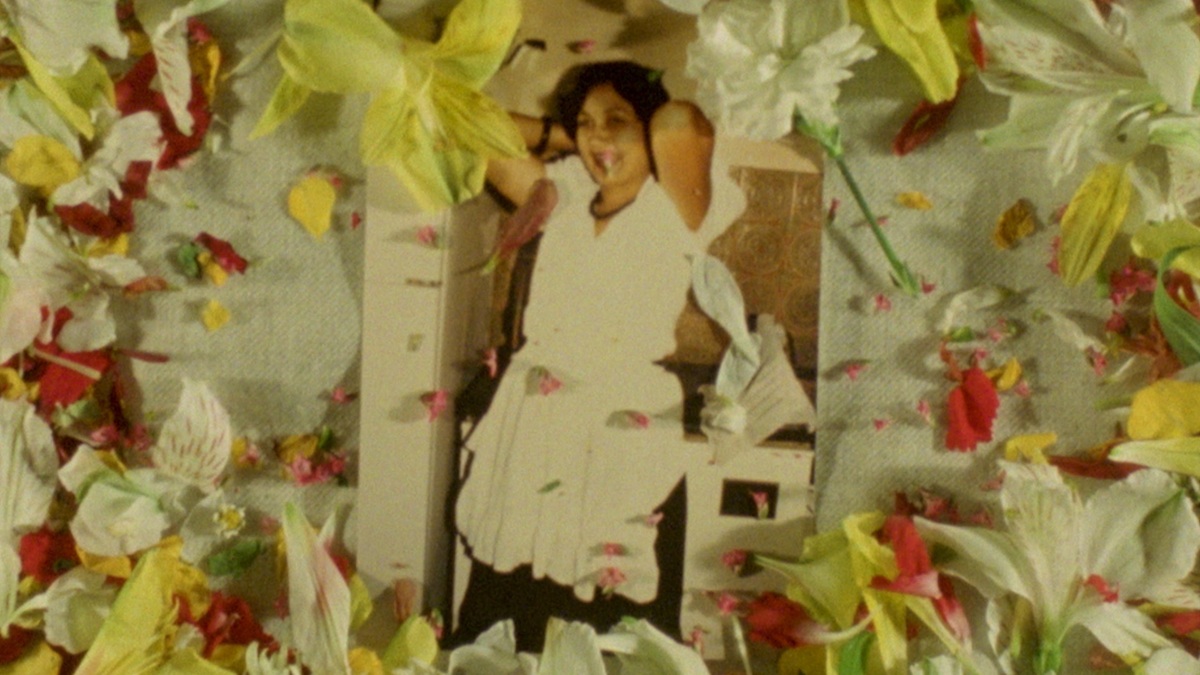
If you’re going to title your film “mother, you have not died yet. but you will. and when you do, you will finally be alive again.,” you’re not exactly sneaking into the room. The title arrives carrying flowers, smoke, prophecy, and a warning label. It tells you, almost too plainly, that it won’t treat death as an ending here. It also tells you that you’re entering a film willing to speak in contradiction: a mother can die and somehow become more alive; a daughter can mourn someone who still seems to occupy the house; and grief, no matter how private it feels, can still carry the weight of history.
So, in a sense, I thought I knew what I was getting myself into. I’m a sucker for films about grief and letting go, partly because the good ones rarely flatter us with closure. They sit with the mess instead. They understand that mourning doesn’t always make people kinder, wiser, or more articulate; sometimes, it only makes them more aware of what they were never taught how to carry. Advik Beni’s debut feature understands that, but it also surprised me by giving far more than the title had already prepared me for. Instead of louder emotion or bigger declarations, it offered something trickier and, in the end, more moving: a film whose feelings keep changing shape.
Grief That Keeps Changing Shape
The setup is simple enough to describe, though much harder to contain. In Cato Manor, Durban, Lishana (Lishana Nandhlal) tends to her elderly mother, Leela (Dolly Bechu), in a home shaped by routine: prayer, food, television, gardening, medication, the cat, and the small domestic repetitions that become a language between people who’ve long learned how to live beside each other.
But ‘mother, you have not died yet’ doesn’t treat caregiving as a sealed-off chamber of personal sorrow. Instead, the mother’s body, the daughter’s memories, the family photographs, the old songs, the radio reports, the neighborhood aunties, the barbershop portraits, the history of Indian indenture, and the violence of post-apartheid South Africa all begin to speak at once.
That could have easily turned shapeless, especially in a film so committed to drifting between documentary, re-enactment, archive, and imagined space. But Beni has a rare command of poetic movement. The film can pass from a flowerbed to a funeral portrait to a burning hillside without making the connection feel imposed, because its logic is emotional before it’s explanatory. It trusts association, but it isn’t vague. Its images may be soft, grainy, and half-swallowed by light, but its thinking is sharp. Grief, in Beni’s hands, isn’t only something that happens after death. It’s something a family inherits, something a country suppresses, and something communities pass down without always naming it.
Related Review: Miiku Sakanishi’s ‘Memorizu’ Finds Family History in the Images We Almost Forget
What the Marigolds Remember
The gardening routines become essential to that understanding. Early in the film, Lishana remembers planting marigolds with her mother during a blisteringly hot afternoon: pulling roots, shifting pots, digging a hole, then watching Leela lay the seeds into the soil with an almost maternal precision. At first, the memory seems intimate, one of those ordinary details grief turns sacred simply because the person who shared it is gone.
But as the film expands, the marigolds also begin to carry a wider meaning. They survive. They self-seed. And they bloom again and again, not as a neat metaphor for healing but as proof that care leaves traces even when people don’t know how to pass down answers.
That’s where the film’s compassion really lies. It doesn’t turn resilience into an inspirational poster, which is a good thing. It simply understands that survival can be ugly, incomplete, and exhausting, especially when communities have been asked to move forward without being given the space to grieve.
And yet, the marigolds remain. They become a modest but powerful image of continuity: of hands tending land, of neighbors who once worked together, of a solidarity that history damaged but didn’t entirely erase. When Lishana imagines the flowers carrying songs of resistance, moments of shared struggle, and the memory of communities working hand in hand, the film briefly allows beauty to become political without becoming decorative.
Related Review: ‘The Tropic Sun and His Eyes’ Examines What Men Pass Down, and What They Can Still Repair
The Camera is Not Innocent
The film’s use of photography is just as beautiful because it never treats the camera as a neutral witness. Lishana’s return to image-making begins as a personal act, a way of reaching for her mother through pictures, but it slowly becomes a confrontation with other people’s histories. When she photographs members of the community, the act feels warm at first: smiles coaxed out, bodies arranged, elders enjoying the minor glamour of being seen. There’s humor in these sessions too, the gentle comedy of people knowing exactly how they want to be remembered. But then a man refuses to smile, and the entire exchange turns. Suddenly, the camera is no longer just a tool of remembrance. It’s a question of power.
That moment deepens the film considerably. Lishana begins to ask why she expected obedience from him in the first place. Was it simply the dynamic between photographer and subject, or was there something older and more poisonous sitting between them? The film doesn’t answer too quickly, and that restraint gives the scene its charge. It lets her sit with the possibility that the history of Indian indenture, the apartheid separation between Indian and Black communities, and the hierarchies assigned by white colonial power have all left their residue in the room. The camera, then, doesn’t only preserve memory. It exposes the arrangements we’ve inherited without always realizing it.
It’s here, more than anywhere else, that I found myself thinking back to Karla Murthy’s “The Gas Station Attendant,” though not because the two films move alike. They don’t. Murthy’s film works through home videos, voiceovers, late-night phone calls, and the ache of immigrant labor, while Beni’s moves through ritual, portraiture, performance, and ancestral drift. But both films understand something painful about looking at a parent after the fact: love can sharpen your vision, but it can also reveal how much of that person remains unreachable. To mourn them is also to meet the life they lived outside your needs, outside your childhood, outside the version of them you were able to hold.
Because of this, ‘mother, you have not died yet’ becomes more than a film about a daughter mourning her mother. It’s also a film about what a country does with the grief it never processed. Its very existence feels meaningful in that regard. Beni, an Indian South African filmmaker, isn’t approaching South African identity as something settled, triumphant, or easily reconciled after apartheid.
Instead, the film insists that national identity is made up of unfinished arguments: who was displaced, who was made to feel inferior, who learned to survive by standing above someone else, who watched, who suffered, and who was taught to forget. The film doesn’t pretend cinema can repair all that, but it does suggest that making certain images visible is already a form of refusal.
A House That Can Hear the Country
In that sense, the movie’s hybrid form feels necessary rather than ornamental. The home, the barbershop, the garden, the ancestral realm, and the public broadcast all fold into one another because that’s how inherited grief works. It doesn’t stay in one room just because we ask it to behave. Radio reports about water shortages, load shedding, riots, and civic breakdown enter the same sonic space as prayers, recipes, teasing, and medication reminders. The country keeps interrupting the house, or maybe the house was never separate from the country in the first place.
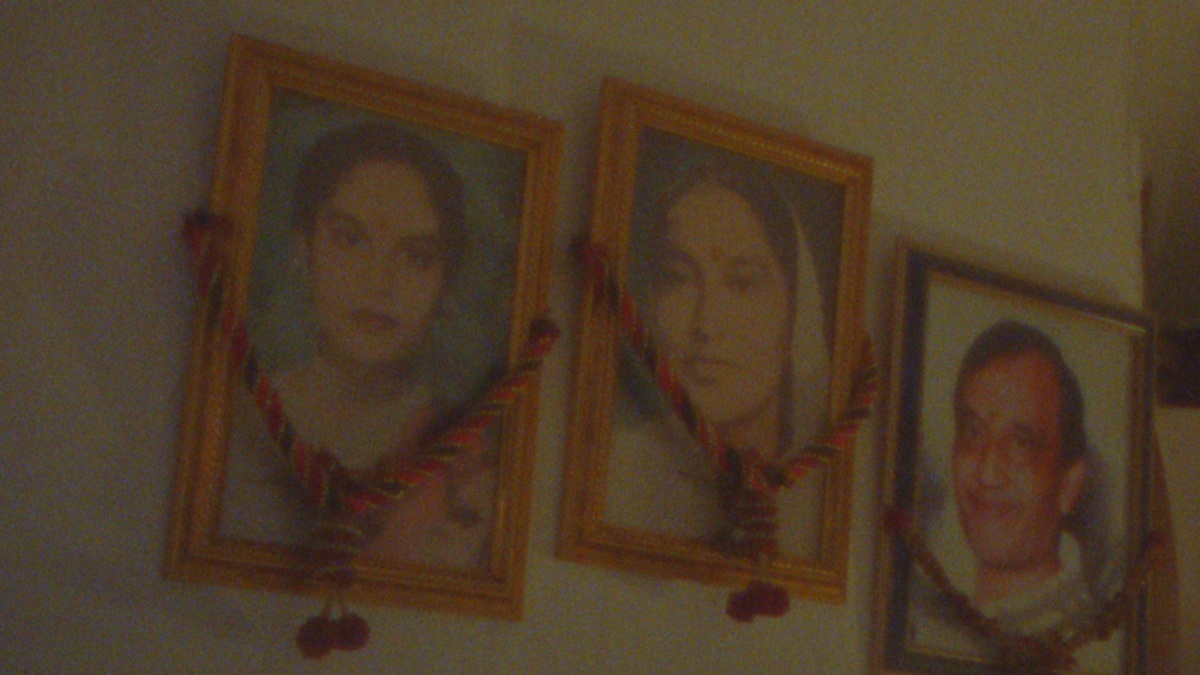
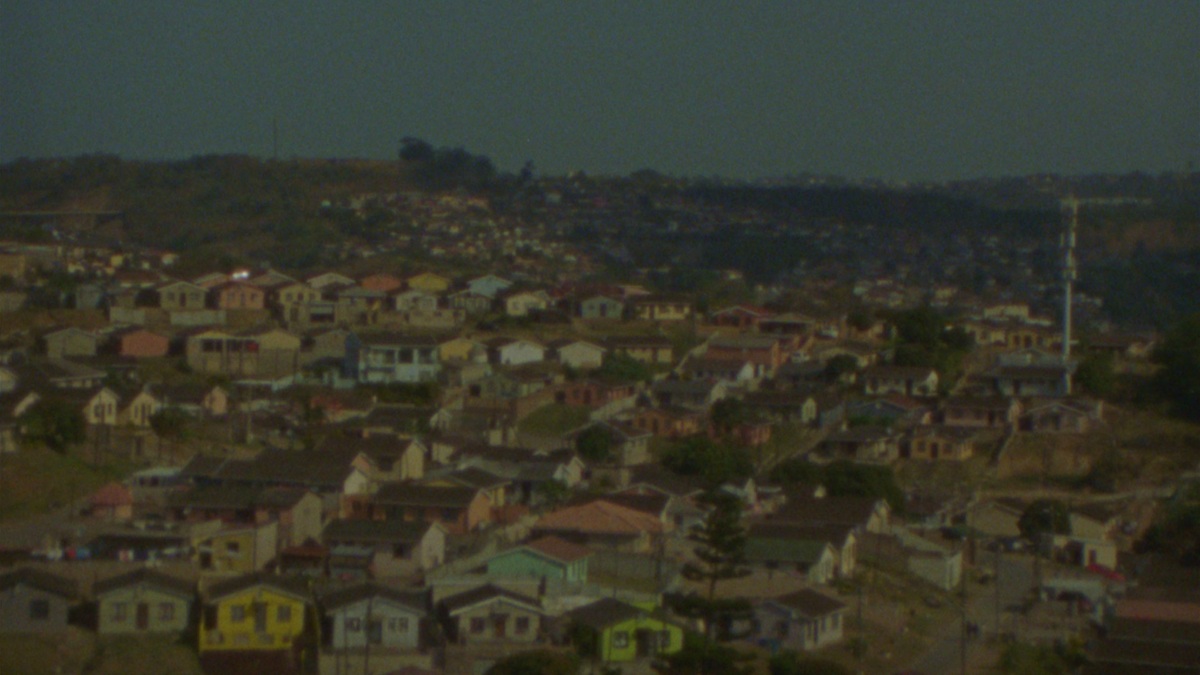
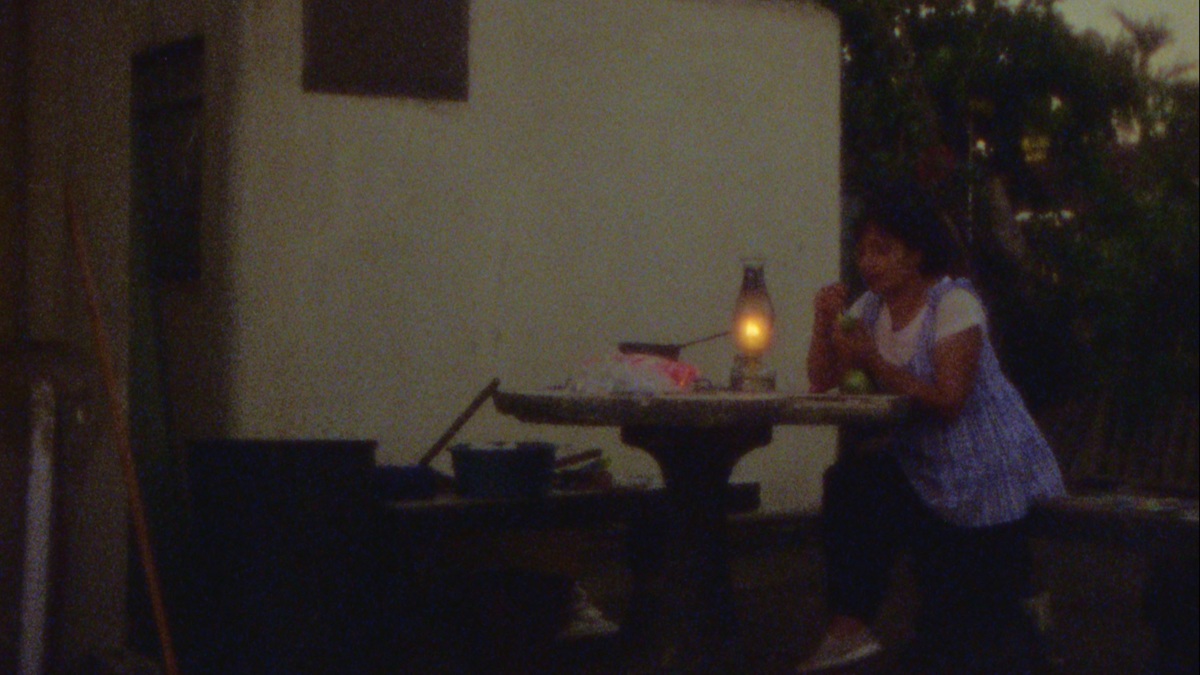
Visually, the film has the texture of something retrieved from a drawer and found slightly changed by time. A photograph surrounded by flowers. A face lit by a lamp. Hills blurred under smoke. Family portraits hanging like quiet witnesses. Beni’s cinematography gives the film a tactile, analog softness, but the sound often pulls against that softness. The images seem to float, while the audio keeps bringing them back to earth: devotional chants, old Hindi songs, neighborhood chatter, news bulletins, photo-session instructions, and the ordinary panic of checking whether medication has been picked up. That contrast gives the film much of its force. It’s mystical, yes, but never precious about it. The sacred and the mundane share the same table, as they often do in homes where grief has overstayed its welcome and started using the good plates.
For a debut feature, this is an unusually assured work. Not perfect in the polished, festival-machine sense, and that’s partly why it feels alive. Its beauty comes from risk: from allowing the personal to spill into the political, from letting the dead occupy the frame without reducing them to symbols, and from accepting that peace can never give words to some wounds. Beni doesn’t grasp for simple answers. Instead, the film’s maturity comes from a compassionate acknowledgment that some inheritances can only be named, held, and passed on differently.
And based on this film alone, Beni is a filmmaker I’ll be watching closely. World cinema is full of young directors trying to prove they have style; this one already seems more interested in what style can carry. Here, it carries grief, history, tenderness, fracture, anger, and the stubborn possibility that the dead don’t disappear. They move into rooms, rituals, songs, photographs, and flowers. They become harder to hold, maybe, but not less alive.

Advik Beni’s “mother, you have not died yet. but you will. and when you do, you will finally be alive again.” will have its World Premiere in both the International Competition & First Film Competition at FID Marseille on July 9, 2026. Follow us for more coverage.


2 Comments
Pingback: TIFF 2026: ‘The Smell of Apples’ | The Movie Buff
Pingback: TIFF 2026: ‘The Hummingbird Paints Fragrant Songs’ | The Movie Buff