


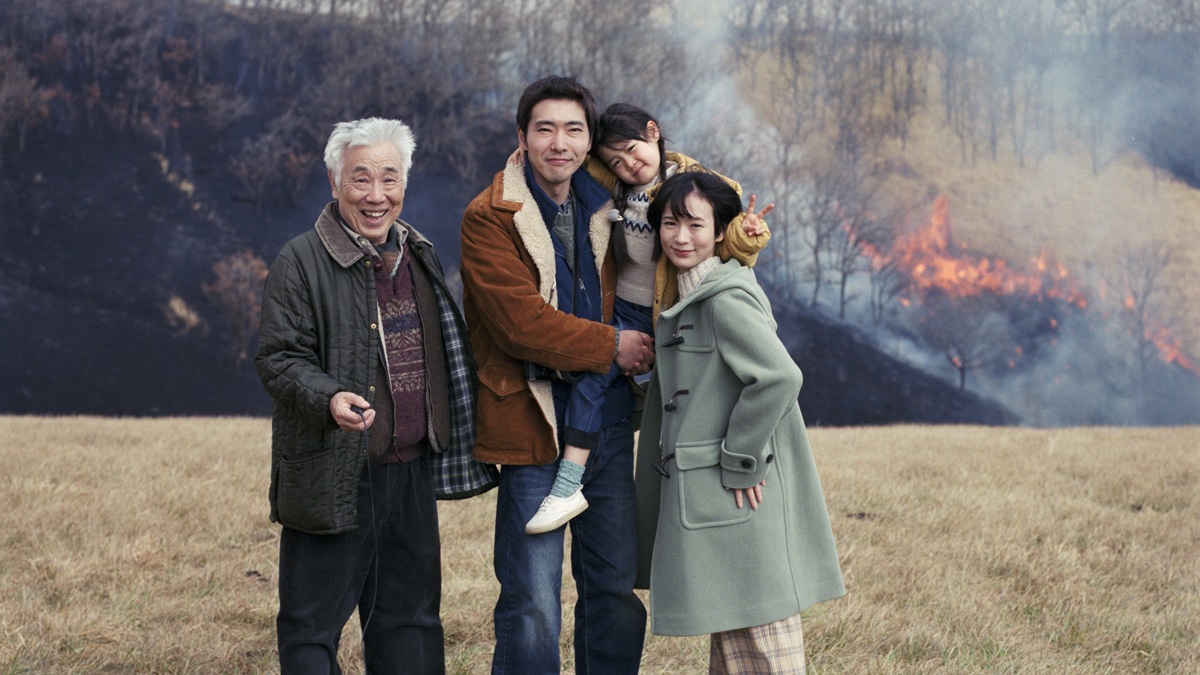
The funny thing about a phone video is how little ceremony it asks from us. We take one because a child says something cute, because the light falls nicely on a street corner, because we want to show someone the dog we saw on a walk. Most of these clips end up buried in endless storage, probably never to be watched again. Still, the impulse behind them isn’t shallow. We record because we’re afraid the day will pass through us without leaving proof.
Miiku Sakanishi‘s “Memorizu” understands that impulse without scolding it. The film isn’t some grumpy argument for analog over digital, nor is it a misty-eyed ode to old cameras as morally superior objects. It sees value on both sides: the patience of a composed portrait, the immediacy of a phone clip, the family album, the casual video sent across distance. All of them are attempts to hold on to time, even when time has no intention of staying put.
More Tribeca Coverage: ‘The Tropic Sun and His Eyes’ Examines What Men Pass Down, and What They Can Still Repair
Pictures Taken, Pictures Sent
World-premiering at Tribeca in the International Narrative Competition, “Memorizu” follows Yuta (Tasuku Emoto), who leaves Tokyo for a rural town in Kyushu after his father-in-law, Makoto (Issey Ogata), fractures his leg. Makoto runs a traditional portrait studio, the kind of place where people sit still, straighten their backs, fix their collars, and surrender themselves to an image meant to outlive the day. While helping him out, Yuta stays connected to his wife Yuki (Moeka Hoshi) and their daughter Hana through smartphone videos and photos.
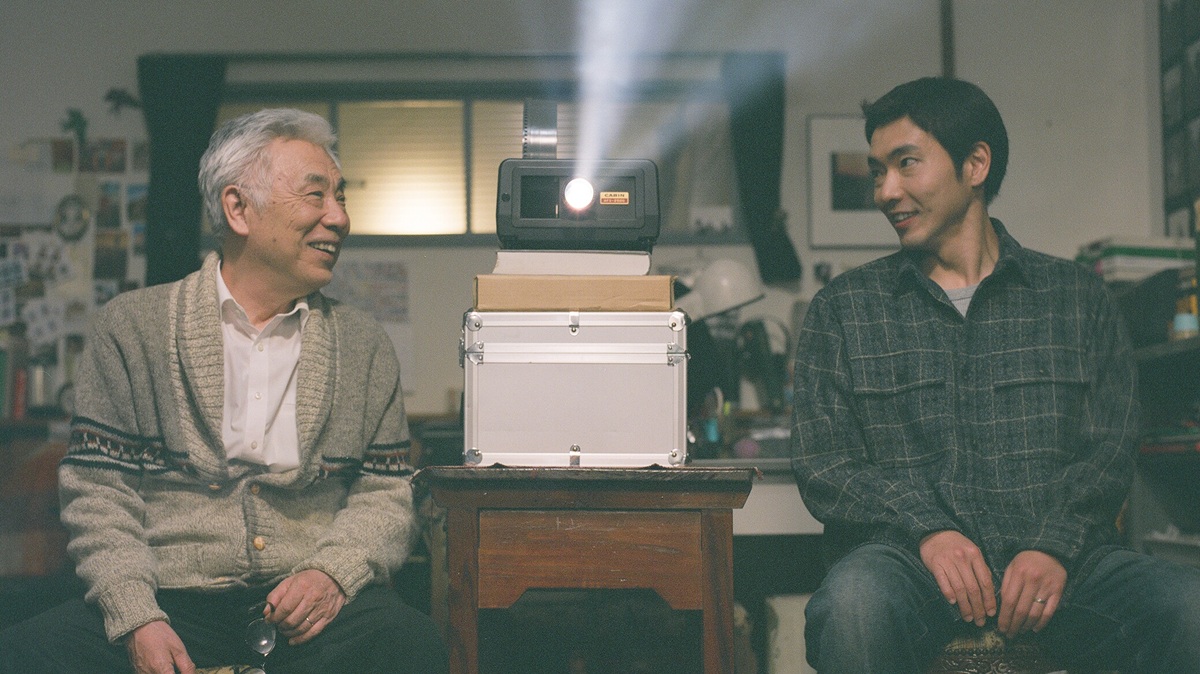
That setup could’ve become painfully schematic: old man equals analog permanence, younger family equals digital distraction. Fortunately, Sakanishi is too observant for that. He doesn’t turn technology into a villain, and he doesn’t romanticize film photography into a cure for modern inattention. He instead watches how images move between people. A video becomes a little hello. A photograph becomes proof of care. And a slide projector turns into an unexpected bridge between two generations who don’t always know what to say to each other.
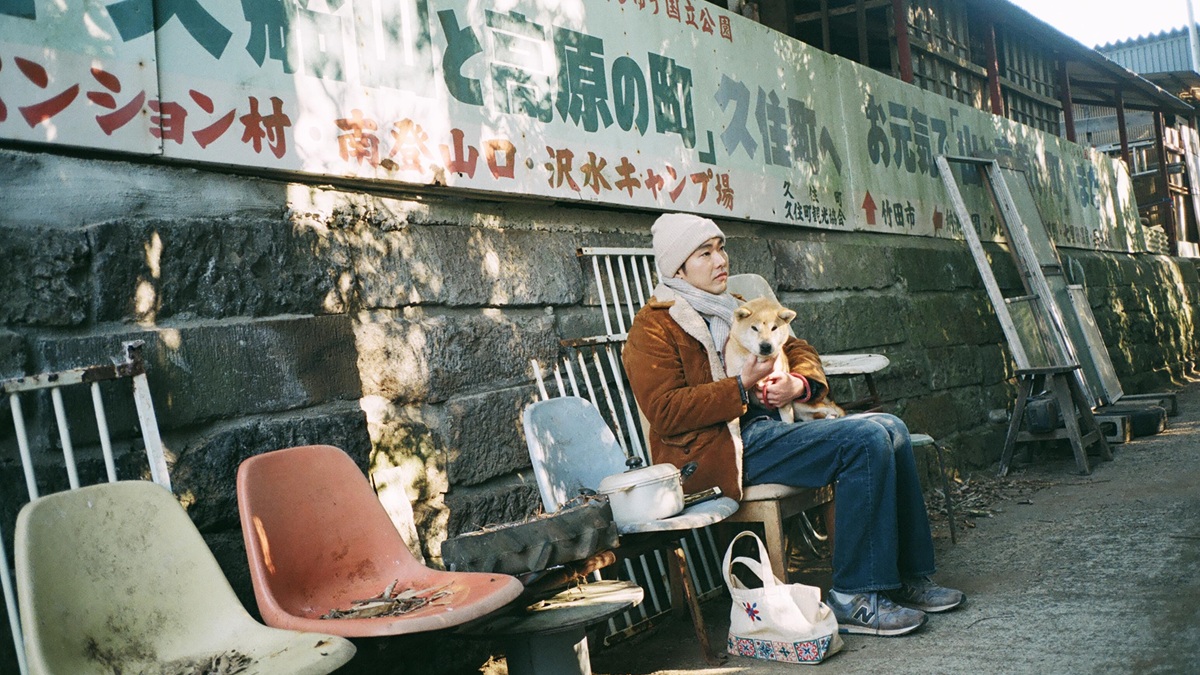
There’s something quietly moving in the way Yuta begins to record his days in Kyushu. He isn’t documenting anything grand. He sends glimpses: the dog, the streets, the scenery, whatever small thing seems worth sharing with the two people waiting for him in Tokyo. The videos are casual, almost disposable, but that’s what makes them tender. They say, without saying it too loudly, “I saw this and thought of you.”
A Predilection for Quotidian Cinema
I’ve always had a weakness for Japanese films that take everyday life seriously. No amount of long takes, quiet rooms, or people walking through ordinary places can wear me down if the film knows what it’s looking at. “Memorizu” belongs to that patient tradition, though I’d be careful with the usual Kore-eda and Ozu comparisons that tend to appear whenever a Japanese film moves gently around family. They’re not wrong in spirit, but they can be too easy: Sakanishi has real promise, but there’s no need to crown him after one feature.
With this film, the director’s work sits closer, at least for me, to filmmakers attentive to emotional withholding and daily drift: Hamaguchi in the way silence can become a form of pressure, Chikaura in the attention to distance and absence, and Hayakawa in the sensitivity to what children and elders absorb without naming. Sakanishi’s voice is still forming, and part of the pleasure of “Memorizu” is watching that voice begin to find its shape.
The film’s best passages are almost aggressively ordinary. Yuta walks the dog. Makoto moves through the routines of the studio. Yuki works through her own days in Tokyo. Hana grows a little in the time her father is away, which is what children do whether adults are ready for it or not. A store sign flips from closed to open. A band practices. Someone notices a horse. Someone records the sky. These moments don’t arrive with dramatic underlining, and Sakanishi trusts them enough not to dress them up.
Related Review: ‘Drive My Car’ is a Contemplative and Delicate Examination of Grief as Unexpressed Love with Nowhere to Go
The Patience of Looking
Complementing the filmmaker’s vision, Yoichi Kamakari’s cinematography has a soft, grainy plainness that suits the film’s interest in memory. The rural town doesn’t look polished for tourism. It looks aged, lived in, and quietly funny in places: faded signs, mismatched chairs, winter light, streets that seem to have kept their own pace regardless of who comes through. One of the stills that stayed with me shows Makoto and Yuta sitting beside a projector, its beam of light cutting through the room between them. It’s the film in miniature: old technology, two men, a memory being thrown onto the air.
This gentle Japanese drama treats casual recordings and carefully posed portraits as different ways of preserving love before it slips into memory.
Sakanishi also finds feeling in the friction between Yuta’s distance from his daughter and Makoto’s memories of Yuki as a child. They’re both fathers watching their girls become harder to hold in place. Makoto has his slides and studio portraits; Yuta has his phone clips and video calls. Neither format solves the sadness of time passing. They simply give that sadness somewhere to go.
Emoto gives Yuta a watchful gentleness, the manner of someone learning a place by looking before speaking. Ogata, unsurprisingly, is wonderful as Makoto. He doesn’t play him as a quaint mentor or a gruff old master waiting to soften on cue. Makoto can be fastidious, funny, stubborn, lonely, and unexpectedly tender, sometimes within the same scene. Meanwhile, Hoshi’s Yuki has less screen time, but her presence through calls and videos gives the family’s distance an ache that never has to become melodrama.
‘Memorizu’: The Little Proofs That We Were Here
Full disclosure: the film’s patience will test some viewers. It drifts through routines with little interest in conventional payoff, and a few stretches come close to stillness for stillness’ sake. Yuta can also feel too recessive as a dramatic center, especially if one wants a clearer sense of how his time in Kyushu changes him. I did wish, now and then, for a slightly sharper edge to his inner life.
But “Memorizu” earns its gentleness. Sakanishi isn’t asking us to confuse quietness with profundity. He’s asking us to look at the little pieces of a life before we decide they’re too small to matter. The film has a generous idea at its center: some images are taken carefully, some casually, some by us, some of us. We may forget why we made them. Heck, we may forget the day itself.
But somewhere in the pile, in an album or a phone folder or a half-remembered projection on a wall, there’s proof that we looked, that we loved, and that for one passing second, we wanted someone else to see what we saw.

Miiku Sakanishi’s “Memorizu” had its world premiere at this year’s Tribeca Festival in the international narrative competition. The festival takes place on June 3-14, 2026. Follow us for more coverage.

