


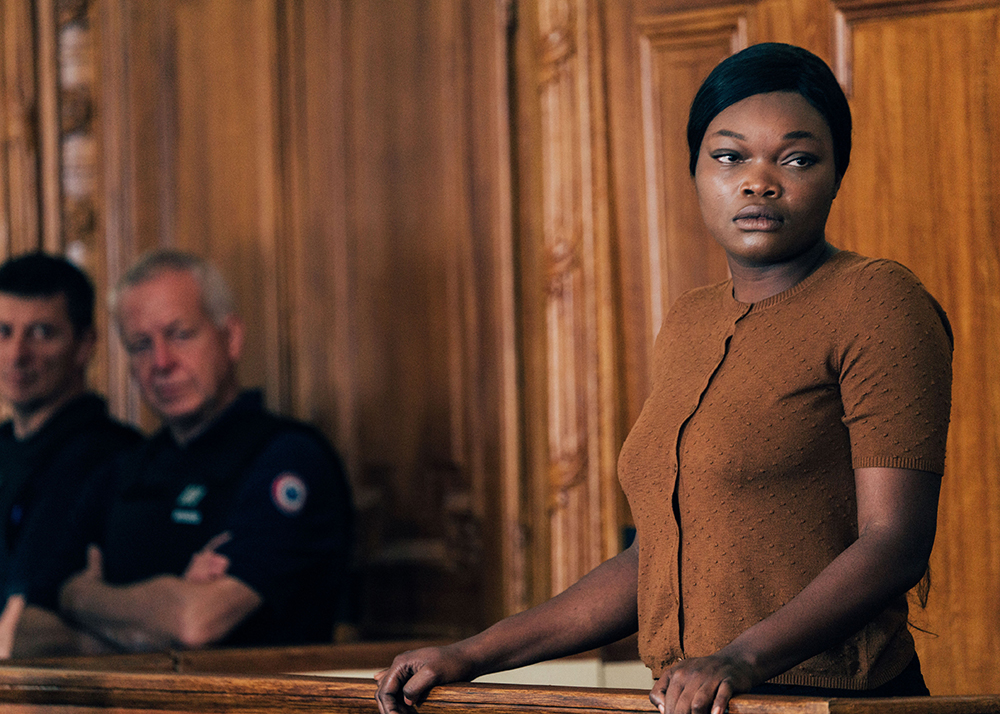
Alice Diop’s first attempt at fiction filmmaking, the ‘Silver Lion’-winning “Saint Omer,” is more than a courtroom drama as it transcends its subgenre trappings. The film tackles maternity, gestation, mysticism, mental stability, and the power structures in French Society. It takes a documentary-esque and gentle approach, as well as small touches of psychological surrealism.
Documentarian Alice Diop often questions French society and its cultural diversity like no other filmmaker has done in recent years. Her 2021 feature, “We” (“Nous,” in its original French title), is a sophisticated and nuanced kaleidoscopic portrayal of the immigrant communities in the Parisian suburbs. It presented their lives through a humanistic lens, and they all were connected by the RER B, a hybrid commuter rail and a rapid transit system that serves Paris.
Diop, one of France’s Finest Modern Filmmakers in the Making
There were plenty of subjects in the documentary, including her own sister, N’deye Sighane Diop, and acclaimed writer Pierre Bergounioux (author of books such as “Miette,” “Catherine,” and “B-17 G”)—all of which talked about their how their lives are affected by inequity and partisanship. However, it is not all about the bad things that happen. It reflects the people’s love for their respective communities, and Diop manages to contemplate memories as a part of it. At the same time, she dives deep into the consciousness of the townsfolk.
Her voice is unique, and I think she will grow to be one of the finest modern French filmmakers of today’s generation if Diop keeps developing projects like that. And my case seems to be improving and validated as Diop’s follow-up, winner of the Venice Film Festival’s ‘Silver Lion’ “Saint Omer” (and France’s submission for the Oscars), is just as (or even more) astonishing than her previous work.
Also Read: NYFF 2022 Review: ‘TÁR’ is a Masterful Portrait of an Artist’s Amour Propre
With “Saint Omer,” her first attempt at fiction filmmaking, Alice Diop gives insight into the human condition through the notions of suppression, both in communication and feelings, via a courtroom drama canvas. It has some similar elements to Carl Theodor Dreyer’s “The Passion of Joan of Arc” (1928), but in a more simplistic yet thematically substantial way. However, it isn’t only just a courtroom drama like the ones we have seen before, even though it contains some of the trappings these types of films have. The legal trial of its story may be the backbone. Still, its core is filled with discernment on maternity, gestation, mysticism, the power structures in French society (a theme present in some of her previous shorts and documentaries), manipulation, and mental stability.
A Story that Brilliantly Creates Parallels Between Truth and Myth
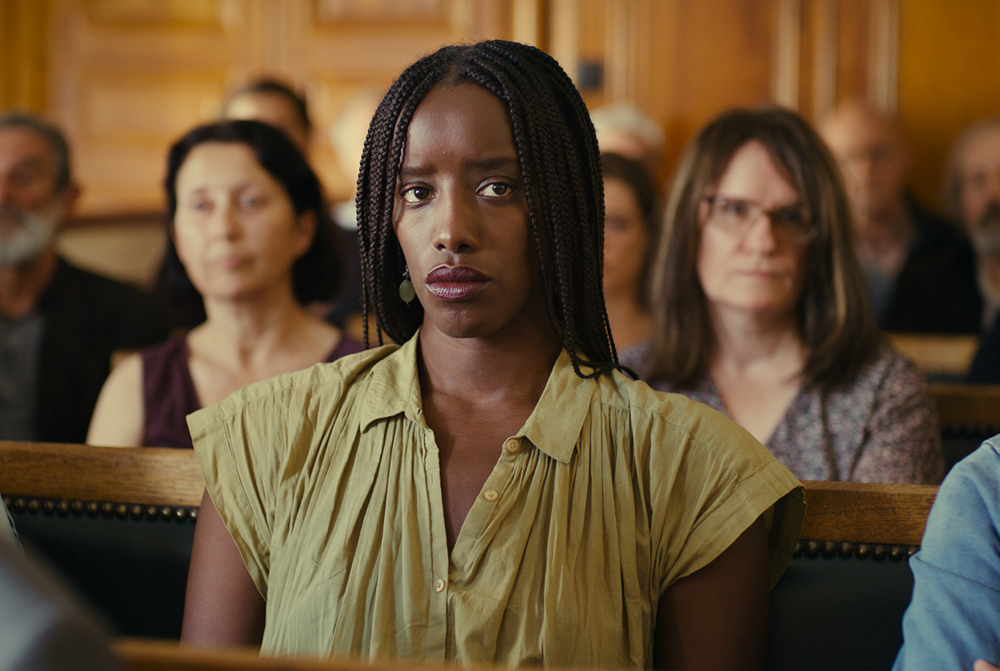
“Saint Omer” is based on a true story, a courtroom trial in 2013 where a Senegalese woman, Fabienne Kabou, abandoned her fifteen-month-old child on a beach in Northern France (on the shores of Berck-sur-Mer, to be more specific), later to be found dead. Diop explores this case in complete detail with her documentary-esque and humanistic touch.
Named after the town these events took place in, the film revolves primarily around Rama (Kayije Kagame), a writer traveling to Saint Omer to visit the trial to see if she can get some inspiration for her new book. The book she is working on is a modern adaptation of the myth of Medea, a story that Pier Paolo Pasolini adapted way back in 1969 (and Diop interjects some moments in the story with clips of said film). The Greek tragedy of Media revolves around a mother who murders her own children as an act of revenge against her unfaithful husband—the tale of a woman feeling entrapped in a deviant land that treats her as an outsider.
Diop brilliantly creates heartbreaking parallels between the true story and the myth, eliciting fear and compassion for its titular character. In the movie, the accused Senegalese woman is named Laurence Coly (played by Guslagie Malanda). While Rama watches the trial, the camera focuses on the accused, hearing her plea. Laurence does confess to the murder, but she doesn’t know why she did it. She faults witchcraft as the main culprit, convinced that her aunt put a curse on her family once they left Senegal.
A Tough Film that Works to Build Empathy
Because Rama is now pregnant, she starts being affected by Laurence’s story, especially the aspect of her relationship with her family and the man who birthed her daughter. This makes Rama reminisce about her fractured bond with her mother and maternity—the life her own child will have. There’s a specific scene where she runs out of the courtroom with tears on her face, reflecting on the testimonies being heard, wondering how this story may have an impact on her future as a mother.
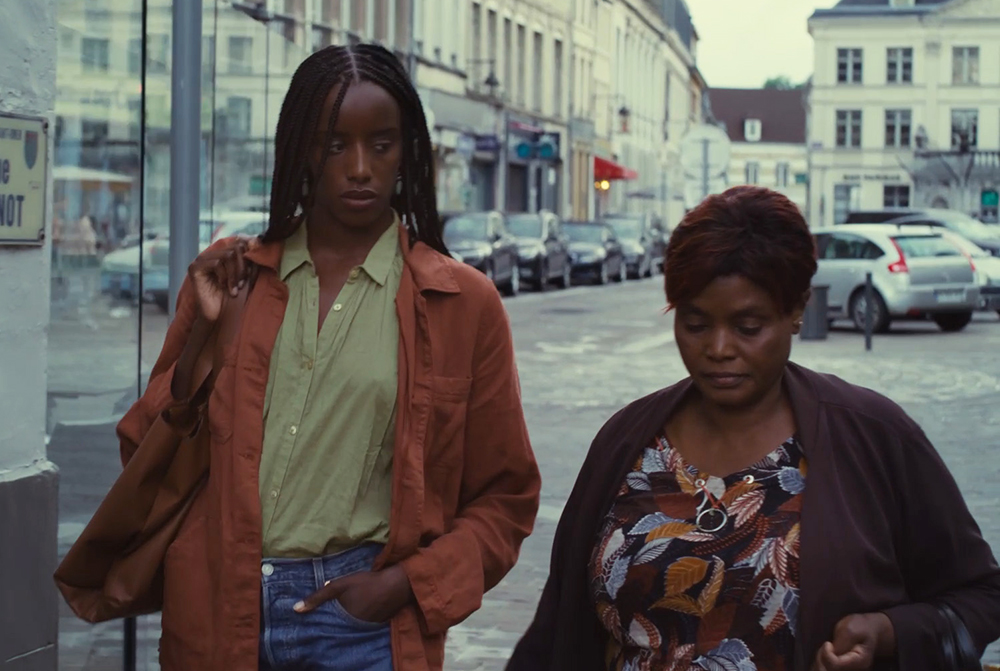
Rama begins to question if she will be a good mother, what her mother was like, and her child’s fortune (whether she will have a fractured or stable relationship). Since Rama has been observing the trial carefully, an array of feelings got bottled up in her heart, ultimately breaking her apart to the point of not only having to leave but shattering her state of mind regarding motherhood. “Saint Omer” is a tough film, with scenes that make the viewer think about the multiple questions Diop is proposing regarding Coly’s trial. And no answers are coming from her. It has an ambiguous nature to build empathy amidst the character’s choices and contemplations. Diop contrasts with her humanistic and grounded way of filmmaking. She asks the performers not to look at their respective characters in a judgmental manner but that they understand the actions each takes.
‘Saint Omer’ Works on Diop’s Documentary Roots to Create Her First Fiction
In the end, Diop showcases how the workings of society have contributed to Laurence’s downfall and that, to this day, it still affects many lives. Meanwhile, Rama understands that a racist society contributed to the accused’s derangement. It is heart-shattering, but there is plenty of sympathy and gentleness to the story being told thanks to Diop’s finely tuned hand. She doesn’t want to overextend it with stylish maneuvers; instead, Diop restrains herself and leaves the audience to bask in the juxtaposition between heritage, catharsis, memories, healing, and its quick touches of psychological surrealism.
“Saint Omer” is somewhat stylistically treated as a documentary, leaving Claire Mathon’s beautiful hand at the camera to linger in the characters’ faces for the perfect amount of time. However, it contains enough stunning thematic forces in its aspects of fiction. The film pulls you into the courtroom so that you can feel each punch, one after the other.

“Saint Omer” is part of our continuing coverage of the 2022 New York Film Festival (NYFF).
Support the Site: Consider becoming a sponsor to unlock exclusive, member-only content and help support The Movie Buff!
