


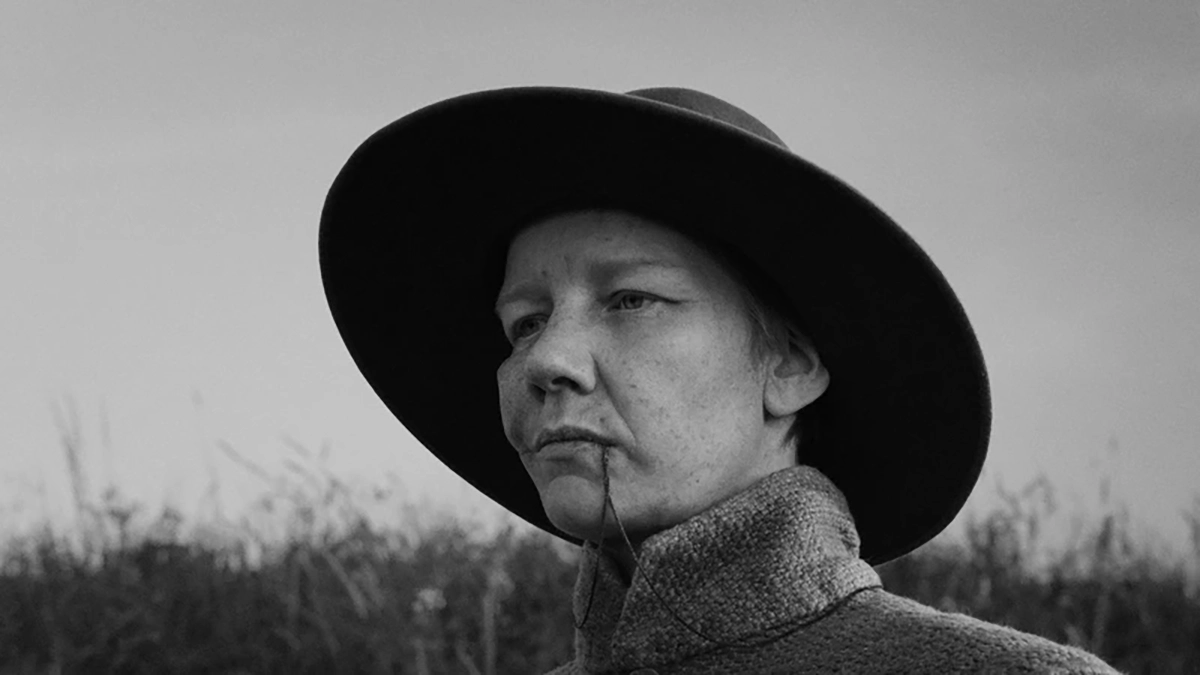
It would be difficult to typecast Sandra Hüller because she’s such a chameleonic and timeless talent. For “Anatomy of a Fall” (2023) Hüller earned what should be the first of many Oscar nominations (two this year, perhaps?), playing a wry, pseudo-unreliable protagonist/possible murderess. In “Toni Erdmann” (2016) she crooned Whitney Houston, wore fake teeth, ran around naked and coaxed a fling to unload on a petit four. Then, she ate it. And now we have “Rose,” an elegant and merciful period drama, in which Hüller’s range is on partial display. Director Markus Schleinzer (“Michael”) struggles intermittently to meet this daring performer at her most heightened brilliance, unable to fully capture the film’s spark before it dissolves. And while Hüller remains uniquely capable of transcending scripted material, her unyielding commitment still couldn’t vault the story off the screen, and I wished Schleinzer would’ve followed her lead and truly leapt.
Labeled a fable, “Rose” is also an historic folk tale about a woman who passes as a man in order to fight in a war and for herself. Admitting in a tense, terrifying interrogation scene that there is more freedom “in trousers,” Rose grifts her way into an inheritance that previously belonged to a fallen comrade. Rather than retreat into a cozy, anonymous lifestyle, Rose is constantly chasing prosperity, because, why not her? Bargaining with a neighbor (Godehard Giese) for a share of his property, he man-splains to Rose that a stream (i.e. land), like a womb, keeps giving, whereas money can only be spent and given away. So, he proposes that Rose court Suzanna (Caro Braun), one of his five daughters, in a fittingly 17th-century (or, depending on the culture, perfectly modern) quid pro quo transaction.
The Sound Team Does Evocative Work
Amid the howl of nature and the clop of a wooden home’s fragile interior (Sound Mixer Nora Czamler and her team do standout, evocative work here), Rose navigates this tricky domestic gear shift. To consummate the marriage—another caveat to her neighbor’s offer—Rose fastens a strap-on around her waist, gently taps on Suzanna’s cubby hole of a bed and tells her to turn around. Soon, Suzanna is pregnant (!) and Rose’s inscrutable gaze hardly cracks at this baffling, surreal turn of events. Maintaining a steely pragmatism, Rose insists that it’s too early to celebrate, and that muted reaction doesn’t prompt suspicion from Suzanna or the servants. What does out Rose, however, is a bee-sting attack that forces Suzanna to disrobe her husband, revealing—or complicating—the true nature of her baby’s maybe-daddy.
The punishment for Rose and Suzanna (the child’s fate remains unclear to me) is decisive and swift. This won’t be the first review that compares Hüller’s enigmatic face and Godlike sacrifice to Renée Falconetti’s iconic mug in Carl Theodor Dreyer’s “The Passion of Joan of Arc” (1928). Nor is it an entirely original notion that Schleinzer’s spare monochrome backdrop (shot by Cinematographer Gerald Kerkletz) resembles Michael Haneke’s terrifying and unsparing “White Ribbon” (2009), a film for which Schleinzer served as casting director. But “Rose” is no copycat, and Schleinzer’s style is more humane than Haneke’s, closer to the indelible black humorist Todd Solondz (“Happiness”) or even David Cronenberg. (Throw in another favorite provocateur/Canadian maestro, Atom Egoyan, for good measure). Schleinzer’s “Michael” (2011) promised to startle—and sort of delivered—objectively depicting the relationship between a bland, monstrous thirty-something office worker and the young boy he held captive.
Schleinzer Dials Down the Absurdity
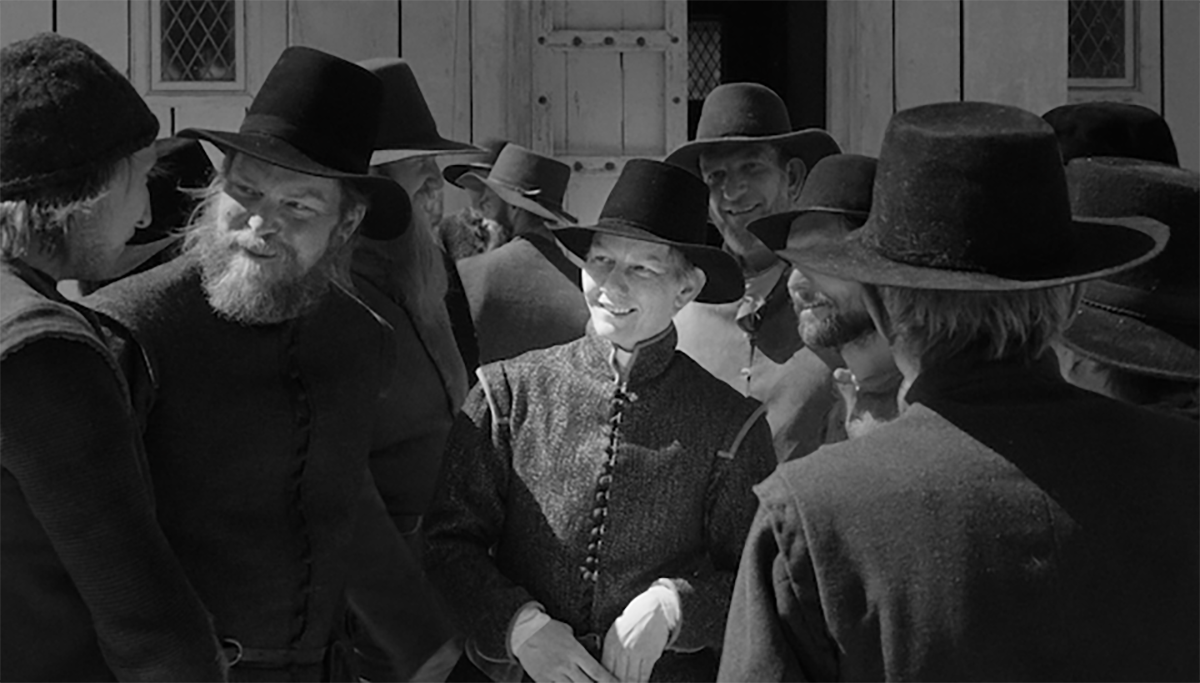
Unlike Solondz, whose consistent preoccupation with children and their abusers (“Life During Wartime,” “Welcome to the Dollhouse”) is bleak yet uncomfortably funny, Schleinzer tends to dial down the absurdity and default to a familiar European arthouse show-and-cut-to-silence mean, a distinctive strategy more successfully executed by the cheeky devils Catherine Breillat and Haneke, or more recently, Mascha Schilinski (“Sound of Falling.”). Withholding in prose, if not in form, Schleinzer clearly divides Rose’s world between good and evil, God and the devil. For what’s supposedly a fictional retelling of actual cases of women passing as men, I wished that Schleinzer and co-writer Alexander Brom availed themselves of the freedom to make it weirder and harder to categorize. An anti-feast for the eyes, a perverse can’t-look-away squirmfest that pokes at David Cronenberg’s vexing fixation on the body and a Solondzian cinema of benign emotional torture. Brutal, sure. But in Hüller we must trust.
A MUBI release, “Rose” had its New York premiere at the New York Film Festival. The film opens in theatres on December 11th.