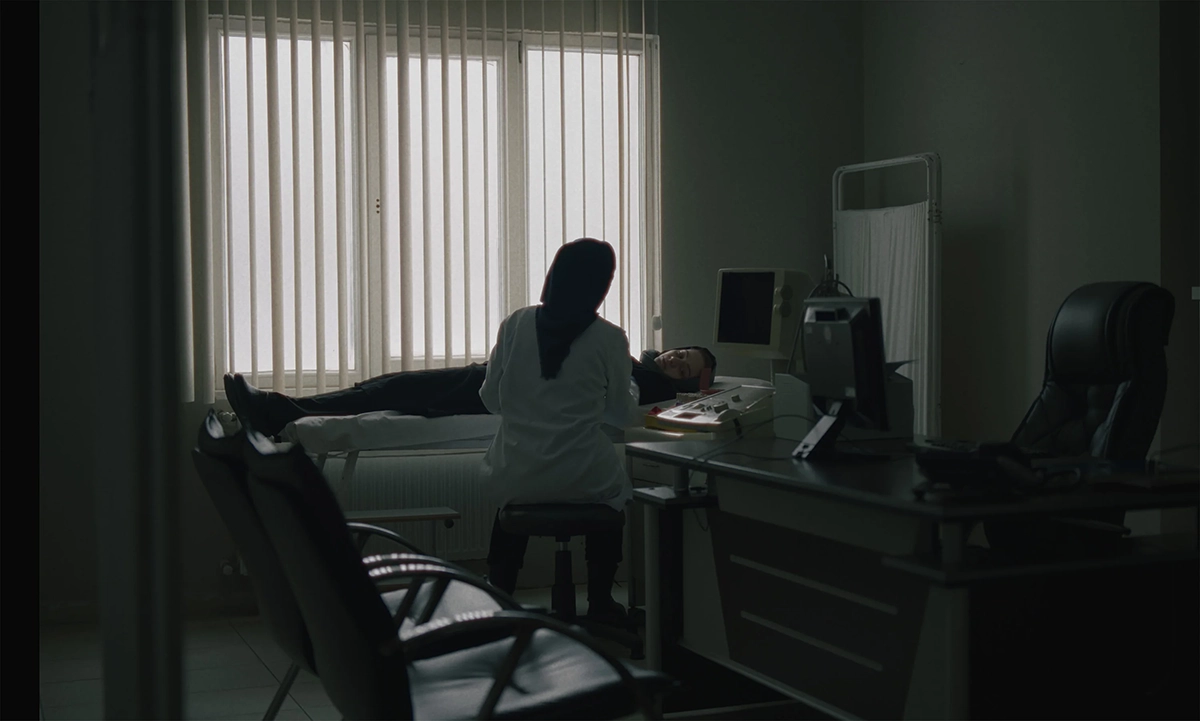
Amir Zargara’s short film “Vital” offers critique on not just the Iranian practice of legally selling organs but on the exploitation of poverty as well. The short, at under 15 minutes, examines two different parents. One mother in Iran watches her sick daughter wither away from an undefined illness. She’s not in need of organs but treatment which her mother cannot afford. This is juxtaposed with an Iranian man living in America whose daughter is also sick. She needs a heart and no match has presented itself. The film’s beginning carries cryptic on-screen text: There is only one country in the world where buying and selling human organs is legal. However, a law itself can inspire ways for us to break it. Subsequently, “Vital” is a hard look at what people in poverty will do to save their loved ones.
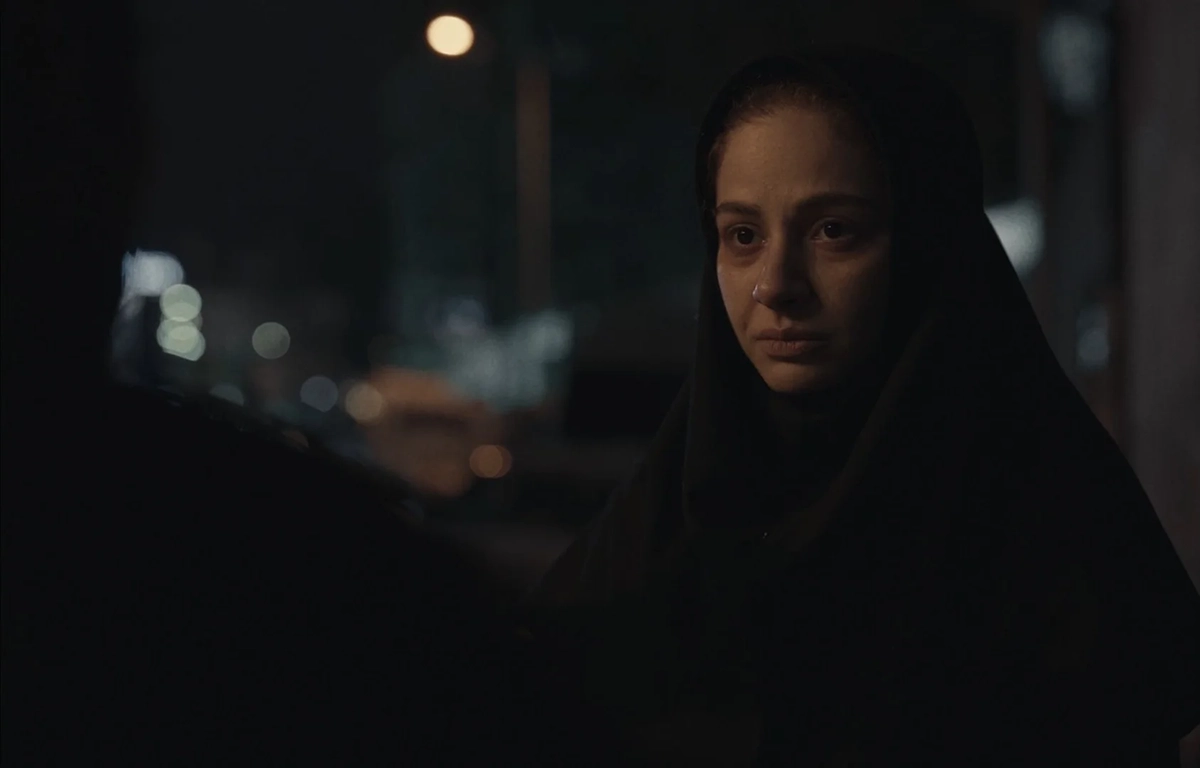
“Vital” offers a shocking concept, and the characters within its frames operate under its premise. At the film’s start, we meet Fereshteh (Mahtab Servati), who is at wits end to save her sick daughter in the hospital. “Vital” wisely doesn’t name what she’s sick from. And from conversations between Fereshteh and a friend who works in organ trade (Reza Akhlaghirad), we glean the girl may not survive anyways. Fereshteh has already sold a kidney and is contemplating selling part of her liver. Her daughter, Hedieh (Narshin Tahamtan) is a vibrant spirt. She jokes with her brother Bijan (Rastin Paknahad) and is clearly Fereshteh’s jewel. Fereshteh’s husband works in what looks like a meat market (some irony here) but is mostly absent from the film. Here “Vital” is commenting on how alone Fereshteh feels dealing with this on her own. “Asking her husband” for money is offered in one scene but dismissed. Patriarchy is on full display here.
Sickness, Poverty, and Unfair Systems
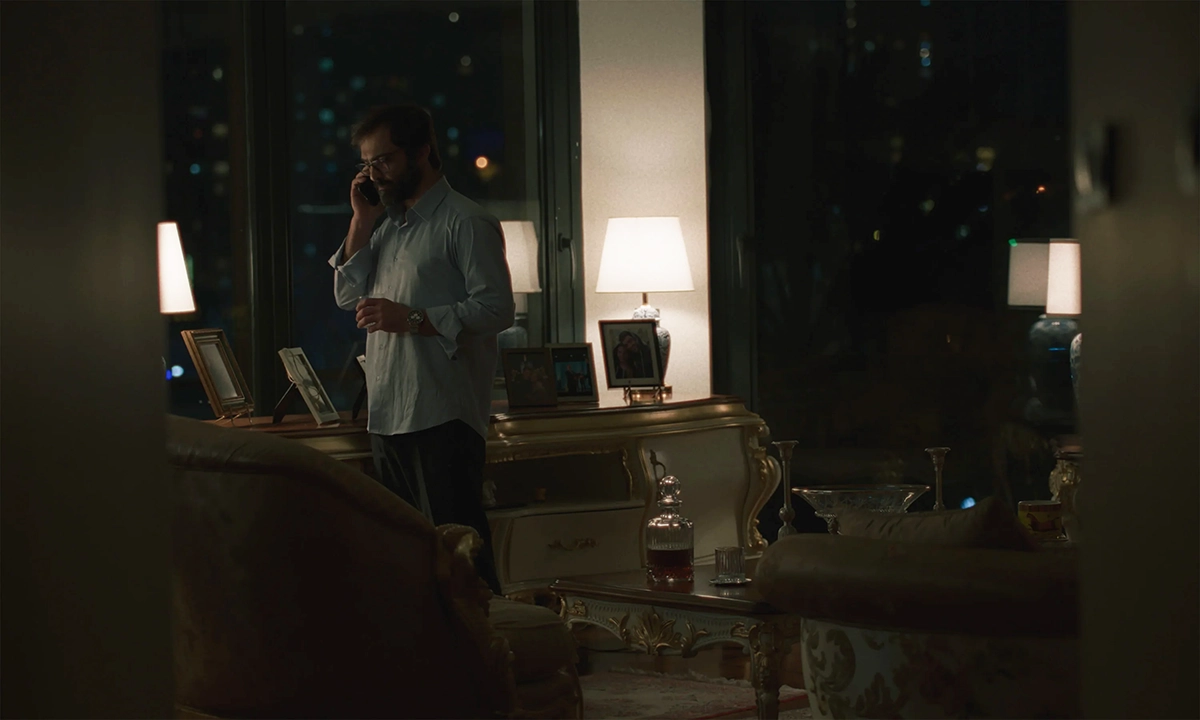
Across the world in the United States, we meet the doctor Shaheen (Hossein Soleimani) as he feverishly looks for a transplant donor for his own daughter. His mother (Tahereh Baigy) cryptically suggests how he might handle this if he were back in Iran. He talks about ethics and codes, which his mother suggests aren’t black and white when life hangs in the balance. Here, I feel a disclaimer is needed. While a scene before Fereshteh met with a broker to sell part of her liver for Hedieh’s medical bills, factually only kidney sale is legal—and regulated by the government—in Iran. Yet the point Director/Co-writer Zargara is making is apropos. People without means look to the organ trade to save their loved ones, pay bills, and make ends meet. I couldn’t help but notice the comparisons to the American medical system, which often bankrupts patients, although Zargara is commenting on Iran and not America.
For a short film, “Vital” has an immediacy to it and is shot and directed in a forlorn way. Composer Kamyar Behbahani supplies a forlorn, funereal quality while Cinematographer Jalen Maxwell shoots the film in darkness and dolor. Most of “Vital” takes place in darkened rooms, nighttime, or grey, hazy skies devoid of color. To me this represented the lack of hope for its central characters and the weight looming over their heads. As children do, however, both Hedieh and Bjian are bright spots. They know nothing of the seriousness of their world, the loneliness their mother feels, nor the extremes she must go to. Adding to this, both Fereshteh and Shaheen are good, integral characters. Servati and Soleimani play them with urgency and wear their struggles as duty. They’re both solid actors and Zargara directs them well. I also liked Akhlaghirad as Fereshteh’s friend/organ contact. While dealing in the dark world he moves in, he offers her practical advice. Their final conversation at the film’s end is morose and sad.
Poverty is the Common Enemy
Another of the film’s key sequences—its end, actually—shows a wall in Iran placarded with advertisements of organs for sale. Most, if not all, are for financial need. And while “Vital” is a deeply cultural film—Zargara is commenting on the Iranian organ trade—I found it unsettling given even America’s capitalist medical system and the utter need of medical care recipients. The wall is grey, much like the film. Poverty and need are the common enemy—whether it’s organ sales or taking out unforgiving loans. Zargara starts the film by aiming to criticize a law but in the end makes sweeping points about economic injustice. It makes the film that much more approachable.
The film’s only detriment to me was its length and terse conclusion, which holds a lot of Fereshteh’s actions as fruitless. Without offering spoilers, “Vital” shifts gears from saving Hedieh’s life to financial realities. The film ends in a bittersweet way that marries hope with devastation. Perhaps the film included too many characters. Or perhaps it was too short (Zargara shared he’s working on a feature version of “Vital” for release next year). For by showing two Iranian parents living in different countries—and with different rules—the law Zargara wishes to interrogate becomes somewhat softened.
Zargara starts by criticizing a law but ends up making sweeping points about economic injustice.”
I also wish “Vital” would have criticized directly not the means Iranian citizens resort to in order to make ends meet or save their loved ones but the cause—financial insecurity. Iran’s economy is not the same as America’s but shares enough aspects where Shaheen’s character could have been used more pointedly. Both counties cripple the financially insecure, leading to loss of lives due to financial apathy. By broadening Iran’s organ trade with creative license, Zargara is clearly casting a gauntlet against this abusive practice. Yet it might have fared cleaner with a decisive narrative that challenged the practice instead of merely commenting on it. But the result is still profound: we understand pain and desperation. The whole thing works due to Fereshteh and Shaheen. We care about them and believe their struggle.
An Oscar-qualifying Short
All-in-all, however, “Vital” is a good film. It comments on a crisis that affects more than just one country while also criticizing a way that Iran uniquely takes advantage of its citizens. It’s a story—like the excellent “Falsified” by Ashley Tabatabai—that most Americans are unaware of and would be better served to understand. Its acting, score, cinematography, and experience leaves a mark. While poverty is its main focus, we can’t help but feel for the lives of Hedieh and like children. The casualties lost in the war between poverty and medical care are daily headlines. By caring about “Vital’s” characters we care about something that may not affect us directly but is still just as profound. Hopefully Zargara’s film will inspire empathy worldwide to bring awareness to the cause—and effect—of Iran’s unique opportunist system and those who fall victim to it.
*”Vital” is an Oscar-qualifying short film and is in consideration for the ‘Best Live Action Short Film’ category. To Learn more about this film, visit its official website, here.