


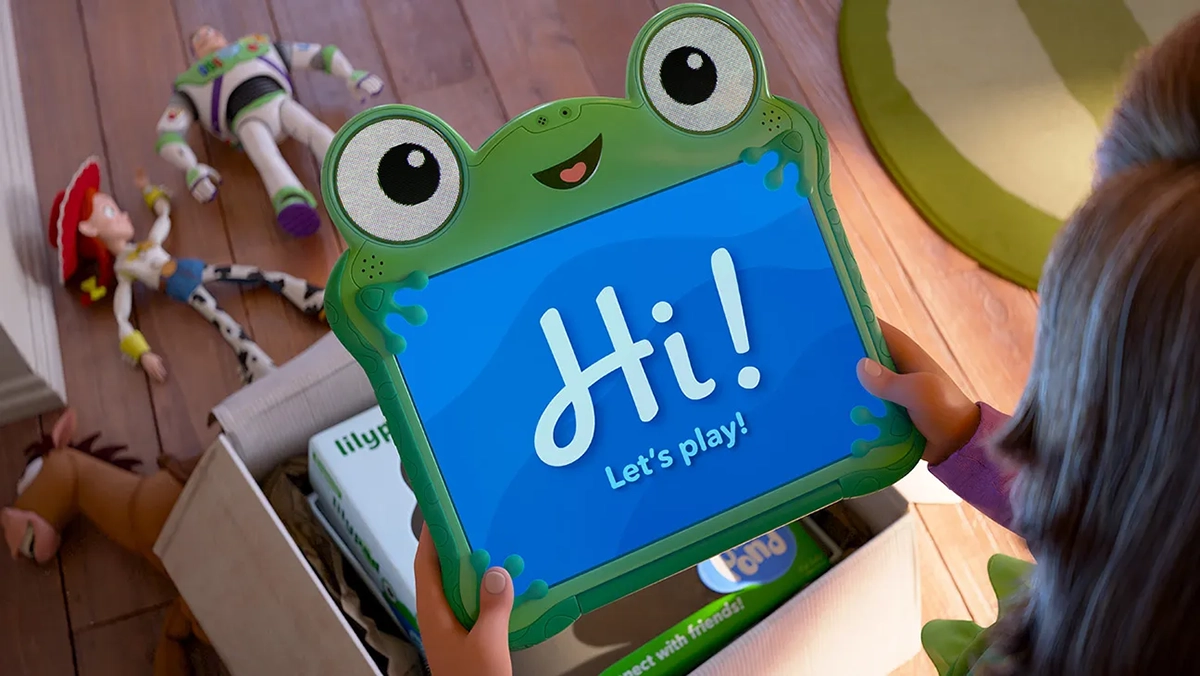
The remarkable thing about Pixar’s recent output is that the studio finally seems interested in wrestling with big ideas again.
For much of the last decade, Pixar often felt caught between sequels struggling to justify their existence and original films that never quite cohered. But this year has been encouraging. “Hoppers” was a surprisingly thorny movie about the limits of empathy and the uncomfortable realization that good intentions and liberal ideals don’t always survive contact with reality. “Toy Story 5” similarly feels like a studio once again reaching for something larger than nostalgia.
A New Treat: the iPad
Every “Toy Story” movie is ultimately about obsolescence. Woody fears being replaced by Buzz. Jessie grapples with abandonment. The toys confront mortality in an incinerator. Woody eventually realizes his purpose might exist outside of being played with altogether. This time, however, the threat isn’t another toy or even the inevitability of growing up.
It’s the iPad.
“Toy Story 5” is probably the most contemporary entry in the series. It concerns itself with children increasingly living through screens and the ways technology mediates friendship, imagination, and empathy itself. Bonnie is now an anxious and painfully shy eight-year-old whose parents gift her a tablet called Lilypad, hoping it might help her make friends. Instead, she retreats further into digital spaces while her toys begin to fear something much larger than obsolescence. They fear irrelevance.
Like “WALL-E” before it, “Toy Story 5” is fundamentally worried about life lived behind screens. It touches on social media, algorithmic entertainment, loneliness, cyberbullying, and the ways digital communication can create a deep well of sadness and isolation despite its promises of connectivity. The film’s deepest anxiety isn’t simply that children don’t play with toys anymore. It’s that children increasingly experience friendship, creativity, and even cruelty through devices.
A Film that Could Have Dug Deeper
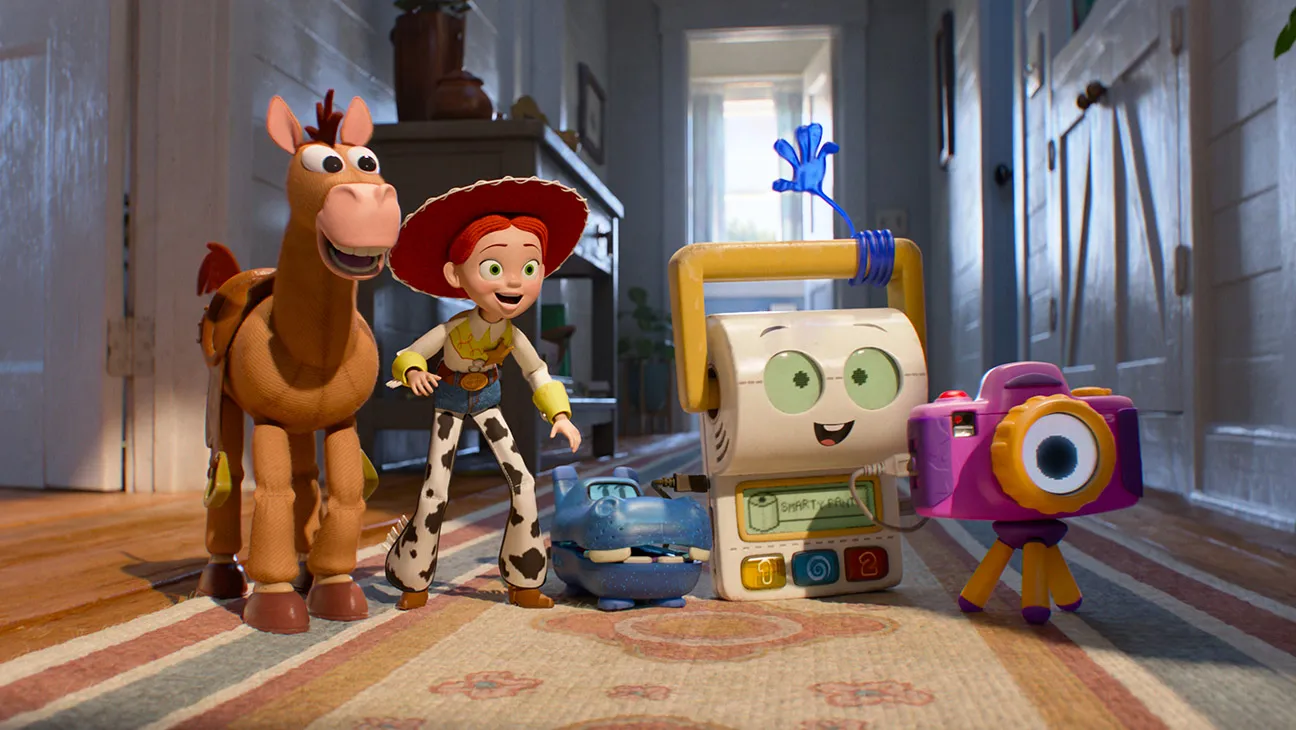
This is fascinating territory for a “Toy Story” movie.
It’s also frustrating.
The film repeatedly introduces provocative ideas before softening them into something more reassuring and digestible. Its themes are ultimately oversimplified. The relationship between children and technology is far messier than the movie allows. It continually brushes against genuinely disturbing implications only to retreat toward safer conclusions about screens being useful in moderation. The cynical part of me could never entirely give myself over to the film’s anxieties when it is, after all, a Disney release introducing an adorable tablet character that feels awfully merchandise-ready.
Does “Toy Story 5” need to interrogate the psychological and social implications of technology with the rigor of great science fiction in order to entertain six-year-olds? Of course not.
But I can only speak from my own experience as someone who grew up with these movies. Pixar conditioned an entire generation of viewers to expect more from family entertainment than we realized was possible. These films consistently smuggled existential questions into children’s movies and trusted young audiences to wrestle with them. Because this series set such an unusually high standard for itself, I couldn’t help wishing “Toy Story 5” trusted its ideas enough to dig a little deeper.
O’Brien and Greta Lee are Good
That isn’t to say I didn’t enjoy myself. Quite the opposite.
“Toy Story 5” is tremendously entertaining. It’s funny, often beautiful, and full of terrific visual invention. The imagination sequences, rendered in an alternate partially 2-D animation style, are absolutely gorgeous and perhaps make the film’s anti-screen argument more persuasively than the screenplay itself. They visualize everything the movie fears is disappearing: creativity, interiority, and the active process of making worlds from nothing.
The film’s single best addition is Conan O’Brien’s hilariously cranky potty-training toy Smarty Pants. O’Brien perfectly understands the peculiar rhythms of this world, giving a vocal performance that is both uproariously funny and strangely poignant.
Greta Lee is also quite good as Lilypad. The character works because she isn’t malicious. She’s warm, sincere, and genuinely believes she’s helping Bonnie. There’s something frightening about an algorithm convinced it knows what’s best for you. Even if the mechanics of her abilities occasionally feel implausible and narratively convenient—her messaging capabilities often move characters exactly where the plot needs them to be—Lee imbues her with enough warmth to make her feel less like a villain than an embodiment of a system.
A Bevy of Characters Threaten to Drown Out the Originals
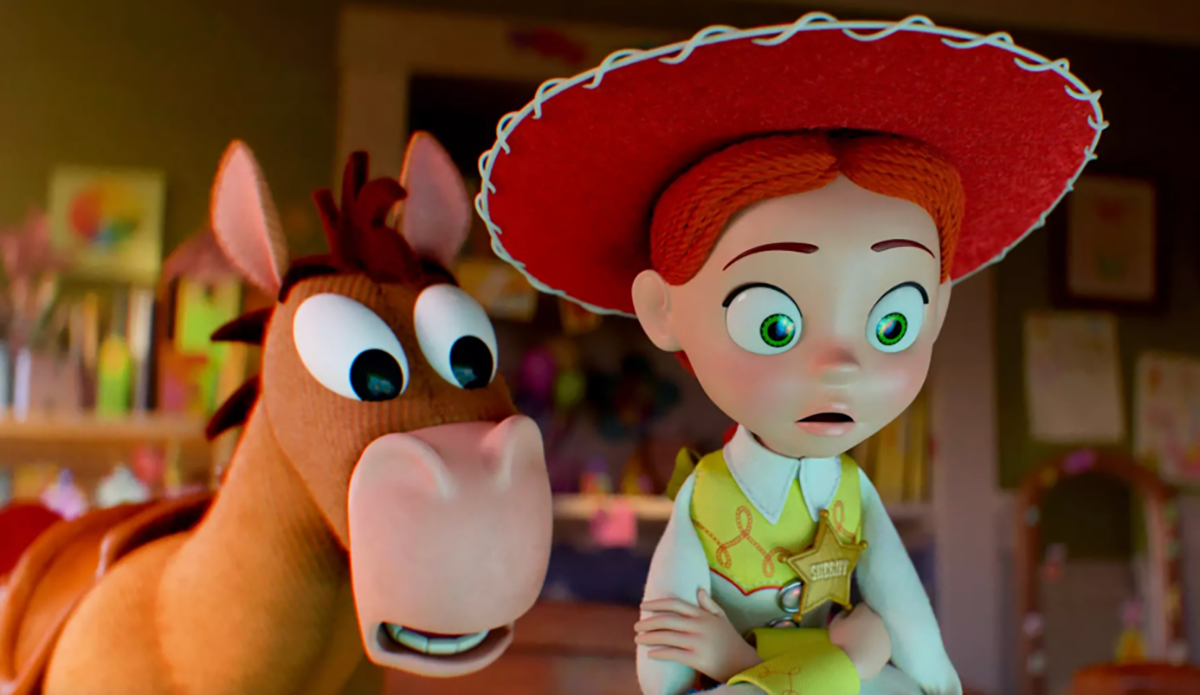
The film is also, somewhat unexpectedly, a sensitive and thoughtful story about female friendship. By shifting the emotional center from Woody to Jessie, “Toy Story 5” becomes interested in young girls attempting to help one another navigate loneliness and connection. Jessie finally receives another substantial emotional arc, and Joan Cusack’s warmth remains one of the franchise’s secret weapons.
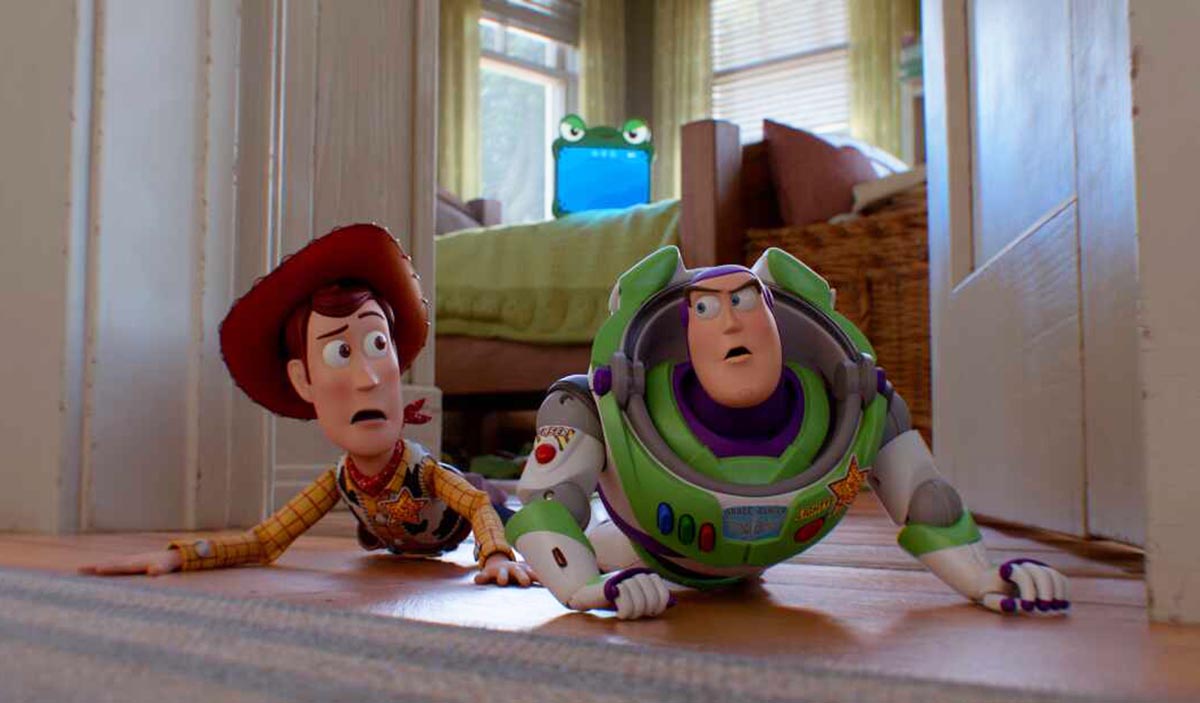
The tradeoff is that much of the ensemble gets pushed to the margins. Buzz remains present but largely functions as support, while Woody is surprisingly sidelined despite his iconography and marketing prominence. Most of the extended cast is reduced to brief appearances and side cameos. Whether that’s a bug or a feature will likely depend on the viewer. But it undeniably gives “Toy Story 5” a different texture than its predecessors. Rather than another adventure anchored by the Woody-Buzz dynamic, this is a more female-driven story centered on Jessie, Bonnie, and even Lilypad, with its emotional concerns rooted less in rivalry and more in loneliness, friendship, and the desire to connect.
I still prefer “Toy Story 4.”
Still a Film to Enjoy
That film was stranger and more existential, willing to follow its ideas into genuinely radical places. “Toy Story 5” repeatedly approaches similarly unsettling questions about technology, loneliness, and human connection but ultimately blinks. Maybe that’s precisely as deep as it needs to be for the six- and seven-year-olds discovering these characters for the first time.
But Pixar spent thirty years teaching me to expect family entertainment that doesn’t merely introduce difficult ideas but interrogates them. “Toy Story 5” is funny, thoughtful, and one of the studio’s most interesting films in years. I admired it enormously. I laughed. I kept thinking about it afterward.
I just couldn’t quite give my heart over to it.

Continue Exploring Animation
🎬 Browse all of our Pixar reviews

