



For the longest time, Philippine cinema has danced around certain subjects; tiptoeing past them, softening their impact, or ignoring them altogether. From abortion to mental illness, from queer longing to systemic neglect, these narratives, though deeply felt across the country, have often been missing from the mainstream. But that’s changing. As independent and mainstream filmmaking sensibilities continue to converge, we’re now seeing more films brave enough to tackle the uncomfortable. In “Sunshine,” Antoinette Jadaone adds her voice to that chorus, delivering a film that’s tender, empathetic, and unafraid to confront one of the country’s most polarizing taboos: unwanted teenage pregnancy.
That Jadaone takes on this subject in a country where abortion remains criminalized speaks to the clarity of her intention. Her direction is sensitive without being saccharine, compassionate but unflinching. The film doesn’t levy judgment on its characters—it simply follows a girl on the brink, giving Maris Racal the stage for what may be the best performance of her career. And while I have mixed feelings about certain narrative choices, there’s no denying “Sunshine” is one of the boldest—and best—films in Philippine cinema this 2025. And it’s only July.
A Quiet Collapse
The film begins with a promising future. Sunshine (Racal), a rhythmic gymnast barely out of her teens, is training for the Asian championships, with Olympic qualifiers just around the corner. The pressure is real: she’s been training with her coach (Meryll Soriano) since she was 11, and the qualifiers are just two months away. But in the middle of a routine, she collapses. Minutes later, she’s lying in the school gym’s clinic, face pale, mildly disoriented. A quick word from the nurse clues Sunshine into the news audiences already sensed from the get-go: she’s pregnant.
What follows is not a melodrama of “what now?” so much as a quiet reckoning. Sunshine’s identity is suddenly thrown into question. She’s not even 20. She’s still figuring out who she is. But in a world where pregnancy can derail a life, the decisions she faces aren’t just difficult; they’re existential.
Jadaone draws this emotional terrain with grace and restraint, and her actors follow suit. Racal’s performance is nothing short of revelatory. There’s a wordlessness to her early scenes, where disbelief and denial sit just beneath the surface. In one standout moment, she visits a Quiapo church and pleads silently with God: undo this, and I’ll make it up to you. It’s a kind of bargaining that feels deeply Filipino—equal parts faith, fear, and desperation. Elijah Canlas, playing her boyfriend Miggy, is equally compelling. He embodies a kind of immature apathy that masks a deeper panic, the kind young men often feel but rarely articulate. When he suggests the child might not even be his, the words land like a slap—not just for Sunshine, but for anyone who’s ever had to carry the burden of consequence alone.

What the Eyes Catch
That burden is the film’s core, and it’s one Jadaone handles with a steady, thoughtful hand. The filmmaker, whose filmography has often leaned toward romantic dramedies, stages small moments with larger meanings. A jeepney Sunshine rides to church sports a decal that reads “Gift of God” at the front. Later, as she ponders abortion, she walks through a hospital wing filled with newborns and their mothers. Even the abortifacient vendor—maintaining a facade as a street vendor hawking holy statuettes—closes the transaction with a quick penance to the statuettes. There are no sermons here; just sharp, resonant ironies.
Among the supporting cast, Jennica Garcia shines as Sunshine’s sister Geleen, whose tough love and quiet sacrifices feel lived-in. There’s a wordless tenderness between her and Sunshine that suggests years of surrogate motherhood, and even a shared passion for gymnastics. Racal and Garcia’s scenes serve as the emotional anchor of the film, hinting at a family history of resilience built on silent struggle. These women may not say everything, but they carry everything.
Technically, the film is lean and assured. Rico Blanco’s score is more functional than memorable, but it fortunately complements the mood without overwhelming it. Benjamin Tolentino’s editing keeps the 90-minute runtime tight, avoiding both drag and haste. Indeed, “Sunshine” moves like its protagonist—deliberate, burdened, occasionally breathless.
‘Sunshine’ and The Moral Battleground
Of course, a film this bold is bound to ignite debate—and it should. Abortion remains illegal in the Philippines, and discussions around bodily autonomy are often stifled by religious dogma and political inertia. One particularly uncomfortable scene shows an OB-GYN scolding one of the characters in the film who tried to self-induce abortion, forcing the latter to apologize to “Papa God” in front of a crowded ward. It’s a moment that captures the country’s deeply entrenched religious conservatism, and the shame that comes with defying it.
[The film gives] Maris Racal the stage for what may be the best performance of her career.
It’s this kind of reality that brings to mind Eliza Hittman’s “Never Rarely Sometimes Always,” a film that tackled similar terrain in an American context. Both films deal with teenage girls navigating the murky waters of unwanted pregnancy and reproductive autonomy.
Jadaone’s film, while different in scope and tone, shares that same emotional DNA: a quiet, measured study of a young woman navigating impossible choices. Where Hittman’s heroine had to cross state lines for a legal abortion, Sunshine must confront not only the law but centuries of religious conditioning.
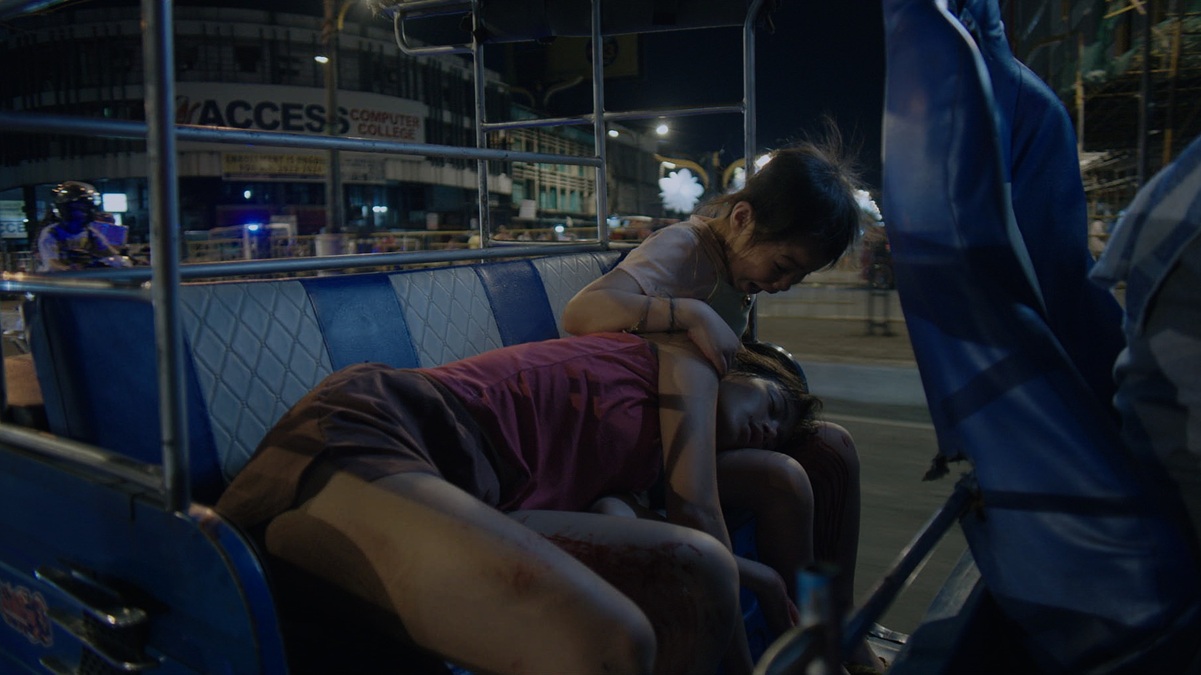
When Conscience Takes [Corporeal] Form
Still, I wish the film trusted its audience a little more. At times, its moral imagery veers toward the didactic, particularly in how it renders the idea of unborn life. A recurring narrative device, which I won’t spoil, feels like it’s pushing one interpretation over others. There’s a lack of gray here, and while I understand the choice (especially given the cultural climate), it can come off as heavy-handed. That said, even these elements are likely to resonate deeply with local audiences.
And maybe that’s the point. There’s little room for ambiguity in “Sunshine,” but that clarity of intent—Jadaone’s refusal to muddy her stance—may also be its strength. Because, as I realized gradually, “Sunshine” isn’t here to play it safe. Jadaone has crafted a film that relishes discomfort, one that forces us to confront the silences we’ve learned to live with: around abortion, around reproductive rights, around what we teach our daughters (and sons) about sex, choice, and consequence. The more painfully real the film becomes, the more accomplished it feels.
In the end, “Sunshine” is a triumph not because it resolves these tensions, but because it dares to speak them aloud. It’s a film rooted in empathy, elevated by performance, and brave enough to ask questions that too many of us still whisper. Sometimes, that’s the most powerful thing cinema can do.

Antoinette Jadaone’s “Sunshine” first premiered on September 13, 2024 at the 49th Toronto International Film Festival, and had a European premiere at the 75th Berlinale on 18 February 2025. The film was released to the general public on July 23, 2025. Follow us for more coverage.

