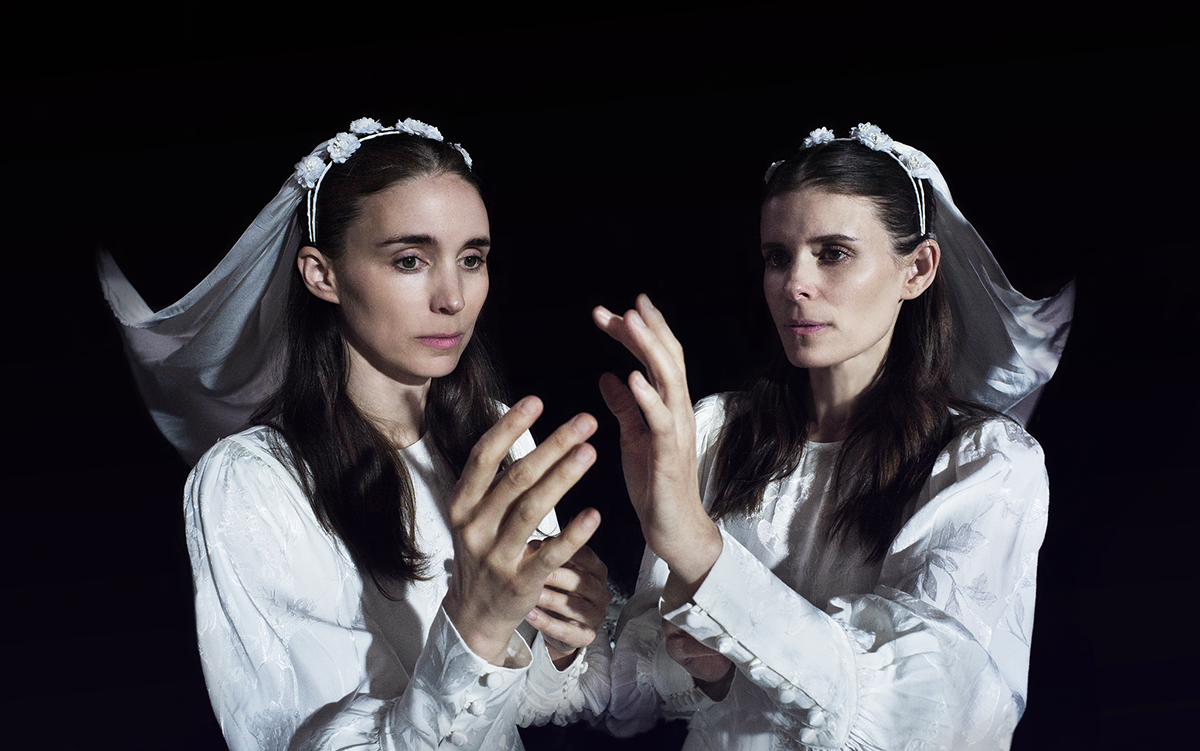
Look past the zany plot summary of Werner Herzog’s “Bucking Fastard.” Actually, no—embrace it, with a thick grain of mined salt, because these Holbrooke sisters do everything together. And while that last part sounds like a kitschy, porn-adjacent tagline, “Fastard” is only occasionally farcical. Had Mike Leigh, another octogenarian legend, not already claimed the title, “Tender Loving Care” could’ve served this oddball saga of Joan (Kate Mara) and Jean (Rooney Mara) Holbrooke, sisters devoted to their shared passions and romantic idealism/extremism. Herzog, who wrote the script, permits some sentimentality to seep in, but it’s well earned and inevitable, considering that the Holbrooke sisters fit squarely in a long line of Herzogian strivers, misfits and ambitious fiends. Defying proper social mores, Joan and Jean are more misunderstood (or neurodivergent) than evil, hammering away towards a braver new world that wouldn’t exist unless they linked up with Werner to create it.
Early courtroom exposition sequences might give “Fastard” its title—and a smarmy anti-hero—but Herzog’s theses catch momentum when the Holbrooke sisters agree to a self-exile. That’s to say, Jean and Joan submitted to the terms of a restraining order. On trial for stalking and harassing their neighbor Gareth (Orlando Bloom), Joan and Jean stubbornly insist the only crimes committed were of passion and the undying love was mutual. From the witness stand, in fact, Gareth winks at the girls, calling them his cowgirls. But Gareth’s reversal of affection came sudden and swift, baffling Joan and Jean, driving them to desperate bids for connection (a rope ladder over the shared fence) and finally, payback (gasoline in his Range Rover).
Herzog Both Tightens and Expands the Narrative
Although the trial neutralizes “Fastard” in a leaden crawl forward, the outcome propels the Holbrooke sisters’ to infamy. Out in the world, they are recognized and inevitably, harassed and stalked, presumed to be low-hanging fruit for predatory leeches. For every harmless selfie-taker (“Do you mind if I post this?”) Joan and Jean encounter an aggressive landlord (“I should really have a key”) and a dim, yet threatening forklift operator (“Can I touch your hair?”). Introducing these leering pests, Herzog the auteur both tightens and expands the narrative, aligning himself in solidarity rather than mere pity or curiosity. So if the initial courtroom set-up frames Joan and Jean as manic-pixie nightmare girls, the closer zoom in on their inner lives reflects more on what had brought them to this point. And so Joan and Jean burrow further inward towards each other, a protective measure that is reflexive and justified.
Herzog’s trusted Cinematographer Peter Zeitlinger drones his camera around like a pesky fly on the wall, eavesdropping on Jean and Joan. Later, though, the volatile angles and shifty movement turn into a sort of watchdog, when an uninvited third party invades their personal space. Despite—or in response to—their parents’ neglect and actual avoidance, the Holbrooke’s Aunt Louise (Marion O’Dwyer) invites them to her country home, no strings or timeline attached. Out there, decency reigns, and the town sage/local activist McFarlane (Brendan Conroy) serves as a spiritual adviser of sorts. Suggesting that the local caves have a mystical potential, Joan and Jean go full Fitzcarraldo, bargaining on a better life on the other side. In unison, as always, the girls and a fox named Cupid (uncredited?) chisel away, finally unearthing an extraordinary world that could be a hallucination.
The Sisters Bargain on a Better Life
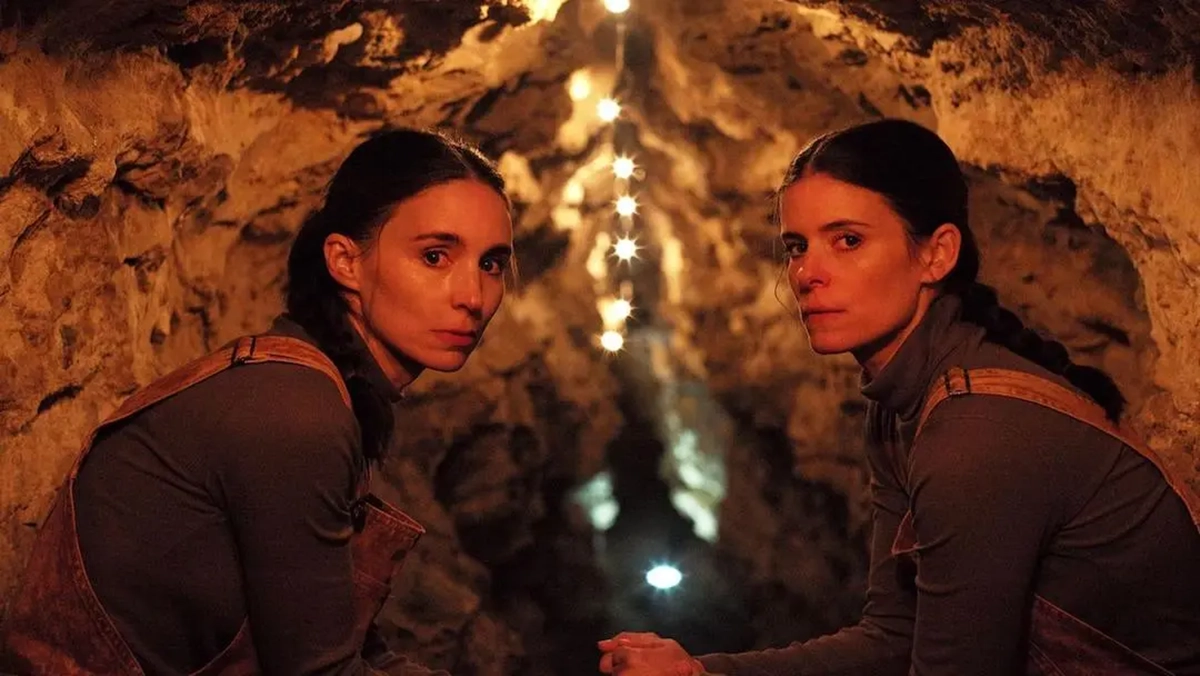
Conflating fantasy with reality places us in the Holbrooke’s semi-charmed/-damaged perspective, and slamming the cave’s exit shut is more than a metaphor, it’s a gift. Locked inside of the Postojna Cave (Werner and his caves …), Joan and Jean can start over on their terms, surviving on grit and sisterly resourcefulness. Then again, there’s always the entrance on the other side, back towards Aunt Louise. Unlike the chronically abused Bruno S. in “Stroszek” and “The Enigma of Kaspar Hauser,” Joan and Jean can buck the trend, sparing death and prospecting for unconditional acceptance. A pipe dream, no doubt, but at least Joan and Jean and Kate (fierce yet vulnerable) and Rooney (the best among literal equals) have refined enough skills to prosper. Since they no longer need all four hands to open a sardine can or vacuum, these cowgirls can ride on without Gareth, that bastard.
*Werner Herzog’s “Bucking Fastard” had its New York premiere at the New York Film Festival. The final festival screening is on Monday, October 12th.