


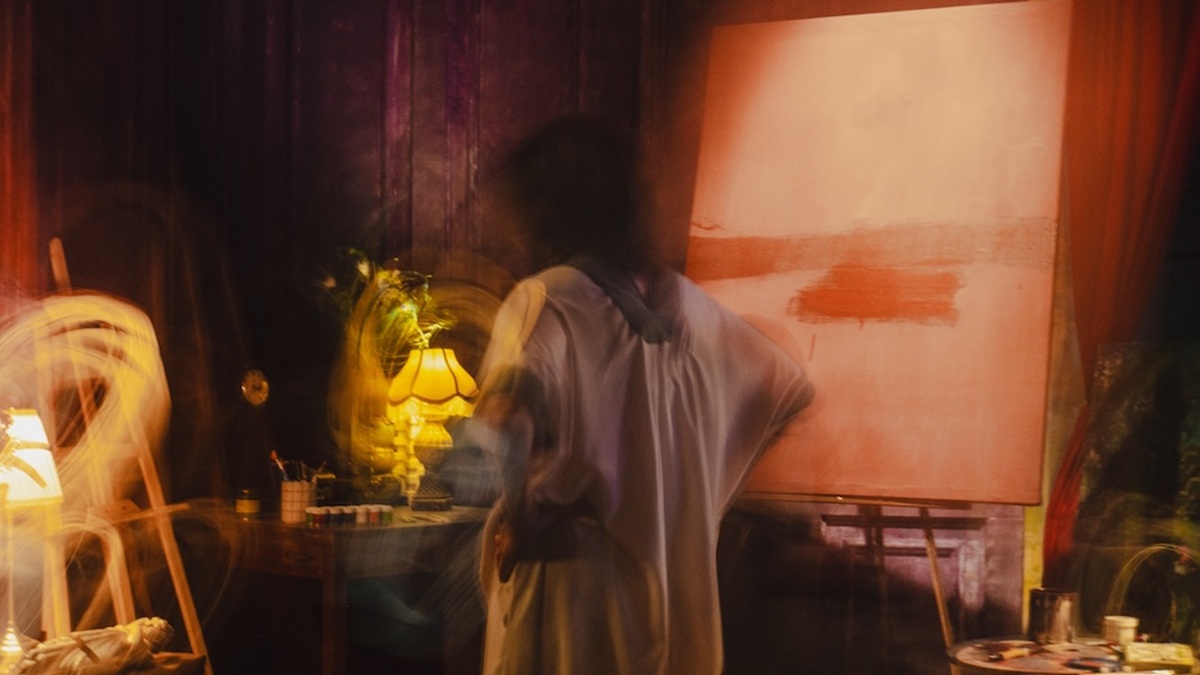
This family seems to eat unresolved traumas and secrets for breakfast, lunch, and dinner.
It takes Giancarlo Abrahan’s “Mag-iina” (Lit. The Mothering) nearly half an hour to put its title onscreen. By then, Anj Abreu (Janine Gutierrez) has already returned from New York to the ancestral home she left years ago, just days before the 40th day after her estranged father’s death. Her mother Mita (Agot Isidro) is coming apart in grief. Her aunt Ysobel (Cherry Pie Picache) appears considerably steadier, at least at first. Their 90-year-old matriarch Angela (Jackie Lou Blanco), a celebrated National Artist, has retreated into painting, old age, and a temperament sharp enough to wound anyone nearby. There’s also Katte (Ness Roque), the housemaid who has spent enough time around these people to know where not to look, and young Yñigo (Lucas Andalio), whose very name hints at how badly the Abreus handle letting go.
By the time the title finally appears, the house has already begun working on us. Abrahan and screenwriter Guelan Varela-Luarca adapted the latter’s award-winning play “Corridors,” though the film doesn’t simply transplant theatrical blocking into an ancestral home. Varela-Luarca rewrote the screenplay around the location once they found it, while Abrahan treated its rooms almost as separate psychological territories.
Anj moves through corridors and bedrooms that should carry familiarity but instead make her uneasy. Dreams send her looking for her father from room to room. Certain spaces seem to hold themselves back from her. Doors open onto conversations she wasn’t meant to hear, and every flight of stairs appears to lead toward another layer of history somebody would rather leave untouched.
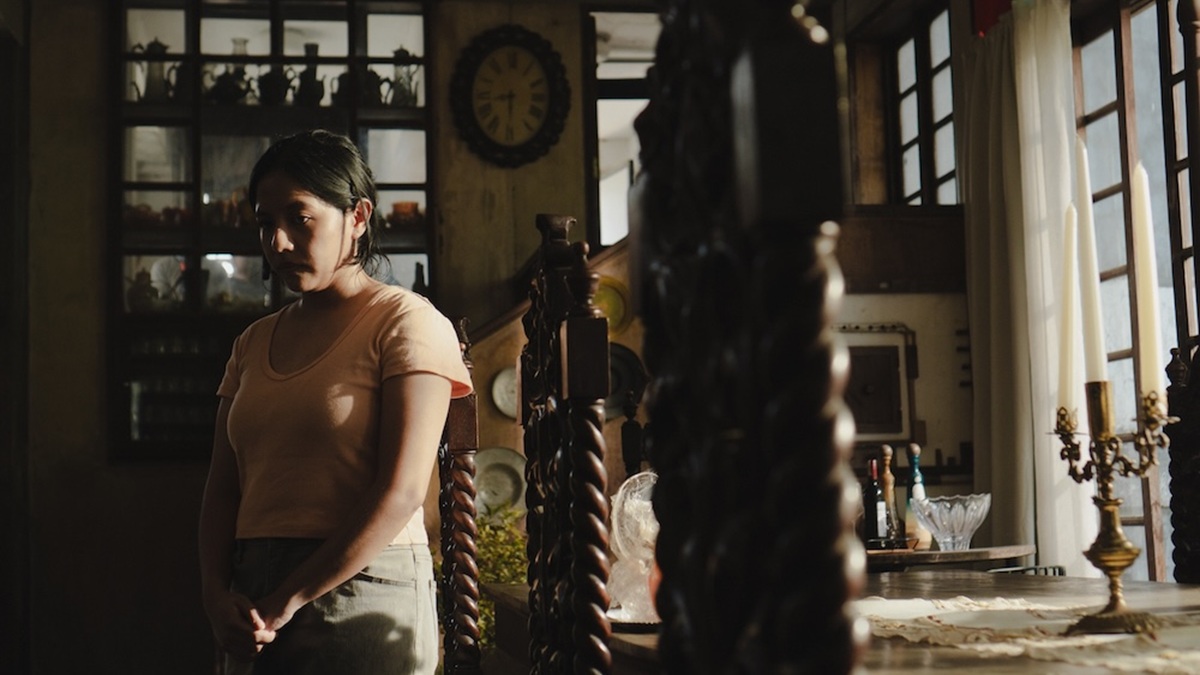
Outside, the ancestral home looks as though time has been slowly eating it. Its facade is weathered, nearly derelict, particularly when being compared to its surroundings. Step inside, however, and the Abreus remain encased in the evidence of old money and cultural prestige: paintings, furniture, inherited objects, and rooms large enough to preserve lives long after the people who occupied them should have moved on.
The building is decaying. What it contains is another matter.
More Cinemalaya 2026: ‘Only Known to Us’, and the Things Love Asks Us to Keep
Every Room Keeps Something Rotten
Angela eventually remarks that “all families are graveyards of sins.” Elsewhere comes an equally revealing declaration: “In this house, everything is forgiven.”
Put those thoughts together and you begin to understand how the Abreus have survived one another.
Forgiveness here rarely means repair. More often, it allows whatever happened yesterday to remain untouched long enough to poison tomorrow. Love gets confused with ownership. Loyalty requires silence. Grief grants people permission to trespass where they shouldn’t. By the time “Mag-iina” begins showing its more grotesque side, the horror doesn’t feel like something newly arriving at the house. It feels native to the place.
There’s a class reading built into the Abreus as well. They’re old money, socially prominent, and tied to Philippine arts and culture through Angela’s stature (Mita’s frustration with a missing keepsake featuring memories with the Marcoses should clue one in); and yet all that prestige sits above a private history nobody wants examined too closely. The surname endures, as do the paintings. The property remains standing. Human damage is treated as the expendable part of the legacy.
The fact that this household is dominated almost entirely by women makes the setup even richer. The adult man around whom so much resentment, desire, and grief circulates is already dead, yet he continues shaping the lives of those left behind.
Philippine culture has a particular reverence for maternal authority: the mother or grandmother who remembers everything, feeds everyone, settles disputes, sacrifices without complaint, and somehow holds the clan together. “Mag-iina” looks at the darker possibilities hiding inside that ideal. Care can slide into control. Protection can resemble abandonment from the child’s side. Women who endure violence aren’t automatically prevented from passing another form of it onward.
The title carries several variations of mothering at once: biological, surrogate, failed, smothering, protective, possessive. Varela-Luarca and Abrahan keep pulling those meanings apart, then knotting them together again.
Motherhood as an Instrument of Control
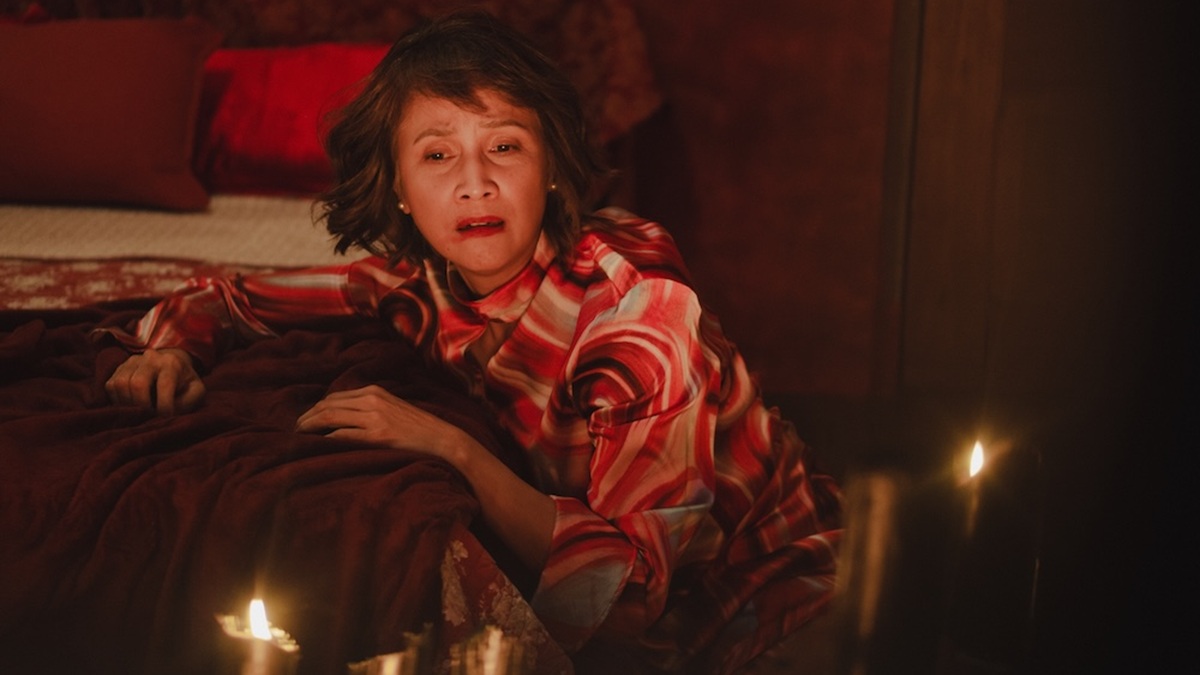
Mita initially appears to be the household’s most obvious casualty. Isidro plays her grief with an increasingly frantic edge as she obsesses over why her late husband seems to make his presence felt everywhere except with her. Yet as Anj begins piecing together what happened before she was sent abroad, the decision she spent years reading as rejection acquires another possible meaning. Mita may have been trying, however clumsily and painfully, to place her daughter beyond the reach of this house.
The film wisely doesn’t turn that possibility into instant reconciliation. After all, decades of hurt won’t disappear because a motive suddenly looks kinder.
Giancarlo Abrahan and Guelan Varela-Luarca send grief, abuse, class, and body horror running through a family home that looks close to collapse but refuses to die.
Ysobel, meanwhile, carries a quieter menace. Picache plays her with such measured composure that the ugliness underneath lands harder once it begins showing itself. Her treatment of Katte brings the household’s class hierarchy into the horror. This family doesn’t merely inherit art, property, and reputation; it relies on someone farther down the ladder to cook, scrub, wash, clean, absorb humiliation, and remain accessible to people accustomed to taking more than labor from those who serve them.
Katte, thankfully, isn’t written as helpless furniture. Roque gives her a slyness and growing impatience that keep shifting our sense of who actually holds knowledge inside the house. Even some of the movie’s strangest domestic rituals carry a hint of rebellion. Even so, awareness doesn’t equal freedom, especially when one person can walk away from an ugly situation and another has to calculate whether she can afford to.
More Cinemalaya 2026: ‘A.ni.mál’ Makes Political Animals Look Pathetic
The House Knows Before Anj Does
That imbalance is one reason the ancestral home functions as more than handsome gothic production design. Katrish Aristoki’s spaces and Joy A. Aquino’s cinematography give each room its own temperature, while Mikko Quizon’s sound design may be the film’s most consistently impressive technical achievement.
Food lands heavily in the ear. Furniture groans. Floorboards announce weight. Footsteps travel ahead of whoever is coming. The staircase carries movement through the structure long before a person enters the frame. Abrahan often allows those ordinary noises to supply the unease rather than constantly leaning on music or conventional horror punctuation.
Sometimes the house seems to be listening back.
That sonic precision is just ear candy to me, and it helps “Mag-iina” sustain paranoia between its more flamboyant passages. Varela-Luarca has explored enclosed dread before: the earlier screenplay of his I knew was “Lumang Tugtugin,” Pepe Diokno’s short, which similarly found menace inside an old home and the histories embedded there. Here, that instinct has room to sprawl.
How Far Can the Nightmare Stretch?
And sprawl it does.
Dreams gradually lose the courtesy of clearly announcing themselves. Memories leak into the present. Yñigo occasionally says things no child his age should know, with sudden changes in manner that make Anj wonder what, exactly, she has returned to. Bodies acquire symbolic meanings that grow stranger as the film advances. Images of motherhood begin mingling nourishment with injury, tenderness with violation, birth with something closer to possession.
That’s where my “Get Out“-meets-Cronenberg shorthand came from—not because “Mag-iina” particularly resembles either film in plot or tone, but because it shares their fascination with the body as territory. Who gets to claim it? How much of a person belongs to family? Can leaving a home actually sever what was handed down there?
Jackie Lou Blanco gets some of the wildest material. Angela is imperious, vulgar, funny, frightening, and intentionally camp, often within the span of one conversation. Blanco relishes her theatricality, especially whenever Angela talks as though age, artistic stature, and family rank have exempted her from ordinary rules. A dinner-table monologue full of Spanish hauteur and profanity is among the movie’s most memorable displays of bad behavior.
The prosthetic work, however, is less persuasive for me. Abrahan eventually asks it to carry imagery that should feel biologically upsetting, and I was sometimes too aware of the construction itself. The ideas behind those images are nastier than their physical realization. Nonetheless, one recurring piece of body horror linking motherhood, feeding, pain, and bodily autonomy is difficult to shake even when the illusion doesn’t entirely convince.
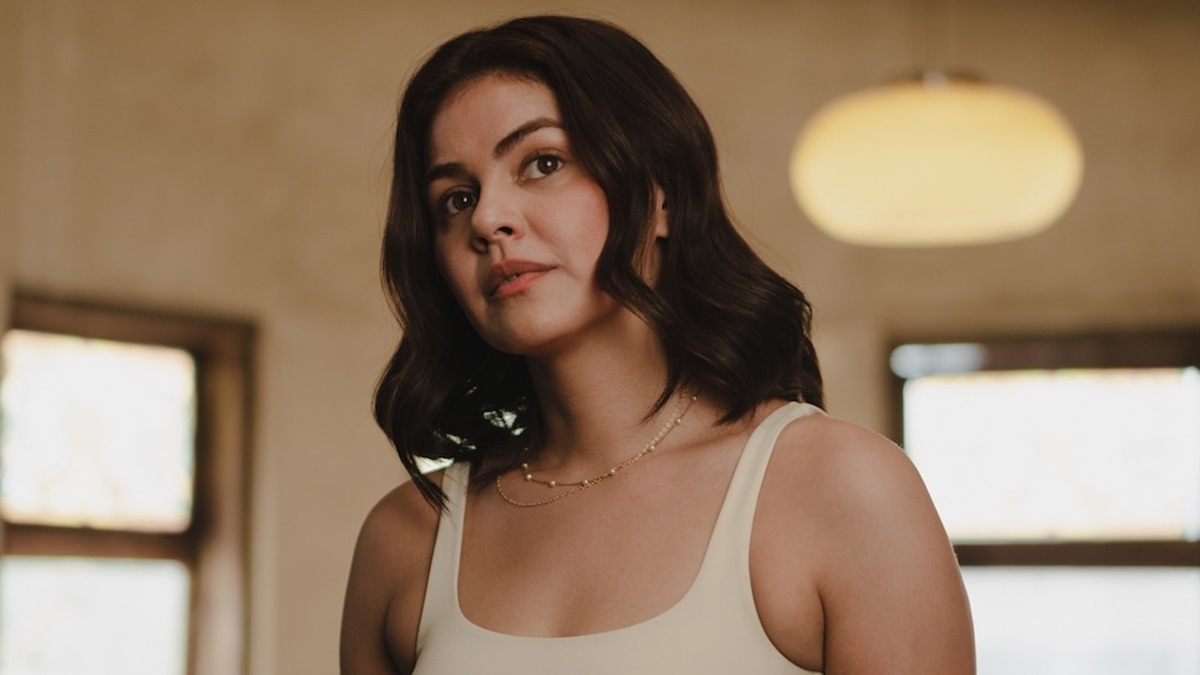
Gutierrez has the trickier assignment of keeping Anj grounded while nearly everyone around her drifts farther into the bizarre. She’s particularly good at the irritation of somebody returning to a family whose behavior begins reminding her, almost immediately, why distance once felt necessary. Her skepticism becomes our foothold without reducing her to the rational character standing outside the madness.
Picache may be scarier because Ysobel rarely needs a visible transformation. She plays intimacy itself as something potentially predatory, allowing warmth and coercion to sit uncomfortably close together. Isidro, meanwhile, commits to Mita’s volatility without protecting the character from looking ridiculous or desperate. Her grief gets messy, sometimes almost operatic, but the house provides enough pressure that the excess rarely comes from nowhere.
Lucas Andalio holds his own among veteran actors while being asked to handle material that would be difficult for a performer twice his age. And honestly, his stranger moments don’t always land. When Yñigo drops into a noticeably deeper vocal register, I can sometimes hear the technique before I feel the unease it’s meant to create. Even so, Andalio remains impressively game, and the roughness in those passages doesn’t outweigh how naturally he moves through the film’s increasingly warped reality.
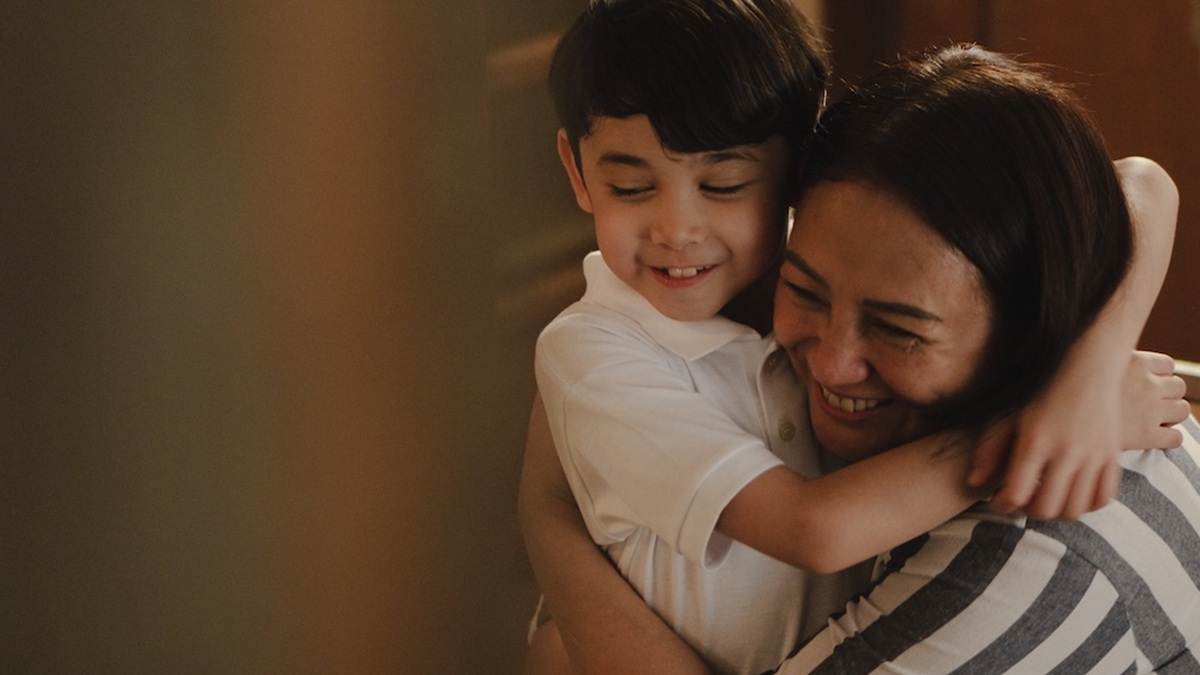
‘The Mothering’: Controlled Chaos, But Chaos Nonetheless
That unevenness points toward my larger reservation. “Mag-iina” is controlled chaos, though on occasion the filmmakers seem to discover the boundary between the two only after crossing it. Some sequences are exhilarating precisely because Abrahan follows Varela-Luarca’s nastiest impulses instead of tidying them into tasteful prestige horror. Others left me wondering which nightmare, joke, family secret, symbolic image, or emotional confrontation was meant to dominate the scene. The confusion is clearly part of Anj’s experience, and a maze shouldn’t suddenly acquire neat signposts simply because an audience wants them.
Still, deliberate disorientation doesn’t automatically excuse every baffling choice.
What impressed me, however, is how frequently Abrahan recovers just before the picture threatens to fly apart. The final stretch piles family history, grief, sexual menace, ritual, class resentment, supernatural horror, and grotesque maternal imagery into the same pressure cooker. More than once, I thought it had finally become too much. Then the pieces would briefly click into a new configuration and the madness would acquire shape again.
That push and pull probably explains why I’m more forgiving of “Mag-iina’s” excesses than its messiest passages might warrant. A cleaner version could easily be duller. These are people who have spent generations hiding private ugliness beneath old money, artistic prestige, family loyalty, and a doctrine of forgiveness that asks almost nothing of the person being forgiven. Making their story elegant would be suspicious.
By the end, “The Mothering” has turned its title into something much darker than caregiving. Anj came home believing distance had already separated her from whatever happened inside these walls. Abrahan and Varela-Luarca are more interested in the possibility that certain family legacies don’t respect geography, estrangement, or even death.
The Abreu house might already be falling apart, but its talent for keeping the family inside it alive is considerably harder to kill.

“The Mothering” (“Mag-iina”) currently screens at the 22nd Cinemalaya Independent Film Festival. The festival runs from August 6 to 18, 2026. Follow us for more coverage.

