


“Only Once” is a powerful indie short we reviewed earlier this week, dealing with themes of trauma, neglect, and giving a voice to the voiceless. Hamza Kaye directs the film and adds an urgency to it that defies its short, 8-minute run-time. It also features good acting from all involved, from Killian A. Robbins, who plays a young, victimized boy, to Jason Stoops, who takes on the role of an abusive figure with a pained dedication.
Kaye’s film has much to say — namely that abuse is not okay, and the film serves as a beacon to victims that they are not alone.
At The Movie Buff, we were lucky enough to sit down and talk with Kaye about his film. In the following interview, we discuss the film’s difficult themes, its production, Kaye’s inspiration, and more. Follow us after the interview for ways to follow this young filmmaker and where you can watch the film. (Note: this interview has been edited for clarity).
Mark Ziobro for The Movie Buff: Thank you for joining us! Can you introduce yourself for our readers?
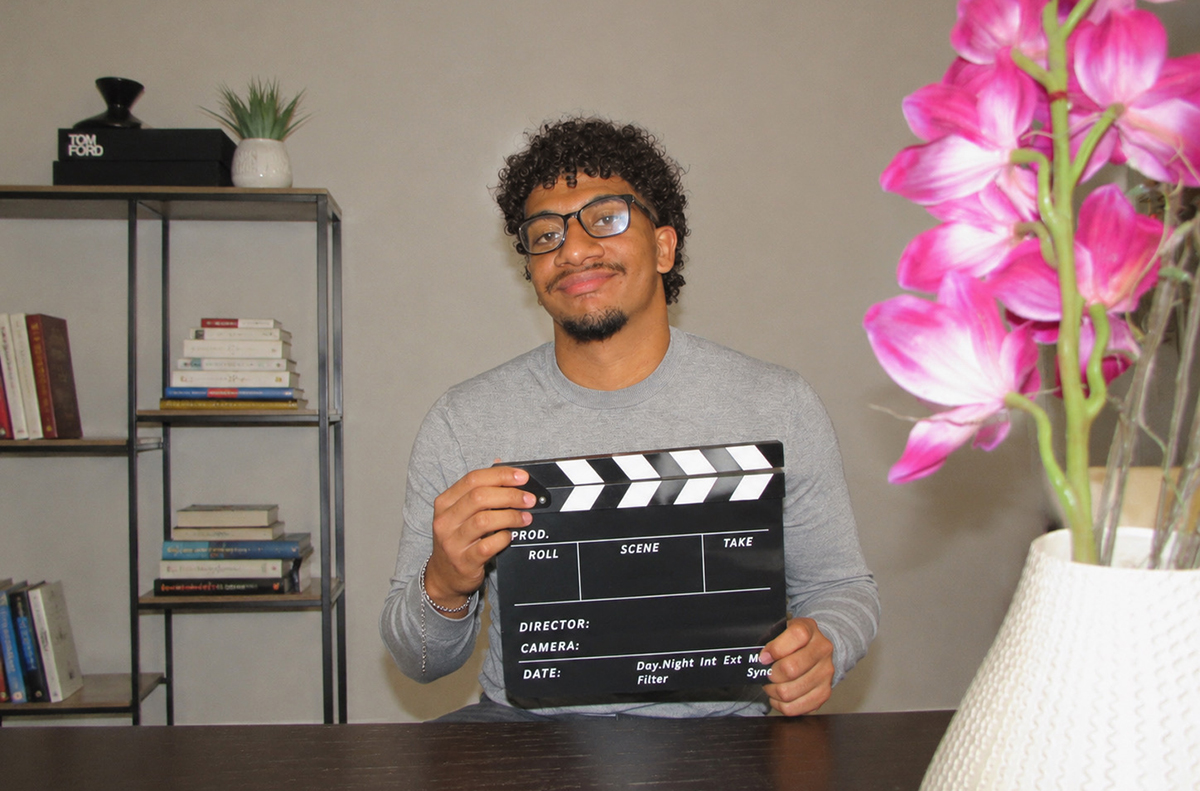
Hamza Kaye: Thank you for having me and for taking the time to watch my work. I really appreciate it. My name is Hamza Kaye. I’m a 19 year-old filmmaker from the suburbs of Illinois, and I’m about to enter my sophomore year of college. I’m actually not in film school, but filmmaking has become the main way I express myself creatively. I think every artist finds some kind of outlet for processing the things they experience, observe, or think about, and film just happened to become that for me. A lot of what I make starts with something I’m trying to understand emotionally, and then I figure out how to turn that feeling into a story.
MZ: Can you tell us a bit about your film?
HK: “Only Once” is definitely a darker film, which is always kind of interesting to me because people who know me personally usually know me as a pretty happy and humorous person. But the story itself is very personal to me in certain ways. At its core, I was interested in memory, specifically how experiences from childhood can stay with us long after we’ve grown up, even when those memories become fragmented or distorted over time. The film follows Damien (Killian A. Robbins) and explores the lasting psychological weight of something that happened to him when he was younger.
Abuse is obviously an extremely disturbing subject, and I wanted to approach it carefully“
Hamza Kaye
I wasn’t necessarily trying to give the audience a straightforward answer about trauma or memory. I was more interested in capturing the feeling of carrying something with you and not always knowing exactly how to process it. The earliest version of the idea actually came to me when I was a freshman in high school. I wrote a little bit of it and then basically abandoned it because I knew I wasn’t ready to make it. Years later, after my senior prom, I remember deciding that once I graduated I was finally going to try to make “Only Once.” That became my main goal that summer.
MZ: What were your inspirations for making this film? How did you come up with the concept?
HK: A lot of my ideas come from just writing and seeing where my mind takes me rather than beginning with a perfectly mapped-out concept.
With “Only Once,” I kept coming back to how strange childhood memory can be. When you think back on certain things from when you were young, you don’t always remember them like a clean sequence of events. Sometimes you remember a room, a face, a sound, or one very specific feeling. Everything else around it can almost feel blurry.
Abuse is obviously an extremely disturbing subject, and I wanted to approach it carefully and the more restraint I had, the better. [I didn’t want to use it] simply for shock value. What interested me was what happens afterward how something from childhood can continue affecting someone years later, even if they have tried to bury it or move on. Because the film is only around seven or eight minutes, I knew I had very little time to create that emotional weight. A big part of the challenge was figuring out how to communicate those feelings visually without overexplaining them.
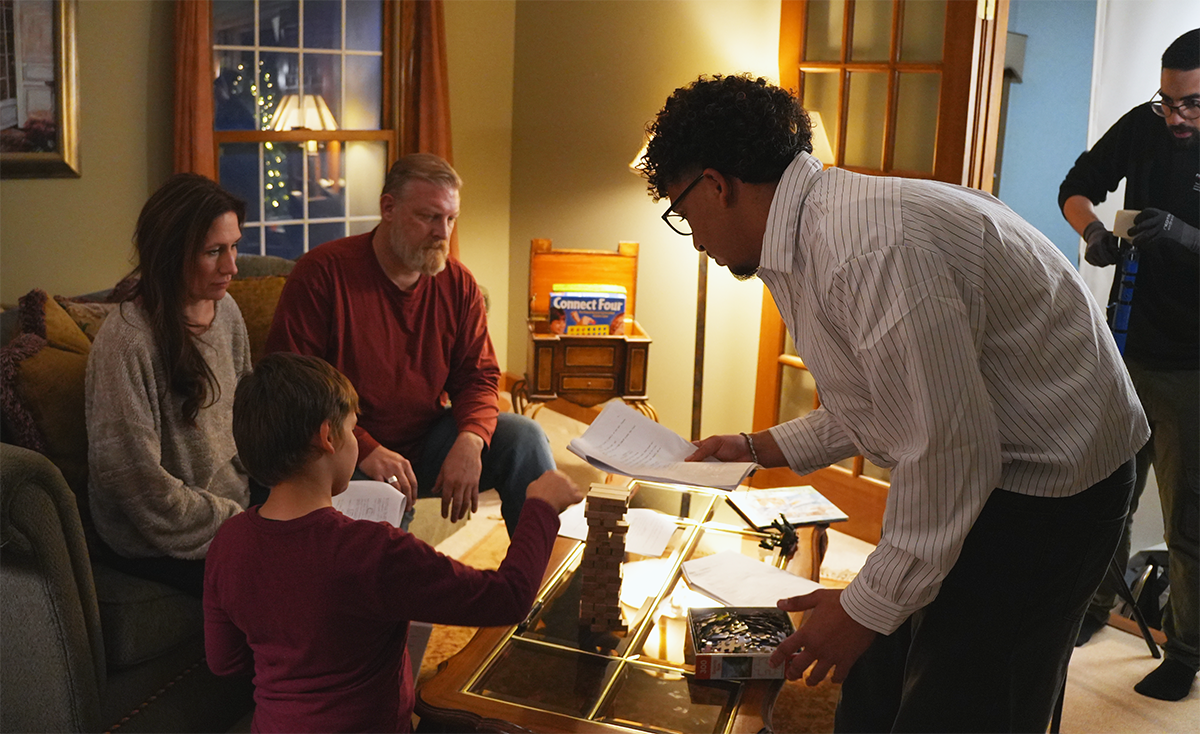
MZ: I noticed a good deal of symbolism in this film, such as the abuser being really tall and of course the Jenga game. Was this a conscious choice by you?
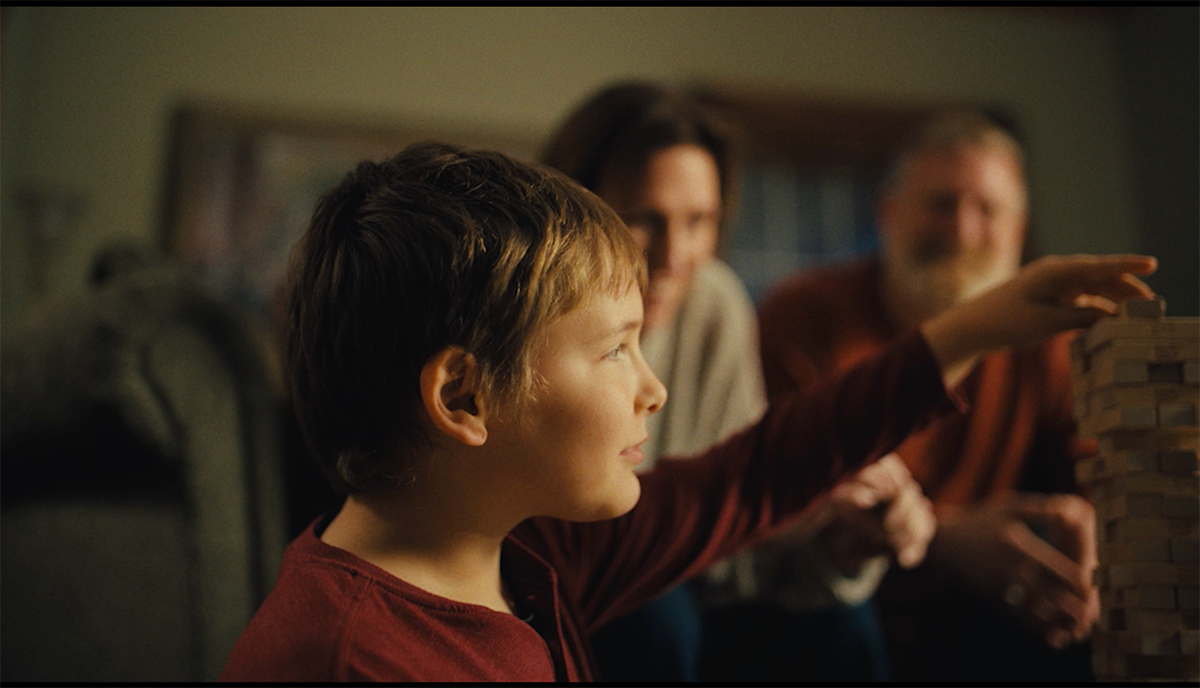
HK: Definitely. A lot of the physical contrast between Damien and the abuser was intentional. Killian is obviously much smaller than Jason Stoops, and once I realized how strong that difference looked visually, I leaned into it. There are POV shots and certain compositions where I wanted the audience to physically feel that kind of imbalance in size and power.
The childhood games were also very intentional. Something like ‘Simon Says’ is normally innocent and playful it’s something almost everyone associates with being a kid. I liked the discomfort that came from taking something so familiar and harmless and slowly transforming it into something threatening. That contrast was really interesting to me taking something associated with childhood innocence and allowing the meaning of it to change completely depending on who has control.
MZ: How did you come to work with the actors in your film, especially Killian A. Robbins, who plays the young boy?
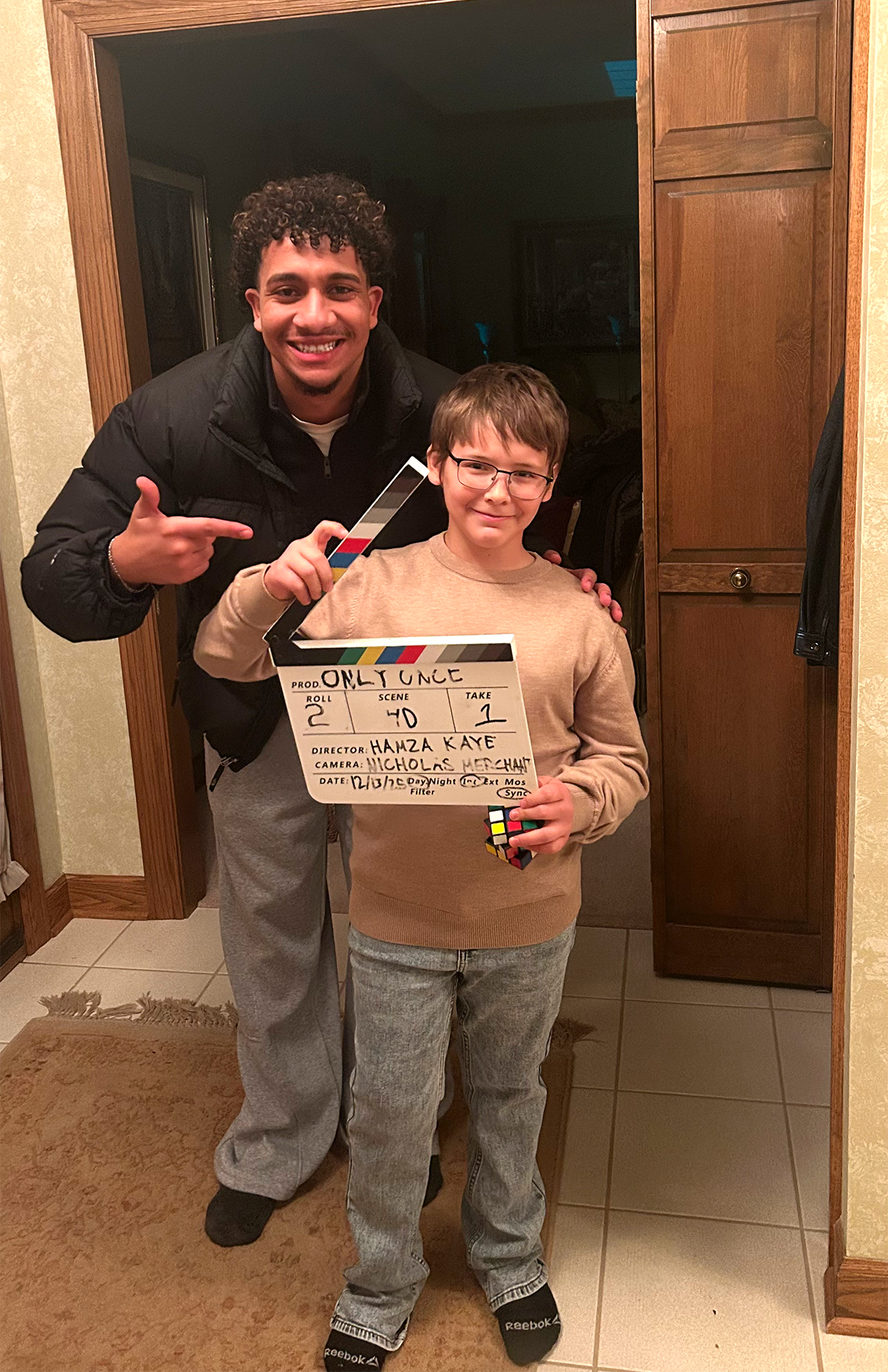
HK: Casting Killian required a lot of care because of the subject matter. I spoke with multiple young actors and parents, and one of my biggest priorities was making sure both the child and the parent completely understood the film and felt comfortable with it.
With Killian and his mother, Megan Chamberlin, we had several conversations beforehand. She read the material, understood what I was trying to do with the story, and was able to have those conversations with Killian in the way she felt was appropriate as his parent.
When I talked with Killian, there was something about his demeanor that immediately interested me. He has this maturity to him almost an old soul quality while still obviously being a kid. Damien is quiet and observant. He seems to understand more than he necessarily says out loud, and I felt like Killian naturally carried some of that quality.
For the rest of the cast, I held auditions and had conversations with everyone about the material. I wanted people who weren’t just right physically, but who actually connected with what the film was trying to do. Looking back, I’m really happy with the cast we ended up with.
MZ: How was it working with Jason Stoops? Was it hard for him playing such a vile character?
HK: Jason was great to work with because he approached the role with a lot of openness and was very conscious of making sure everyone around him was comfortable.
I saw the ending less as a completely literal statement and more as an emotional or psychological one.“
Hamza Kaye
He was newer to acting, but he took direction extremely well and also brought ideas of his own. In the ‘Simon Says’ sequence, for example, we experimented with the way his voice changed as the scene progressed. Instead of beginning as obviously sinister, we played with allowing his tone to gradually become darker with each command.
Because the character is so disturbing, I think it was important not to approach him like a cartoon villain. We worked through different takes, different levels of eye contact, different deliveries, and occasionally some improvisation so I could see what felt most unsettling without becoming exaggerated.
I’ll admit there was also an interesting challenge for me personally. I was 18 directing both a child actor in very heavy material and an actor significantly older than me. There were moments where I was aware of that dynamic, but once we started working, everybody was extremely collaborative and respectful.
MZ: Can you talk about the ending while avoiding spoilers? Were you trying to circumvent the helpless victim motif or trying to make another point?
HK: I don’t really believe every element of a film needs to have one straightforward interpretation, especially with an ending.
Without spoiling anything, I saw the ending less as a completely literal statement and more as an emotional or psychological one. There’s something in it about wanting to destroy a memory, of wanting to remove something from yourself that has followed you for years.
At the same time, I understood that audiences would naturally be rooting for Damien after what they’ve seen him experience, so there is a certain satisfaction people have told me they feel at the end. I don’t think those two interpretations necessarily contradict each other.
I like leaving some space for the audience. If someone finishes one of my films and continues thinking about what something meant afterward, I’m happy. I’d rather leave somebody with a question or an image they remember than have them simply say, “That was good,” and immediately forget about it.
MZ: What do you hope audiences will take away from watching this film?
HK: More than anything, I hope the film encourages empathy. You never completely know what another person is carrying or what experiences have shaped the way they behave. People can appear completely normal from the outside while dealing with memories or emotions that nobody around them knows about.
I also hope the film gives people some space to think about their own relationship with memory how we remember difficult experiences, how those experiences change over time, and what it means to actually move forward from something rather than simply trying to erase it.
It’s an uncomfortable film in certain moments, but I don’t necessarily think discomfort is a bad thing. Sometimes being willing to sit with an uncomfortable feeling can make us think about something more honestly.
MZ: How has the reception for the film been so far? Is it being shown at any festivals in the future?
HK: The reception has been really encouraging so far. I’ve actually been pretty organic with the way I’ve released and promoted it. I haven’t done a massive marketing push yet. I wanted to let the film find people gradually and see how audiences responded to it naturally.
“Only Once” is my first real short film, the first one where I felt like I was beginning to understand what kind of filmmaker I might want to become.“
Hamza Kaye
It’s received recognition from a few festivals, including local festivals as well as ‘Dances With Films,’ which has been really exciting. I’m also currently in conversations regarding some additional screenings, including potential opportunities in New York and Texas.
More than anything, it’s been rewarding hearing directly from people who connected emotionally with the film that are reaching out to me. That’s ultimately the response I care about most.
MZ: What is next for “Only Once?” And do you have any other projects you’re working on?
HK: I definitely still want to continue giving “Only Once” opportunities to find an audience and see where the festival side of things goes, but I also don’t want to live on one project for too long.
In a lot of ways, I consider “Only Once” my first real short film, at least the first one where I felt like I was beginning to understand what kind of filmmaker I might want to become.
Right now I’m already in pre-production on my next short film, “Faces.” It’s a psychological drama and very different from “Only Once,” but it continues some of my interest in memory, identity, and the things people carry internally.
Every film teaches me something, so I’m mostly excited to take everything I learned making “Only Once” and apply it to the next one.
MZ: Can you share where our readers can follow your work?
HK: Absolutely. You can find my films on YouTube under Hamza Kaye, and I’m also on Instagram at @hamzakaye4. Whenever I complete a new short, I plan to continue sharing my work there.
And again, thank you for taking the time to watch “Only Once” and for giving me the opportunity to talk about it. It genuinely means a lot to me.

