



I didn’t expect my first question for Quinta Brunson to lead her back to her own school days. During our brief virtual conversation, I asked the creator and star of “Abbott Elementary” which of the show’s teachers she would’ve liked to have had as a student. She chose Jacob Hill (Chris Perfetti), the well-meaning, occasionally overenthusiastic history teacher whose earnestness can sometimes get on his colleagues’ nerves. Brunson explained that she’d always enjoyed history growing up, and recalled having a teacher who regularly found creative ways to make the subject interesting to students who might otherwise have found it boring.
Then she made a connection she apparently hadn’t considered before. “I think that Jacob’s character is actually inspired a lot by that teacher,” she told me. It was a lovely little discovery, especially coming from someone who has spent six seasons writing and developing these characters.
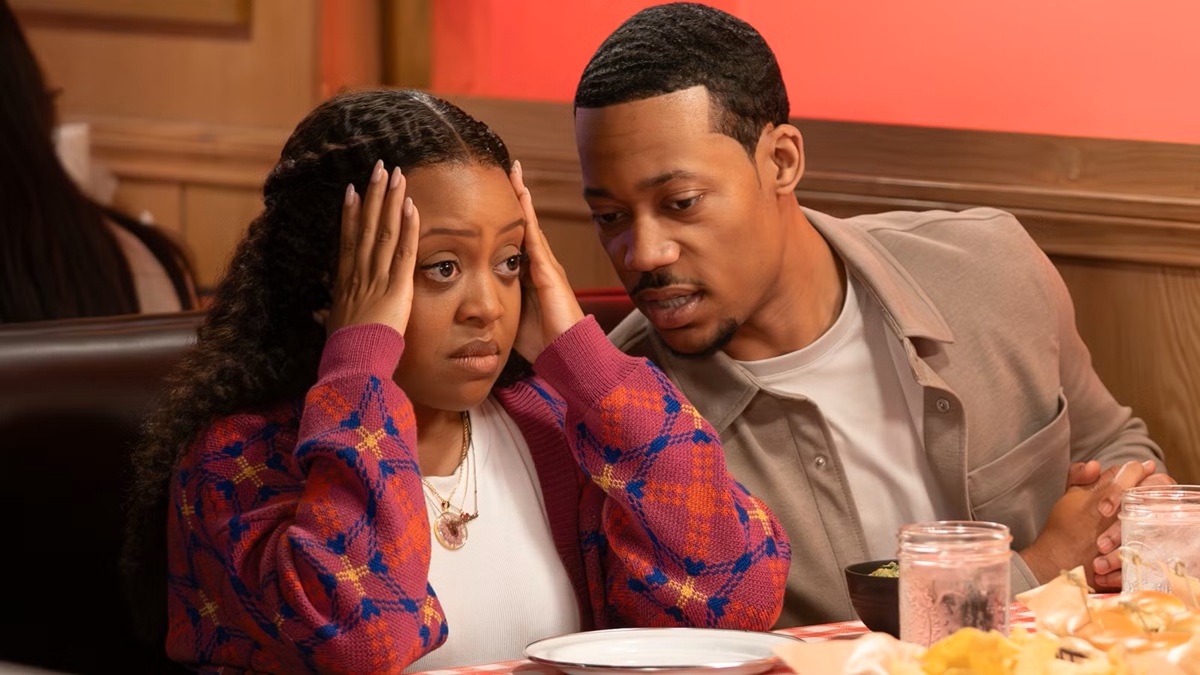
For the uninitiated, “Abbott Elementary” is ABC’s award-winning mockumentary sitcom about a group of teachers working at an underfunded public elementary school in Philadelphia. Brunson plays Janine Teagues, an endlessly optimistic second-grade teacher whose determination to make a difference often runs up against the realities of an overstretched educational system. Alongside a colorful ensemble of fellow teachers, an unpredictable principal, and a custodian who occasionally seems to operate in his own universe, Janine deals with the everyday challenges of teaching children while figuring out a few things about adulthood herself. The show has found considerable success in making audiences laugh about situations that, outside the confines of a sitcom, aren’t always particularly funny.
Now in its sixth season, “Abbott Elementary” faces another challenge: keeping its characters interesting after viewers have spent years getting to know them. In a September interview with Entertainment Weekly, Brunson described Season 5 as something of a “filler season,” acknowledging that although the writers had produced good work, the storytelling occasionally lacked direction. She wanted Season 6 to be more purposeful, with clearer ideas about where the characters should be heading.
Naturally, I wanted to ask her about that. Our conversation touched on the balancing act of allowing sitcom characters to grow without losing the qualities that made audiences love them in the first place, the considerations involved in finding humor in the very real problems facing public education, and whether the show’s mockumentary format has ever restricted what she can do as a storyteller. As it turns out, Brunson has plenty to say about the possibilities and occasional limitations of having a documentary camera follow her characters around.
Before wrapping up, I returned to something a little less serious and asked which other “Abbott Elementary” character she’d like to play for just one episode. Her answer came with an impromptu impression, something I certainly hadn’t anticipated when I posed the question.
This interview has been edited for brevity and clarity.
Paul Emmanuel Enicola for The Movie Buff: I’d like to start with a fun one. If you had been a student at Abbott Elementary, which of the teachers do you think would have been your favorite and why?
Quinta Brunson: If I had been a student at Abbott — I think that Jacob would have been my favorite. I really enjoyed history. And honestly, I had a history teacher in school named Mr. Ruth that was very much like Jacob, always finding creative ways to teach something that was so boring to most kids. And when I think about it, I’ve never really thought about it. I think that Jacob’s character is actually inspired a lot by that teacher.
You’ve talked about wanting Season 6 to have a stronger sense of direction. Six seasons into a sitcom, how do you balance letting your characters grow and change while at the same time preserving the familiar dynamics that audiences have come to love?
You know, that’s the thing: you just kind of do it. You pick and choose when this character is going to be the good old character you’ve always known this episode and then when they’re going to be forced to grow up a little bit.
What’s interesting with sitcoms is — and I guess most television shows, but more so sitcoms because the comedy comes from their quirks and stuff — you don’t want them to grow too much to an unrecognizable person. You kind of want them to be able to count on some of the things they saw in the pilot. All the way up until the last episode of the show, you want to be able to be like, “And that’s the Joey from ‘Friends’ I know.” But you don’t want to sacrifice having a character grow because that’s also a part of the entertainment.
So it is not an easy balance to strike, actually, and I think I find myself thinking about that more than anything in the room: how to maintain these characteristics and quirks, but still grow them all a little bit.
“Abbott Elementary” manages to find humor in a public school system that faces some very real problems. As a writer, how do you decide which issues can be explored through comedy and which ones require a more serious approach?
You know, I think it’s a really simple thing. We’ll talk in the writers’ room about different issues. And the truth of the matter is, if none of us are laughing, then it’s not funny and that’s just that. And we’re not even going to try to make it funny, because if it’s just not funny, it’s just not. If we’re all going, “Oh man, that’s fucked up,” that’s not something we really need to talk about here.
But for instance, this season, you know, we’ve got a whole story based on the fact that kids can’t read anymore. And I think us saying it out loud was like, kind of funny, but it’s not. [laughs] It’s like, this isn’t funny, but the mere thought of a teacher saying that made us laugh, you know? And so it’s like, “Oh, well, we should go down that path.”
If there is some humor to be mined out of it while we can also talk about what it takes to fix the issue, or how these teachers are going to fix the issue, then it’s worth going down that road.
One thing I’ve always enjoyed about ‘Abbott’ is the mockumentary format. Six seasons in, does having that documentary camera present ever limit what you can do with a scene? Or has it actually made you more inventive as a storyteller?
It’s made us more inventive. It’s so interesting, it’s almost never limiting. If anything, sometimes we’ll forget we have it as a vehicle. And we’ll go, oh, yeah, we can do a talking head here. We can get directly into what Janine is thinking or what Melissa is thinking or what Gregory is thinking. Like, we’ll forget about it and just write the entire episode without a talking head, a confessional camera in it sometimes.
The only time it’s limiting at all is, there are some things — if you consider this a documentary — that a documentary wouldn’t do. They wouldn’t come to a character for a confessional for no reason. You would need to go off of that character and you want to know what they’re thinking. [pauses] There’s a lot of questions you have to answer before you write a scene. Sometimes people are like, “Why are they at the houses?”
We kind of went with, “Well, at this point, these people are very familiar with this camera crew. This camera crew probably asked them, ‘Can I come to your house?’ and they’re like, ‘Yeah, you guys can come’.” You know, they know them at this point. But there are just certain things you can’t get away with. There’s probably not going to be a camera somewhere filming a scene where one of the characters isn’t, whereas in another show you can go anywhere.
I guess that’s a limiting thing, we can’t go anywhere that a character is not. If that makes sense.
If you could play one other character on Abbott for just one episode, who would you pick?
Oh. [laughs] So, everyone in the writers’ room really loves doing the Mr. Johnson voice. Whenever we’re reading our characters, like reading a script, we always just go into [William Stanford Davis]’s voice, which is like, [imitates Mr. Johnson’s raspy voice]. We all just put this rasp. So I would love to play Mr. Johnson for a day and actually use my raspy voice.
That’s a good answer. Thank you so much, Quinta, for your time and looking forward to your next projects.
Thank you so much.
More Interviews: Rebekka Karijord • Olivia Wilde • Devonté Hynes

