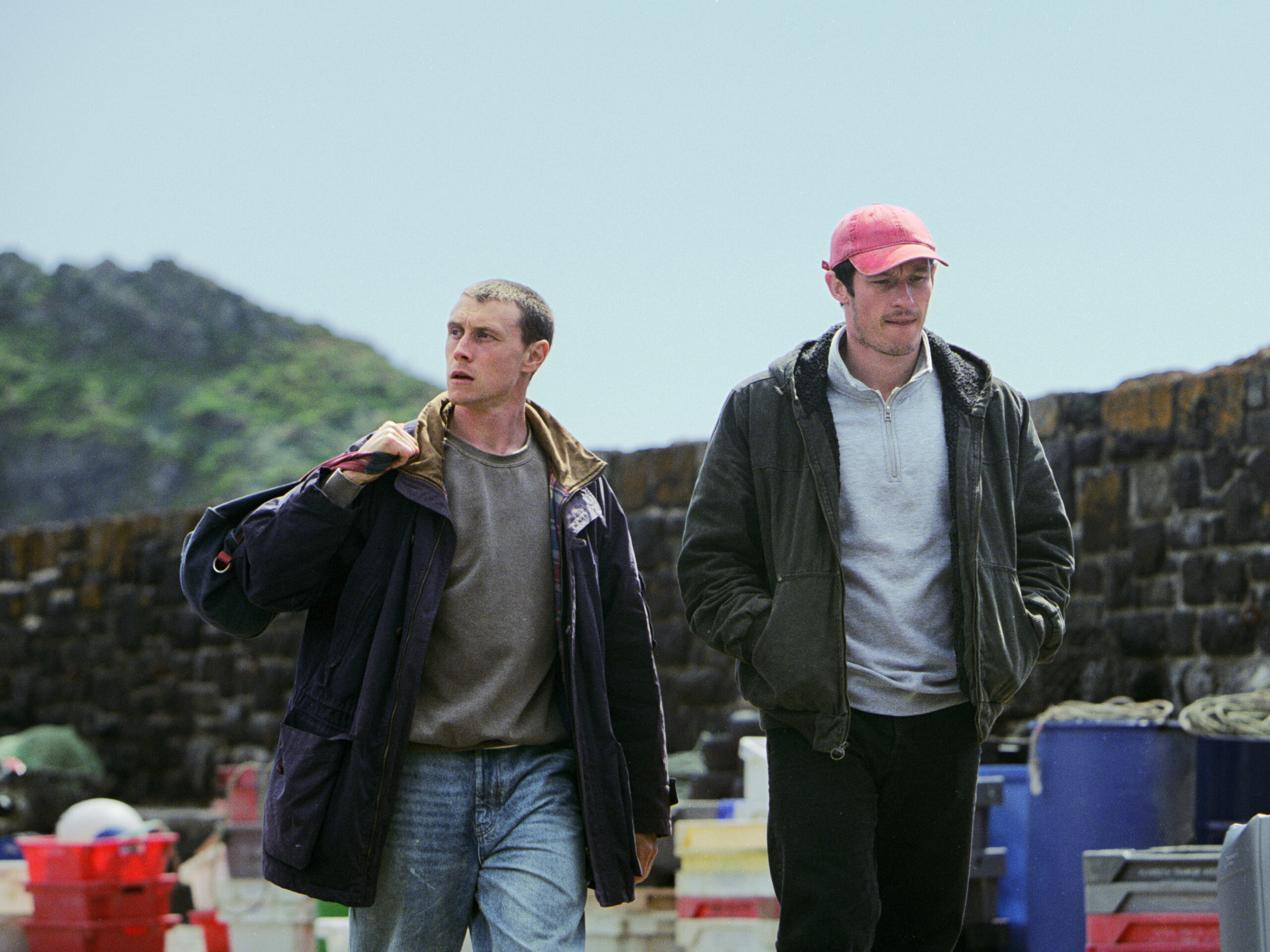
The films of Mark Jenkin are unlike anything you see in today’s cinematic landscape. His projects are hypnotic ventures into the unknown, where time and space dissolve into a brooding atmosphere—as if ghosts hover over every frame. The grainy 16mm film he utilizes and processes helps create the eerie nature of his work. In addition, his non-linear storytelling creates a uncanny valley sensation, where the fluidity of consciousness is lost, and all you have to grasp the film with is your senses, which are being tormented and put to the test. It isn’t easy to classify, but easy to perceive, as it takes over you.
In a cinematic landscape full of lazy storytellers, Jenkin stands out vastly due to his unconventional teaching methods and innovative direction. His latest work, “Rose of Nevada” (screening at the 2025 New York Film Festival in the Main Slate), continues his streak of films that feel entirely out of the norm. However, this time has well-known actors in the cast (Callum Turner and George MacKay), which might prompt the viewer to question if this will be a more “approachable” turn from the “Enys Men” director. But it isn’t at all. Jenkin provides us with a time-travel story that is not so much focused on the sci-fi narrative, but more on the aspect of time and how it affects a society, both psychologically and culturally.
A Cornish Village Plagued by a Damned Ship
The topic of sacrifice and the effects of modernity has been present in Jenkin’s cinema through folkloric elements that crash into the film like rampant waves onto a shore. The sea drags ghosts of the past into view: the maimed spirits of “Bait,” the miners of “Enys Men”—fleeting images that haunt the characters’ psyches. It is always a fleeting image that haunts the characters’ psyches. Its weight depends on the strength of its effect upon the villagers. A spectral energy comes from these images and landscapes tarnished by time. They become reminders of the upheavals and losses that make their way to the present–a time-traveling force, if you will, consuming the traditions and customs of a place.
In “Rose of Nevada,” that ghostly fleeting image is a ship, to which the film gets its name from. This boat went adrift some thirty years ago at sea, with a complete crew all going missing–never to be heard from again. The boat returned, but with no one on board. It cast a curse on the Cornish village, leaving them to a slow damnation, where its identity will be erased and so its progression. After all this time, a man decides that it is time to make the ship sail the seas again. Will it bring luck this time or further damnation? As jobs are scarce and money is tight, Liam (Turner) and Nick (MacKay) enlist to help out. And away they go, with the gods on their side.
A few days later, they return to their homeland, but something is not right. The small details reveal the truth. The local pub is full of people; he pier has fewer marks; the town is more lively. They appear to have traveled back in time to the point where the ship once disappeared. The two men now find themselves adrift in a place alien to them. Nick and Liam must adopt new identities that have already been assigned to them. There’s no other choice. While Liam, who didn’t have a wife and kids, now has a family to care for, Nick lost his—leaving the people he loved and adored. Melancholy rings highly now through “Rose of Nevada.” We saw the mourning for a past distant from the characters turn into a lamentation for the present.
The Ghosts of the Past and Present Come Together to Haunt the Sailors
It brutally comes at them. Imagine losing everything and your sense of the world due to an inexplicable event. How would you react? They share different experiences, loneliness, and a false vision of a prosperous life, both seen through the mirrorings of an unprecedented curse. It is a canvas curated and polished for ghostly presences to take over, both literal and metaphorical ones. Every single element in “Rose of Nevada” is contained within the presence of a previous occurrence, whether shown on-screen or not. You imagine the events and consider how they might have impacted that village. In thirty years, the world has undergone vast changes. And Jenkin demonstrates that by the vivacity, or lack thereof, that surrounds the setting.
The brilliant thing that Jenkin does is not to be overly nostalgic for the past, as it also has its own secrets and grievances. He wants to show us how modernization has affected places like Cornwall, where people live and bask in tradition. If he includes that abusive nostalgia, the film loses its purpose and identity. The film does falter in its pacing, opting for slow reflection with numerous pauses and silences intended to immerse us in this new view of the world, but it instead takes us out of it somewhat. Jenkin never explains the whys and hows of these time-travel occurrences. The audience is meant to make their own realizations. The ship seems to collect souls as sacrifice, with the sea returning the lost at its own whim.
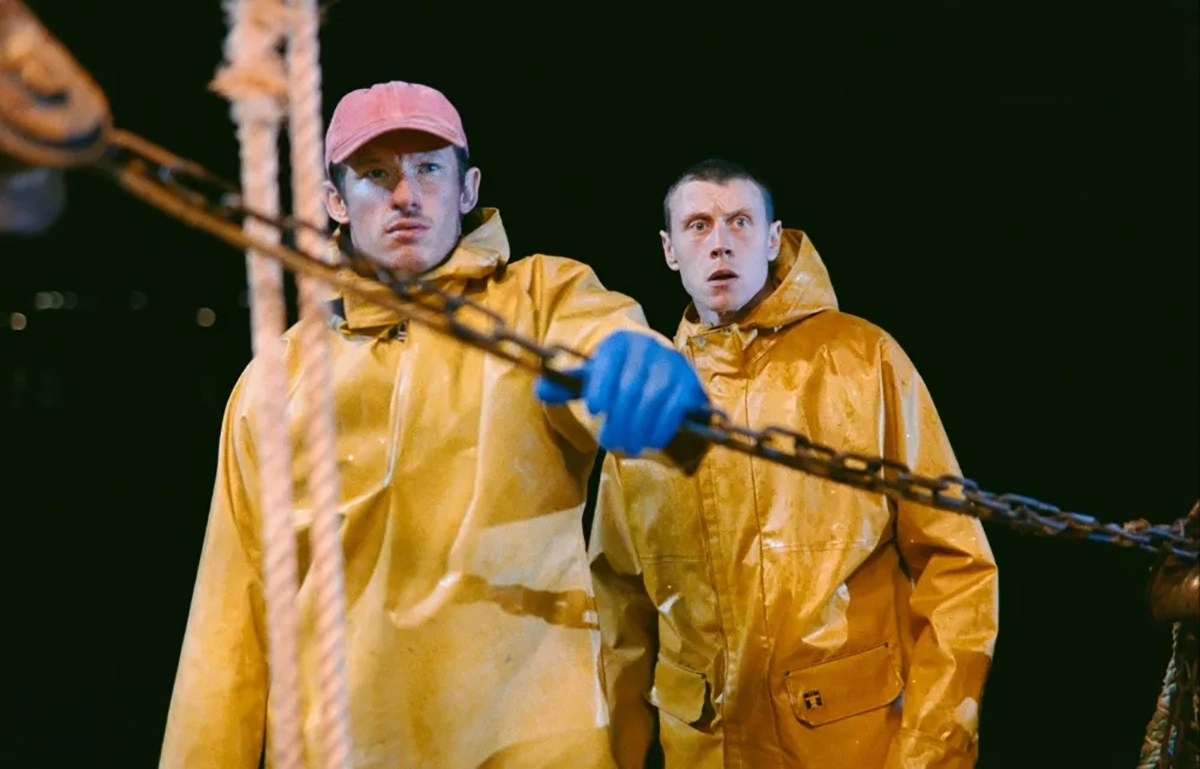
Those who want to sail the waters anew, considering the consequences, are met with a wounding loss that’s irreparable for the heart. No easy answers emerge from Jenkin’s metaphors. That is both a grace to the film, as it paves the way for numerous fascinating conversations, yet it lacks clarity. Regardless of this issue, the tale is so compelling and rich to the eye and mind. Whatever toils it might have narratively are easy to dismiss. Both MacKay and Turner help dive deep into the characters’ predicaments. The two offer layered performances that are among their most interesting work. MacKay has always had a keen eye for directors, always teaming up with very artistic and experimental voices (Bertrand Bonello, Joshua Oppenheimer), and he has a way of matching quite nicely with these artists.
Mark Jenkin’s Old Filmmaking Techniques Prove He is in a League of His Own
With Jenkin, I thought he wouldn’t because of the director’s way of shooting. However, the two work well together, and it brings out the best in them. Of course, the star of the show is Jenkin’s imagery, which confounds and compels to a mesmerizing degree. Shot with the camera as in his previous films, a clockwork Bolex H16, the images contain scratches, marks, and light flashes that seem trapped in the past, just like the characters. The aesthetic lends each scene an otherworldly force, conjured from the old traditions of moviemaking. They bring a texture that is both tactile and mysterious. Jenkin’s process for shooting ties also ties in with his thematic thread of the loss of tradition.
As studios turn to AI and abandon art films, the industry risks losing its classic touch. Directors like Jenkin keep cinema’s traditions alive. VistaVision is having a comeback via Brady Corbet’s “The Brutalist” and Paul Thomas Anderson’s “One Battle After Another.” Jenkin is single-handedly keeping methods that date back to the 1930s and 1940s alive, curating an array of projects that embrace the past while creating a new wave in the present. I do enjoy and admire “Bait” more because of its filmmaking process and aesthetic. Nevertheless, “Rose of Nevada” is no less an achievement than few directors can concoct easily. It once again proves that Jenkin is a director in his own creative and cinematic space.