


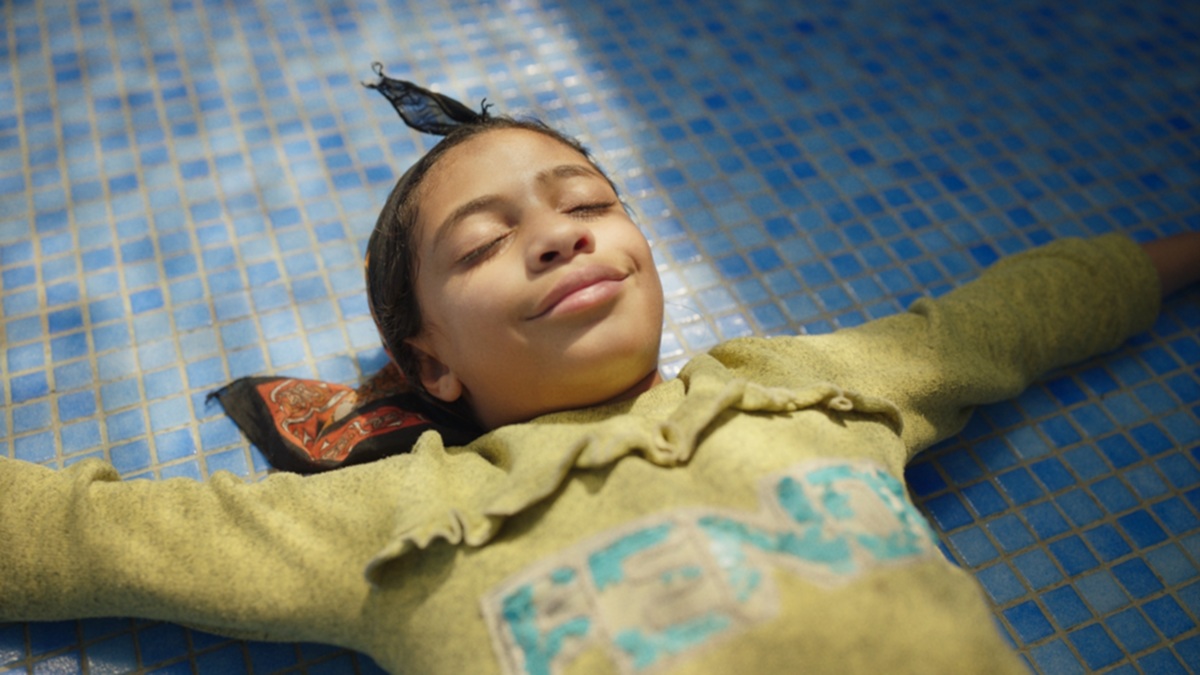
It takes a rare kind of empathy to direct a film that observes hardship through the gaze of a child—one that understands innocence not as a narrative gimmick, but as an emotional reality. “Happy Birthday,” the 2025 Egyptian drama from director Sarah Goher (co-written with Mohamed Diab), does exactly that. It allows us to slip inside the perspective of Toha, a girl so rooted in her own lived world of work, obligation, and survival that something as simple as celebrating her birthday feels like a foreign concept.
By the end of its compact, aching 90 minutes, “Happy Birthday” doesn’t just earn your sympathy (and a few tears); it also deepens your understanding of class, dignity, and the fragile boundaries of belonging. This was, for me, the most emotionally resonant film of this year’s Tribeca Festival—and without question one of the best films I’ve seen in 2025 so far.
An Upcoming Birthday (and a Child Who’s Never Had One)
The film opens on a pair of giggling girls in a bedroom, one gently waking the other. Nelly is excited—it’s her birthday—and Toha, with a mix of responsibility and joy, helps her prepare for the day. At first, you assume they’re sisters, both no more than 10 years of age. Their intimacy is seamless: they tease, they boss each other around, they share secrets. But as daylight hits, the real picture comes into view. Nelly is the daughter of a wealthy Cairo family. Toha is not her sister. She’s the maid.
That early misreading is everything. It primes you to see the world through Toha’s eyes—how she’s absorbed into this household, how she cares for Nelly’s diabetic grandmother, changes gas tanks, handles errands, and yet is always just out of frame when it matters. When Nelly casually mentions her upcoming birthday and that she wishes she can eat ice cream every day, Toha keys in on one word. Wish? What’s that?
As Nelly attempts to explain the concept of making a wish, Toha remains mystified. “Like a prayer?” she asks, eyes narrowing with curiosity. In that moment, something shifts. The idea that one can want something—let alone ask for it—is alien to her. Suddenly, that first close-up of Toha’s makeshift doll (a towel folded into a bear form) carries new weight. Forget the fact that she has never celebrated her own birthday, let alone known her birth date. Here is a girl who’s never learned how to wish for anything, simply because she never thought she was allowed to.
A Candle in the Background
The story spirals gently but devastatingly from there. As Nelly’s birthday party teeters on collapse—her parents are divorcing, the family is moving—Toha becomes fixated on salvaging the celebration. She convinces Nelly’s distracted mother to let the party happen, not for herself but for her friend. All Toha asks in return is to blow out a single candle. Just one. A wish of her own. And when she finally voices it—that she wants to be part of Nelly’s family—you feel every boundary, unspoken but immovable, snap into place. The mother is caught off guard, unsure how to respond. There’s a flicker of pity. A pang of discomfort. But mostly, there’s silence.
What’s remarkable is how Goher never lets this moment tip into melodrama. She directs with the clarity of someone who understands that inequality, when internalized young, isn’t processed with righteous anger, but with quiet confusion. And Doha Ramadan, playing Toha, is a revelation. Her performance is buoyant, stubborn, and emotionally crystalline. She’s resourceful, almost comedic in her determination, and her joy when encountering new things—shopping malls, birthday decorations, bubble gum—is contagious.
But what deepens the performance is what happens when that joy evaporates. When the dress shop clerk refuses to let her try on a gown, when she realizes she wasn’t supposed to be seen at the party, when even her absence is easier for the family to manage than her presence. It’s heartbreaking.
A Helper, Not a Guest: Learning the Shape of Her New Shadow
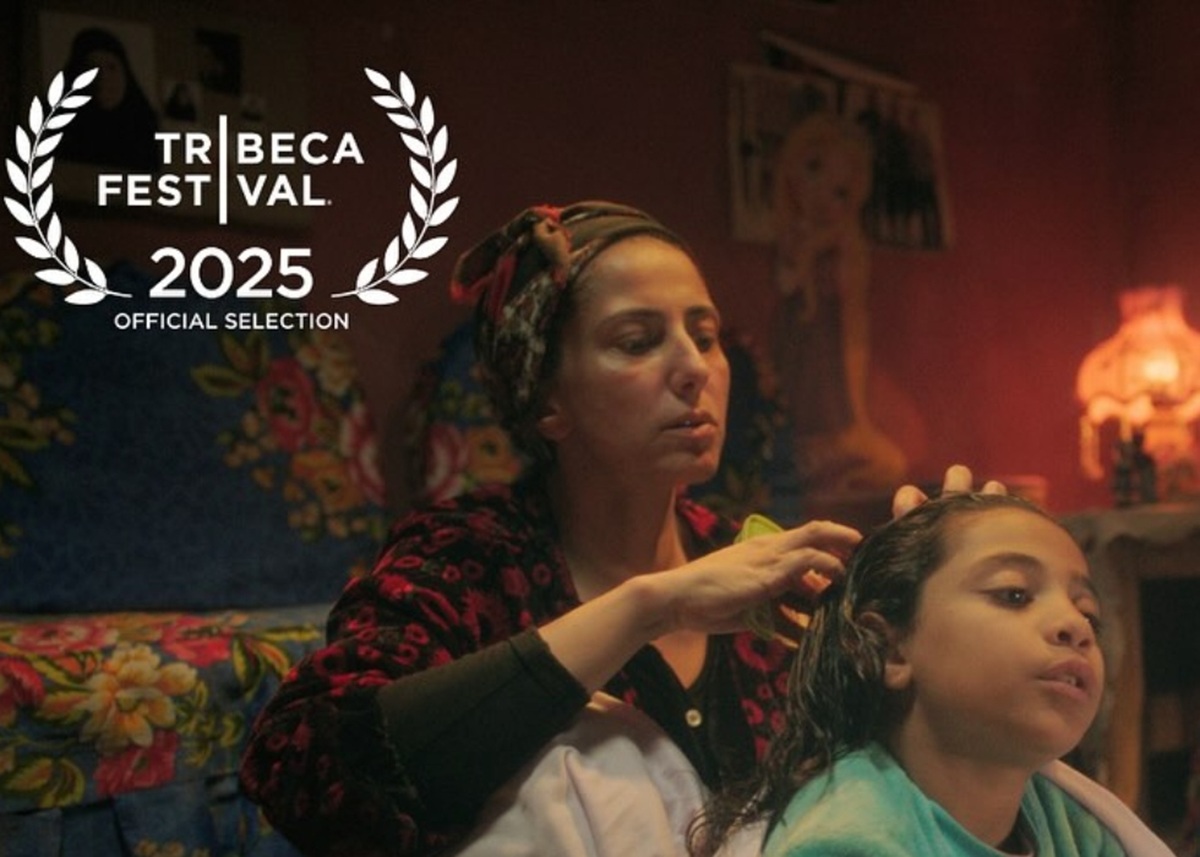
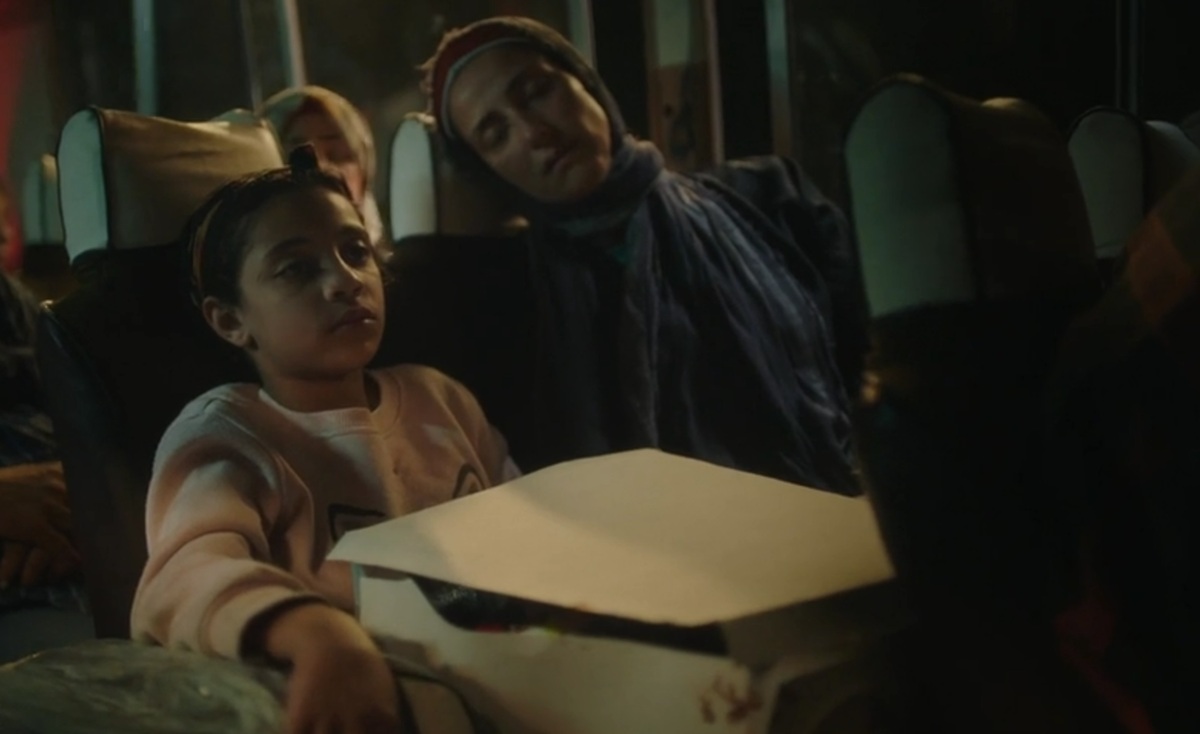
But it’s also clear, from the start, that Toha is still a child. Not just in stature or in the gap between her front teeth, but in the soft edges of how she understands the world. So when her mother arranges for her to work as a helper in the home of Laila (Nelly Karim) and her estranged husband Asser (Sherif Salama), there’s no dramatic buildup. Just a long bus ride, a tightly held plastic bag, and a little girl quietly preparing herself for something she doesn’t yet have the language to describe.
What Goher captures so acutely is how class and labor aren’t simply economic categories, but emotional geographies.
The setup may sound Dickensian, but Goher resists the urge to sensationalize. Instead, she maps out the emotional terrain with quiet precision. Laila and Asser are in the middle of a crumbling marriage, and their daughter Nelly (Khadija Ahmed), close in age to Toha, is struggling with the fallout in ways she can’t articulate. Meanwhile, Laila’s mother (Hanan Youssef) sees both the dissolution of the marriage and Toha’s arrival as threats to the fragile balance of their household, which hinges more on appearances than harmony.
And then there’s Toha—floating somewhere between domestic help, surrogate sibling, and invisible presence. At first, she adapts; she’s not naive, after all. She quickly picks up on routines, learns how to navigate Laila’s moods, and finds ways to endear herself to Nelly. There’s even a sense of wonder with experiencing the kinds of things that kids in her neighborhood could only imagine. But as the days wear on, the sheen dulls. Laila’s short fuse, Nelly’s shifting loyalties, and the constant reminder that Toha doesn’t belong here begin to chip away at whatever excitement she felt. It’s not just the labor that weighs on her—it’s the social tightrope she’s made to walk.
Nuanced Direction off an Equally Deft Screenplay
This is where the film’s real brilliance lies. Co-writers Goher and Diab understand that exploitation doesn’t always look like cruelty. Sometimes it looks like kindness with strings attached. Sometimes it’s the simple, corrosive feeling of being tolerated until you cross an invisible line. Toha is given a bed, food, even moments of affection. But the moment she oversteps—by trying to enter a room uninvited, by playing too freely with Nelly, by existing a little too comfortably—she’s reminded of her place.
Toha is no stranger to hard work. But navigating people—that’s the real challenge. She’s learning that emotional labor can be just as exhausting as physical toil. That the hardest part of a job is often not the task itself, but the unspoken rules. She’s caught between two worlds, neither of which fully see her. In her own neighborhood, she’s a star—a popular, capable kid who knows how to fish, sell, and play. In Laila’s home, she’s a ghost in plain sight. Needed, but never fully welcome.
And yet, the film refuses to strip her of her dignity. And that’s where Ramadan’s performance shines. She doesn’t play Toha as a victim, but as someone quietly, stubbornly trying to make sense of a world that keeps shifting beneath her. Her silence holds weight. Her reactions are measured but full. There’s a heartbreaking moment where she’s turned away from the gated community after trying to return to work unescorted. You feel the sting—not because she was humiliated loudly, but because she wasn’t acknowledged at all.
Capturing the Geography of Inequality, One Frame at a Time
There’s a particularly haunting contrast late in the film. Toha rides in a private car with Nelly’s mom—then later, her sister carts her home in a jam-packed bus. Goher stages the two journeys almost as mirror images: same Cairo, but worlds apart. The divide isn’t just visual—it’s infrastructural, emotional, and psychic. One version of the city runs on air-conditioning and silence; the other vibrates with the heat, noise, and urgency of survival.
At home, Toha’s mother fishes for a living. Her siblings work. Their house is narrow, dim, and crowded. There is love, but no time for daydreams. That Toha even dares to have one is, in itself, an act of quiet rebellion. The birthday wish, so ordinary in one context, becomes a radical gesture in another—a luxury of time, of selfhood, of being seen as someone worthy of celebration.
In this way, “Happy Birthday” becomes more than a story of domestic labor or girlhood. More than that, it’s a portrait of Cairo’s deeply coded class system, where wealth doesn’t just buy comfort, but narrative control. You see it in the unspoken rules: who eats first, who speaks when guests are around, who’s allowed to disappear. These aren’t just cultural niceties; they’re part of an inherited system, shaped by decades of economic imbalance, privatization, and uneven urban development. The walls that separate families like Nelly’s from families like Toha’s aren’t just architectural—they’re moral and emotional.
[More Tribeca 2025 Coverage: ‘Honeyjoon’ is a Tender—If Tonally Uneven—Study on the Stubborn Bonds Between Mothers and Daughters]
Of Emotional Geographies
What Goher captures so acutely is how class and labor aren’t simply economic categories, but emotional geographies. The camera lingers on spaces: the tiled hallways of Laila’s home, the humid, cramped kitchen where Nadia guts fish, the gleaming gates that separate the compound from the rest of the city. The editing is quiet but deliberate, allowing us to feel how space breathes differently depending on who is allowed to belong. In this Cairo, proximity does not mean parity. You can live just one car ride away from another world, and still never an invite.
And yet, the film never sermonizes. It doesn’t need to. The contrast is always present, just beneath the surface: in the color of the light, in the stillness of a dinner table, in what’s said after a child leaves the room. In this sense, “Happy Birthday” feels less like a critique and more like a mirror. It doesn’t argue; it reflects. And what it reflects back is often hard to look at.
Seeing the World Through a Child’s Eyes
Films told through a child’s lens aren’t new, but “Happy Birthday” brought to mind Beata Parkanová’s “Tiny Lights,” another story where a young girl must navigate grown-up complexities with no manual but her instincts. Like that Czech film, Goher’s feature trusts its protagonist’s limited vocabulary and emotional logic, allowing us to feel the gap between what Toha senses and what she can’t yet articulate.
But where “Tiny Lights” simmered with domestic unease, “Happy Birthday” carries the weight of an entire system—classism, child labor, inherited injustice. Even so, it never preaches. The heartbreak sneaks up on you, arriving not with sweeping speeches or tortured allegories, but with a single unlit candle.
Ultimately, though, what makes “Happy Birthday” hit harder is that Toha never grows bitter. She doesn’t reject her home, or scoff at fishing by hand, or bristle at the murky water where she skips rocks with her siblings. Even after tasting the polished world of comfort foods, comfortable beds, and air-conditioned rooms, she doesn’t turn her nose up at the one she came from. The desire isn’t to trade one for the other—it’s to bring something back. That one small candle, lit and wished upon, would have meant the world.
‘Happy Birthday’: A Gem of Egyptian—and World—Cinema
We often talk about what world cinema should do: inform, engage, illuminate. “Happy Birthday” does all three, but not through polemic. In a festival lineup often crowded with familiar arcs and imported prestige, the movie feels like a genuine discovery. It isn’t flashy. It doesn’t trade in trauma spectacle or over-earnest messaging. And it trusts the audience to feel its weight through the margins, through the small wounds of a child who has to grow up too fast but still finds room to make a wish.
And hopefully, while she’s at it, blow a candle to the tune of her own birthday song.
Sarah Goher’s “Happy Birthday” screened at this year’s Tribeca Festival, which ran from June 4 to 15, 2025. Follow us for more coverage.

