


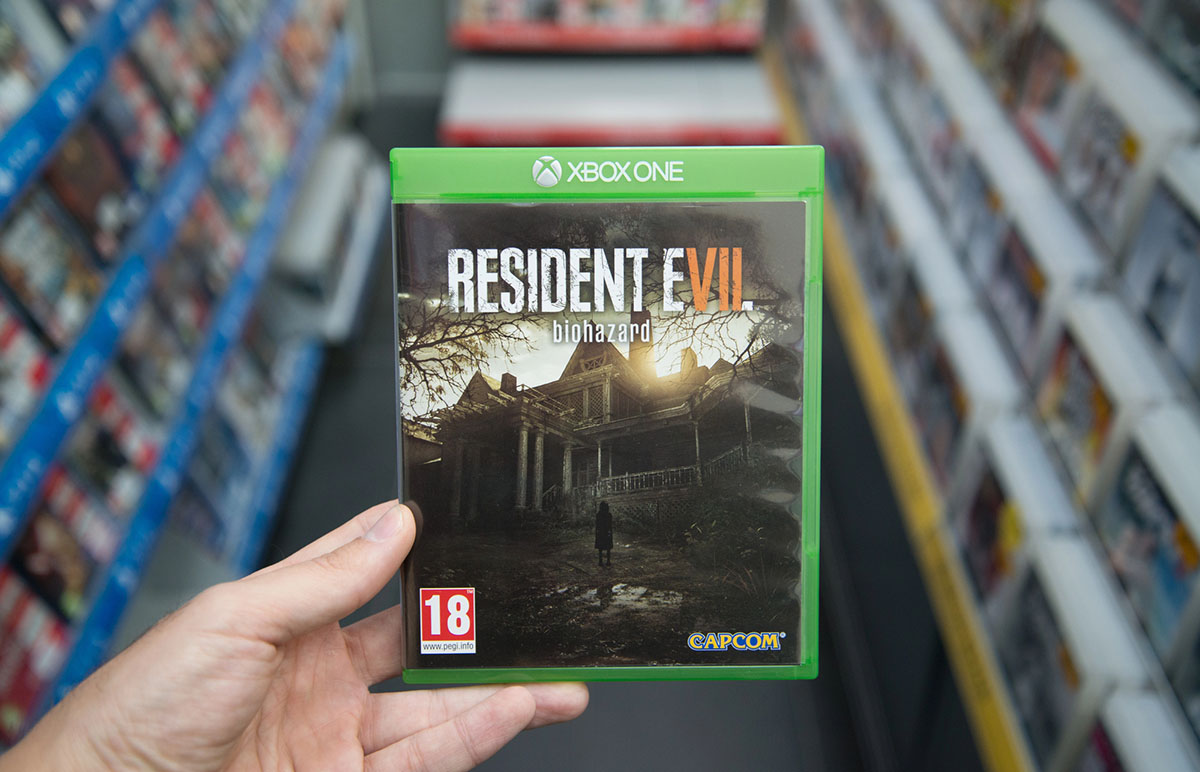
I should probably get this out of the way first: I have never played a “Resident Evil” game.
What I have recently become is a fan of the “Resident Evil” movies, especially Paul W.S. Anderson’s increasingly deranged six-film run with Milla Jovovich.
Anderson had already directed “Mortal Kombat,” which for years had a legitimate claim to being the best live-action video-game movie ever made. If that makes him the Cecil B. DeMille of video-game adaptations, then “Resident Evil” is his great epic: a saga of plagues, clones, evil corporations, subterranean deathtraps and Milla Jovovich doing impossible things while looking incredibly cool.
What I responded to most was Anderson’s sense of space, geometry, and movement. These movies may not be faithful to the nouns of “Resident Evil,” but they often feel faithful to the verbs: move, explore, survive, fight, advance, die, and restart.
With Zach Cregger bringing “Resident Evil” back to theaters, here is my ranking of the live-action films.
8. ‘Resident Evil: Welcome to Raccoon City’ (2021)
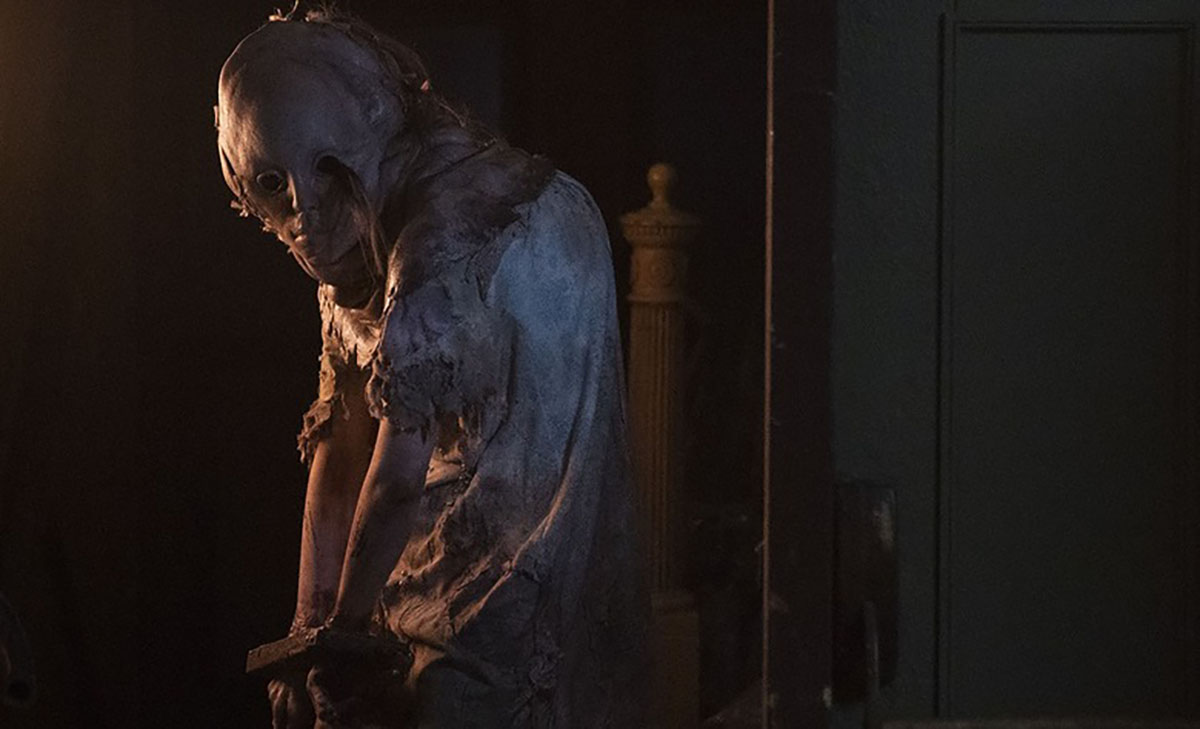
There is an admirable impulse behind “Welcome to Raccoon City,” which is clearly designed to give “Resident Evil” back to the fans through familiar characters, familiar locations and a return to horror rather than the superheroics of Alice.
Johannes Roberts also very obviously wants to make a John Carpenter movie, and there are individual images that work because of that. Unfortunately, the movie mostly settles into a good-looking slog in which a collection of CW-adjacent actors repeatedly announce the names of iconic “Resident Evil” characters as though recognition itself were enough to generate drama.
Its most interesting lesson is therefore accidental: fidelity and personality are not the same thing. Roberts gives fans things they recognize, while Anderson was more interested in building a movie.
7. ‘Resident Evil: Apocalypse’ (2004)

“Apocalypse” is basically the sluggish entry in the franchise that you have to get through before the series really finds its groove.
There are things to like here, especially Nemesis, the expansion into Raccoon City, and Milla Jovovich beginning to fully transform Alice into an action icon. The problem is that the movie never develops the same momentum or spatial clarity as Anderson’s better entries.
It feels caught between the claustrophobic survival horror of the first film and the increasingly deranged action franchise that follows. It is a necessary bridge, but bridges are not always very exciting places to stand.
6. ‘Resident Evil: The Final Chapter’ (2016)

By the time “The Final Chapter” arrives, continuity in this franchise has become something closer to a polite suggestion.
Anderson races Alice back toward the Hive while inventing new layers of Umbrella mythology and attempting to convince us that several developments were planned fifteen years earlier. At that point, the only reasonable response is to shrug and go along with it.
The circular structure does work, though, because bringing Alice back underground gives the movie a satisfying sense of return. Jovovich also provides enough emotional continuity that the film can survive the screenplay’s increasingly elastic mythology.
My biggest reservation is the cutting, which is unusually frantic for a filmmaker whose greatest strength is normally visual clarity. Even so, it works as a farewell to Alice.
5. ‘Resident Evil’ (2002)

The opening of “Resident Evil” is absolute cinema because Anderson introduces the Hive as a living machine before Alice has even fully emerged as the protagonist.
Doors seal, elevators stop, and ventilation systems activate as the building that is supposed to protect its workers instead decides they are disposable. The scariest thing in the movie is not necessarily the zombie; it is the architecture.
In that sense, the movie sometimes feels like Vincenzo Natali’s industrial sci-fi horror film “Cube” with a significantly bigger budget. Both films understand that a sterile, man-made environment can become terrifying once the space itself starts behaving like a trap.
That idea pays off beautifully in the laser hallway, where a corridor itself becomes a weapon. The whole movie operates according to similarly simple, game-like logic: enter a space, understand how it works, discover the danger, survive it and keep moving.
That becomes the foundation for everything the franchise eventually turns into.
4. ‘Resident Evil: Afterlife’ (2010)
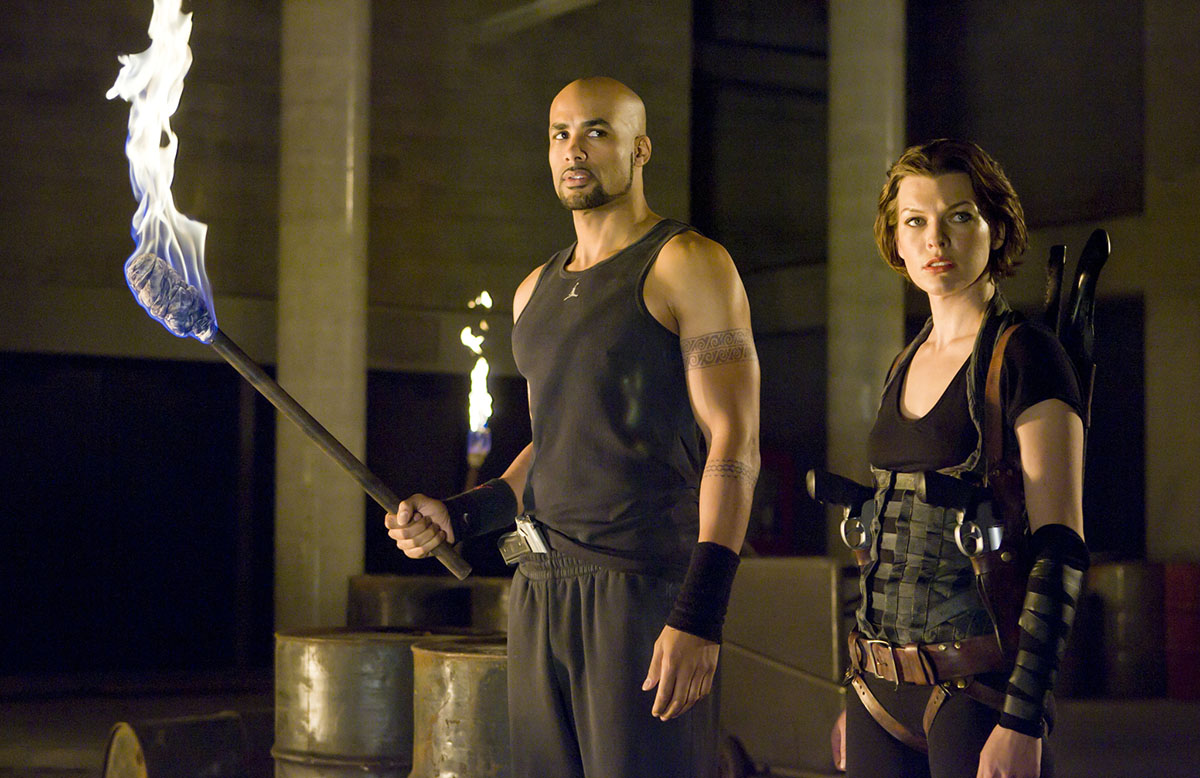
“Afterlife” is where Anderson returns to the director’s chair and seems to realize that he can make these movies look like almost anything he wants.
The images become cleaner, the action becomes more monumental and the use of 3D emphasizes depth, distance and architecture rather than merely throwing objects toward the audience. The prison setting is especially suited to Anderson because it gives him floors, cells, corridors, rooftops, tunnels, and barriers that he can first establish and then destroy.
This is also where plot begins to become secondary to kinetics. The action scenes stop feeling like interruptions in the story and increasingly become the story itself.
3. ‘Resident Evil: Extinction’ (2007)
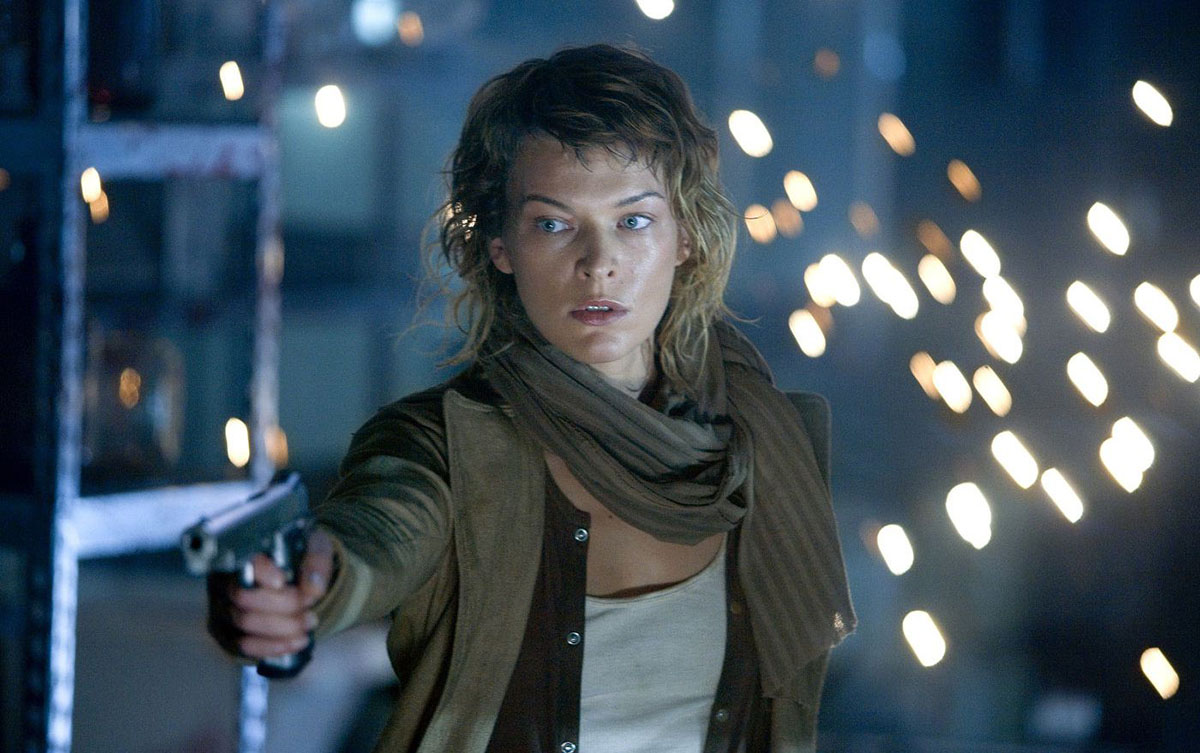
Turning “Resident Evil” into “Mad Max” is exactly the kind of sequel decision that makes me fond of this franchise.
The virus has escaped containment, civilization has collapsed, and Alice is now wandering through a sun-scorched wasteland while Umbrella continues conducting insane experiments underground. Russell Mulcahy gives the movie a radically different texture from the earlier entries by replacing claustrophobic corridors with ruined highways, desert expanses, and enormous horizons.
Even with that change, the film still understands “Resident Evil” as movement through hostile territory. I also love that the series refuses to maintain a single aesthetic identity when it would have been very easy to spend six installments repeatedly finding excuses to put Alice inside another spooky laboratory.
2. ‘Resident Evil: Retribution’ (2012)
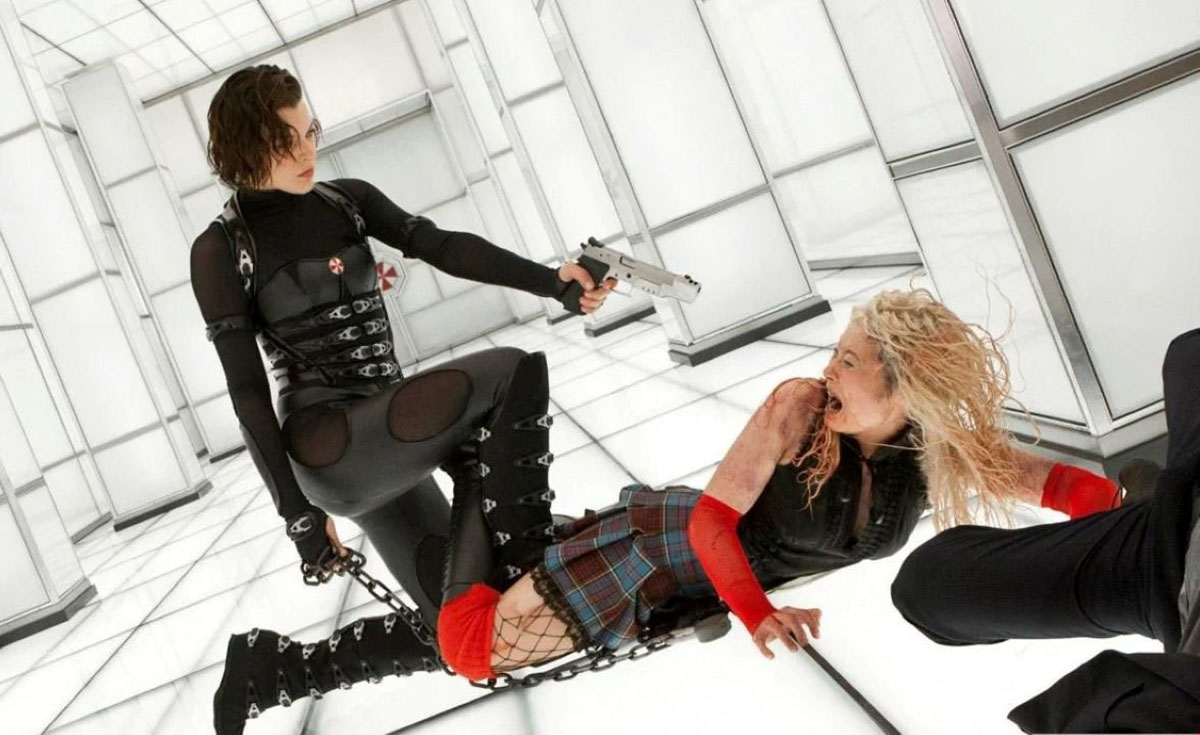
If you want the best argument for Paul W.S. Anderson as a genuine action auteur, “Retribution” might be all you need.
The opening alone is about as gripping as anything in the entire series. Anderson stages the aftermath of an attack in reverse slow motion, using action geography so precisely that the sequence remains completely legible both backwards and forwards. It is flashy, but not empty; the formal trick works because the spatial relationships are so clear that reversing the movement only makes you more aware of how carefully the action has been constructed.
From there, the movie barely resembles conventional narrative filmmaking. Anderson structures it as a series of fluid, witty, and interlocking set pieces across Tokyo, suburbia, Moscow, ice fields, and simulation chambers, while characters who died several movies ago can simply return because continuity itself has become modular.
The key is that Anderson finally stops treating the franchise’s increasingly incomprehensible mythology as a problem he needs to solve and turns it into material he can play with. Characters become reusable assets, locations become levels, and previous movies become save files that can be loaded again in different combinations.
The result is something close to abstract action cinema, where rhythm, repetition, movement, and variation matter more than conventional dramatic causality. It is completely ridiculous, and that is exactly why I love it.
1. ‘Resident Evil’ (2026, Zach Cregger)
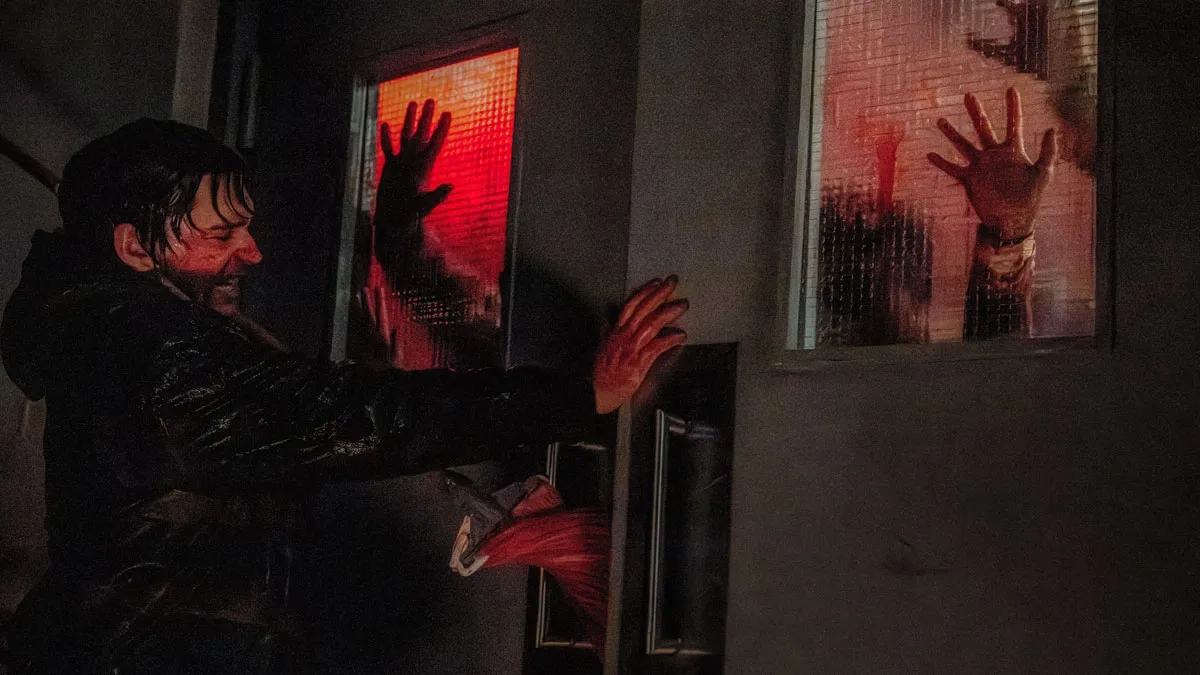
One of the funniest things about the excitement around Zach Cregger’s “Resident Evil “is how many fans have come out of the woodwork disappointed that it isn’t a faithful adaptation, as if “Welcome to Raccoon City” didn’t already exist and stink. Cregger’s film is proudly unfaithful to the games in exactly the way Anderson’s films were.
Rather than dutifully translating lore, Cregger is more interested in translating the sensation of being trapped inside a hostile game and having to survive long enough to reach the next room. The result is a snowbound, 90-minute shot of adrenaline that combines the survival-horror instincts of John Carpenter, the wintry absurdity of “Fargo,” the slip-and-fall physical comedy of “Evil Dead II” and the elastic movement of silent cinema.
Austin Abrams is the movie’s greatest weapon. He makes his character feel terrified, resourceful, and incredibly funny at the same time, and his comic timing never depends on deflating the danger around him. He runs like Tom Cruise, takes a fall like Charlie Chaplin, and carries himself with the battered charm of John McClane or Bruce Campbell without becoming another smug quip machine.
That distinction matters because the humor comes from his desperation to stay alive rather than from the movie pausing to wink at itself. Cregger lets the danger remain dangerous, which makes the comedy funnier without lessening the stakes.
Dariusz Wolski’s cinematography is also gorgeous, at times recalling the nocturnal expressionism of his work on “The Crow” and “Dark City.” The camera is dynamic without becoming gimmicky, and the movie always maintains a clear sense of geography even as it keeps throwing Abrams into increasingly ridiculous situations.
What I loved most is that the film never dwells on what just happened. Something insane occurs, Abrams barely has time to process it, and the movie is already pushing him toward the next problem. It gives the whole thing the feeling of playing a survival game for the first time, learning the rules at exactly the same moment as the person you’re controlling.
These movies may not be faithful to the nouns of “Resident Evil,” but they’re faithful to the verbs: move, explore, survive, fight, advance, die, and restart.
It is brutal without becoming grim, hilarious without puncturing its own tension, and stylish without becoming precious. I laughed constantly, felt completely present, and did not want it to end. It’s one of the best movies of the year, hands down, and probably the best video-game movie ever made.
That is more than enough for first place.
The strangest thing about finally discovering this franchise is realizing how thoroughly its reputation undersells it.
The “Resident Evil “movies are junk food, and I say that lovingly. They are corporate products about the evil of corporations, video-game adaptations increasingly unconcerned with accurately adapting video games, and zombie movies that eventually decide zombies are not nearly enough.
At their best, though, they understand something very simple about cinema: put someone in a space, teach us the rules, close the doors, fill the room with monsters, and find the coolest possible way out.
Anderson and Cregger get there in very different ways, but they understand the same verbs.

