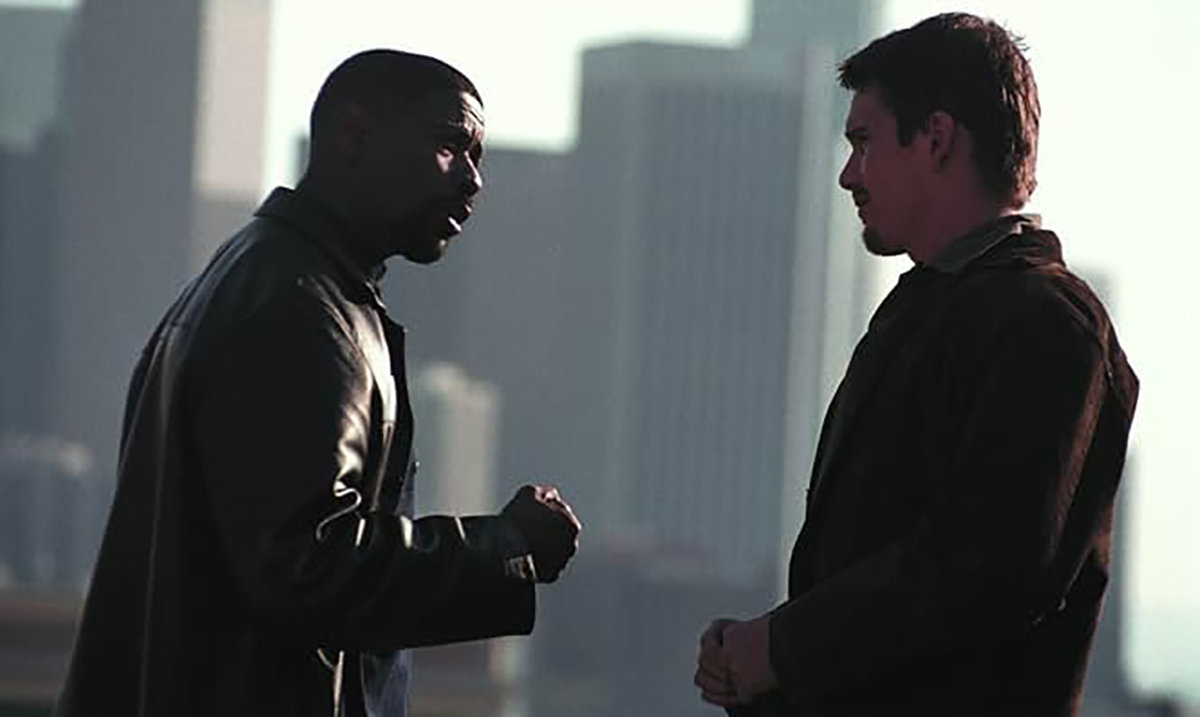
It’s been a quarter of a century, and there’s no better “worst first day on the job” motion picture than “Training Day,” directed by Antoine Fuqua (“The Equalizer”). The 2001 classic film is a deep dive into the Los Angeles underbelly. A city plagued by crime, drugs, and an unadulterated gang culture, it all comes as a shock to the LAPD narcotics unit’s newest recruit. All of the intricacies and dos and don’ts of the streets of L.A. are shown to him by a decorated superior who doesn’t really fit the mold for—and I say this in quotation marks—standard police “core qualities.” Just today—and only today—does he have the chance to unlearn everything he was taught in the academy and show that he can run with the city’s undercover squad, or so he is told.
The widely praised crime thriller went on to receive prestigious awards and solidify itself in film history, but what makes this specific piece of cinema so special? Why, after all these years and the legion of “good cop, bad cop” films that followed, does it still stand out and remain one of the best films not just for the director, but for the lead stars as well?
Hoyt’s Training Day
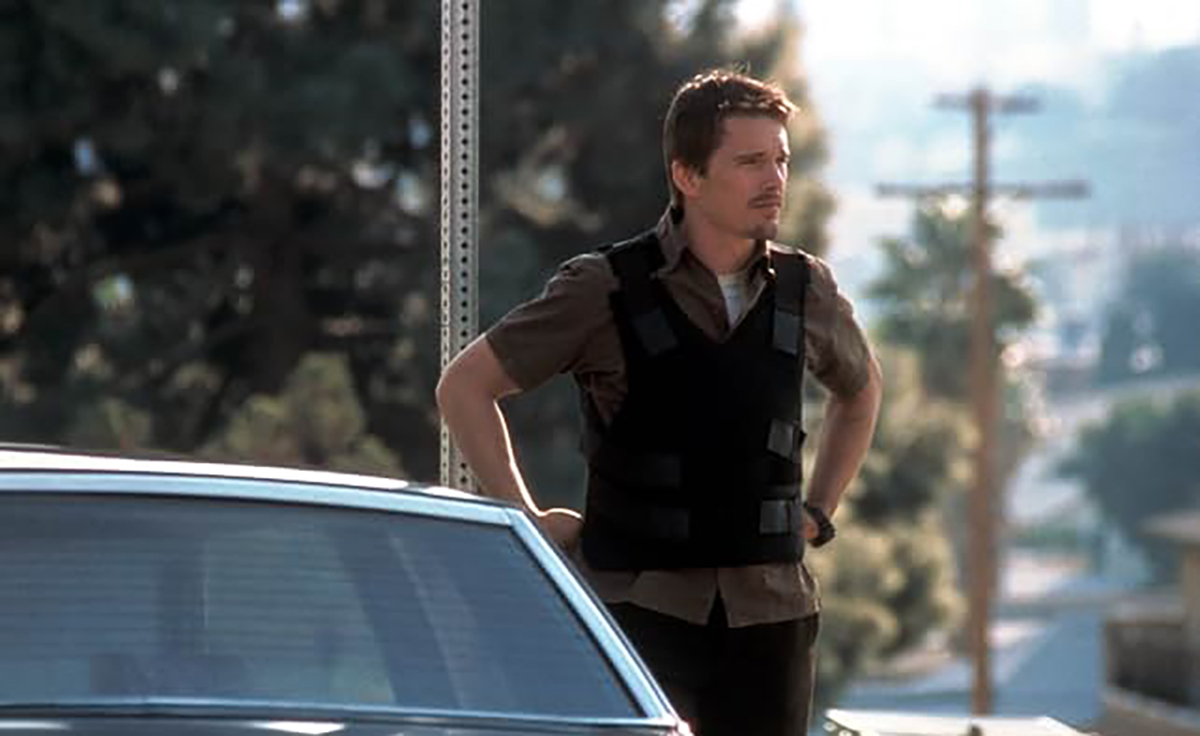
From writing parking tickets in the San Fernando Valley to serving high-risk warrants in Echo Park, Officer Jake Hoyt (Ethan Hawke) is a wide-eyed rookie, under the impression his by-the-book methods are what expedited his opportunity to join this elite unit. Electing to ignore standard police protocols and common sense, the North Hollywood native walks the line between innocence and ignorance as he’s dragged from one dangerous—and often illegal—situation to another. Like a modern-day Serpico, he’s thrown into the deep end with the sharks. But instead of “Training Day” being a fish-out-of-water story or a tale of someone who is in over his head, you immediately get the feeling these scenarios are hazing or a test that has gone on for too long. None of this is by accident or random. Everything is carefully calculated and flawlessly executed by a master manipulator.
When it comes to career-defining performances, I find it hard not to include Denzel Washington as Detective Alonzo Harris. From the moment the character appears on-screen, the mind games begin with insults and compliments, followed by an uncomfortable encounter disguised as a test—or, as I like to put it, “trying” him (seeing how much Hoyt lets him get away with before he reacts). But the trick to trying someone is to elevate each attempt gradually; since the film takes place over 24 hours, everything escalates at an alarming rate. Misdemeanor actions quickly turn into felony offenses, with no clear end in sight. But I guess it’s easy to fall for the deception when the charismatic, authority-demanding voice of Denzel Washington is so reassuring that this is simply how things get done.
Washington and Hawke are Excellent
But what always keeps me coming back to revisit this film—even 25 years later—is the chemistry between the two men, or lack thereof. Both are on the same side of the law but have vastly different definitions of justice and how it should be executed. Hoyt sees life in black and white, while Harris not only lives in but thrives in the gray area. Being a seasoned detective has equipped him with the tools to deceive an unsuspecting mind and take control when necessary, turning this into an intense 24 hours trapped on a ride along with a vicious superior. But it doesn’t stop there; this Wild West conduct is shown to go all the way up the chain of command. This isn’t something Hoyt can simply transfer out of; this is the new reality of his career.
The infamous detective was based on the notorious real-life corrupt LAPD officer Rafael Pérez, who served in the Rampart division’s CRASH (Community Resources Against Street Hoodlums) unit. Pérez is best known for his 1998 arrest for stealing eight pounds of cocaine from police evidence lockers to resell, an event that triggered a chain reaction exposing widespread corruption within the LAPD’s anti-gang units. Evidence framing, police misconduct, and even alleged connections to the Notorious B.I.G. murder case—though no evidence ever proved his involvement—are just a few elements that built the foundation for a dynamic fictional character for Washington to tackle.
High Praise from Critics
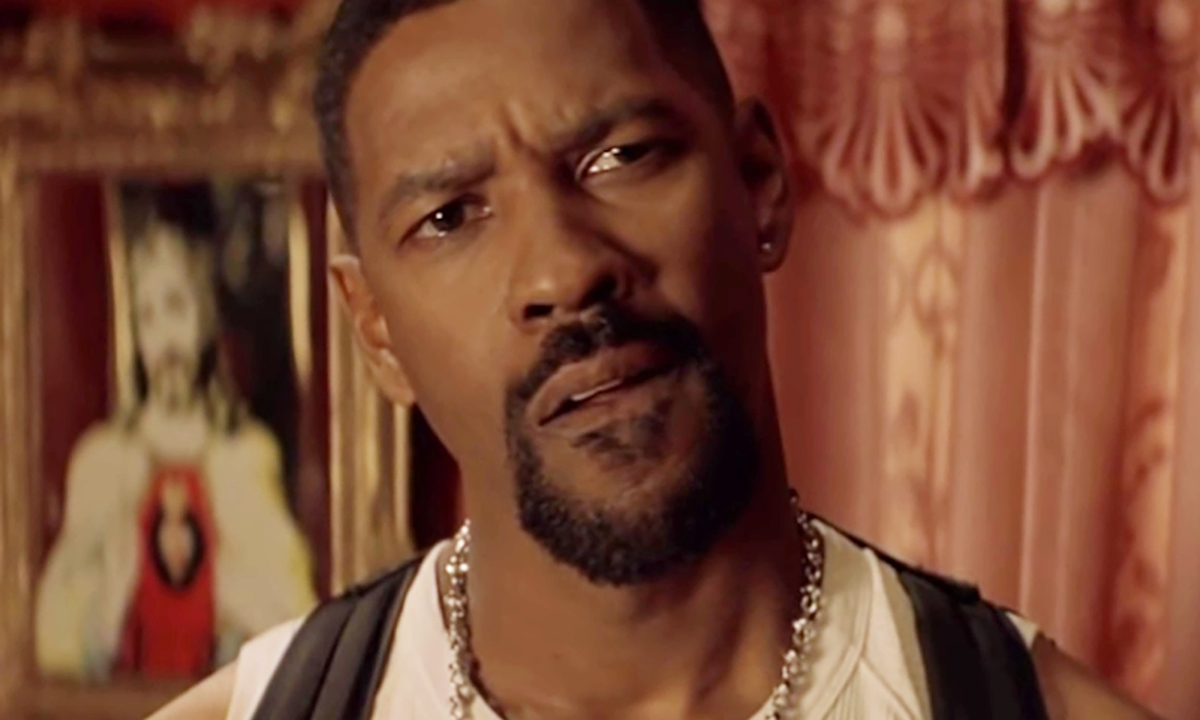
Not until my most recent rewatch of the film did I realize that you never see a police station. The entire makeup of Washington’s character is a gangster with a badge, operating by his own set of rules. No roll call and no desk—just his gun, badge (on a chain, by the way), and his office. And that office is an all-black 1979 Chevy Monte Carlo lowrider equipped with hydraulic switches and Dayton rims. What’s equally interesting is the license plate: ORP 967. It is a clear nod to his real-life inspiration, Officer Rafael Pérez (O.R.P.), born in 1967. I see what you did there.
Both Ethan Hawke and Denzel Washington went on to receive high praise from fans and critics for their portrayal of the unlikely cop duo. At the 74th Academy Awards, Hawke received a nomination for ‘Best Supporting Actor,’ while Washington walked away with the gold for ‘Best Actor in a Leading Role,’ making him the second Black man in history to take home the Oscar.
Fuqua Demanded Authenticity
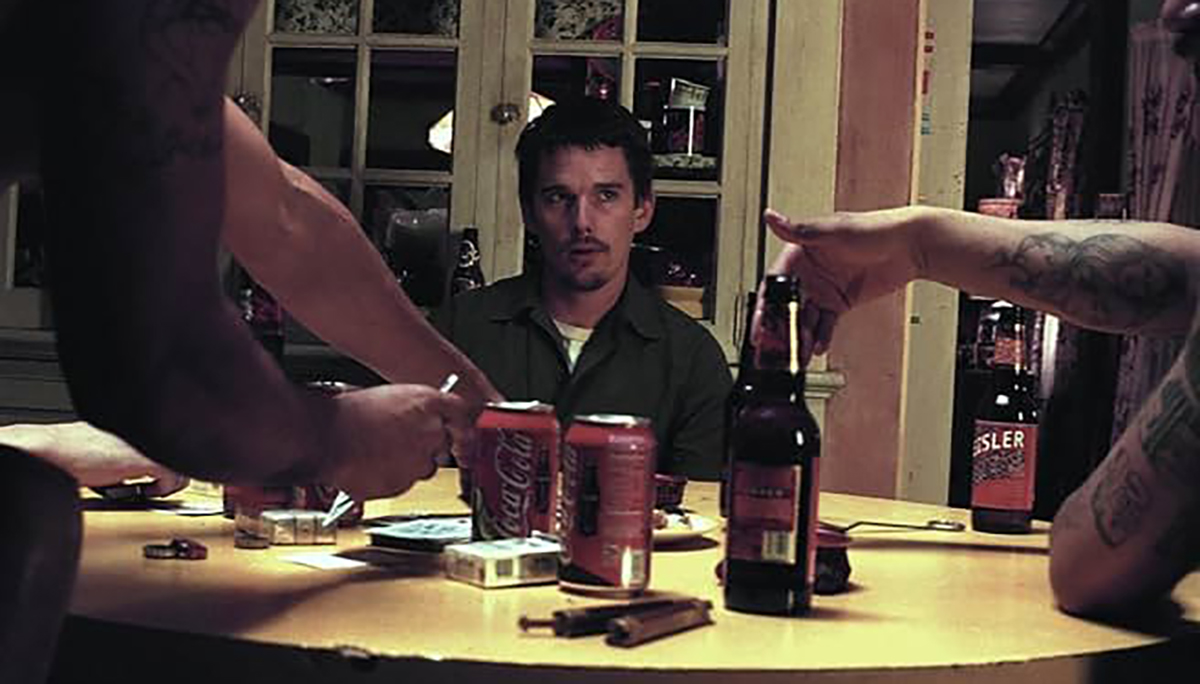
Much like John Singleton and his love letters to L.A., director Antoine Fuqua hired real gang members as extras to keep things as authentic as possible. In order to film in areas such as Baldwin Village (“The Jungles”), the Imperial Courts housing project, and Lincoln Heights, the cast and crew worked directly with real-life Athens Park Bloods member and actor Cle “Bone” Sloan (“Bright,” “End of Watch”) along with other community leaders to ensure safety during production. Tensions were high when known rapper and Rollin’ 20s Crips member Snoop Dogg was harassed on set by rival gangs—a firm reminder that while the script and characters may be fictional, the rules of L.A. still apply, even if you’re a Grammy nominated artist.
With no shortage of corrupt-cop dramas being made each year, this exceptionally unique and quotable film still stands as a wild ride with unforgettable, powerful performances that only get better with time. It is a giant among ants in its genre and a compelling addition to cinema history. The film is set to return to theaters on October 14, 2026, in a new 4K restoration.
–> Read More: Browse all of our Denzel Washington reviews