Robert Pattinson playing Chris Hansen sounds like stunt casting until you actually see him do it. Then it starts to feel like one of the boldest moves of his career.
Lance Oppenheim’s “Primetime” is a lot of things all at once. It’s a paranoid satire, a horror movie, a media thriller and an extremely warped biopic about the rise of “To Catch a Predator.” Even all those descriptors make it sound more conventional than it is. This is a deranged movie about a deranged television show made during a particularly deranged moment in American culture, when reality television, true crime, tabloid journalism, and the still relatively new frontier of the Internet were beginning to collapse into one another. It’s uncomfortably funny, perverse, formally audacious, and one of the best films I’ve seen this year.
A Very American Movie
The easiest version of “Primetime” would have been an Oscar-bait Chris Hansen origin story. A journalist discovers an online epidemic, assembles a team, catches bad guys and gradually becomes the guy who asks people to have a seat. There’s probably a perfectly respectable awards movie hiding somewhere in that material, but Oppenheim seems actively repulsed by the possibility of making it. His movie is less interested in Hansen’s accomplishments than in the strange machinery surrounding them and what happens when a legitimate desire to expose something monstrous becomes inseparable from the desire to make good television.
That distinction is important because there’s nothing particularly moralizing about “Primetime.” It doesn’t spend much time asking whether the men walking into these houses deserve our sympathy, nor does criticizing the methods of “To Catch a Predator” require providing them with any. The more uncomfortable question is what happens once their depravity becomes raw material for television. At what point does public service become spectacle, with public humiliation repackaged for ratings?
In that sense, “Primetime” is a very American movie, and specifically a movie about the America of the mid-2000s. Oppenheim treats that period not as an adorable graveyard of flip phones and primitive websites but as an incredibly ugly transitional moment in media. Reality television was becoming increasingly shameless, cable news was learning the value of perpetual fear, and the Internet had suddenly given people access to hidden lives without anyone fully understanding what that access was going to do to us. “To Catch a Predator” somehow existed at the intersection of all three.
Turning Misconduct into Prime TV
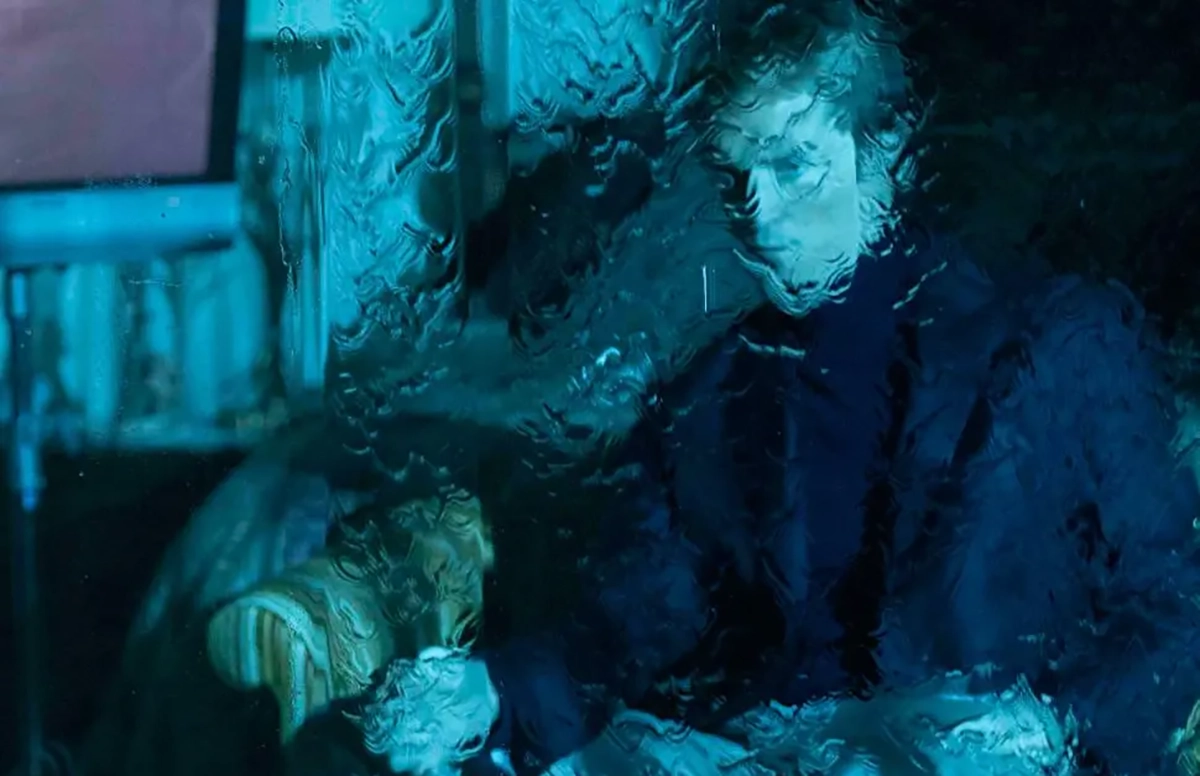
Part of the show’s peculiar power came from its ability to occupy contradictory forms at the same time. The Dateline banner, the correspondent, and the investigative framing supplied the authority of network journalism, while the confrontations offered the anticipation, escalation and public humiliation of reality and tabloid television. The show never really had to decide which one it was. Its success depended on being all of them at once.
One of the things I loved most about “Primetime” is how well it remembers the texture of that trash culture. There’s very little nostalgia in the way Oppenheim looks backward. The movie has a psychotropic, colorful, and grainy visual scheme that makes much of it look like it’s taking place inside a sleazy nightclub. Everything feels slightly illicit, even when we’re standing inside the kind of anonymous suburban home that would otherwise be indistinguishable from a thousand others across the country.
The production design makes those houses increasingly uncanny. Cameras hide behind walls, crew members watch monitors in other rooms, adult decoys wait for strangers who believe they have been talking to children, police sit outside, and Chris Hansen waits for his cue. A perfectly ordinary house becomes a workplace, television studio, trap, and crime scene at the same time. That banality matters. These aren’t spaces that visually announce danger; they’re interchangeable pieces of suburban normalcy temporarily converted into elaborate surveillance environments. The misconduct being exposed is real, but nearly everything surrounding its revelation has been arranged—the house, the decoy, Hansen waiting out of sight, the cameras, and the police outside. “To Catch a Predator” didn’t invent the behavior it captured, but it built the stage on which that behavior could become television.
Public Service and Narcissism Can Coexist
Into all of this walks Pattinson, giving one of those performances where you can practically see an actor realizing how far a director is willing to let him go. Oppenheim has described the performance as containing “Jerry Maguire” and “Dracula,” and once you know that, the combination makes a strange amount of sense. Pattinson isn’t attempting a restrained impersonation of Hansen. The vocal mannerisms are there, and his physicality is uncannily specific, but the performance operates at a much more heightened frequency. He plays Hansen like a demonic crusader who has discovered that being on the side of righteousness also happens to make him really good at television.
Eventually the persona feels like something Hansen switches on for the camera.”
Pattinson understands that the character becomes more interesting if Hansen actually believes in what he’s doing. He isn’t simply a cynical fraud exploiting horrible people for ratings. He sees genuine value in exposing them, but he also begins to enjoy being the man doing the exposing. The work gives him a television persona, then celebrity, and eventually something approaching his own private superhero mythology. The public service and the narcissism can coexist, which is far more interesting than pretending one invalidates the other.
Eventually, the persona stops feeling like something Hansen switches on for the camera. The practiced voice, prosecutorial confidence, and almost supernatural self-assurance follow him beyond the frame. Pattinson can be charming, ridiculous, unsettling, and pathetic within the same scene, with the swagger of a man whose professional success has begun to convince him of his own mythology. There’s something hungry in the performance, which makes Oppenheim’s “Dracula” comparison especially useful: Hansen is hunting monsters while also drawing energy from the encounters themselves. The footage, attention, ratings, and recognition gradually become part of what keeps him going.
Skyler Gisondo as the Film’s Almost Co-lead

That hunger starts shaping the production around him. Bigger catches produce stronger television, stronger television produces greater attention, and greater attention creates pressure to find something even bigger next time. Hansen’s ambition gradually becomes part of the operating logic of the show itself. The production needs escalation simply to keep feeling as consequential as it did before.
Pattinson has been on such a remarkable run that calling this one of his strangest performances actually means something. Everyone keeps clamoring for him to put the cape and cowl back on while he uses the time between blockbusters to make choices like this. It’s difficult to imagine many actors with his level of fame being willing to look this sweaty, needy, and spiritually unwell, much less finding this much comedy in it.
Skyler Gisondo is nearly as good and surprisingly close to being the movie’s co-lead. If Pattinson is the guy disappearing into his television persona, Gisondo provides a way into the production surrounding him. His Dan Plumb initially takes the decoy work for an almost hilariously mundane show-business reason: he’s an aspiring actor who wants a union card. From there, he becomes increasingly invested in work that appears genuinely important. He doesn’t need to begin as a cynic for the machinery to work on him. Career ambition, curiosity, and the conviction that what he’s doing matters are enough to get him through the door. He functions as something like the conscience of the movie without ever becoming its uncomplicated moral center, because he has his own ambitions and becomes increasingly fascinated by the same things that fascinate everybody else.
Reality Organized to be Photographed
That’s where “Primetime” finds its richest idea: everybody involved is performing. Hansen performs the version of Chris Hansen who appears on television. The adult decoys perform children. The predators construct identities through chat rooms. The television crew takes these layers of performance and packages them as reality. Even the confrontations acquire their own dramatic structure, with Hansen waiting offscreen until the appropriate moment to make his entrance. The predator realizes what is happening, Hansen begins reading the transcripts, and an encounter ostensibly designed to document misconduct becomes a piece of television with its own rhythms, reveals, and climaxes.
None of that makes the underlying event false. The men have still arrived expecting something reprehensible. What changes is the architecture around that fact. Reality is being organized so it can be photographed, edited, and understood as narrative, and the more refined that process becomes, the harder it is to determine where observing an event ends and shaping its meaning begins.
The film is particularly good at showing how easily witnessing something can become participating in it. Gisondo begins with the thrill of contributing to something worthwhile, but that excitement becomes increasingly difficult to separate from the excitement of making the show itself. The better the television gets, the less clear it becomes whether anyone involved can distinguish between those sensations anymore.
The Moral Grey Areas of Reality TV
Oppenheim visualizes that confusion through a constant accumulation of screens, surveillance footage, cameras, and computer windows. “Primetime” reminded me most strongly of “Red Rooms” in the way technology becomes a portal through which people voluntarily search for the worst humanity has to offer. The early internet isn’t presented as quaint or nostalgic. It feels invasive and slightly alien, allowing people to invent identities while simultaneously creating new ways to observe them.
There are echoes of “Ace in the Hole,” “Network,” and “Nightcrawler” as well, although “Primetime” is less interested in announcing the corruption of the media than in recreating the conditions that make corruption feel perfectly reasonable while it’s happening. Everyone has a justification. Hansen is exposing predators. The producers are informing the public. The network is giving viewers what they clearly want. The audience gets to experience the thrill of watching someone be publicly destroyed while understanding that the person being destroyed has done something reprehensible.
[‘Primetime’] understands how absurd this operation could be without trivializing what brought these men into the house.
That moral geometry is intentionally ugly. The men being caught can deserve exposure while the process of exposing them becomes grotesque. Those ideas aren’t mutually exclusive, but television has every incentive to make them appear that way because certainty makes cleaner entertainment. “To Catch a Predator” could offer moral disgust and voyeuristic pleasure simultaneously, allowing millions of people to watch a humiliation ritual while understanding their own spectatorship as a public good.
Backed by an Inspired Cast
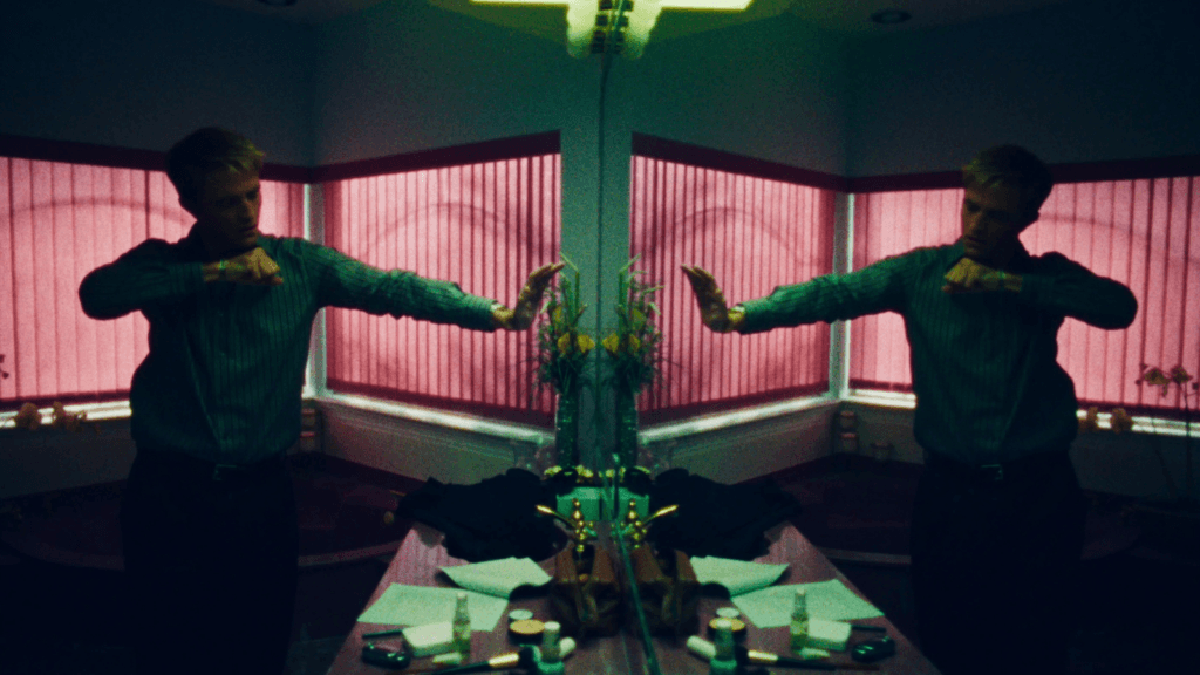
Oppenheim makes that contradiction surprisingly funny. The movie understands how absurd this entire operation could be without using the absurdity to trivialize what brought these men into the house. The comedy instead comes from the increasingly elaborate apparatus constructed around them and the people trying to convince themselves that none of their professional or personal appetites have anything to do with what is happening.
The casting throughout “Primetime” is inspired. Merritt Wever, Matthew Maher, Phoebe Bridgers, and Anna Faris populate the strange ecosystem surrounding Hansen, and Oppenheim seems particularly attuned to what a face can communicate before anybody starts talking. That extends to the men caught in the stings, many of whom have the kinds of faces you simply don’t normally see in movies. They look ordinary, awkward, and sometimes disconcertingly anonymous, which feels essential to a film about television taking something ugly and mundane and transforming it into spectacle.
That makes the more recognizable stunt casting even stranger. Alex Winter, Jonathan Lipnicki, and Tony Revolori all arrive carrying some cultural memory of seeing them young—Winter as the eternally adolescent Bill S. Preston, Esq., Lipnicki as one of the defining child actors of the ’90s, and Revolori as the teenage face of “The Grand Budapest Hotel” and the “Spider-Man” movies. Oppenheim takes actors associated with youth and lets that familiarity curdle into something deeply uncomfortable.
Escalation Beyond Control

The film eventually arrives at the William Conradt case, where the production’s need for escalation collides with consequences television can’t control. By then, the operation has trained itself to regard an elusive target as a problem requiring a bigger response. Conradt, played by Alex Winter, doesn’t arrive at the sting house, so the production follows the story elsewhere. The distinction between journalists documenting police activity and television helping to shape the conditions around that activity becomes much harder to ignore. His death punctures the illusion that the production can remain merely an observer of events it has helped set into motion.
That material also makes “Primetime” an interesting companion to David Osit’s excellent “Predators.” The documentary looks backward at “To Catch a Predator” and its cultural legacy, while Oppenheim has the freedom to turn the same material into something more expressionistic and grotesque. “Primetime” isn’t necessarily more revelatory about the ethics of reality television; most of its criticisms have been circulating almost as long as reality television itself. What makes the movie exciting is the specificity with which it reconstructs the environment where those compromises could become normal.
Oppenheim is interested in the ugliness of the job and the delusion that doing something ostensibly righteous prevents you from being changed by the way you do it. Hansen becomes the ideal figure for that contradiction because Pattinson never settles on whether he’s playing a journalist who became a television character or a television character who still thinks of himself as a journalist.
The Film’s Ambiguity is its Strong Suit
There’s also a warped American Dream story buried inside “Primetime.” Hansen finds a way to turn moral certainty into professional success, professional success into celebrity, and celebrity into proof that he must be doing something right. Every indication that the formula is working becomes another argument for pushing it further. The danger isn’t simply that professional ambition compromises the mission. It’s that success itself begins to look like proof that the mission and the methods must have been righteous all along.
Pattinson never settles on whether he’s playing a journalist who became a television character or a television character who still thinks of himself as a journalist.
That ambiguity is why the film works for me where a more straightforward condemnation of “To Catch a Predator” probably wouldn’t. “Primetime” doesn’t uncover some secret truth that explains the show or the millions of people who watched it. It remembers something more uncomfortable: how completely normal all of this once seemed.
And Of Course, Pattinson Excels

The movie understands the particular moment when American television learned that surveillance, fear, humiliation, and genuine public concern could occupy the same hour of programming without anybody needing to resolve the contradictions between them. “To Catch a Predator” could be journalism, public service, and trash television all at once, and its enormous popularity depended on that combination rather than existing in spite of it. “Primetime” looks back at that moment without nostalgia and without pretending we’ve moved beyond it. If anything, what felt uniquely deranged about mid-2000s television now looks less like an aberration than an early draft of where we are now.
“Primetime” had its U.S. premiere at this year’s Fantastic Fest in Austin, TX. Follow us for more coverage.