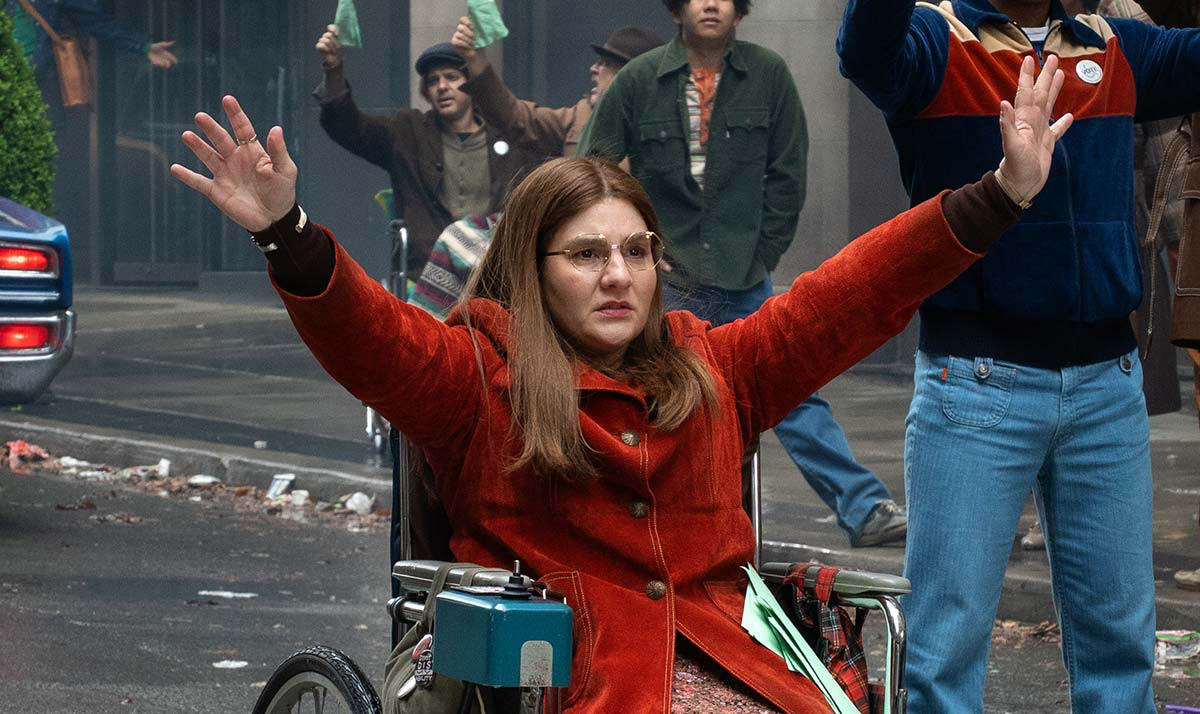
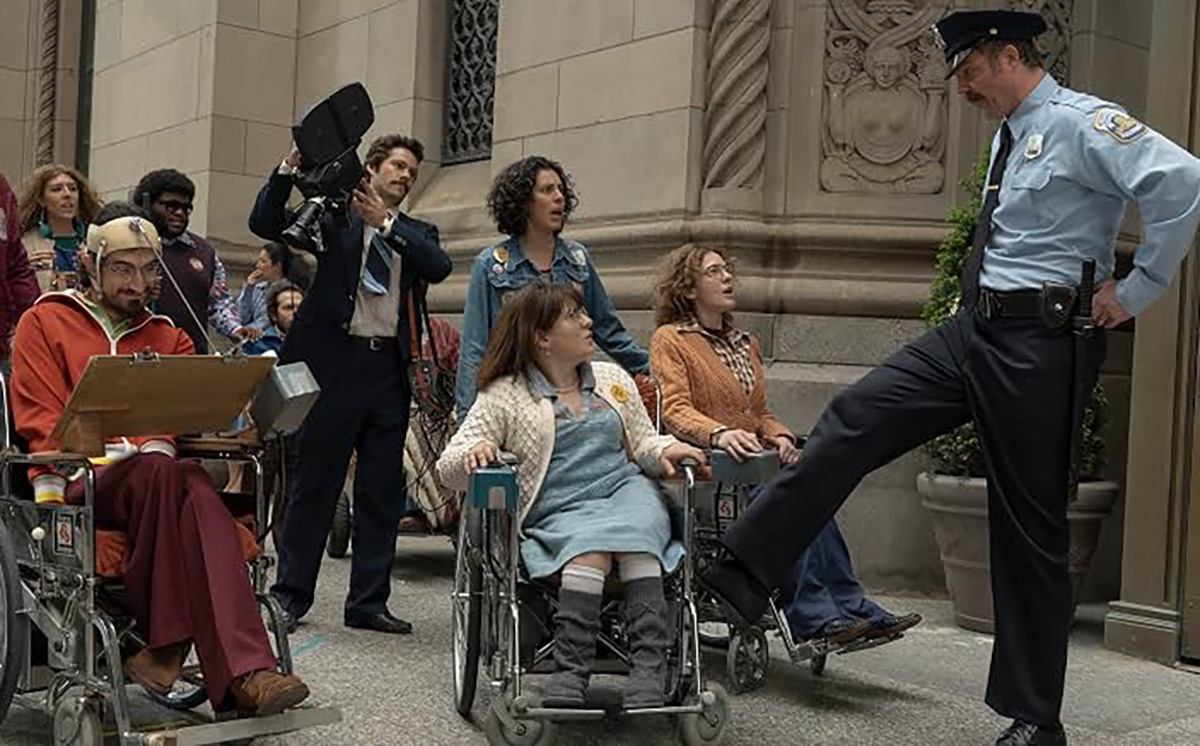
The film opens with a young disabled woman navigating a crowded city street in a wheelchair. At first, it feels like an ordinary scene of someone trying to move through traffic and around the difficulties of the street. But as the scene develops, it becomes clear that this is more than an introduction to a character. It establishes the barriers she and other disabled people faced and prepares the audience for the larger struggle that follows.
Later, it becomes clear that this is not simply a woman taking a ride through the city. It is a deliberate act and part of a larger argument about accessibility, discrimination, and the rights of disabled people. The woman is Judy Heumann, the disability rights activist at the center of Siân Heder’s film.
An Important Chapter in Civil Rights History
That opening is important because the film does not require the audience to know the complete history of Heumann or the disability rights movement beforehand. Instead, the audience gradually discovers that history through the story.
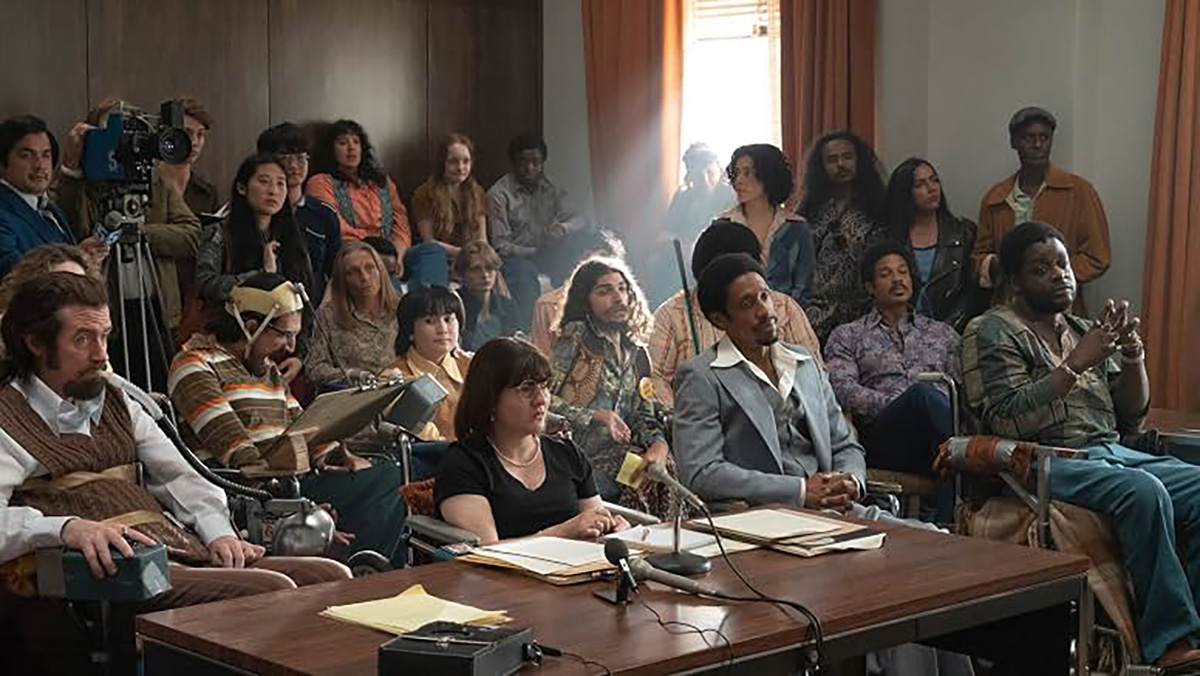
Heder, who previously directed “CODA,” approaches “Being Heumann” as a dramatic feature rather than a documentary. The film draws on Heumann’s memoir and focuses heavily on the 1977 occupation of a federal building in San Francisco, when disabled activists and their supporters demanded that the government enforce disability rights protections. The film presents the occupation as a collective struggle rather than simply the story of one person.
The subject itself gives the film considerable importance. This is an important chapter in American civil rights history, and bringing that history to a broad movie audience makes it accessible to people who may know little about the movement. But “Being Heumann” is not presented as a documentary reconstruction. It uses dramatic scenes, character development, humor, and emotional moments. That creates both the film’s strength and some questions about its storytelling choices.
The Film is Really About a Movement
Ruth Madeley, who plays Judy Heumann, is central to that process. Her performance allows the audience to experience Heumann not simply as a historical figure, but as a person with determination, frustration, humor, and imperfections. Madeley does not present Judy as someone who is always easy to deal with. At times, she can be demanding and uncompromising. Her attention remains focused on achieving rights for disabled people, even when her attitude creates difficulties for those around her.
That characterization is one of the things I appreciated most about the film. Biographical films often emphasize the positive qualities of their subjects. Being Heumann allows Judy to have shortcomings and difficult moments. She is presented as a human being rather than an untouchable historical figure, which, for me, makes the character more believable.
At the same time, the title can be somewhat misleading if it leads viewers to expect a story exclusively about one person. Judy Heumann is at the center, but the film is really about a movement. Many people appear throughout the story, and their individual contributions become part of the larger struggle.
The Humanity of Judy Heumann
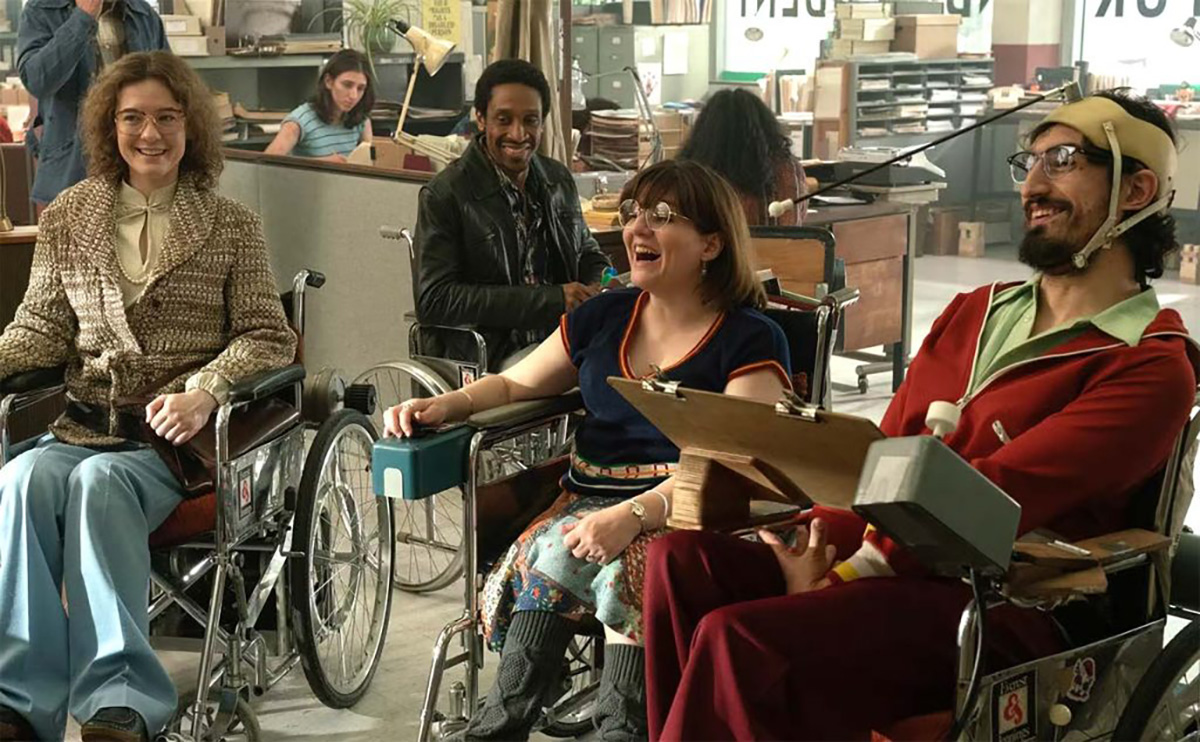
That is important because the disability rights movement was never the work of one person. The film gives visibility to people who might otherwise remain largely unknown outside the history of the movement. Judy may provide the central character, but the larger story belongs to a community.
Rather than attempting to tell every stage of Judy’s life, Heder concentrates on the period in which Heumann’s activism became part of a larger national struggle. This allows the film to use one person’s experience to show the work of many people.
The film is also very much a Hollywood drama. Some scenes can feel melodramatic, and there are moments when it seems particularly conscious of its audience. I would not necessarily consider that a serious weakness. A film dealing with a major historical movement still has to communicate with a contemporary audience. Being Heumann uses familiar dramatic techniques without, in my view, completely sacrificing the seriousness of its subject.
Humor is Woven Throughout
Humor is part of that approach as well. The comedy generally grows out of the characters and their lives rather than completely interrupting the story. This helps prevent the movement from being presented only as a series of serious historical events. The people involved are also shown as individuals with personality, relationships, and ordinary human interactions. There are a few melodramatic moments that may raise questions for critics who prefer a more restrained treatment of historical events, but I did not feel that those moments destroyed the spirit of the story.
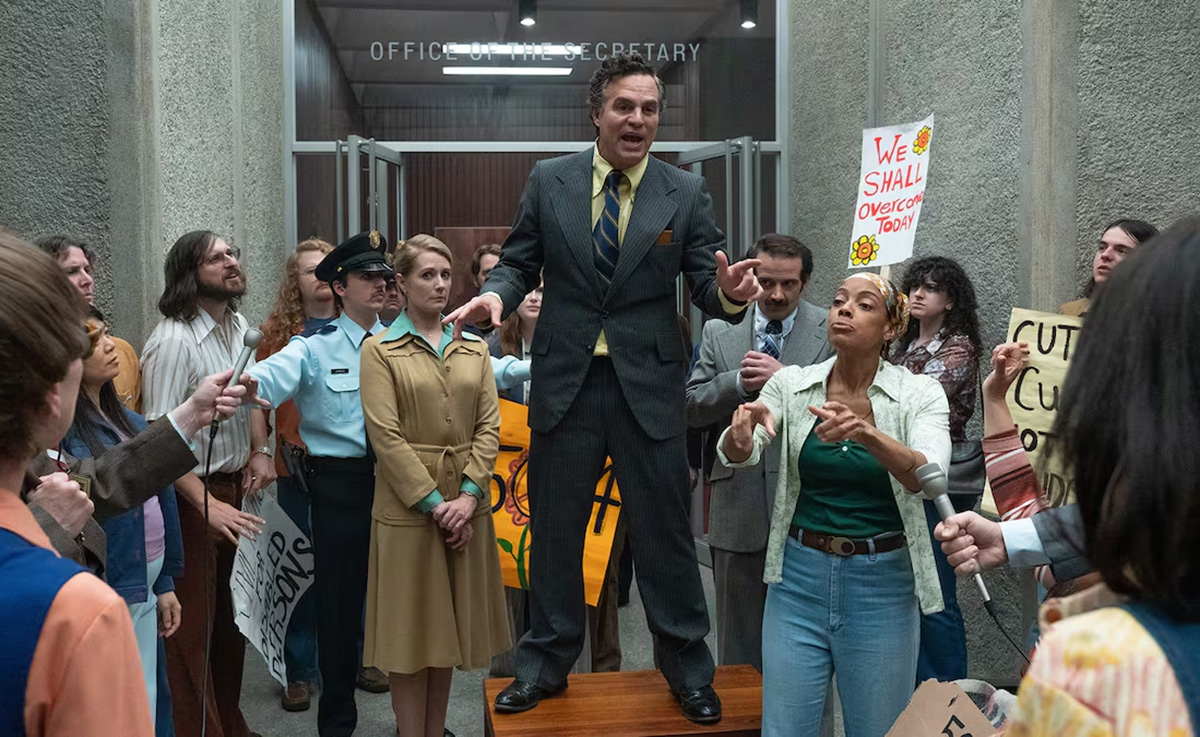
The supporting cast also helps maintain the larger perspective. Mark Ruffalo plays Joseph Califano, while Dylan O’Brien, Madeline Delp, Rob Delaney, Ray Fisher, Michael Patrick Thornton, Daniel Durant, Jon Beavers, and Roberta Colindrez are among the actors portraying people connected to the story and movement. O’Brien plays journalist Evan White.
Some Possible Dramatic License
There is, however, one element that I found less convincing: Evan White. At times, the attention given to the journalist seemed greater than what was logically necessary for the development of the story. While White was among the journalists covering the occupation, I found the amount of narrative emphasis given to his role less convincing than the treatment of most of the other characters.
From a production standpoint, the film generally avoids excessive visual experimentation. The costumes, settings, and production design fit the period, while the camera work serves the story rather than competing with it. I found that approach appropriate. The film does not need unusual photography to communicate its historical setting; its strength is in the people and events being portrayed.
Another question that naturally comes with a film like “Being Heumann” is how closely the dramatized story follows the historical events on which it is based, particularly the fight for the enforcement of Section 504. Because it is a dramatic feature, it inevitably raises questions about which events have been condensed, rearranged, or given greater dramatic importance.
The Story Doesn’t End with one Woman
For me, the more important question is whether the dramatization preserves the larger reality of the movement and the people who participated in it. Historical accuracy deserves examination because once a dramatized version becomes someone’s primary introduction to history, the choices made by the filmmakers matter. “Being Heumann” invites that discussion without needing to be treated as a documentary reconstruction of every event.
Ultimately, “Being Heumann” accomplishes what it sets out to do. It brings an important part of American civil rights history to popular cinema while keeping the people involved at the center of the story. It is not without dramatic compromises, and some of its audience-friendly choices may invite criticism. But those choices do not erase the value of the film. What remains is a story about Judy Heumann, but also about the many people who stood with her and helped turn a demand for accessibility and equality into a much larger movement.
That may ultimately be the most meaningful aspect of “Being Heumann:” the story begins with one woman, but it does not end with one woman.