


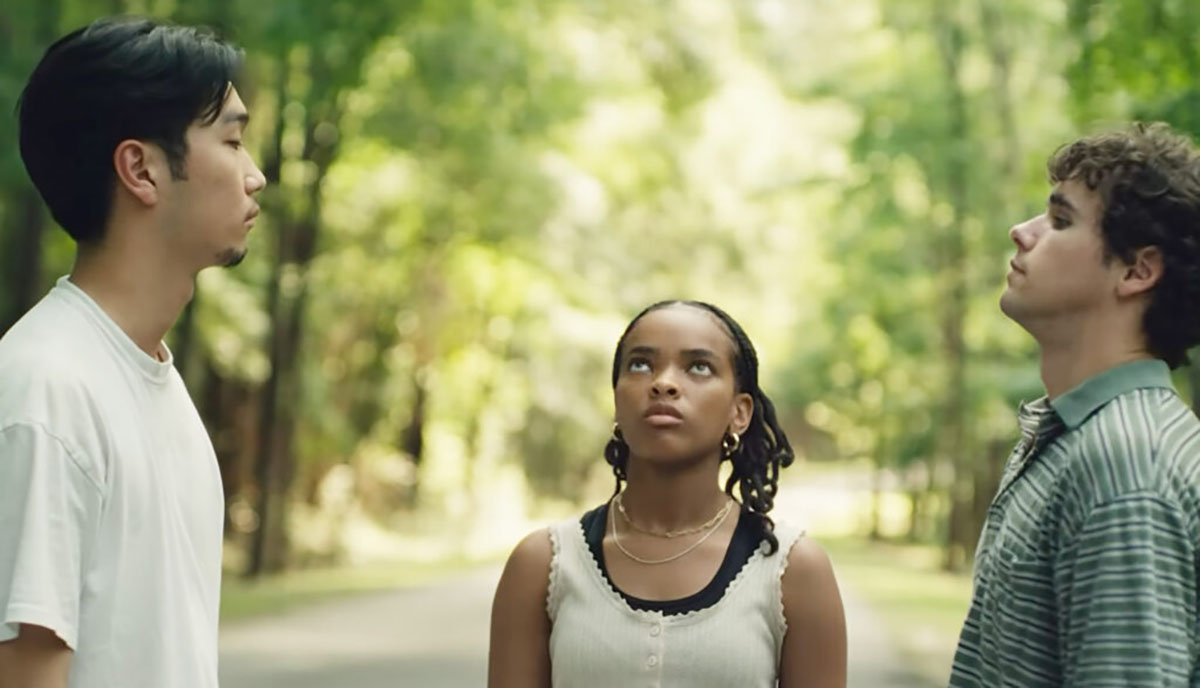
“It Ends” has the kind of easy hook premise that makes you wonder how nobody made this movie already.
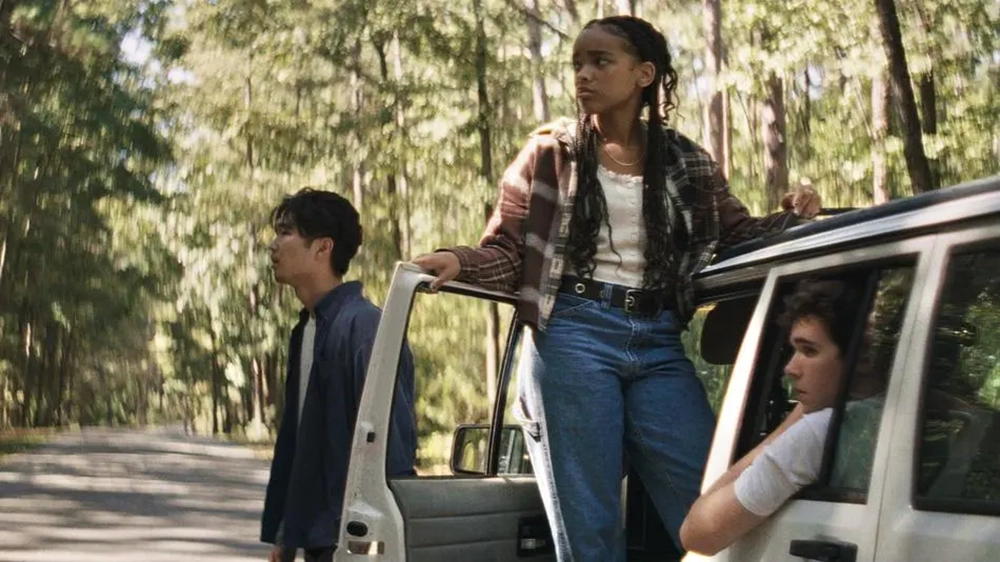
Four friends, freshly graduated from college, are on a road trip when they miss a turn and realize that the road they’re driving on does not end. That’s basically it. There is a car. There are some trees. There is a road. They keep driving.
If there’s a dominant mode in young-person horror right now, it’s liminal spaces. “Exit 8,” “Backrooms,” even “Severance”—movies and shows about hallways, offices, subway stations and other spaces designed specifically to get you somewhere suddenly deciding that you’re actually never going to arrive. “It Ends” takes that idea and strips it down to its cheapest possible form: what if the liminal space was just a long road?
Writer-director Alexander Ullom gets a surprising amount out of (pardon the pun) mileage from that.
A Typical Road Trip at First
James, Day, Fisher and Tyler are recent college graduates taking one last trip together, and the movie spends a good amount of time just letting them shoot the shit in the car. They talk about nothing. They argue. They tell dumb stories. It feels reasonably close to being stuck on a road trip with actual twentysomethings, which ends up being enormously important because eventually there is almost literally nothing else for the movie to do.
At first, “It Ends” appears to be setting up a much more conventional horror movie. They realize they’ve been passing the same landmarks. They get out of the car. People start pouring out of the woods and trying to get inside. Okay, great. Creepy road people. We have our movie.
Except we don’t.
The car never runs out of gas. Nobody gets hungry. Nobody needs to sleep. They can apparently drive forever, which is a much worse problem than running out of gas.
Ullom Has the Nerve to Flirt with Boredom
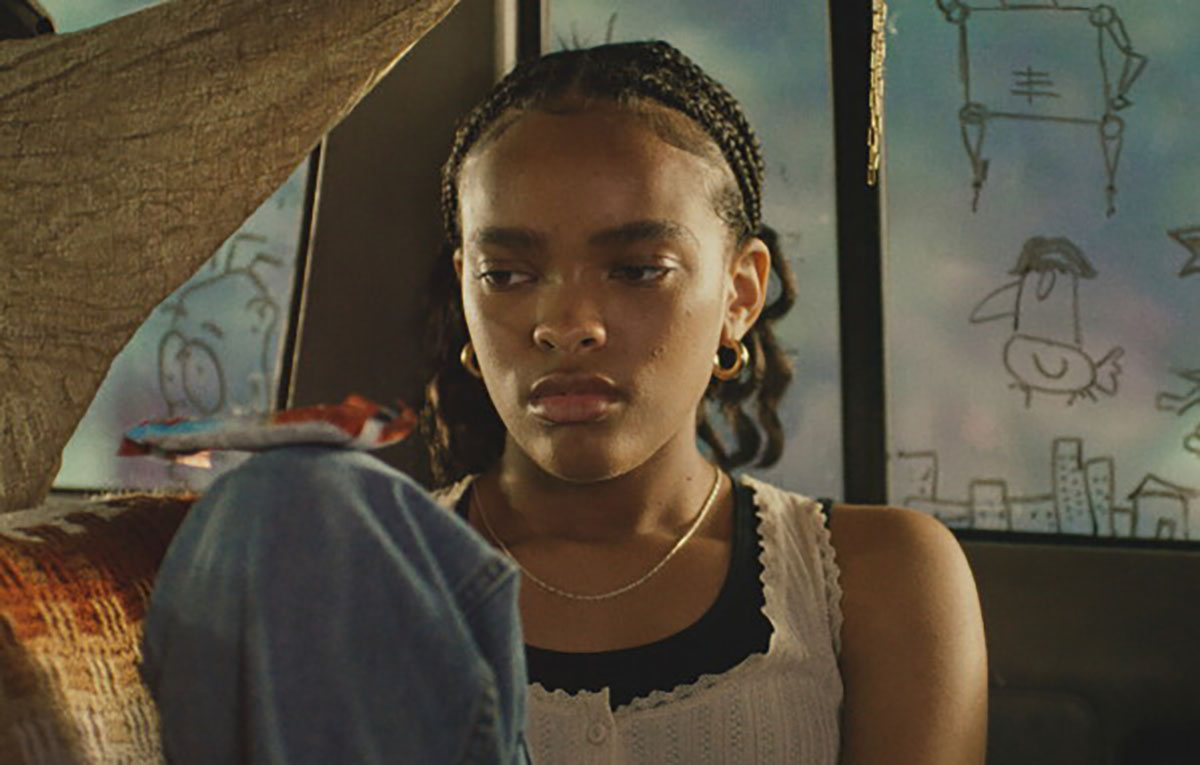
Once the characters realize that, the movie basically begins dismantling itself. The survival thriller goes away because survival no longer seems to be an issue. The mystery stops behaving like a mystery because there may not be an answer. Even the people running out of the woods gradually seem less like monsters than other poor souls caught in whatever this is.
All that’s left is the road.
And the road is boring.
I mean that as both criticism and compliment.
“It Ends” becomes increasingly, deliberately enervating. There are stretches where watching it feels a little like being subjected to the same experiment as the characters: I understand that nothing happening is the point, but unfortunately that still means I’m sitting here watching nothing happen. There is always a danger with this sort of thing that “intentionally boring” eventually just becomes “boring,” and I’m not sure Ullom completely escapes it.
But I also kind of love that the movie has the nerve to do it.
‘It Ends’ Doesn’t Expand Upon its World
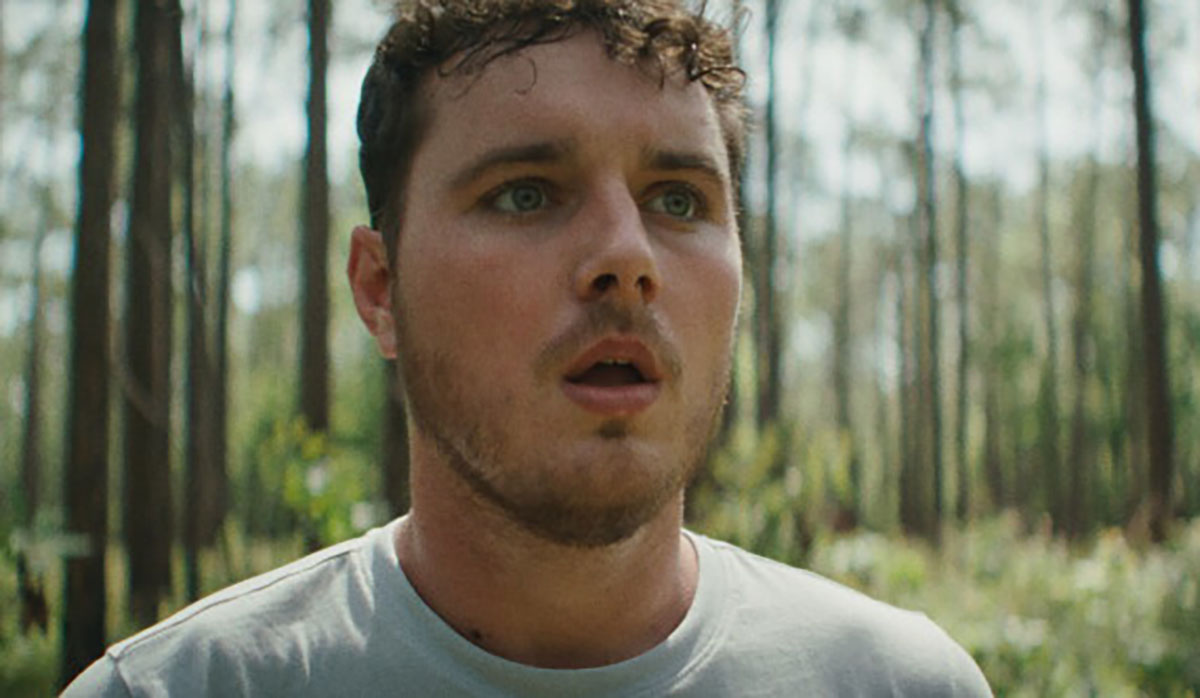
I’m a sucker for movies built around one simple idea that they just keep pushing until the idea starts swallowing the movie around it, and “It Ends” is very good at that. Most high-concept horror keeps giving you more. Another monster. Another room. Another rule. Some guy eventually finds a file explaining that Dr. Plotdevice opened the Infinite Road Portal in 1987.
This movie keeps giving you less.
That is also what separates it from something like “Exit 8” or “Backrooms”. “Exit 8” is based on a video game, so underneath all the existential creepiness there is still the reassuring structure of a game: notice the anomaly, understand the rules, find the exit. “Backrooms” eventually opens itself up into this enormous non-Euclidean world that can be explored, studied and exploited.
You can already imagine the Wiki.
“It Ends” has absolutely no interest in giving you a Wiki.
Some Real Life Parallels
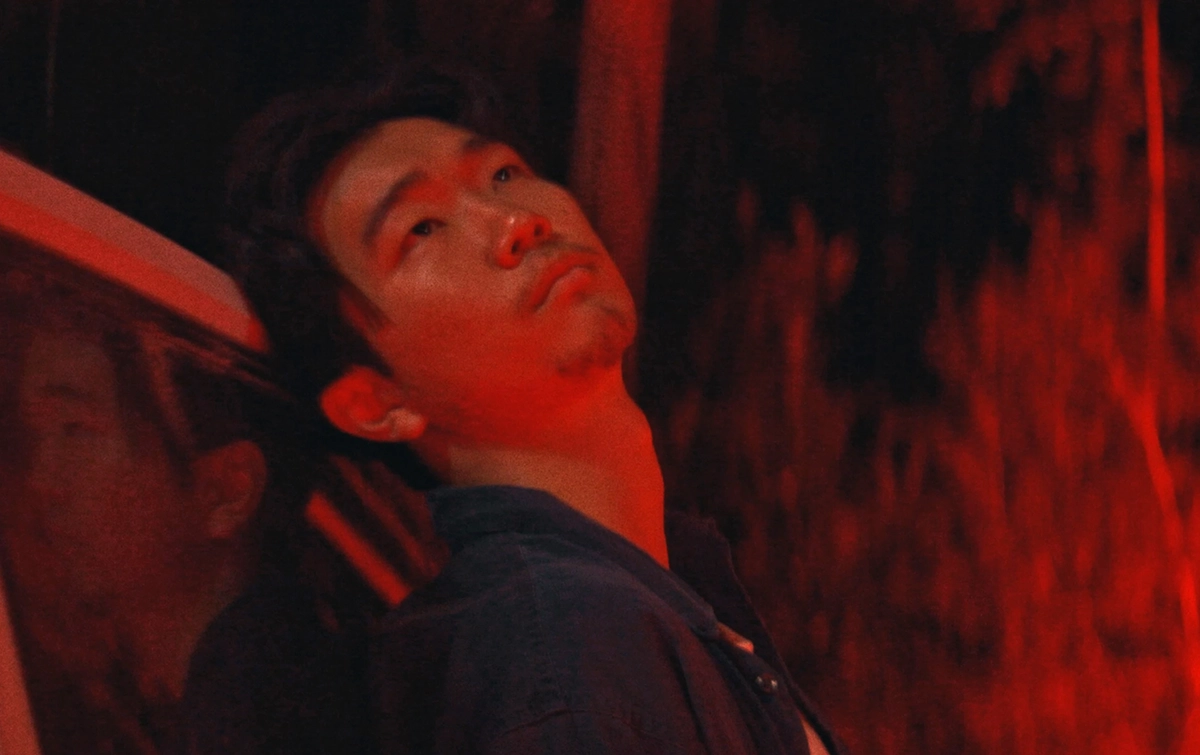
The characters obviously try to figure it out. Maybe they’re dead. Maybe this is purgatory. Maybe there’s some recurring pattern they haven’t noticed yet. James (Phineas Yoon) becomes increasingly fixated on the idea that there must be rules, because if there are rules then presumably there is a way to beat them.
But what if there aren’t?
The smartest thing Ullom does is never treat any of these theories as the answer. The characters talk openly about purgatory and recurrence and what the hell any of this means, but the movie never turns around and congratulates itself for being philosophical. It trusts you to understand what an endless road might mean without having Phinehas Yoon look directly into the camera and explain existentialism.
And there are about a dozen perfectly valid ways to read it.
The endless road is obviously a pretty clean metaphor for the infinite scroll: constantly moving, constantly being given something new to look at and somehow never getting anywhere. Every few seconds there is another post, another video, another thing, forever. Forward momentum with absolutely no destination.
An In Between Place in Life
But I think the graduation angle is even better.
These are four people at the exact point in their lives where one thing has ended and everyone expects the next thing to immediately begin. College is over. Now you become an adult. Get a job. Get an apartment. Fall in love. Fuck up. Have a kid. Get divorced. Whatever. Time starts accumulating through milestones.
Instead, they get stuck permanently between the ending and the beginning.
They don’t work. They don’t eat. They don’t sleep. They don’t seem to age in any meaningful way. There are no birthdays or weekends or Monday mornings. Eventually there isn’t even much reason to know what day it is.
Which makes calling the movie “It Ends” extremely funny in a very bleak way.
As the film goes on, Ullom starts making bigger and bigger jumps forward in time, and this is where the movie really got under my skin. At first you’re trying to keep track of how long they’ve been out there. Eventually that becomes pointless too.
Life Continues on Even in Unimaginable Situations

And the thing I found most disturbing isn’t that these people might have to drive forever.
It’s that eventually they get used to it.
Human beings are extremely good at normalizing horrible situations. Something happens that seems completely unimaginable and then six months later you have a routine built around it. The friends still talk. They fight. They make jokes. Life continues because apparently life is capable of continuing under almost any circumstances.
That scared me more than anything running out of the woods.
Which is good, because “It Ends” is otherwise not particularly scary.
I’m not sure that’s actually a meaningful complaint here. Ullom seems much more interested in existential exhaustion than making you jump out of your seat. Still, I never felt completely swallowed by the movie either. The four actors are charming and credible, and their chemistry does an enormous amount of heavy lifting, but there was always a little distance between me and what was happening. I admired the idea more consistently than I felt it.
The True Horror of it All
And yet I kept going with it.
There is something incredibly refreshing about a low-budget horror movie that understands its central idea well enough not to ruin it by explaining everything. No mythology dump. No last-minute revelation about who built the road. No tease for It Ends 2: The Road Gets Wider.
Just four people moving forward forever.
“It Ends” occasionally exhausted my patience, but I think that exhaustion is inseparable with what makes it work. It takes an incredibly simple horror premise and slowly removes everything pleasurable and familiar about the genre until you’re left with repetition, friendship and the horrible realization that there may be nothing waiting at the end.
Assuming there even is one.