

There’s something deeply rewarding about returning to a filmmaker whose cinematic language you’ve become intimately familiar with. The recurring characters, relationships, anxieties, and obsessions begin to feel like variations on a larger work, each new film enriching your understanding of everything that came before it. James Gray is one of those filmmakers for me. His films return again and again to brothers, fathers, family obligations, looming criminal threats, and the elusive promises of the American Dream. Rather than feeling like a filmmaker repeating himself, each recurrence adds another piece to an increasingly complicated portrait of American life.
“Paper Tiger” is a James Gray film through and through, and a remarkable one at that.
The film opens with a quotation from Aeschylus: “Let there be wealth without tears; enough for the wise man who will ask no further.” It’s a fitting invocation for a story about people whose ambitions are relatively modest, whose intentions aren’t entirely dishonorable, and whose pursuit of financial security threatens to destroy everything they’re trying to protect. Gray establishes the terms of the tragedy before we’ve even met these characters. The danger isn’t necessarily in wanting too much, but in discovering how much suffering can come from wanting just a little more.
A Straightforward Opportunity at First
Set in 1986 Queens, “Paper Tiger” follows Irwin Pearl (Miles Teller), an environmental engineer and family man running a small business while raising two sons with his wife, Hester (Scarlett Johansson). Irwin isn’t looking to become a millionaire. He’s worried about paying for his children’s college education and providing his family with a little more financial security.
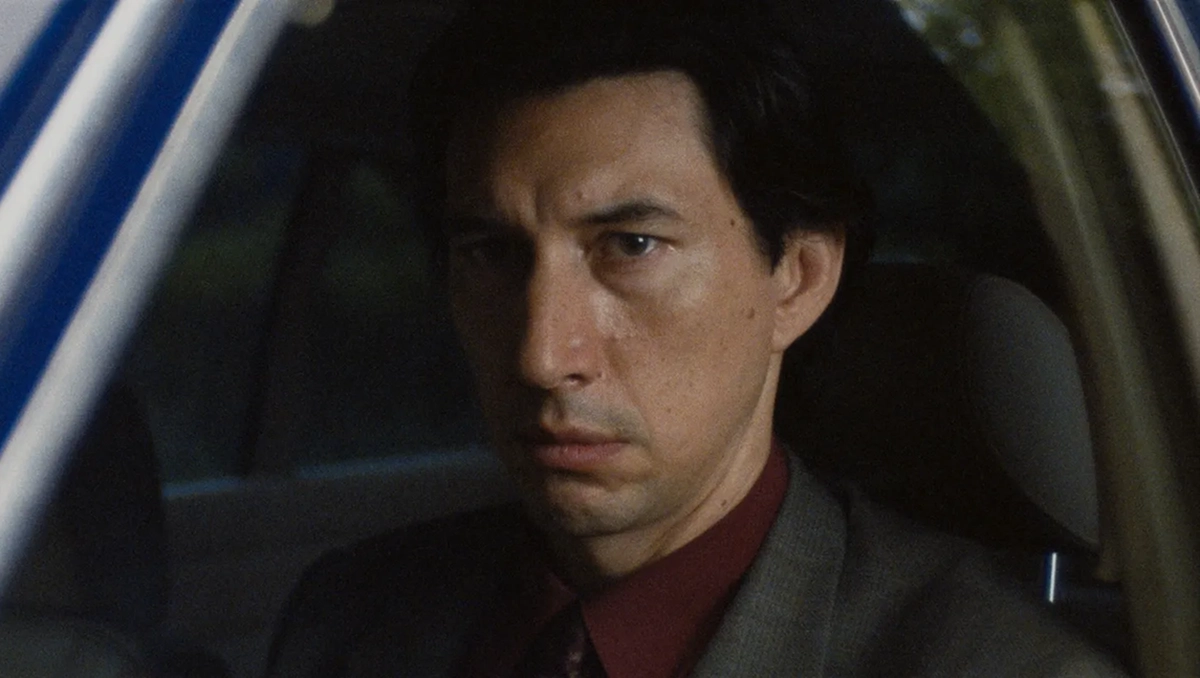
Enter his older brother Gary (Adam Driver), a former NYPD officer turned businessman who seems to have figured out how to get ahead. Gary is a peacock of a man, a charming, well-connected hotshot who drives a nicer car, commands attention wherever he goes, and possesses precisely the sort of confidence Irwin lacks. He approaches his younger brother with a lucrative proposition involving a redevelopment project along Brooklyn’s polluted Gowanus Canal. The idea is to use Irwin’s engineering expertise to help a group of Russian businessmen navigate environmental regulations. It sounds like a straightforward opportunity for the brothers to make some money together.
Naturally, things are considerably more complicated. Their new business associates have ties to the Russian mafia, and when Irwin witnesses something he shouldn’t during an ill-advised visit to the property, he inadvertently places his family in danger. Gary, who believes he understands the criminal underworld well enough to negotiate his way out of trouble, only succeeds in making matters worse. Meanwhile, Hester is quietly confronting a medical crisis of her own, leaving Irwin caught between his loyalty to his brother, his obligations to his wife, and his increasingly desperate attempts to protect his children.
Driver Effortlessly Commands Scenes
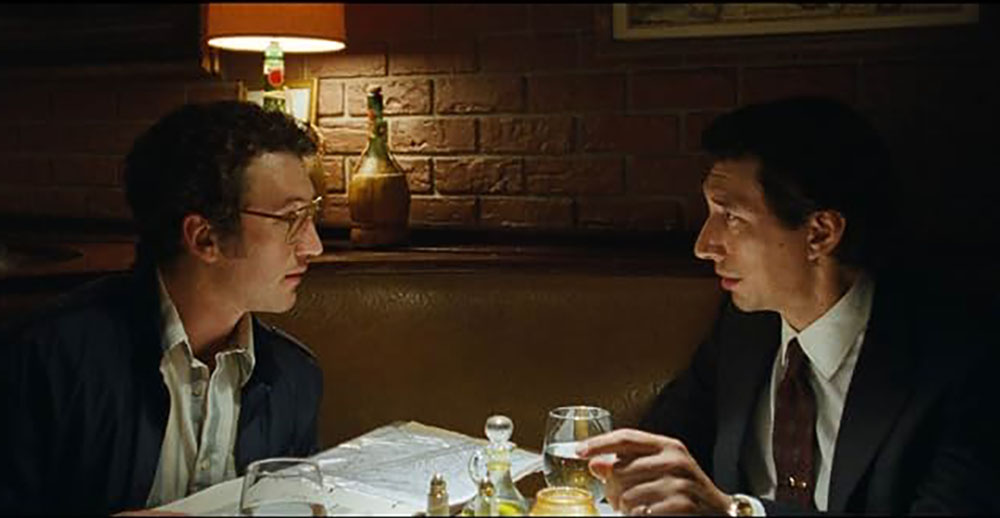
At the center of the film is the relationship between two brothers whose wildly different approaches to life make their shared predicament both compelling and heartbreaking. Teller plays Irwin as a prideful, naive, working-class family man, the sort of middle-aged schmuck Albert Brooks might have played in another era. He’s desperate to participate in the American Dream but fundamentally unequipped to navigate the systems that supposedly make it possible. Driver, meanwhile, plays Gary as a man who seems to float above every room he enters, convinced that he understands how the world works even as he repeatedly demonstrates otherwise.
Driver is a quiet force of nature here, effortlessly commanding scenes while playing someone whose confidence is as dangerous as his incompetence. He enters situations convinced he can improve them and instead makes everything worse. Teller hasn’t been this good in ages, finding something genuinely tragic beneath Irwin’s pride and naivety. Together, they create a sibling rivalry that’s simultaneously pathetic, funny, and devastating.
Neither brother is chasing unimaginable wealth. They want the security and dignity they’ve been told are available to them, but the capitalist machinery they’re attempting to navigate seems almost designed to punish their humanity. Gary knows the rules but can’t follow them successfully; Irwin wants to participate but doesn’t understand them at all. Their ethical instincts, however imperfect, may be the very things preventing them from succeeding.
Autobiographical Origins Remain Central
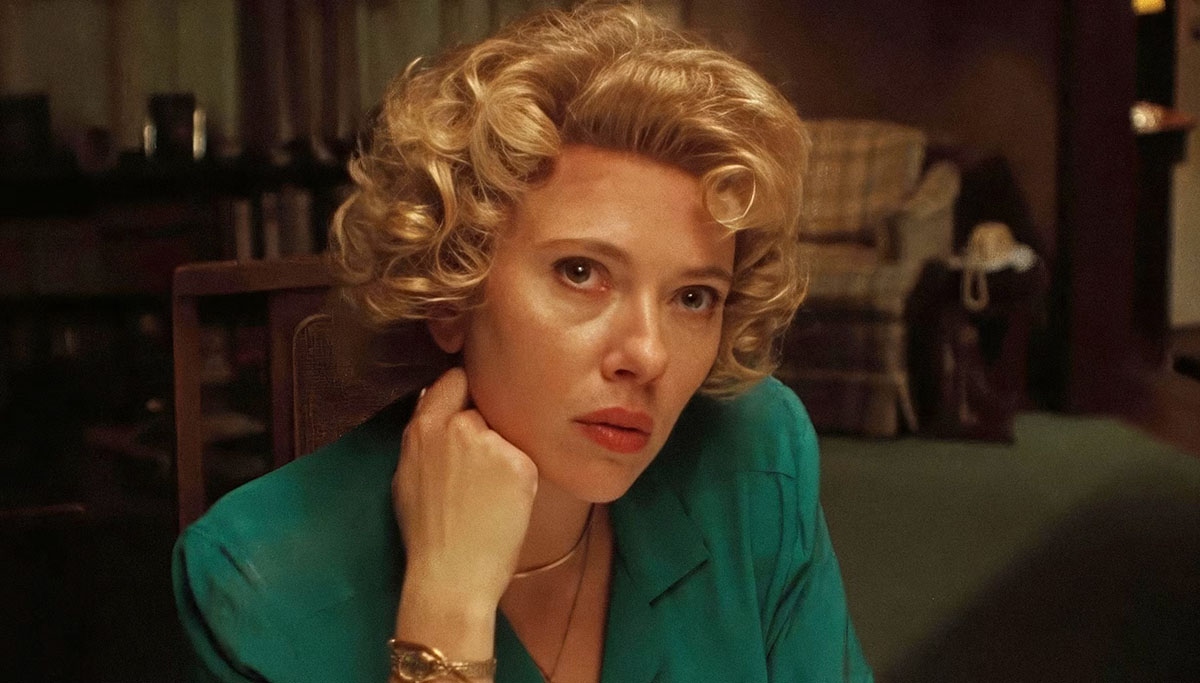
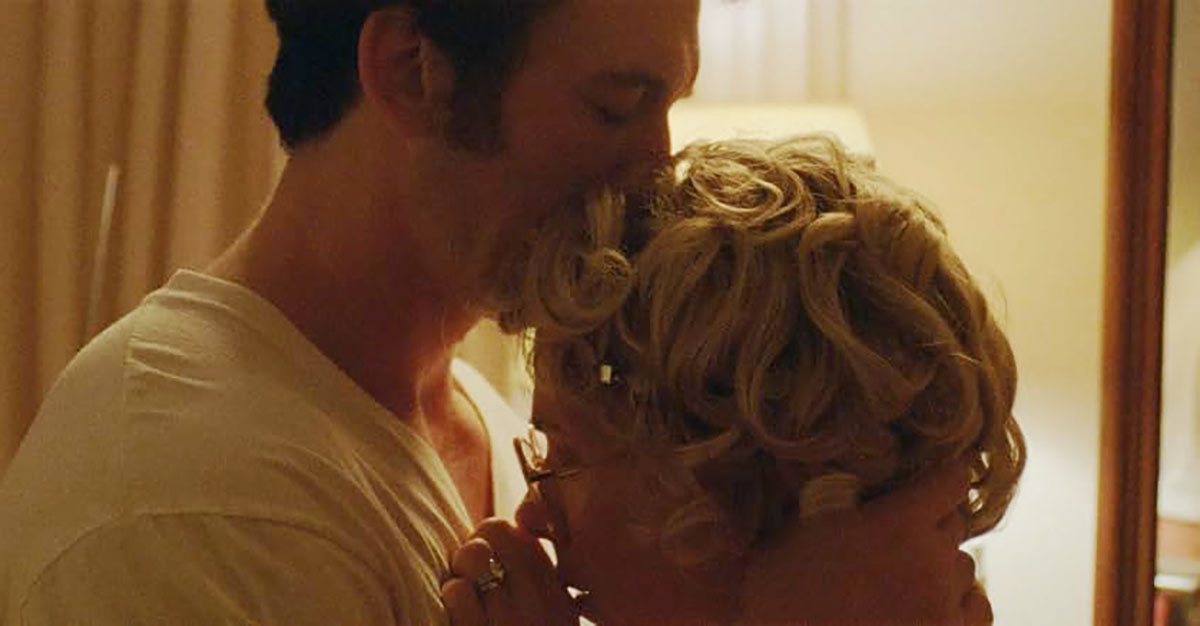
Johansson is quite good as Hester, although there are moments when she seems more intent on disappearing into the role than either of her male co-stars. It’s an interesting contrast to Driver’s commanding presence and Teller’s more openly expressive performance. Her storyline is the least directly connected to the film’s criminal entanglement, but it becomes essential to the story Gray is ultimately telling, especially the different movie that seems to emerge from the wreckage of its initial premise. There’s a sequence in which Hester receives a medical diagnosis that’s among the finest work Johansson has ever done, an extraordinarily controlled piece of acting that allows the character’s private fears to register without overwhelming the scene.
“Paper Tiger” originally began development as a sequel to “Armageddon Time,” with Anne Hathaway and Jeremy Strong expected to reprise their roles as fictionalized versions of Gray’s parents. Although the project evolved into a separate film, its autobiographical origins remain central to its identity. In “Armageddon Time,” we experience the family largely through the perspective of Gray’s younger self, with his parents occupying the complicated, sometimes frightening, sometimes loving roles that parents inhabit in a child’s understanding of the world. “Paper Tiger” effectively reverses that perspective.
Here, the characters played by Teller and Johansson become the focal point. The children are still present, but Gray is far more interested in the private anxieties, compromises, and failures of the adults raising them. It’s a fascinating shift, allowing him to revisit the same familial experiences with the perspective of someone old enough to recognize that his parents were struggling with circumstances he couldn’t possibly have understood as a child. The father who once seemed stubborn or distant becomes a man desperately attempting to provide for his family, while the mother becomes someone confronting her own mortality.
An Extraordinary Genre Filmmaker
Taken together, “Armageddon Time” and “Paper Tiger” feel like two halves of an autobiographical project, and something of a skeleton key to Gray’s entire filmography. The earlier film examines what it means to grow up within a particular family and social environment; the latter asks what it means to be responsible for sustaining that family when the world seems determined to tear it apart. The shift from childhood recollection to Hitchcockian crime melodrama demonstrates how Gray can translate deeply personal material into genre filmmaking without sacrificing its emotional specificity.
And Gray is an extraordinary genre filmmaker. Compared with contemporaries like Quentin Tarantino and Paul Thomas Anderson, he’s always seemed considerably less interested in calling attention to his own virtuosity. His sensibilities feel more closely aligned with the classical American filmmaking of William Friedkin, Sidney Lumet, and Francis Ford Coppola. He wears those influences beautifully, drawing on their command of character, atmosphere, and visual storytelling without merely imitating them. There’s a restraint to his filmmaking that makes his occasional eruptions of violence all the more startling.
Three sequences in “Paper Tiger” rank among the finest work of his career. A shootout in tall grass near an airport is one of the best I’ve seen in perhaps a decade, an astonishingly controlled eruption of violence that demonstrates just how masterfully Gray can stage action. A home invasion becomes an exercise in shadow and suggestion worthy of Val Lewton, transforming familiar domestic space into something nightmarish. And an encounter between the children and the Russian mob is genuinely haunting, a sequence that feels closer to horror filmmaking than conventional crime drama.
A Richly Observed Crime Tragedy
These aren’t simply impressive set pieces. They’re expressions of the film’s larger anxieties, moments when the threats hovering around the family become horrifyingly tangible. Gray understands that violence is often most frightening not when it’s spectacular, but when it intrudes upon spaces and relationships that should offer protection.
“We Own the Night” remains my personal favorite of Gray’s films, but what makes his filmography so rewarding is the way each work deepens the others. His recurring preoccupations aren’t evidence of a one-trick pony. They’re the vocabulary of an artist who has spent decades refining the same questions without exhausting them.
“Paper Tiger” is an intimate, lived-in, muted, and richly observed crime tragedy about people who want relatively little from life and nevertheless find themselves destroyed by the pursuit of it. The performances are exceptional, the filmmaking is frequently breathtaking, and the accumulated weight of everything Gray has made before gives this film an extraordinary resonance.