


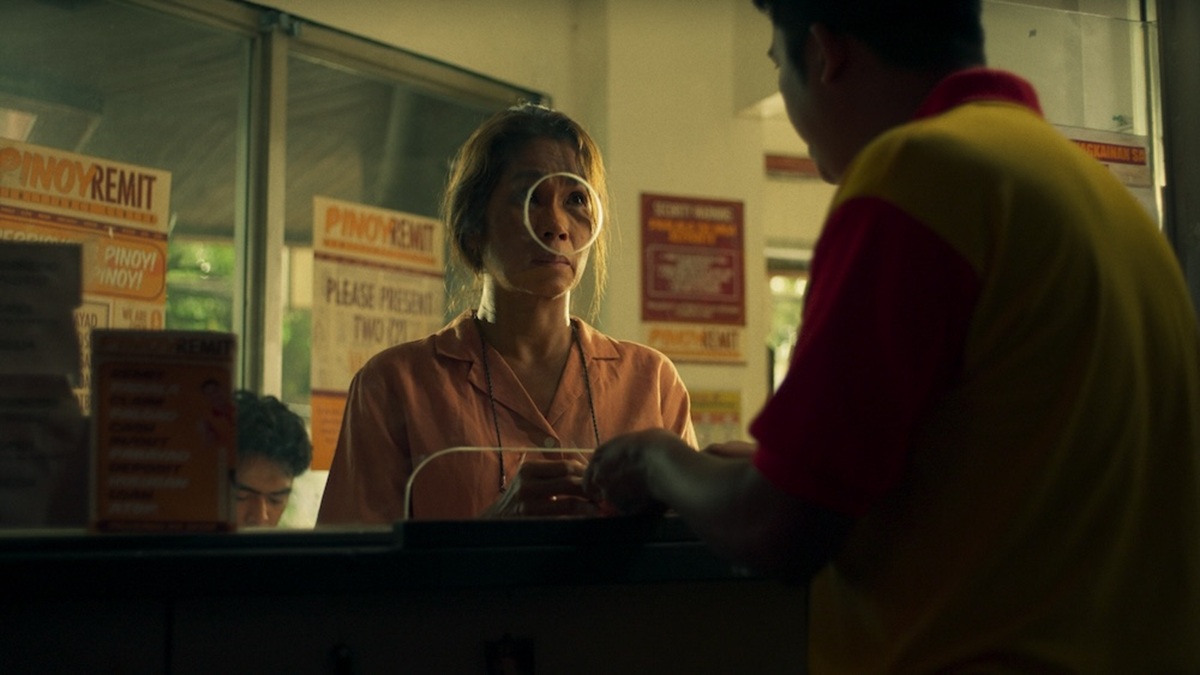
The money is already there. That’s what makes “2 Valid IDs” so infuriating.
Sylvia (Marietta Subong, better known as Pokwang) isn’t scrambling to find someone willing to pay for her husband Ramon’s (Joey Marquez) medical care. Her aunt in New Zealand has already sent more than enough to help with his mounting bills and, hopefully, move him somewhere better equipped to treat his severe COPD. After an extended stay in a crowded public hospital, both husband and wife are exhausted. Medicines cost money. Supplies run low. Beds are packed together. Patients, relatives, and caregivers occupy whatever space they can find while too few healthcare workers try to attend to too many people.
Then Sylvia goes to collect the remittance and learns she needs two valid IDs.
She has one: a PhilHealth card. It isn’t accepted.
There’s a particularly Filipino absurdity in seeing an identification card issued by the government’s national health insurance system deemed insufficient while its owner is desperately trying to pay for healthcare. Sylvia explains herself. She pleads. She insists she isn’t running a scam. None of it matters. The employee behind the counter can only offer the sentence anyone who has spent enough time dealing with Philippine institutions learns to dread: Pasensya na po. Policy po namin. (I’m sorry. It’s just company policy.)
And off Sylvia goes.
Ma-an L. Asuncion-Dagñalan’s film, written by Abet Pagdagdagan Raz, turns that absurd requirement into an obstacle course through Philippine bureaucracy. Getting money requires identification. Obtaining identification requires other documents. Acquiring those documents means more offices, more forms, more fares, more waiting, more money, more hours away from the hospital, and eventually the possibility of paying someone who knows how to make the system move faster.
For people with money, inconvenience is irritating. For Sylvia, time spent waiting in line could mean the difference between getting Ramon the treatment he needs and arriving too late.
More Cinemalaya 2026: ‘Ganggang’ Explores Bullies Learning to Carry Bigger Weapons
We Are All Sylvia
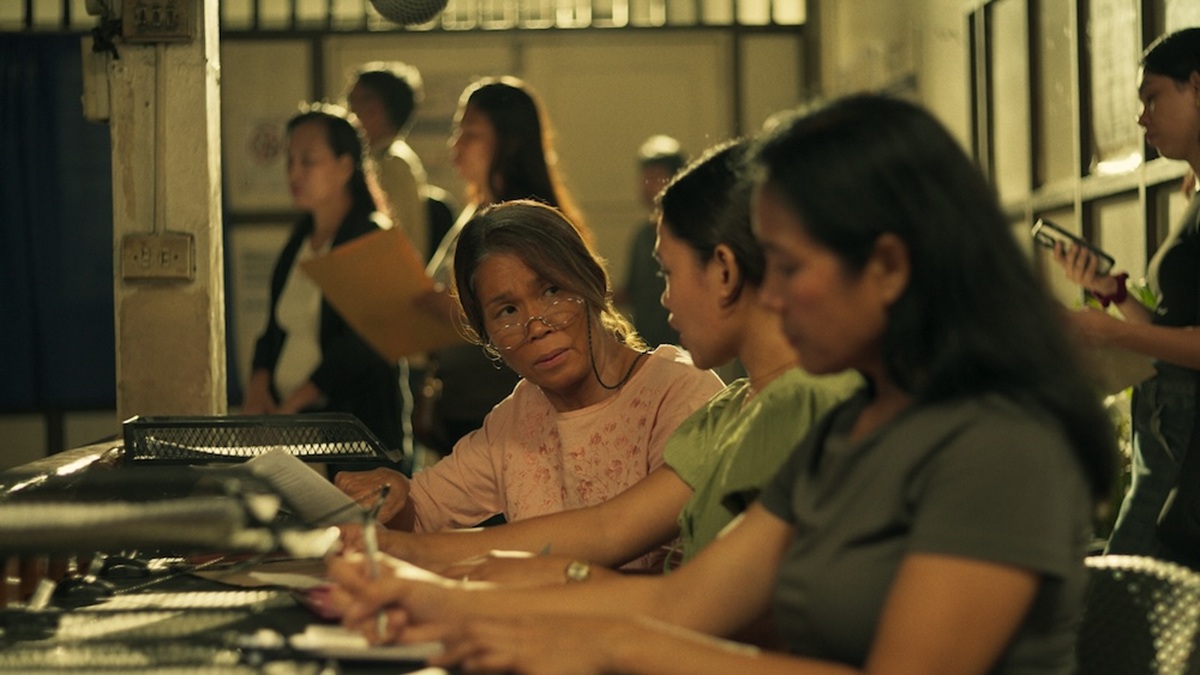
There’s a reason Filipino audiences laugh at some of Sylvia’s predicament before the laughter curdles into anger. We know this. Maybe not her exact circumstances, but the ritual is familiar: take a number, fall in line, discover you’re missing a photocopy, find somewhere to photocopy it, return, wait again, approach another window, get redirected to another floor, learn that the document you brought isn’t considered valid for the thing you need it to validate. Rules meant to prevent fraud somehow punish most efficiently the people least equipped to navigate them. “2 Valid IDs” recognizes that bureaucracy is also a class system.
At one office, Sylvia waits for hours alongside other working-class Filipinos who have surrendered an entire morning to government processing. She’s hungry and increasingly desperate. Then a wealthier woman arrives, skips the queue, walks straight into an office, hands over what she needs to hand over, and leaves.
Of course she does.
The maddening part isn’t merely that the system is inefficient. It’s that inefficiency seems remarkably negotiable depending on who you are, who you know, or how much leverage you carry through the door. Poor people get procedures. Everyone else seems to know a person.
That idea reaches beyond identification cards and into the hospital where Ramon lies. Dagñalan and cinematographer Neil Daza fill the frame with bodies sharing cramped spaces, families caring for relatives because the institution cannot possibly provide enough hands, and patients whose medical decisions are dictated as much by finances as diagnosis. Ramon may require better care, but “better” in this system comes with a price tag.
Watching the movie, I kept returning to the same thought: we are all Sylvia.
Subong makes that identification almost effortless. There’s a running joke whenever Pokwang takes on dramatic material that the appearance of “Marietta Subong” in the credits means business, but “2 Valid IDs” proves why the joke exists. Sylvia gives her access to the comic performer’s understanding of frustration without asking her to turn the character into comic relief.
She knows precisely how irritation accumulates.
A polite request gets slightly firmer. Another rejection stiffens the face. Hunger shortens her patience. Every employee who recites policy asks Sylvia to remain civil while the circumstances give her increasingly little reason to be. Subong never loses sight of the woman underneath the film’s social argument: a wife who is frightened that every hour spent proving who she is means another hour she isn’t beside the man she loves.
Her exhaustion is recognizable to anyone who has dealt with a government office, public hospital, local agency, or elected official whose accessibility somehow changes once the campaign posters come down. But Sylvia can’t afford the luxury of walking away angry. Ramon still needs medicine. The bills keep coming. Tomorrow means another line.
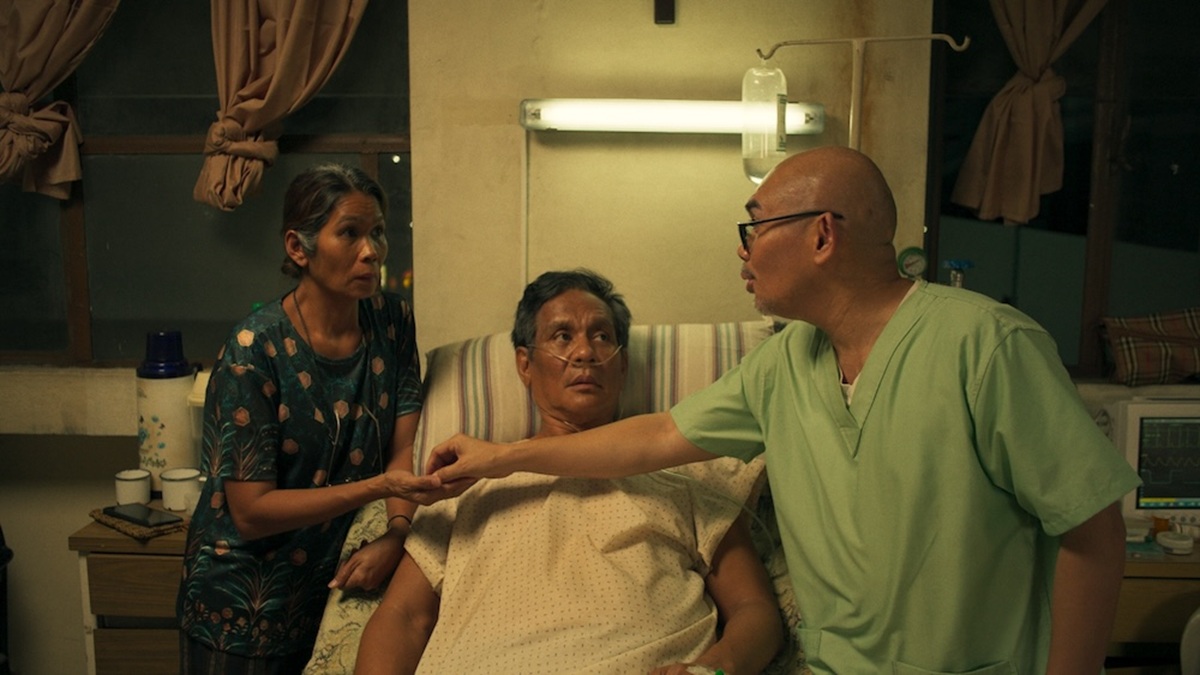
Dagñalan smartly gives her company along the way. Meryll Soriano brings welcome humor and warmth as Mercy, while Zaijian Jaranilla’s Denver, a young man caring for his own hospitalized grandfather, widens the film beyond Sylvia and Ramon without dragging attention from them. These people talk, tease one another, share food, offer advice, and find little ways to help because Filipinos have become very good at building temporary communities inside systems that have failed them.
Marquez, meanwhile, contributes a quieter sadness as Ramon. He repeatedly asks Sylvia to take him home to Ilocos, while she holds onto the possibility that staying in Manila means he can still receive treatment. Their disagreement gives the movie one of its better emotional tensions. Ramon thinks about where he wants to be. Sylvia thinks about keeping him alive. Neither position needs to be wrong for the situation to hurt.
More Cinemalaya 2026: ‘Only Known to Us’, and the Things Love Asks Us to Keep
When Anger Stops Moving
Where “2 Valid IDs” loses me somewhat is precisely where it should hurt most. Dagñalan is hardly subtle, though much of the bluntness appears deliberate. This is a film about institutions whose failures are already visible to anyone willing to look, and softening that anger merely for the appearance of nuance would be its own form of dishonesty. The public hospital is overcrowded. Government services exhaust the poor. Fixers thrive because legitimate procedures are inaccessible. Politicians promise assistance more readily than they provide it. Privilege allows certain people to bypass inconveniences everyone else is ordered to endure.
And for a while, the sheer familiarity of it is staggering. At some point, “2 Valid IDs” almost stops playing like a drama and starts resembling a documentary. You begin wondering whether Sylvia and Ramon are fictional at all, or whether Dagñalan simply planted a camera inside a public hospital and followed one of the countless Filipino families trying to survive it. In that regard, the movie succeeds enormously. It feels frighteningly real.
However, realism alone doesn’t create dramatic movement. The film keeps piling indignity on top of indignity until Sylvia’s ordeal begins to circle rather than progress. The repetition certainly mimics bureaucracy: tiring, circular, seemingly designed to break the person trapped inside it. Some viewers may find that exhaustion essential to the experience. I found myself wanting the film to do something more with the anger it had already earned.
Not solve it. Move it.
A movie this bleak doesn’t owe Sylvia a miracle, and Philippine healthcare certainly isn’t going to be repaired before the credits. Nor does social cinema have to append a tidy call to action to justify making us miserable. But despair still needs shape. A dramatic arc can end lower than where it began while changing our relationship to the anger along the way.
Instead, the closing stretch takes Sylvia to emotional rock bottom and then produces another institutional indignity. The cruelty is entirely plausible. That’s almost the problem. We already know this system can be cruel. After spending the film showing exactly how, its final answer is to show us that it can be cruel one more time. I wanted a little more than another reason to be furious.
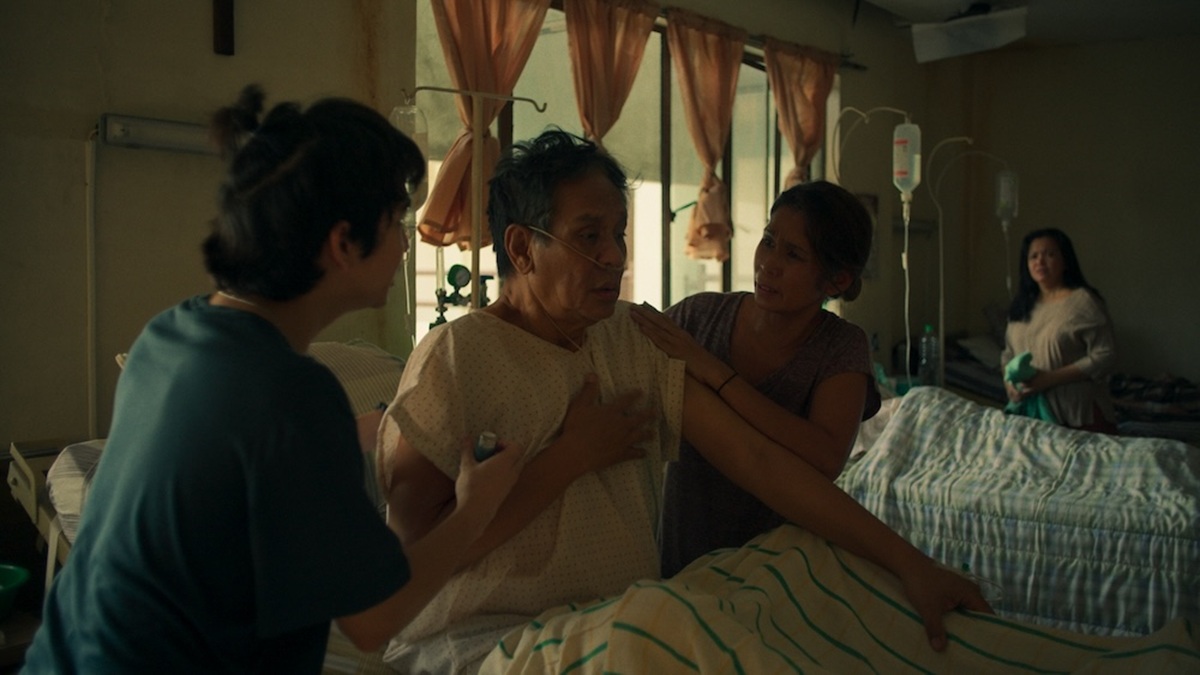
This probably explains why “2 Valid IDs” works better for me as an act of recognition than as a fully satisfying drama. It knows the experience intimately. Raz conceived the story after seeing the conditions surrounding patients while caring for his own hospitalized mother, and you can sense that observational foundation in the crowded wards, weary caregivers, and tiny negotiations that keep people going. The film knows that poverty doesn’t merely mean having less money. It means having less time, less access, fewer shortcuts, and much smaller margins for anything to go wrong.
And things keep going wrong for Sylvia. Subong prevents that accumulation from turning completely mechanical. She remains the furious, exhausted human being inside the thesis, and by the time her patience finally starts cracking, ours has gone with it.
Perhaps that’s “2 Valid IDs'” most successful act of identification. Sylvia walks into a remittance center needing paperwork to prove she is who she says she is. By the end, the movie has made her recognizable to practically every Filipino who has ever stood before a counter and realized that the person on the other side cannot—or will not—help.
The institution may require two valid IDs.
We only need Sylvia’s face.

“2 Valid IDs” currently screens at the 22nd Cinemalaya Independent Film Festival. The festival runs from August 6 to 18, 2026. Follow us for more coverage.

