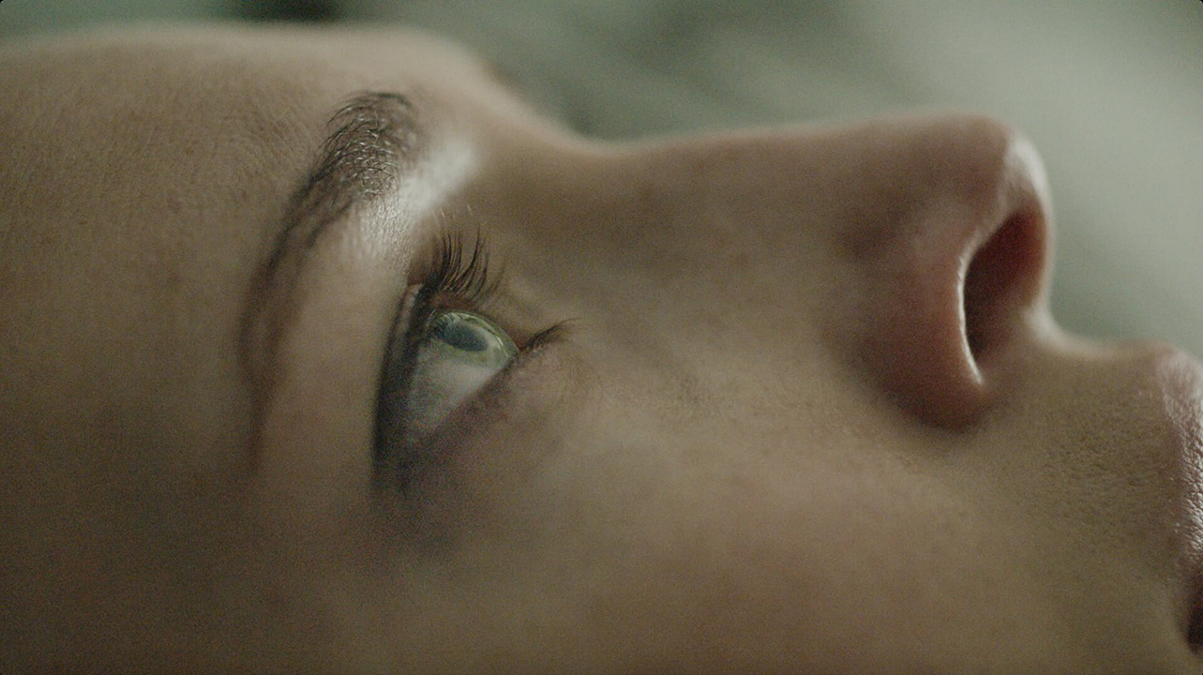
Louisa Connolly-Burnham’s short film “The Ceiling” is hard to watch. Its subject matter (date rape) is handled in such a nuanced way it feels authentic and real. It powerfully bridges the gap between the sexes; though the film’s events happen to a woman, you can almost feel them happening to you. It creates an active sort of empathy. And while the film’s subject’s been explored in longer films such as Emerald Fennell’s “Promising Young Woman,” here the quiet tones and lack of score make it hit harder. The film’s less than 10 minutes, but holds the uncomfortable, lingering qualities of traumatic moments we’d like to forget. Its cast of just two people make it feel like a moment in time. And its subtleties make us question and acknowledge what we feel we may already know about the subject.
Connolly-Burnham asks much from the film’s leads (Jake Curran, Louisa Sexton), and I can’t imagine this was an easy film to make. It opens in a sunlit bedroom as a couple (Jamie and Harriet—Curran and Sexton, respectively) are awakening after a one-night stand. Jamie touches her gingerly; she smiles. She drinks a sip of water from a cup by the bedside and then shares it with him. It was a nice gesture, and I can’t remember the last time I’d seen that in a movie. Harriet cleans her eyes, wiping them off with a makeup removal cloth. Jamie teases her that she “came prepared” after protesting that she wasn’t going to sleep over last night. It’s a cute banter—for a while. They like each other and both ask if they can see each other again.
Confronting Sensitive Issues
Where “The Ceiling” becomes murky—and likely needs a trigger warning—is when Jamie lets on he’s in the mood for sex while we get the impression Harriet isn’t. She offers up some subtle hints on the way she’s feeling (“I’m hungover, I feel gross” and “I have morning breath”) before attempting to cuddle with him and just be. Jamie is persistent, and for the initial moments in the film I could almost believe maybe he thought she was being self-conscious or unsure or herself, and that continuing to come on to her was the right call. However, as it’s clear she has said ‘no’—and in the intervening moments has definitely said she is not in the mood right now—Jamie’s persistence takes on an aggressive nature. I clearly got her feelings. Why didn’t he?
The film is short, and I’m struggling with how to relay the film’s messaging without giving away the details. James does force himself on Harriet and she does find herself going along with it. But unlike “Promising Young Woman,” however, “The Ceiling” celebrates its grey areas and feels as icky as it’s evident Harriet does. In “PYW,” the film’s males are pure villains, taking advantage of a drunk girl’s vulnerable state. “The Ceiling,” however, asks us to question what we think we know about date rape and turns it on its head. We may think it’s drugging a partner or forcibly holding someone down against their will. But there’s a subtle crossing point here, a sort of point-of-no-return when we know that Harriet is having sex when she didn’t want to, staring at the ceiling, wondering to herself if she was definitive enough in her protestations.
A Hard, but Necessary Short Film
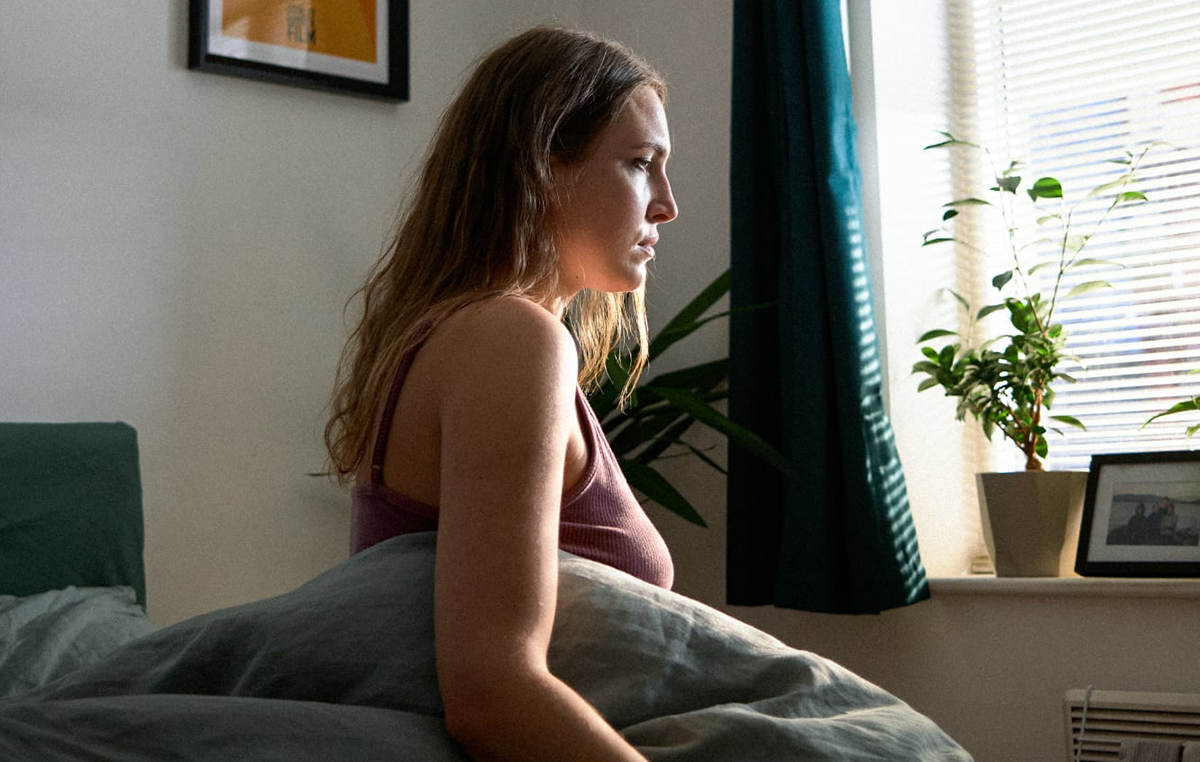
The film covers many of the after-effects of the encounter, too, including Harriet voicing her feelings about what just happened to Jamie (“I would never do that, you know?,” he protests) and self-doubts that run through her mind. There’s a fair amount of gaslighting on Jamie’s part as well as denial. An aggressor never acknowledges nor apologizes for their aggression, do they? It’s dependent on their sense of denial that they convince the other party (and themselves) that it’s not what it looks like. Jamie doesn’t say he’s sorry, only hints at the previous night’s sex and the fact he thought she orgasmed as evidence she wanted it. The whole thing makes the viewer feel very uncomfortable—and I can only imagine this to be Connolly-Burnhman and Writer Louisa Sexton’s aim here.
“The Ceiling” is a powerful film. It starts innocently, becomes unbearably uncomfortably for many minutes, and concludes in a way that lets this uncomfortability linger as the credits roll. The events feel hazed and anxious—yet urgent. I know how I wanted Harriet to respond as the film wrapped up, but that’s not what films are for, are they? They’re here to make us think, ponder, and stew on. “The Ceiling” is a stark portrait of a moment in time, how it causes confusion, anxiety, and hurt, and how moments like this are never objective to the person going through them. It features tenseness and good acting throughout, and is a must-watch for anyone looking for understanding or empathy on a difficult topic.
Note: This film review is part of the 10th Femme Filmmakers Festival held by Filmotomy. For more information about the 10-day festival (Sept. 19-29), check out the event at the following link.