


“The Zone of Interest” is a bone-chilling and distressing piece concocted with Jonathan Glazer’s usual distinctive and experimental directorial hand. The master’s vision is in full nightmarish mode, exploring the banality of evil through an array of haunting cinematic pieces—Mica Levis’ ambient score, Łukasz Żal’s astonishing cinematography, and the horrifying sound work.
Throughout his decade-spanning career, Jonathan Glazer has become one of our times’ most visionary, chameleonic, and unique filmmakers. He may not deliver films consistently, often taking plenty of years in between pictures. But when Glazer arrives with something, you know it will be rich in its elusive texture and fruitful in its thematic exercises. The English filmmaker isn’t interested in doing what everyone is doing or pictures containing prevalent themes. Instead, he’s on his calm path, curating a filmography nobody can quickly deconstruct. You must have time and patience to see the multi-faceted and dual-sided layers he brings to his unique and piercing pieces, whether a portrait of loneliness through the eyes of an outwardly being or a dark crime thriller.
Adapting Martin Amis’ novel
He isn’t in one specific category or box. It is impossible to do so. But that’s what makes him such a force in the cinematic landscape. Ten years after his masterful 2013 film “Under the Skin,” Jonathan Glazer is finally back with another picture. This time, he’s loosely adapting Martin Amis’ acclaimed novel, “The Zone of Interest.” He takes pieces and details from the source material. He just lets all of his nightmares loose in a piercing and effective manner. Glazer has found new ways of telling stories about what happened during World War II. Take everything you know about those films and start with a new blank sheet of paper, which Glazer will fill up with striking imagery and tormenting visualizations.
It doesn’t go inside the concentration camps or into the battlefield. Instead, he chooses to do something even more haunting – a perspective that gets us face-to-face with the banality of evil. We see the film through the eyes of those who caused this indescribable tragedy: an Auschwitz camp commander, his family, and his comrades. “The Zone of Interest” begins with a bone-chilling symphonic overture composed by the brilliant Mica Levi, which lasts almost six minutes. A black frame accompanies this haunting track, leaving us on tenterhooks. You are at your most vulnerable position—not knowing what will transpire when all this sequence ends. The first frame that Glazer provides to the audience is a family sitting by a lake.
Haunting, ambient sound design
They are relaxing, showering in the shimmering sun as if there was no worry in the world. But sooner rather than later, as the family picks up their things and heads back home, Glazer begins to show the setting’s true nature. This place is near a concentration camp where an infamous Auschwitz commander, Rudolf Höss (Christian Friedel), and his family reside. The commander lives there in idyllic bliss with his wife, Hedwig (Sandra Hüller), who later refers to herself as “the Queen of Auschwitz,” and their five children. We get to see the everyday lives of these people and how they ignore everything happening in the background. The kids swim around in a makeshift pool and play in the backyard. When Höss goes to work, Hedwig tends to the lilacs in her garden.
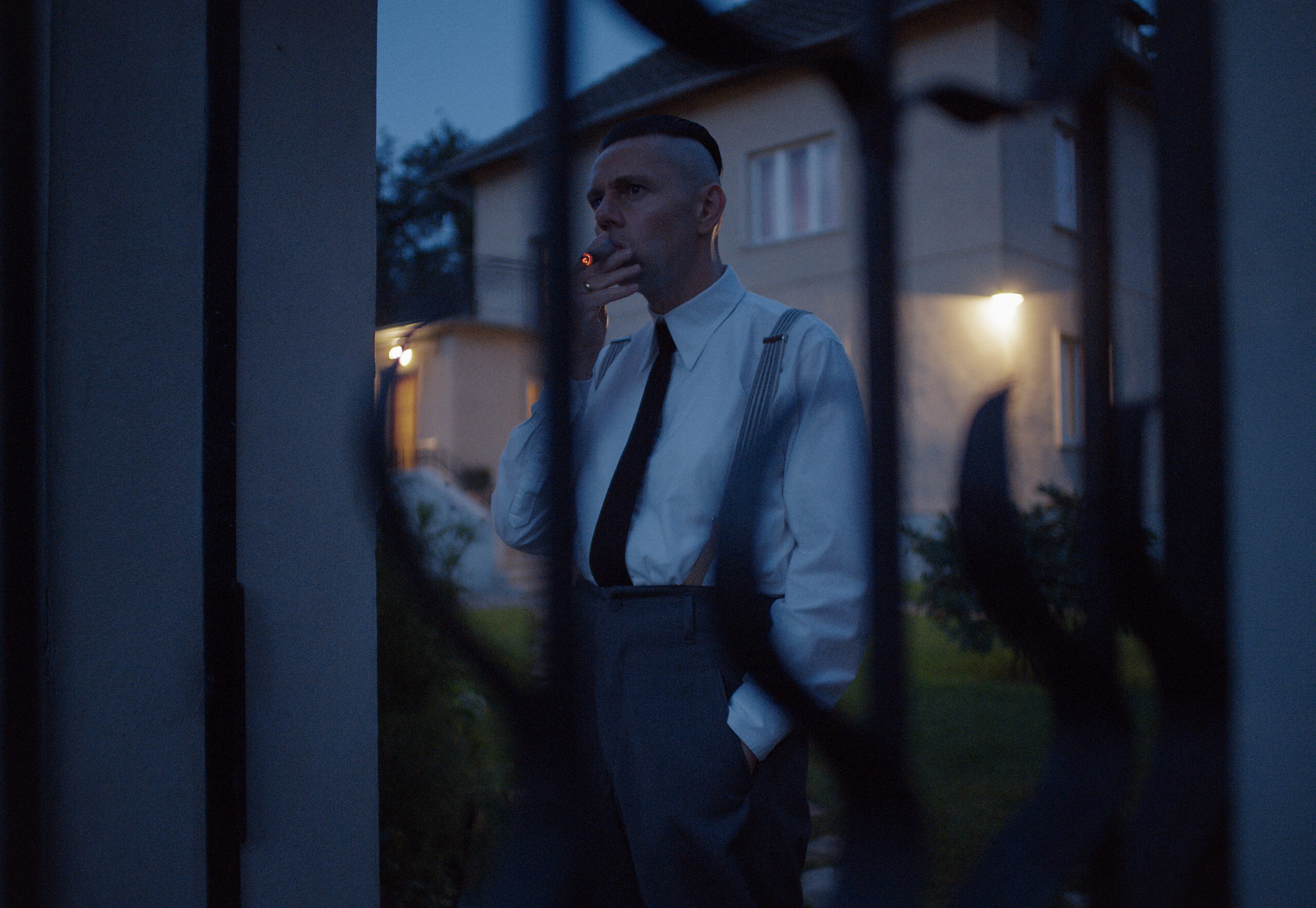
As they do all of these activities, we hear the horrors of the war through the film’s haunting ambient sound design. The barking dogs late at night sound like horrific screams. The executions tie in with the churns of the crematory. Glazer doesn’t add any gratuitous or overly provocative scenes, unlike other war movies that do have them to cause shock and prove their point. But it isn’t necessary for “The Zone of Interest.” We all know what happened during World War II. Just by hearing the sounds, the images play in our heads. We are constantly told of what’s happening next door, not only focusing on the Höss family’s household.
Sequences that are cutting and unnerving
The camera is placed far away from the actors so that you can feel as if you are a witness to this ignorance of banality. We are watching through a window how evil pours from their pores, yet their actions are met with a cold shoulder. A couple of small details construct this villainous vision—a brand new fur coat, the blooming flowers over the garden, the freshly painted walls, water being covered in ash. Glazer uses a black-and-white image of a girl collecting fruit as a scene-to-scene transition edit. It makes each sequence more cutting and unnerving. This is one of the many experimental artistic choices separating this film from the other war movies we have seen recently.
This single image Glazer uses occasionally adds another layer to the film’s thesis and the characters’ bond with one another—the in-union ignorance toward the banality of evil. This family acts like nothing is happening on the other side of their estate—insensible and unconcerned to the pain of others. But that’s not all. We also get glimpses of the barbed-wire walls, the incinerators’ flame, smoke, and a watch tower. Whether it is day or night, Hedwig and Höss continue with their lives. They go along with their days. At one point in the film, Hedwig even complains about the “Jews over the wall.”
Relentless, profound, and distressing
There’s not an inch of sympathy for this family. But what Glazer does throughout the film is make them recognizable. He wants you to feel that something similar can (or could) happen in your hometown. Near the end of the film, Glazer concocts a scene that will make the viewer think about our society. It reflects the past, present, and future—how the world evolves yet, in some aspects, has stayed the same. We think about how, when you look closely enough, this scenario isn’t that far from what we have today. This concluding scene will cause some provocation. And it will have many viewers discussing and reassessing the film over lengthy periods of time.
Like Glazer’s entire filmography, there are many hidden layers behind each viewing. Enduring watching his latest once more is definitely a big ask due to the themes and its procedure. Yet you won’t stop thinking about it. Every single image stays in your mind as you reflect what Glazer presents to us. “The Zone of Interest” is not a subtle metaphor for this idea Jonathan Glazer is presenting to us. But it doesn’t have to be because it is equally relentless, profound, and distressing. With his previous work “Under the Skin,” Jonathan Glazer cemented himself as one of our modern era’s best original and experimental filmmakers. But he has surpassed himself with one of the most unsettling pictures I have seen in a long while.
“The Zone of Interest” is currently playing at the New York Film Festival. The festival goes from September 29th – October 15th. Join us for continual coverage.

