


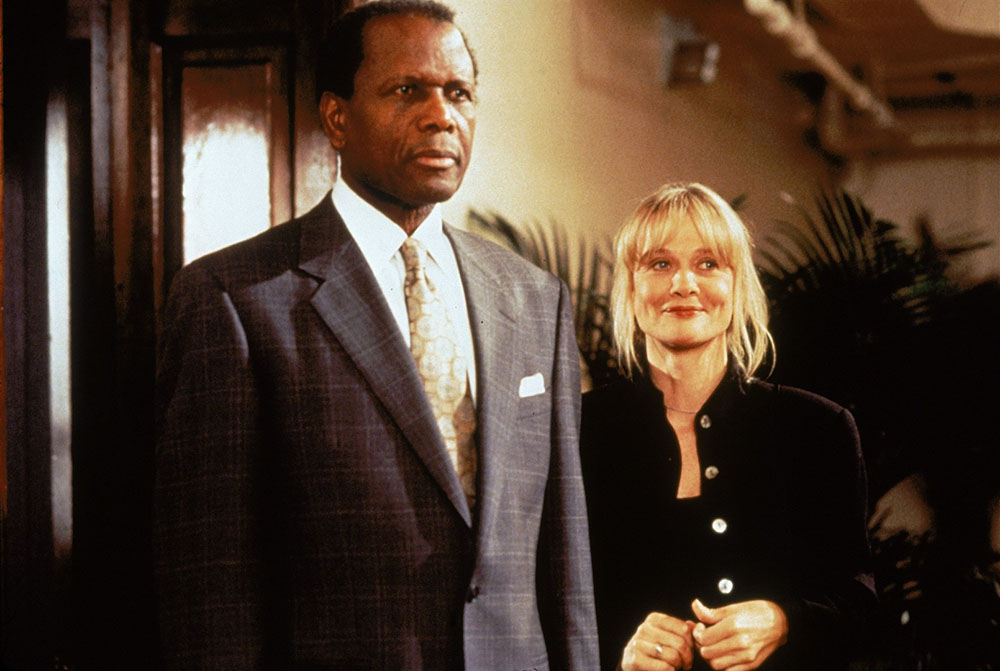
On January 6, 2022, both Sidney Poitier and Peter Bogdanovich died, a harsh dual blow to the film industry. Reflecting on their careers, these two appeared to have little in common, besides a shared death day and similar general profession. Poitier, a trailblazing Black leading man active for sixty years, broke barriers and collected awards from not just the Academy but from President Obama, too. Bogdanovich, a son of immigrants, was a New Hollywood maverick whose career floundered after an extraordinary winning streak in the early 1970s. Well into their respective careers, it took a TV movie for the two to finally collaborate, with Bogdanovich the hired hand to direct a sequel to one of Poitier’s most famous roles. A cozy, low-stakes soap opera, “To Sir, With Love II” didn’t need to be made, but with both icons now gone, a heavy sense of nostalgia clouds over the film’s contrivances.
To start the film, Mark Thackeray (Poitier) is retiring from his teaching post in London’s East End. It’s the same role he’d had for thirty years, and this rushed sequence brings back a few other familiar faces from “To Sir, with Love” (1967). Most notably, there’s Lulu, thanking Mark again for “taking her from crayons to perfume,” singing her hit, “To Sir With Love,” which topped the Billboard charts in 1967. Then, Mark reveals that he’s accepted a new role which sounds a lot like his old one. This time he’ll be teaching troubled teenagers at an inner-city Chicago school. The dread of predictability soon of how this will proceed — or knowledge of how it all happened before — gives way to the comfort of familiarity, thanks to Poitier’s considerable star power.
Something Refreshing About Another Go-Round for Poitier
It is entirely Poitier’s film, with the students, faculty, and education system as a whole playing supporting roles, just as they did in the original. And again, there’s so much teaching to be done! The lessons come hard and fast — on guns, drugs, and sexuality — both inside and outside the classroom. Mark seems to have hardened in some ways over the years, and softened in others. Mark’s concerns for finding his students’ jobs and worries about their home lives are rooted not just in inherent kindness, but also the fact that he’s had a few decades to ponder his own life. To that end, there is one particular subplot involving a former partner that suggests the man who Mark was outside the classroom, and yet another big reveal stemming from that relationship which detours this story from TV movie of the week and into afternoon soap territory.
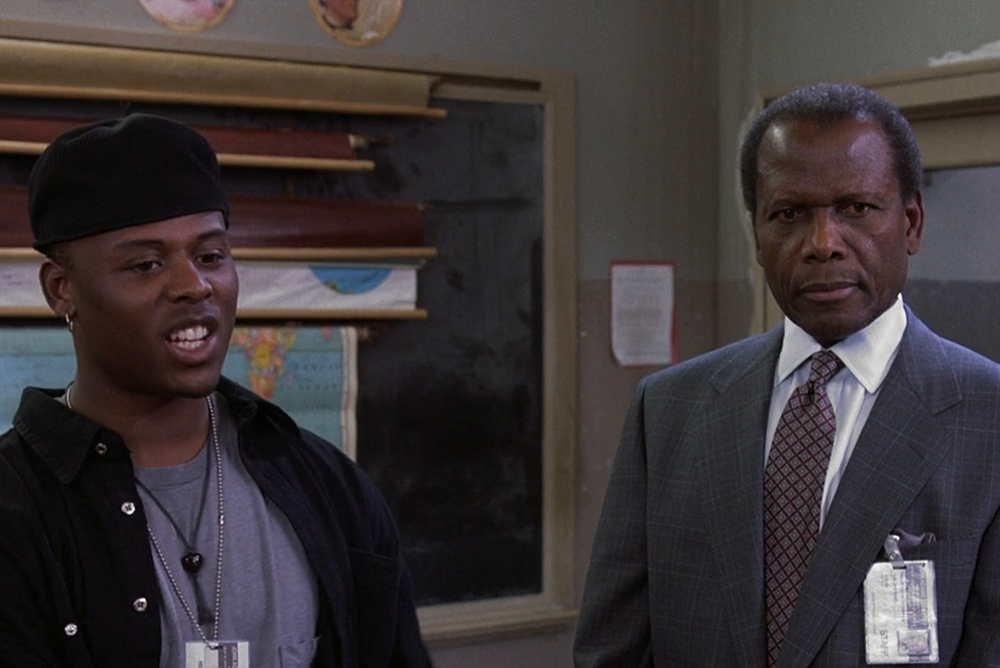
Still, there’s something so refreshing about this movie, which conforms to expectations and follows the arc of a number of films such as “Stand and Deliver” (1988), “Lean on Me” (1989) and “Dangerous Minds” (1995), which were themselves, derivative updates of “To Sir, with Love.” It’s the teacher or principal as iconoclastic savior, usually a fish-out-of-water who wins over the troubled students with some combination of persistence, charm, and tyranny. And what makes both “To Sir” films endearing is that the sense of victory comes with an asterisk, and some doubt about what Mark’s life will look like after his latest triumph. Inside the classroom, he’s unflappable and respected, but what remains for his personal life remains an enigma, at best.
Matching the Original in its Distance from its Hero
In that way, the sequel maintains a certain distance from its hero, just as the 1967 film did. In the original, Poitier confides in another teacher about the life he used to lead, mentioning how he can’t drink a glass of wine because he’d want the whole bottle, and he only eats fruit at work because he has trouble with self-control when eating. There’s a passing mention of a woman he loved back where he grew up, but his private life is mostly reduced in favor of big classroom declarations. The sequel, to its credit, does attempt to introduce some backstory. Mark mentions in his London retirement speech that his wife died years ago. Once he gets to Chicago he’s in pursuit of a different lost love, who he ends up meeting — in a hospital room with her son — towards the end of the film.
Holding out hope for a nuanced treatment of this conservative material might seem optimistic, since it’s a TV movie, made for mass appeal. Mark’s personal life is more fully rendered in the sequel, yet it’s still all presented as background information, not given adequate resolution. With Bogdanovich directing, I was curious how his sensibility might influence the end product. But it’s hard to notice any special touches that would suggest a former Oscar-winning wunderkind was steering the film. It lacks that dark sense of humor and subversive wink that Bogdanovich typically brought to his work. He was the rare New Hollywood director who evoked Old Hollywood nostalgia without irony, appealing to commercial and critical audiences alike, so it’s disappointing that Bogdanovich didn’t stand a chance to leave his mark here. And that, again, could have a lot to do with the medium for which this Poitier/Bogdanovich pairing was produced.
A Film Worth Seeing all the Same
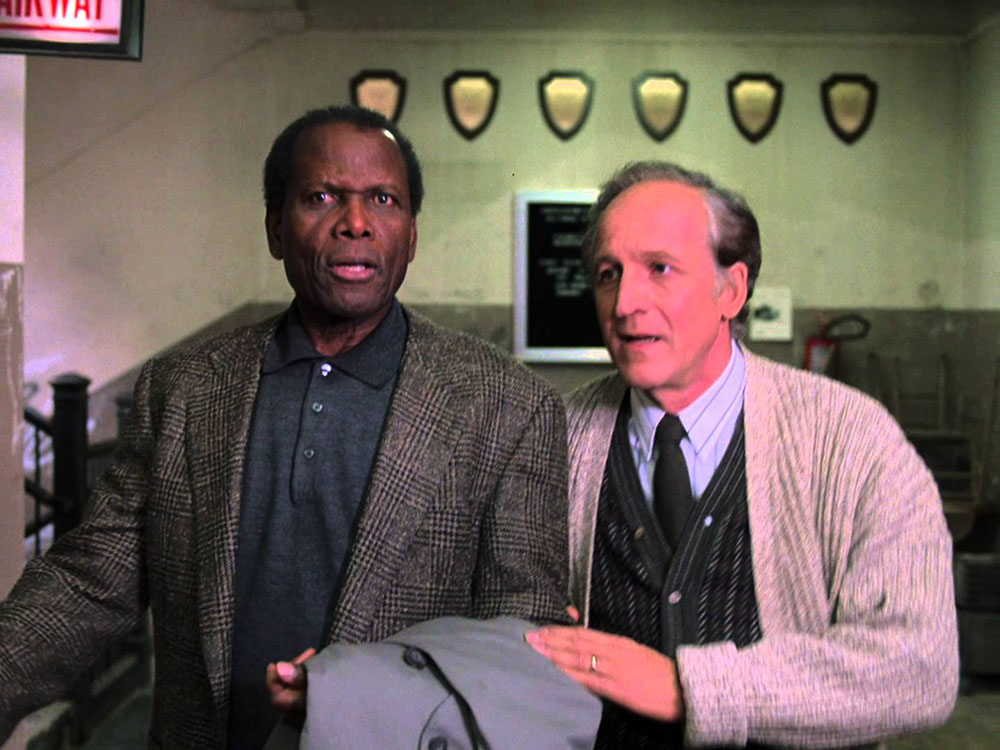
Poitier and Bogdanovich linking in death is more than just trivia if for no other reason that they were linked in their professional lives this one time. Neither man appeared to earn accolades from this film, but their union provides a connection to several times and places, for me at least. I think of growing up in the 1990s and actually watching movies — with commercials — on TV. I think of the great peaks of these two careers: for Poitier, it was 1967, when he starred in three of the biggest films of the year: “In the Heat of the Night,” “Guess Who’s Coming to Dinner,” and “To Sir, with Love.” And then I think of Bogdanovich, whose back-to-back-to-back (“The Last Picture Show”, “What’s Up, Doc, Paper Moon”) hits in the 1970s made him both a Hollywood darling and a symbol of scorn.
A modest project with an eye towards the past, “To Sir, with Love II” stands out because it stands with the film that inspired it. This follow-up isn’t exactly essential viewing, but it’s worth seeing all the same, to appreciate Poitier’s commanding presence in a defining role. The bonus is that Bogdanovich is directing, bringing together two sirs whose careers diverged long ago, and converged just this one time. It may be a TV movie, but it finds ways to charm and surprise, and most importantly, it’s brought to you by two very different Hollywood legends, with sentimentality, kitsch, and, yes, some love.

“To Sir, with Love II” is available to stream on Tubi – Free Movies & TV, Prime Video, VUDU, Vudu Movie & TV Store, or Apple TV.
Support the Site: Consider becoming a sponsor to unlock exclusive, member-only content and help support The Movie Buff!
