


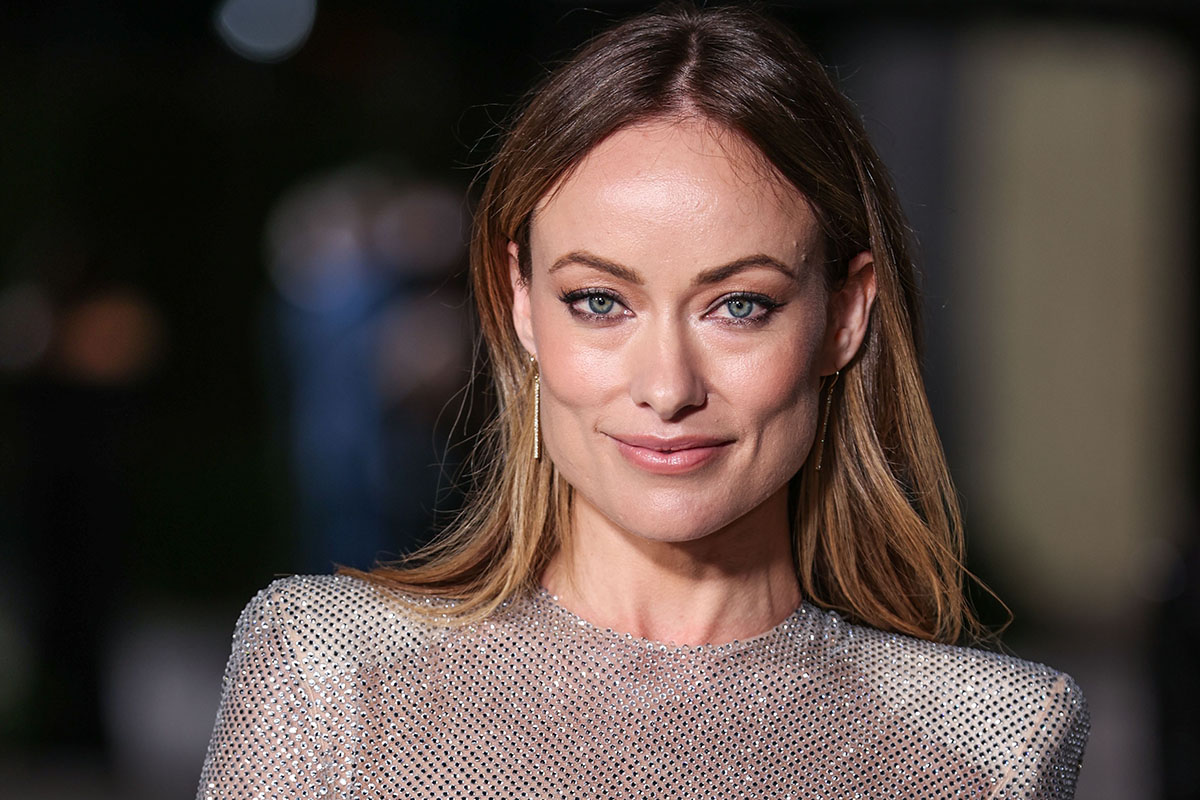
What’s worse than sitting through another couple’s argument at dinner? Sitting through the silence after they’ve run out of things to say. Olivia Wilde’s “The Invite” makes considerable use of both, finding humor in the things people say to hurt each other and, eventually, something more painful in what they choose to leave unsaid.
On the evening of November 1, while many Filipinos were out visiting cemeteries and memorial parks to commemorate All Saints’ Day, I spent part of my Sunday in front of my computer for a brief Zoom conversation with Wilde. I’ve admired her vision as a filmmaker, particularly her ability to find humor, tension, and emotional complexity in intimate, character-driven scenes. Naturally, the opportunity to speak with her about her latest directorial effort was one I couldn’t pass up.
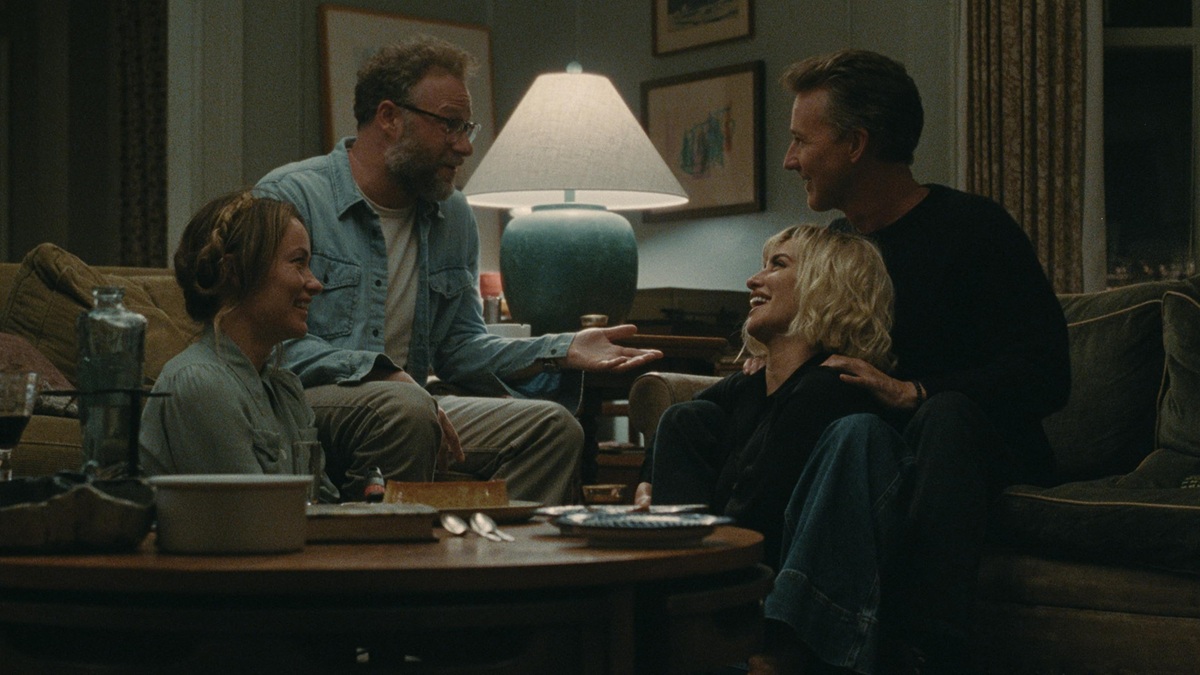
Directed by Wilde from a screenplay by Rashida Jones and Will McCormack, “The Invite” follows Angela (Wilde) and her husband Joe (Seth Rogen), a married couple whose relationship has deteriorated into a seemingly endless cycle of arguments, resentment, and passive-aggressive remarks. Hoping to break the monotony, Angela invites their upstairs neighbors, Piña (Penélope Cruz) and Hawk (Edward Norton), over for dinner. Joe isn’t particularly thrilled about the arrangement, especially since the same couple upstairs has been keeping them awake with rather loud, enthusiastic sex. What begins as an awkward evening of wine, food, and small talk gradually turns into something far more revealing, as the two couples confront uncomfortable truths about sex, marriage, and the things they’ve kept from one another.
Before getting into my questions, I told Wilde how much I enjoyed the film and, perhaps more importantly, how uncomfortable it made me. I meant that in the best possible way, of course, and suspected that this was precisely the reaction she wanted from her audience. She laughed and replied, “Yes, exactly! That’s perfect. That’s exactly the reaction.”
It was a fitting start to our brief but insightful conversation, which touched on the film’s changing visual language, her evolving relationship with silence as a filmmaker, and the restraint required to bring Joe and Angela’s turbulent evening to a close. She even brought up Sidney Lumet’s “12 Angry Men” as an influence, which made our already limited time together all the more interesting.
This interview has been edited for brevity and clarity. *Some spoilers ahead.*
Paul Emmanuel Enicola for The Movie Buff: Before we start, I’d just like to say that I enjoyed the movie so much and how much it made me feel uncomfortable — and that’s a good thing — which I suspect is exactly what you were going for.
Olivia Wilde: [laughs] Yes, exactly! That’s perfect. That’s exactly the reaction.
Now, I’d like to ask about the visual storytelling of the movie. The film seems to loosen up once Piña and Hawk arrive. Did you deliberately change the camera’s behavior as Joe and Angela basically lost control of the evening?
Yes, completely. We introduce the Steadicam once Piña is in the room, because there is a new type of energy. I always feel that she changes the weather in the room. There’s something that suddenly is, you know, allowing everyone else to feel differently about the space. She has a power. So that was one element that changed the visual language.
There’s also the shifting perspective throughout the film that was very much inspired by Sidney Lumet and how he filmed “12 Angry Men,” because, of course, it’s the all-time greatest example of a single-location film; and how you somehow don’t feel overly claustrophobic in an unintentional way, or bored even by it, it’s because of the shifting use of the camera and the lensing.
So I was very inspired by that. And you’re absolutely right that it begins once they enter the space, and then from that point, it’s shifting until the end. And I really loved having the chance to put thought into that and to have the space to play with that kind of visual storytelling.
That’s interesting. I recently had the opportunity to speak with Dev Hynes about the score, and he sang your praises. He mentioned your instinct for knowing when the cello should pull back. This movie being an adult comedy, how did you decide when to let silence carry a scene?
Ooh, [pauses] well, it’s interesting because silence for me in the past has felt very risky, very difficult.
Like, I’m afraid of silence, clearly, because I have found myself leaning on the energy of sound and music to maintain the audience’s attention. That has been something that I’ve witnessed about my own filmmaking so far. I think it’s because I started in music videos. I just think it came from that.
We wanted the score to reflect the nerves of the characters… the bow on the cello felt like it should be the bow on your actual nerves…”
Olivia Wilde
And just the anxiety that I wouldn’t be able to keep the audience’s attention, potentially. In this film, it was this great learning experience of trusting silence, whether to use it comedically for awkward beats and to allow those to really land; or in a more emotional sense, really towards the end of the film, to allow for the silence to be louder than any words or music could be.
It was really interesting because, of course, Dev provided so much incredible music that we could have filled those silences with, and I continued to pull back to allow for the music to mean more because of where it would come in to actually punctuate those pregnant pauses.
And the other thing is that we wanted the score to reflect the nerves of the characters, right? So the cello felt correct because it feels like you’re actually listening to the nervous system of the characters. The bow on the cello felt as though it should feel like the bow on your actual nerves. And by the end of the film, there is heartbreak, but there is a release of tension. And so that felt like then that the nerves didn’t need to be represented through the music in the same way.
It softens up and becomes the piano. But this was the kind of thing that I felt so lucky to be able to play with, you know? So often in films you’re dealing with so much plot that you don’t have the space to really linger in these types of experiments.
You mentioned the piano. After such a brutal evening, Joe and Angela share a surprisingly tender moment at the piano. How did you approach that shift without suggesting that they were able to solve their problems?
I wanted to suggest there was potential and that they had found their way back to being able to sit side by side and to play together again because they have a child.
They’re going to need to be able to do that forever, and I wanted to show that they’re capable of that and that the contempt that they were nearing has now been kind of dissolved. They no longer feel contempt. They feel a partnership. But I wanted it to be light-handed so that you didn’t feel too much resolution.
And part of it was in the staging of that scene and also in the restraint as an actor that I had to perform, as well as, you know, encouraging Seth to perform. That if it had ended in, like, a kind of tearful hug or kissing or anything that was overly intimate, we would’ve resolved this for you, or it would’ve been potentially, I think, less satisfying.
And so it was about, you know, putting my head on his shoulder is the first time we’ve made any real physical contact in the film, and to show that something that subtle and tender could say more than something that was more heavy-handed. So it was a combination of, from a director’s perspective, trying to stage it correctly, and then as an actor trying to practice real restraint.
Congratulations again, Olivia. Thank you so much for your time.
Thanks, Paul. I appreciate it.
And I’m looking forward to your next project.
Thank you so, so much. Thank you, Paul.
More Interviews: Devonté Hynes • Isabel Lamers • Carl Joseph Papa

