


It’s hard to watch “Supergirl” and not feel like you’re attending a wake.
Not for superhero movies themselves. Batman and Spider-Man aren’t going anywhere. There will be more “Avengers” movies, more reboots, and eventually another comic-book film that catches the culture by surprise. Intellectual property this durable doesn’t simply disappear. But it does feel like the end of an era.
The Change of Superhero Films
For roughly twenty-five years, superhero movies occupied the center of film culture. They weren’t simply movies; they were the movies. They dictated release calendars, fueled online discourse, transformed casting rumors into headline news, and turned post-credit scenes into communal experiences. Entire podcasts, websites, YouTube channels, and careers were built around the endless speculation machine.
They’re not that anymore.
That’s not because audiences suddenly hate superheroes. If anything, audiences seem increasingly unwilling to settle for mediocrity simply because recognizable characters are involved. The old pleasures of the genre — lore, continuity, universe-building, and the promise of future installments — no longer feel sufficient on their own. People seem hungry for movies that feel singular, authored, and alive.
I say this as someone who loves comic books and genuinely wanted James Gunn’s DC Universe to work. I still do. More specifically, I wanted “Supergirl” to work.
On paper, it sounded like exactly the kind of left turn the genre needed. Adapted loosely from Tom King and Bilquis Evely’s acclaimed “Woman of Tomorrow,” the film follows Kara Zor-El as she reluctantly accompanies a young alien girl named Ruthye across the galaxy on a quest for revenge against the warlord responsible for her father’s murder. Structurally, it’s a science-fiction western, a cosmic riff on True Grit in which a deeply disillusioned Supergirl begrudgingly becomes the protector and traveling companion of an idealistic young girl.
The Film Fails to Capitalize
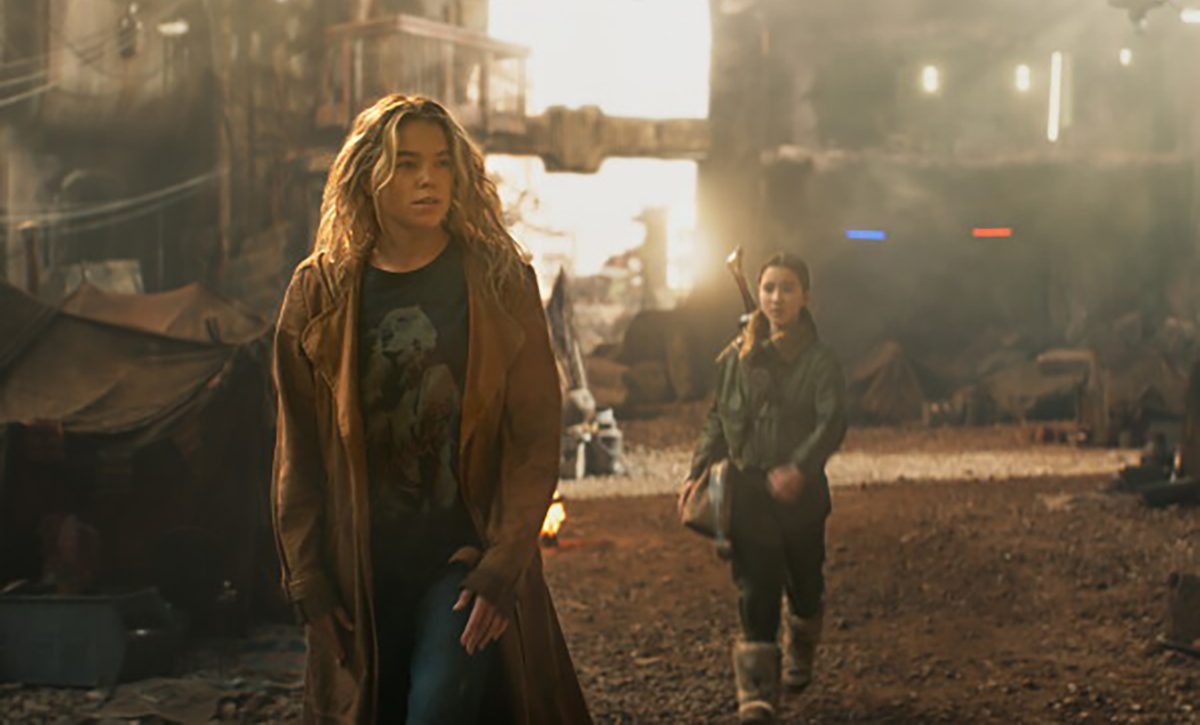
It’s a terrific premise. A superhero western. A revenge story. A smaller-scale adventure about grief and mentorship rather than another apocalypse in the sky. Unfortunately, the finished film rarely capitalizes on any of those possibilities.
James Gunn repeatedly insisted that projects in his new DC Universe wouldn’t move forward unless the scripts were truly ready. Having seen “Supergirl,” that promise now feels almost comical.
Because “Supergirl” feels less like a fresh beginning than a relic.
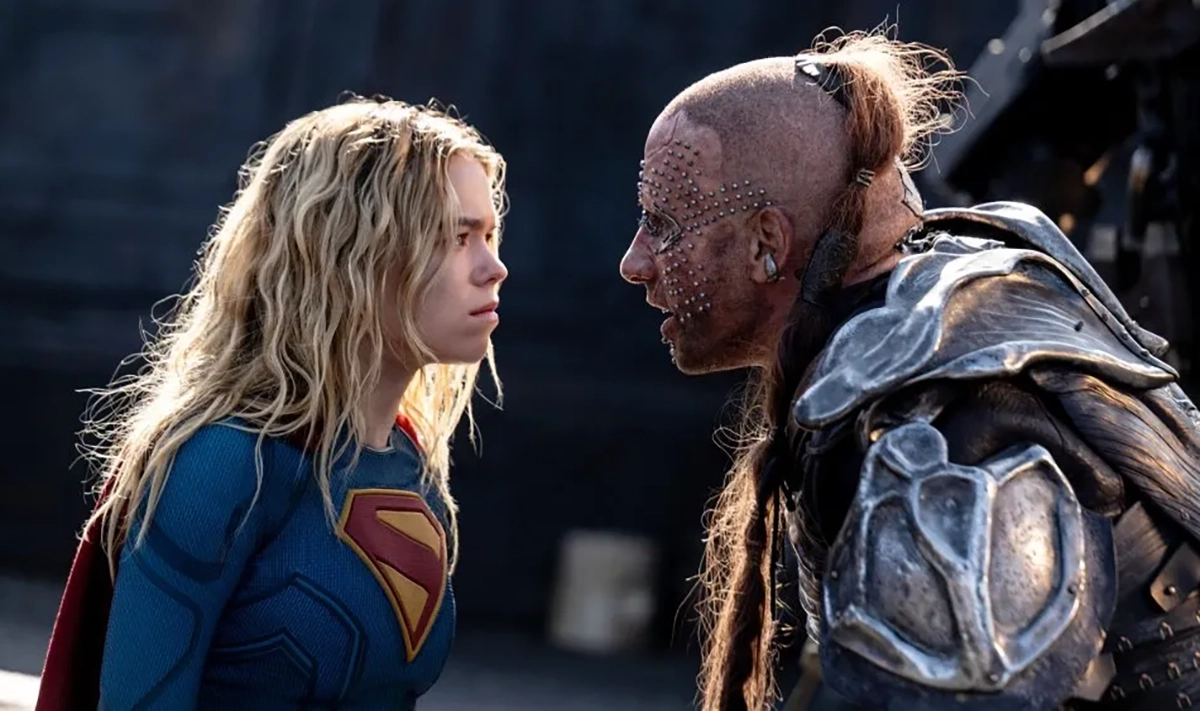
It’s a remarkably old-fashioned superhero movie, one that could have comfortably existed in 2014. It has all the familiar ingredients: the reluctant hero carrying trauma, the vaguely barbaric villain with little interiority, the cute sidekick, the sarcastic quips, the needle drops, and eventually, the obligatory CGI climax where digital noise overtakes whatever emotional stakes the film once possessed.
The issue isn’t that any of these ingredients are inherently bad. It’s that the movie never discovers a fresh angle through which to approach any of them. More frustratingly, it never decides what kind of movie it wants to be.
A Missed Origin Story
It’s simultaneously a revenge western, a road movie, a study of grief, a big-sister/little-sister story, a broad comedy, and another piece of franchise-building. Every time the film brushes against something interesting, another franchise obligation arrives to interrupt it. Every time it begins to resemble a character study, it remembers that it has to extend a cinematic universe.
That feeling permeates the entire production.
There’s no real personality to the filmmaking. No visual specificity. No sense of discovery or verve. Despite hopping from planet to planet, the movie paradoxically feels small. The various alien worlds don’t feel inhabited or especially distinct. They feel like temporary digital backdrops. Much of the film unfolds on murky brown planets that seem less like places than empty movie sets waiting to be populated by computer effects.
The whole thing just isn’t cool to look at. Most frustrating is its treatment of Kara herself.
Unlike Superman, Kara actually remembers Krypton. She remembers her parents, her culture, and the civilization she lost. That’s a genuinely compelling starting point and could have been one of the more tragic origin stories in DC Comics.
Milly Alcock Fights an Uphill Battle
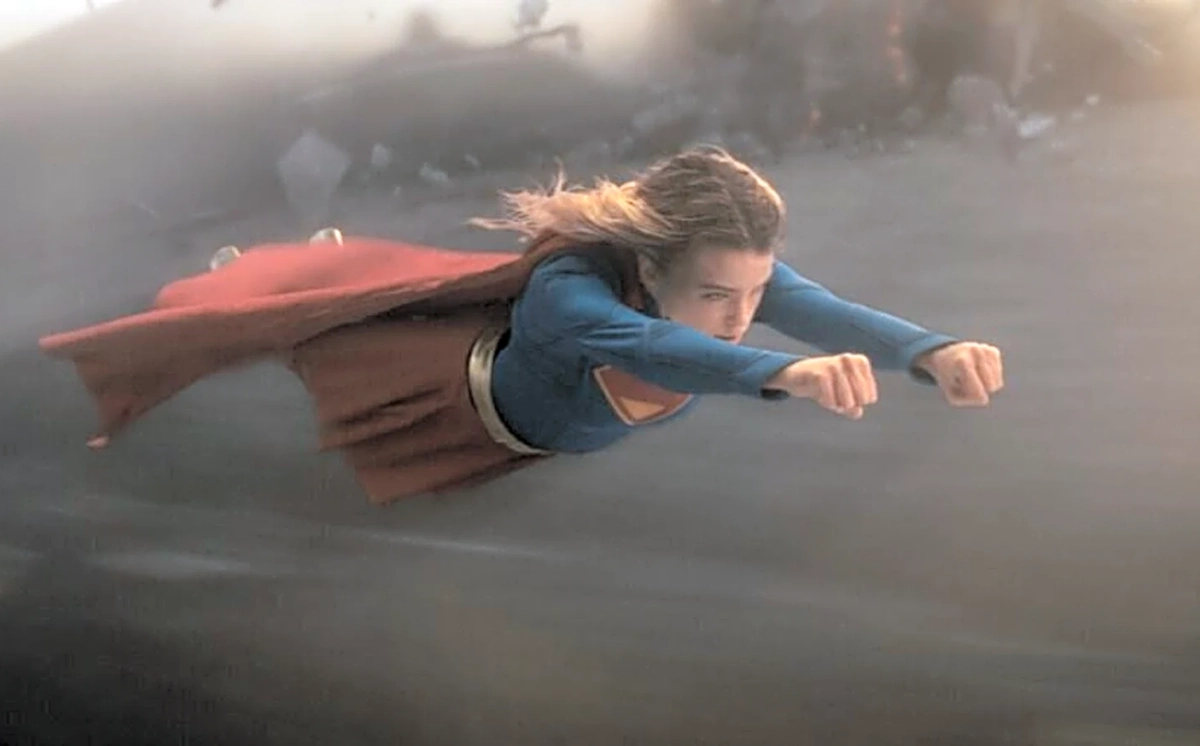
The movie continually gestures toward the immensity of that grief without ever really sitting with it. Instead, her pain is largely expressed through hangovers, slurred speech, big sunglasses, and ironic detachment. The film mistakes symptoms of grief for an examination of grief.
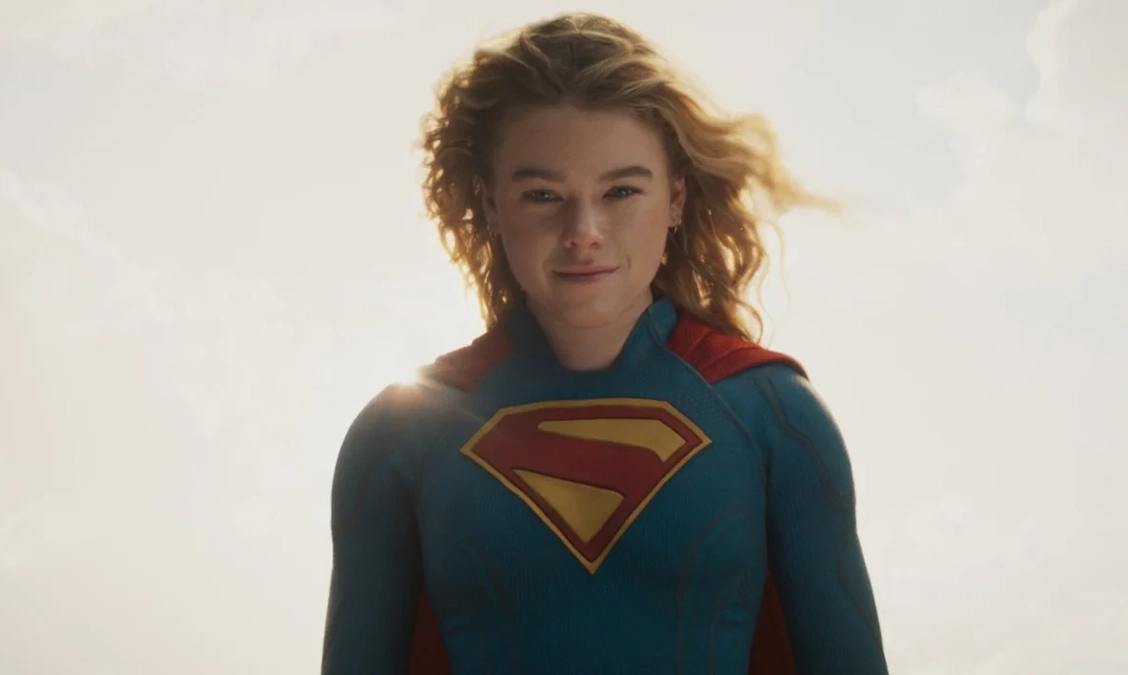
Milly Alcock often appears adrift rather than disengaged. She’s asked to pivot between broad comedy, tragic backstory, superheroics, and surrogate big-sister duties, often within the same sequence. The performance occasionally lands, largely because Alcock is an innately charismatic screen presence—she popped in her brief appearance in Superman — but she’s fighting uphill against material that never coheres.
The plot itself isn’t much to chew on. It feels like thin gruel dropped on our plate as we wait for an actual meal. At its best, there are brief flashes of something stranger and more interesting — an amusing alien practical effect, an inspired creature design — that almost evoke an Albert Pyun science-fiction western. But those moments are fleeting. At its worst, “Supergirl” feels like “Thor: The Dark World” by way of a bargain-bin True Grit imitation.
The movie also seems fundamentally confused by its own themes. It wants to tell a revenge western while simultaneously insisting on Superman’s moral framework. Supergirl repeatedly warns Ruthye that vengeance is corrosive and life-defining, even as the entire plot is structured around hunting a murderer across the galaxy. The film’s themes and genre keep stepping on each other’s toes.
Missing Sorely Needed Female Input
The choice of Craig Gillespie as director also feels emblematic of the movie’s larger identity crisis.
Gillespie has made films I’ve genuinely enjoyed, from the tender oddball romance of “Lars and the Real Girl” to the slick and genuinely entertaining remake of “Fright Night” and even the surprisingly fun capture of 2020s anxieties, “Dumb Money.” He’s also made a number of mediocre studio pictures that often feel less like the work of a filmmaker with a coherent artistic project than that of a talented craftsman borrowing a bag of tricks from more distinctive directors.
On paper, he makes a certain amount of sense for Supergirl. He’s directed films centered around memorable female performances, particularly from Margot Robbie in I, Tonya and Emma Stone in Cruella. He’s a steady pair of hands. But that’s also the problem. Supergirl often feels like the work of someone without vision serving too many masters.
You can’t help but wonder why, in rebuilding an entire cinematic universe from scratch, James Gunn and DC never sought out a female filmmaker for one of their most significant female characters. Perhaps Warner Bros. remains gun-shy after the commercial disappointments of “Birds of Prey” and “Wonder Woman 1984.” Those films are certainly flawed, but they possess something “Supergirl” sorely lacks: stylistic intent. They feel authored. They have discernible points of view.
“Supergirl” frequently feels like a movie assembled by committee and built according to assumptions that no longer hold true — that recognizable characters, quips, and universe-building are enough to carry audiences from one installment to the next.
Jason Momao Seems Wasted
Curiously, the person who seems to understand this universe best barely appears in it.
David Corenswet’s Superman is easily the movie’s most effective element. In his brief scenes, he immediately injects the film with warmth, conviction, and that aw-shucks movie-star charisma that made Superman feel unexpectedly fresh. Suddenly the movie feels lighter, more emotionally coherent, and more purposeful. It’s a terrible sign when the best thing in a Supergirl movie is wishing you were watching Superman instead.
Then there’s Lobo.
Jason Momoa has been one of fandom’s longest-running wish-casts for the character, the kind of message-board fantasy that somehow finally made it to the screen. As one of the seemingly dozen people who will passionately defend James Wan’s “Aquaman” films, I know firsthand that Momoa can bring genuine personality and force to fundamentally ridiculous material. I don’t think that happens here. Instead, Lobo’s arrival feels like a studio note materialized: here’s the guy you’ve all been asking for.
‘Supergirl’ Comes Up Empty
One of the defining pleasures of superhero culture used to be possibility. What if they cast Robert Downey Jr. as Iron Man? What if they actually made an “Avengers” movie? What if we finally got to see Thanos? Simply introducing a beloved character once carried an electric charge.
“Supergirl” reaches for that same feeling and comes up empty. Which may be why I walked out of the film feeling unexpectedly melancholy. Not because superhero movies are dead. They aren’t. But because “Supergirl” feels like one of the first major comic-book movies made after the end of the superhero era’s cultural dominance, still speaking in the language of a genre that no longer occupies the center of our imaginations.
“Supergirl” doesn’t feel like the death of superhero cinema. It just feels like its afterlife.

Explore More: All our DC Comics Universe reviews.

