


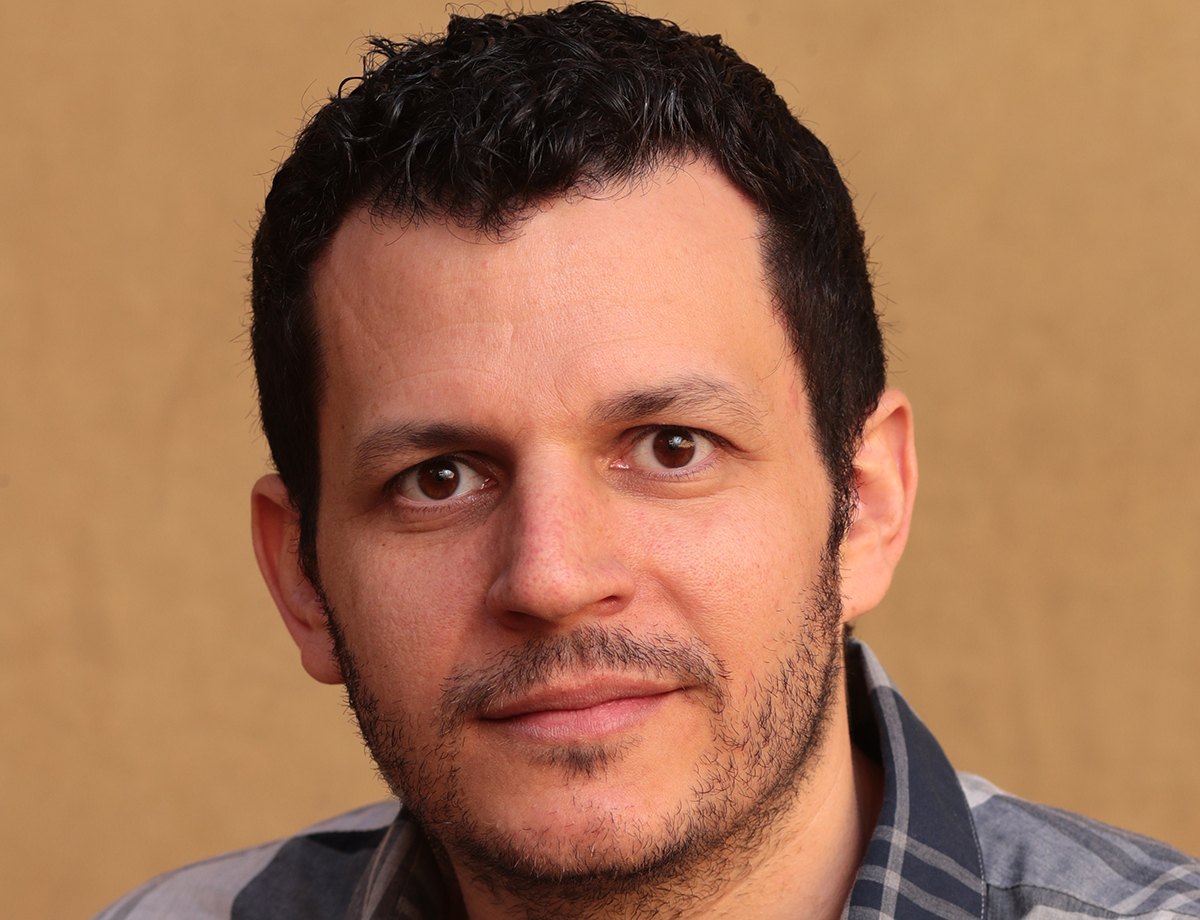
As we wrap up our 2026 Tribeca Festival coverage, we had the opportunity to talk to another filmmaker, Liron Topaz, about his animated short film “Saba,” which had its world premiere at the festival. The film — at only nine minutes — was another one of my favorites from Tribeca. It highlighted the bond between a grandson and his grandfather, used the full capacities of its animation, and left a sweet yet bittersweet conclusion. Featuring unique artwork and a sweet, loving family story, the film left a mark on me as I viewed it. And as with the animated short “Eeny, Meeny, Miny, Moe!” we previously reviewed, “Saba” is distributed by Miyu Distribution.
In the following interview, we talk to the film’s Director and Writer Liron Topaz, who elaborates on some of the film’s themes, takeaways, and what he hopes people will take away from watching “Saba.”
Note: This interview has been edited for clarity.
Mark Ziobro for The Movie Buff: Thank you for joining us. Can you tell us a bit about your film?
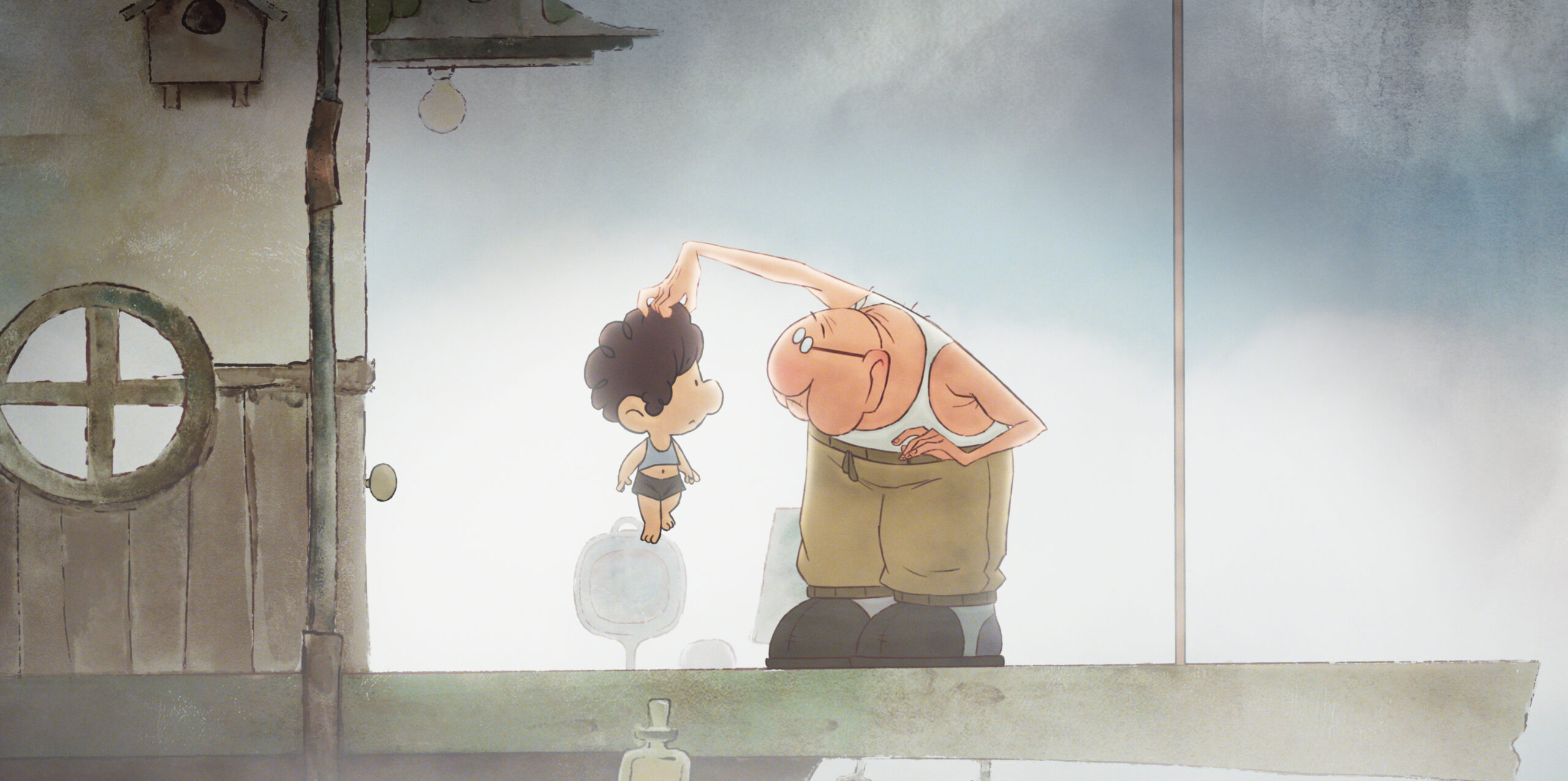
Liron Topaz: “Saba” is a poetic animated short film about a young boy and his grandfather living in a surreal world where gravity flows upward. In this world, everything alive remains grounded, while everything else slowly drifts upward toward the other side. When a sudden event separates the boy from his grandfather, the boy embarks on an emotional journey through grief, memory, and the search for closure.
At its heart, the film is about our shared longing for one more moment with the people who shaped us and made us who we are. It explores how their influence remains part of us, even after they are gone. Ultimately, “Saba” is about accepting that we cannot hold on forever, while finding a way to carry those connections forward as we continue our own journey.
MZ: How did you come up with the concept for ‘Saba?‘
LT: The film grew out of my own experience losing my grandfather. For years I kept thinking about how strange grief is. We know someone is gone, yet they still feel present in our memories and in who we have become.
Animation allows us to visualize emotions in a way that live action often cannot.“
Liron Topaz
The idea of gravity flowing upward came from that feeling. I started imagining a world where nothing truly disappears, but instead slowly drifts beyond our reach. From there, the story became a way for me to explore loss, memory, and our desire to hold on to the people who shaped us.
MZ: Can you talk a bit about the medium of animation? Why did you choose to use it to tell your story? Do you think this story could have been told as well in live action?
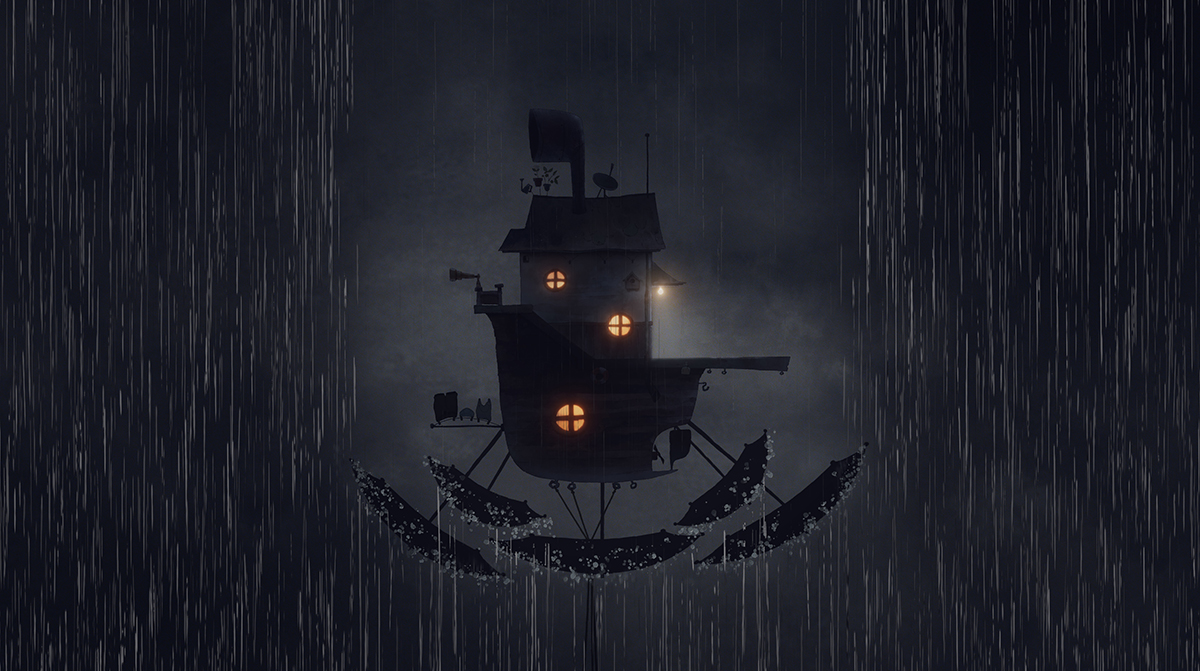
LT: Animation allows us to visualize emotions in a way that live action often cannot. The world of “Saba” is built entirely around metaphor. Gravity itself becomes part of the storytelling. Houses hang from ropes, people anchor themselves to the earth, and entire landscapes reflect the emotional state of the characters.
Just as importantly, the hand-drawn style helps reinforce the simple and almost childlike nature of the world. It allows the film to feel more lyrical and poetic, rather than literal. The visual language invites audiences to experience the emotions of the story rather than focus on the mechanics of how the world works.

I think the story could absolutely be told in live action, but it wouldn’t feel the same. Animation gave us the freedom to create a world driven by emotion and symbolism. A live-action version would likely feel more grounded and literal. Animation allowed us to approach grief, memory, and closure in a way that feels more universal and poetic.
MZ: How has the film been received at Tribeca?
LT: The response at Tribeca has been incredibly moving. What has surprised me most is how personal people’s reactions have been. Audience members from completely different backgrounds have approached me afterward to share stories about their own grandparents, parents, and loved ones.
That was always my hope for the film. While it comes from a very personal place, grief is something we all experience, and it has been rewarding to see audiences connect with it in their own way.
MZ: Can you tell us about any challenges in making this film?
LT: There were many challenges, both artistic and technical.
The entire film is told in a single continuous shot with no cuts, which meant every transition had to work seamlessly. But what made the process even more complex was the way the film was produced. Artists from multiple countries and time zones were all working on the film simultaneously. Rather than handing shots from one team to another, everyone was building different sections of the same continuous camera move at the same time.
The ropes and anchors throughout the film represent our very human desire to hold on to the people and moments that matter most.“
Liron Topaz
Because of that, we had to carefully orchestrate every aspect of the production. Camera movement, character animation, environments, timing, and transitions all had to connect perfectly across teams that were often asleep while another team was working on the film on the other side of the world.
Another challenge was finding the right balance between simplicity and emotion. We wanted the film to feel visually elegant and poetic, while still carrying the emotional weight of the story.
MZ: What is next for ‘Saba?’ Also, what do you hope viewers will take away from seeing the film?
LT: We were fortunate to premiere at Tribeca, and we’re excited to continue the film’s festival journey over the coming weeks and months.
One festival we’re especially looking forward to is Palm Springs International ShortFest next week. “Saba” was selected for the Opening Night program, which is a tremendous honor. We’re particularly thrilled because it’s the only animated film in that lineup, which makes the invitation feel even more special.
More than anything, I’m excited to keep sharing the film with audiences around the world and hearing the personal stories and memories it brings up for people.
I hope viewers leave the film thinking about the people who helped shape their lives. Grief is often associated with sadness, but I hope “Saba” also reminds people of gratitude. Even when someone is gone, the impact they had on us remains. Ultimately, the film is about finding a way to carry those connections forward as we continue our own journey.
MZ: Do you think ‘Saba’ is trying to tell us ways to access fond memories of passed loved ones? Or is that harder than we think once we lose them?
LT: I don’t think the film tries to provide an answer. Instead, it explores that tension.
Memories can bring us comfort, but they can also remind us of what we’ve lost. The boy’s journey is really about accepting that he cannot hold on to everything forever. Yet he discovers that the connection itself remains meaningful.
For me, the film suggests that closure isn’t about forgetting. It’s about learning how to carry those memories forward.
MZ: Does the upside-down gravity in the world you created represent the film’s plot? Is it about dreams or reality?
LT: The gravity is primarily an emotional metaphor.
The idea came from the feeling that our time in this world is borrowed. In “Saba,” everything alive remains anchored to the earth, while everything else slowly drifts upward toward another place. The ropes and anchors throughout the film represent our very human desire to hold on to the people and moments that matter most.
Whether the story happens in a dream, a memory, or reality is intentionally left open to interpretation. I was more interested in emotional truth than literal truth.
One of the unexpected joys of sharing “Saba” has been seeing how strongly audiences connected with its world and characters.“
Liron Topaz
MZ: Is ‘Saba’ playing anywhere else after Tribeca?
LT: Yes. We’re fortunate that the film’s journey is continuing with screenings around the world. In the coming weeks and months, “Saba” will be screening at festivals in places such as the aforementioned Palm Springs, Tokyo, Sydney, and Shanghai, alongside several other wonderful events.
One of the most exciting things about the festival circuit is seeing how audiences from completely different cultures connect with the same emotions. While the film was inspired by a very personal experience, the themes of loss, memory, and the people who shape us seem to resonate universally.
We’re looking forward to sharing “Saba” with as many audiences as possible and seeing where the journey takes us next.
MZ: Do you have any other films planned in the future?
LT: I have a drawer full of ideas, both short films and feature films, that I’m excited to explore in the years ahead.
One of the unexpected joys of sharing “Saba” has been seeing how strongly audiences connected with its world and characters. Because of that response, I’ve started exploring what a larger story set in the world of “Saba” might look like. The short was always designed to tell a complete story, but there are many aspects of this universe that I find fascinating and would love to explore further.
What interests me most are stories that use animation not simply as a visual style, but as a storytelling language. I love exploring emotional themes through worlds that could only exist in animation, and creating films that connect with audiences on a deeper level. My hope is to continue telling stories that resonate long after the credits roll and become timeless in their own way.
The Movie Buff thanks Liron Topaz for his time and wish him continued success. You can follow Liron on Instagram @lirontopazartistpage. You can learn more about “Saba” also by visiting the film’s official website.

