


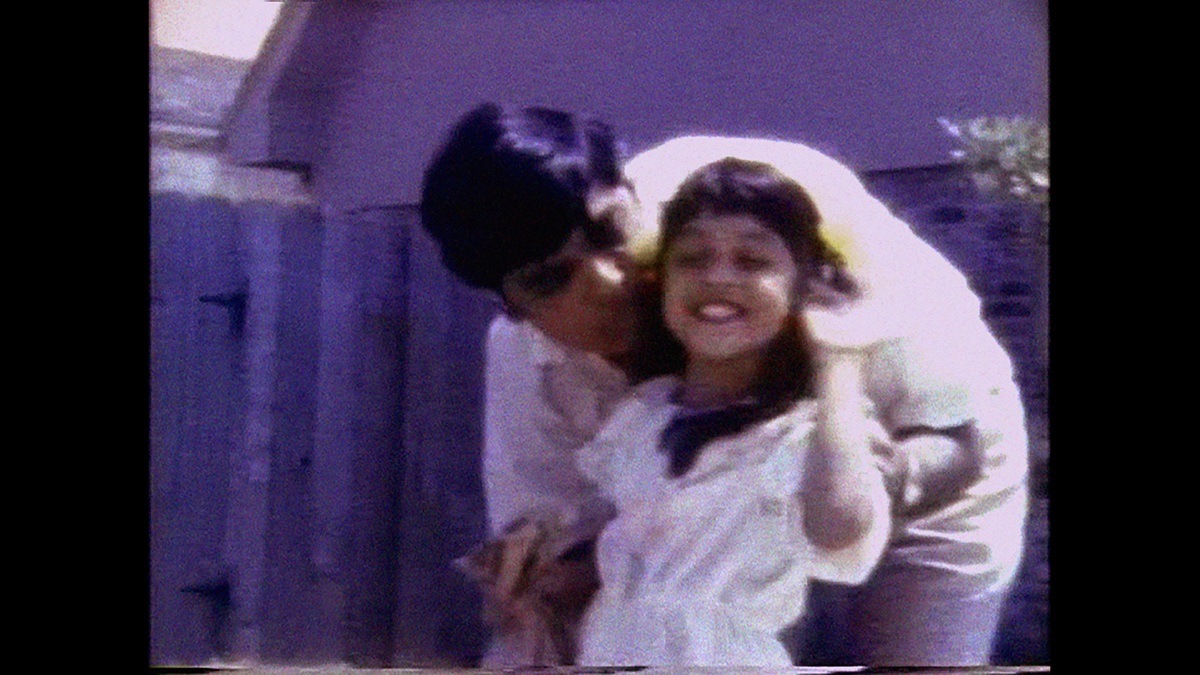
There is a moment in “The Gas Station Attendant” when filmmaker Karla Murthy begins to look at her father not as a collection of stories she has heard all her life, but as a person she is still trying to understand.
For years, Shantha Murthy‘s life had the shape of a family legend. As a boy in India, he ran away from home, survived on the streets, and eventually found his way to America through the kindness of strangers. Growing up, those stories occupied a familiar place in family lore. They were stories repeated often enough that their rough edges had begun to disappear.
But memory has a way of changing when viewed from a different distance.
What began as a series of late-night recordings between a daughter and her father eventually became “The Gas Station Attendant,” Murthy’s deeply personal documentary about migration, grief, family, and the stories we inherit from the people who came before us. Following its world premiere at Sheffield DocFest in June 2025, where it received a Grand Jury Special Mention, the film is now preparing for its U.S. theatrical release beginning June 12, 2026.
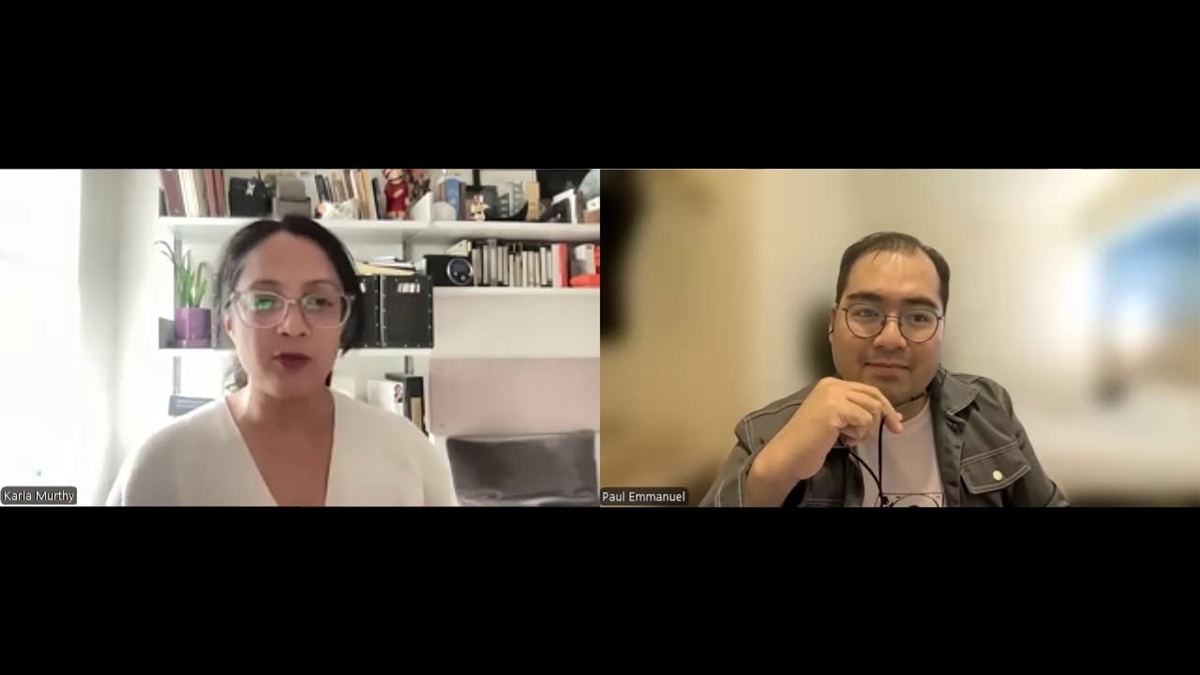
When we speak over Zoom, Murthy tells me she had reread my review of the film before our conversation. It moved her to tears, she says, and for a moment we sit with the strange intimacy of discussing a work so deeply personal to her and so affecting to me as a viewer. That exchange naturally leads us to the subject of memory, family, and the places that shape us. From there, our conversation drifts to the Philippines.
Early in the documentary, Murthy recalls visiting the country as a child in 1980 with her Filipina mother. I ask whether she has been back since.
“No,” she says with a smile. “That was the last time. My other siblings have gone back more often, but that’s definitely a trip I need to take.”
The answer feels oddly fitting for a film so preoccupied with distance—not only the physical distance created by migration, but the emotional distance that can exist between parents and children, between memory and experience, and between the stories we inherit and the lives that produced them.
Over the course of our conversation, Murthy reflects on belonging, immigrant labor, parenthood, grief, and the question that quietly guides much of “The Gas Station Attendant”: how do we make sense of the people we love once they’re gone?
“It’s not place,” she says at one point. “It’s stories.”
This interview has been edited for brevity and clarity.
The Movie Buff: I want to talk about your father, Shantha Murthy. Growing up, his life almost had the shape of a family legend: running away from home, surviving poverty, being brought to America by kind strangers, and starting over again. When did those stories begin to feel less like adventure stories and more like something heavier?
Karla Murthy: Growing up, they were fairy-tale stories. I equate them to a song you’ve sung so many times that you stop paying attention to the lyrics. It wasn’t until I recorded those conversations with him at the gas station that I started hearing them differently. At first, it was really just a way to pass the time. He’d wanted to record his story, and it was also a way for me to keep him company.
But as he was telling me these stories, and I’d hear the sound of the cash register or someone interrupting him to buy cigarettes or whatever, they suddenly hit so differently. It made me start to question the fairy-tale happy ending I’d always imagined the story had, just by him arriving in the States. It put everything in a whole new context for me. But I didn’t do anything with those tapes for decades. I think it really took his passing, and me having my own kids, to make me think about his life, his legacy, and what I wanted to pass on to them.
It also made me think of myself as a mother, and of my own mom and her life. What was I going to leave? What stories was I going to pass on? His passing really started to make me think about those stories again, but in a deeper way.
The gas station starts as something you worry about, but it slowly becomes the space where your father’s life opens up to you through those late-night calls. How did that place change for you while making the film?
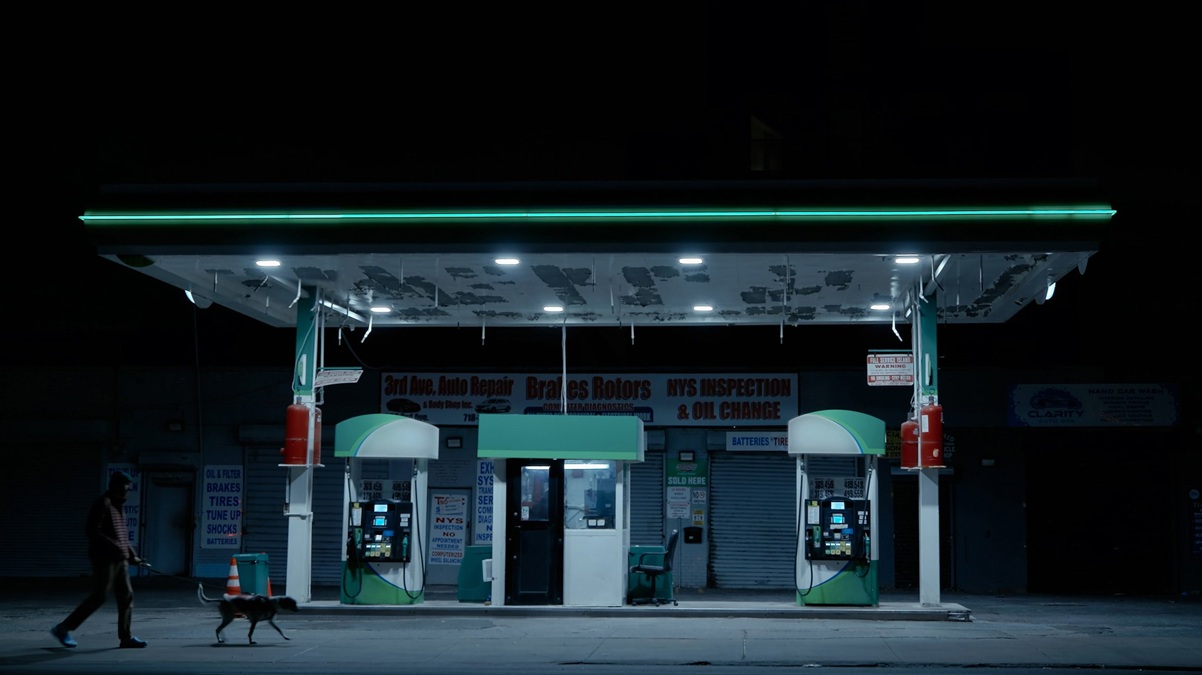
The title of the film is something that has come up a lot because I could’ve named it so many different things. He was so many different things. He wasn’t just a gas station attendant.
But for me, having that as a space and a place to start the film was sort of an invitation to people: these are the intimate strangers in your life. The gas station attendants, the convenience store clerks, the hotel workers. You’re about to get to know this person so intimately by the end of the film. It was a way to break down that barrier. We see gas station attendants all the time, and we have no idea what their stories are.
For me, that space became a portal into his life. I also wanted it to feel like a sacred space, not just for him, but for people’s lives. Gas stations are places we pass by, while the person inside is stuck there and everyone else is moving around. I wanted us to pay attention to those people, their stories, and their lives.
Also, I spent a lot of time looking for gas stations in Brooklyn that I wanted to film, doing a whole location scout trying to find the perfect gas station that could become the main location. I wanted it to be cinematic, with a lot of sky. I thought I was stalking the people there because I was filming there so much. [laughs]
“The Gas Station Attendant” touches on a larger history of South Asian immigrant labor, but it always returns to your father as a specific person. How did you balance telling his story with reflecting a wider immigrant experience?
It’s interesting because I come from a news background, where I probably would have told a completely different story if I were doing the news version of immigrant labor in America today.
This film grew out of a very personal need to tell my father’s story and understand his life. I never imagined it would become the film it is now and go out into the world. When I started making it, I was working through grief and trying to understand what his life meant to me.
At first, I was doing that through collages, writing, and journaling. I wasn’t thinking about the larger issues. Of course, once you’re making a film, you start thinking about the world it’s going to enter and how it might resonate with audiences. I really felt that one way to change people’s hearts and minds about immigrants is to allow them to know someone intimately. That’s what I wanted to do with this film. I wanted audiences to spend time with someone who isn’t a saint, someone who makes mistakes and is flawed, just like the rest of us.
I also wanted to show that I’m making mistakes too, and that we’re all trying to do the best we can. Hopefully, the film encourages people to extend a little grace to others and to themselves. When you spend time with someone on that level and begin to care about them, that can be more powerful than simply watching a news report about immigrant labor.
One thread I found quietly moving is how the film treats identity as something you’re always approaching from a slight distance. You grew up half Indian and half Filipina in a place where, in your words, you felt like an anomaly. Even your trips to India carried this feeling of visiting a place you should know better.
How did making the film change your understanding of where you come from, not just culturally, but emotionally?
I think there’s always a search for belonging, especially in a country where more and more people who look like me are being told they don’t belong. What I realized through making this film is that belonging comes through storytelling—through family stories and understanding the histories that brought us here. It’s not place. It’s stories.
The film opens with the idea that migration is fundamental to the human story. We’ve always been moving. The boundaries we create are often fictional. Every time someone goes into space, they come back saying the same thing: the world is one, we’re all connected. What I learned is that understanding these stories, and passing them on to my children, creates that sense of belonging. That’s one reason I made the film.
Even though the film is mainly about my dad, I also wanted to reflect my Filipino heritage. Having a mother from the Philippines, I often identified more strongly with Filipino American culture. That found its way into the film through the music and through scenes that felt important to me, like karaoke. To me, karaoke is community. It’s how people release emotion together. It’s a collective, cathartic experience. The same goes for my wedding scene, where we dance the Pandanggo sa Ilaw.
With the score, I gave composer Bobak Lotfipour references to boat music from Mindanao. There are gamelan-inspired sounds throughout the film that draw directly from Filipino musical traditions.
That was one of the things I appreciated when I watched the film. I remember thinking, “Oh, I know what that is. I know that dance.“ [laughs]
Yeah, it was a nod to those. Those references may be subtle, but it was important to me that side of my identity was present, even in a film that is fundamentally about my dad.
Your father spent much of his life reinventing himself: engineering, restaurants, trade shows, small businesses, and eventually the gas station. As a child, that can look like adventure. As an adult, it can start to look like exhaustion. When did your understanding of that restlessness begin to change?
As I got older, my father’s constant movement from job to job became stressful rather than adventurous. But it wasn’t until I started making this film that I understood where some of that restlessness came from.
There were so many things I learned about him while making the film. One of them was revisiting his stories about being a street kid in India. I’d heard those stories a million times. But when I started listening to them closely and pairing them with images, they felt completely different. Around that time, my younger child had just turned ten, and I kept imagining him in those circumstances—homeless and alone on the streets of India. That was heartbreaking. I wanted close-up shots of my father’s body because I kept thinking about how vulnerable a child is in that situation.
The way my father survived was by constantly moving—finding the next job, the next opportunity, the next place to sleep. Movement was survival. What I came to understand is that he carried that survival instinct with him to the United States. I don’t think I fully understood that until I started making this film.
One of the things I found most moving is how your father’s friendliness takes on a different meaning over the course of the film. What may have seemed embarrassing when you were younger eventually comes to look like a way of surviving in the world. When did you begin to see that side of him differently?
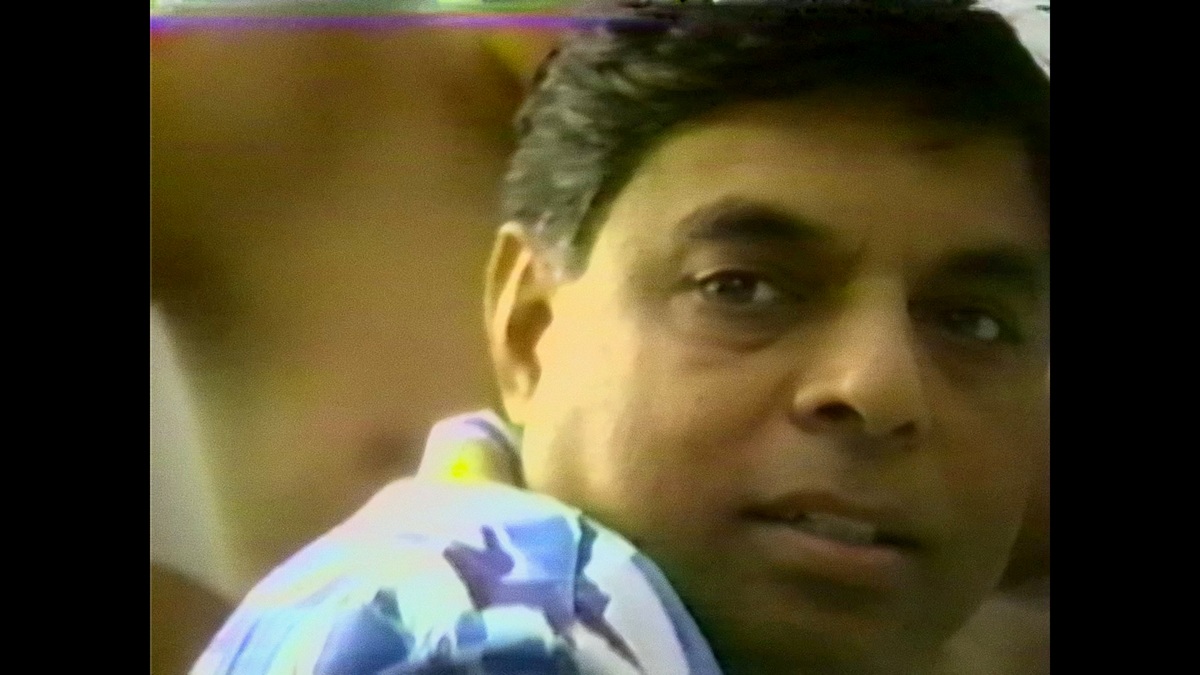
That realization also came through making the film. I have all this footage of my dad talking with friends at trade shows, and watching it made me think about his life differently. His friendliness wasn’t just a personality trait. It was another survival skill.
He used to tell me something that isn’t in the film. If you needed a favor, and you were standing in line somewhere, wait for the teller who’s smiling and laughing. If someone looks like they’re having a bad day, let the next person go ahead. For him, friendliness and kindness were ways of moving through the world. They helped him get to the next step.
I don’t think I understood that when I was younger. Looking back at those videos after he died, I started seeing those habits differently. I think that’s what happens when someone dies. You go back through photographs, memories, old footage, and suddenly you’re looking at the same moments through different eyes.
The film feels like it moves the way memory often does: through fragments, home videos, photographs, and old footage. Was it important for you to make it feel like memory rather than a straightforward biography?
Yes, that was exactly what I wanted the film to feel like: a memory film.
Memory isn’t linear. It’s a mashup of moments that you connect together over time. That’s why the film embraces different formats and different kinds of footage. Even the India sequence is made up of material from multiple trips. They’re all woven together into a single collage. That’s how memory works.
I was inspired by a memory researcher at Stanford who describes memory as being more like a painting than a photograph. You can revisit a painting over and over again, just as you can revisit a moment in your life and repaint it differently depending on who you are and where you are when you’re remembering it. That idea really inspired me. I wanted the film to feel like a painting.
I was also working with a writing consultant who introduced me to the concept of “point of telling,” which is different from point of view. Point of telling asks where you are in relation to the events you’re recounting and how that affects the way you tell the story. If you’ve just been in a car accident, for example, and you’re telling the story five minutes later, it might be frantic and disjointed because you’re still full of adrenaline. But if you’re telling the same story ten years later at a dinner party, it becomes something else.
I thought a lot about where I was in relation to these events and how that should shape the film. For me, the point of telling is revealed when I open the box of tapes near the end of the film. Everything before that is filtered through memory. Everything after that becomes present-day. From that point on, almost all the footage was shot by me. There’s no score, no music. Everything becomes quieter and more immediate. The earlier sections have music from my composer because memory is colored. It carries emotion with it. I wanted the final section of the film to feel present and unfiltered.
What moved me most is that the film doesn’t only investigate your father. It also quietly interrogates you. There’s an unspoken question running through the documentary about what it means to be a good daughter. Was it difficult to turn the camera inward in that way?
Yes, it was difficult. But I also felt that if I was going to interrogate my father’s life, I had to interrogate myself. I had to turn the camera around and look at myself honestly. In some ways, it became cathartic. It forced me to confront moments I carried a lot of shame about, including not calling my dad back.
It’s funny because audiences immediately recognize themselves in that. Who hasn’t ignored a call from a parent at some point? For me, putting that moment into the film became a way of releasing it. It was a way of saying: this is who I am, this is what I did, and I’m willing to let people see it.
I also think the question remains unanswered. I never wanted the film to answer everything because that’s not how life works. There are questions I’ll never get to ask my father. There are things I’ll never fully understand. I didn’t get to say goodbye the way I wanted to. Am I going to be okay with that? How do you keep going afterward? Those are questions the film doesn’t solve. What it does explore is the reality that some questions remain unanswered and that we still have to keep living with them.
One of the final pieces in the film is a piano composition I play called Unsent Love Letters. It was written as an homage to Erik Satie. When Satie died, people entered his apartment and found a stack of love letters he had never sent. That story stayed with me. In some ways, the film became my own unsent love letter.
What I hope audiences take away is the importance of sending those love letters while you still can. Because if you don’t, you may find yourself making an entire film years later just to unpack the guilt and grief of not sending them sooner.
One of the emotional turning points in the film is the question, “How did you get up and keep going?” Early on, it’s about understanding how your father survived your mother’s death. By the end, it has become a question you’re asking yourself. When did you realize the meaning of that question had changed?
I was very influenced by Pegah Pasalar, who worked with me as an additional editor. She introduced me to poetry that uses repeated refrains, and there are several examples of that structure throughout the film. “How did you get up and keep going?” is one of those refrains.
Again, it goes back to this idea that memory changes depending on where you stand in time. The sentence means one thing early in the film, when I’m trying to understand how my father survived losing my mother. By the end, it means something entirely different because now I’m trying to understand how to survive losing him.
The question itself hasn’t changed. What changed is who I am when I’m asking it. That repeated line becomes a way of measuring that shift in understanding over the course of the film. That’s really what drew me to it.
“The Gas Station Attendant” feels like it could only have been made by someone looking back not just as a daughter, but as a parent. Did becoming a mother change how you understood your father’s choices and sacrifices?
Oh, definitely. One of the reasons I wanted to make the film was because I was thinking about the stories my children would inherit. As children, we spend so much time judging our parents and blaming them for the things that went wrong in our lives. Now that I’m a parent myself, I sometimes wonder what my own children will say about me one day—what they’ll blame me for, what they’ll wish I had done differently.
Becoming a parent makes you realize how difficult it really is. Most of the time, you’re just trying to do the best you can. I don’t think I truly understood that, or had a real sense of what it meant, until I became a mother.
And there’s something else I think about often. It’s strange to talk about your own life in terms of scenes, but I think a lot about the moment in the film when my father, as a young boy, chooses to live rather than drown himself. I think about that moment all the time. That desire to survive is what led to me. It’s what led to my children. The beach sequence is really a collapsing of time and space. At first, you think the boy running along the beach is my father. But eventually it’s revealed that the child is actually my son.
I was inspired by “Salaam Bombay!” There is a shot at the end of that film of a young boy running through the streets of Bombay. My father used to tell me, “If you want to know what my life was like, watch that film.” That boy was about the same age my father was when he was living on the streets.
For a long time, I used footage from “Salaam Bombay!” as a temporary placeholder while editing. I even thought I might license the footage. But as I continued working on the film, I realized that wasn’t what the scene was really about. The story wasn’t ending with my father. My children are inheriting this story too. They are the product of all of my parents’ hopes, dreams, sacrifices, and risks. They would not be here today if that little boy on the beach had made a different choice.
That’s what that scene ultimately became about for me—the decision of one child to keep living created generations that came after him.
That’s quite a way to end the conversation. Once again, Karla, congratulations on the film. Thank you so much for taking the time. I’m looking forward to your next project.
Thank you. And hopefully we’ll make it to the Philippines soon. That’s on my next big trip.

