



I was in the middle of watching Jerrold Tarog‘s “Quezon” during its theatrical run when I had a strangely specific thought: regardless of how I ultimately felt about the film, in any other year, “Quezon” would have easily made my year-end list of the best Philippine movies. But considering how many great Filipino films I had already seen up to that point, I was almost certain it wouldn’t make the cut this time.
It’s a weird way to open an article like this, I know. But I guess it speaks to something larger. Pinoy cinema has stepped up several notches in terms of both ambition and execution. In 2025 alone, a number of Filipino films earned critical praise during their international runs, from “Song of the Fireflies” to “Some Nights I Feel Like Walking.”
The year also saw the launch of the CineSilip Film Festival under VMX, the country’s first erotic film festival, an event that consciously pushed conversations about sex in cinema closer to the realm of art rather than mere provocation. The result was surprising in the best way: several entries warranted serious consideration, with one ultimately making this list.
So yes, it goes without saying that 2025 was, at least for this film critic, the best Philippine cinema has ever been. The part of me that prefers qualified praise still does, but there’s no harm in admitting optimism. I can only hope this momentum carries forward.
Expanding the List (And Doing Away with Honorable Mentions)
In previous years, I stuck to a traditional top ten, padding things out with a few honorable mentions. This year, I decided to expand the list to fifteen and dispense with honorable mentions altogether. Focusing on these fifteen films feels sufficient. More importantly, it allows each of them to exist without being pushed into a secondary tier.
This Top 15 is presented in three sections, counting down from #15 to #1. Each section contains five films, discussed in depth. I initially thought of making this a three-part series, but ultimately decided against it. Presenting them all at once feels like the right choice.
Several patterns emerged as I finalized this list: a growing appreciation for local documentary filmmaking; an increase in queer and queer-adjacent narratives; and a willingness to confront subjects that the country’s current sociopolitical climate still treats as untouchable, from abortion and trans rights to sexual assault and annulment in lieu of divorce. These films didn’t merely entertain. They challenged, unsettled, and reminded me why cinema continues to matter.
Without further ado, below are the fifteen Philippine films that made my viewing experience in 2025 such a rewarding one.
Related List: Celebrating the 10 Best Films of Philippine Cinema in 2024
Top 15 Films of Philippine Cinema in 2025 (#15–11)

15. Child No. 82 (dir. Tim Rone Villanueva)
Tim Rone Villanueva’s “Child No. 82 (Son of Boy Kana)” feels like the work of a filmmaker thinking out loud, testing ideas, tones, and impulses in real time. That restlessness could have worked against the film. Instead, it becomes part of its charm, because Villanueva never loses sight of the people at the center of the chaos. Even when the film stretches in multiple directions, it does so with care.
At its core, the film is less interested in celebrity than in what fills the absence celebrities leave behind. Max’s fixation on Boy Kana isn’t framed as a joke or pathology, but as inheritance. Villanueva understands fandom as something learned and passed down, a substitute language for intimacy when real connection is unavailable. The journey Max undertakes matters less as a quest for proof than as an attempt to place himself somewhere in a story that has already moved on without him.
The film’s visual instincts reflect that generational tug. Retro imagery, pixelated graphics, and screen-bound fantasies collide with the present, not as nostalgia but as reassembly. These fragments suggest how myths don’t disappear so much as mutate, reshaped by new technologies and new kinds of longing. What emerges is a portrait of belief that feels distinctly contemporary, where devotion is public, performative, and deeply personal all at once.
The performances ground this vision. JM Ibarra plays Max with an openness that never asks for sympathy but earns it anyway. Rochelle Pangilinan-Solinap lends credence to a mother who has learned to survive by withholding. And Irma Adlawan’s fan-club matriarch, played with unsettling conviction, captures the fine line between love and obsession without reducing either to spectacle.
What ultimately secures “Child No. 82” a place on this list is Villanueva’s refusal to sneer at the very longing he puts under the microscope. The film understands how idolatry, masculinity, and parasocial attachment can curdle, but it’s far more interested in where they come from. There’s an unusual softness in the way it watches its characters reach for meaning, even when that reaching is awkward or misdirected. Villanueva lets belief be fragile rather than foolish, and that choice gives the film its staying power.

14. Call Me Mother (dir. Jun Robles Lana)
There’s a particular satisfaction in watching an actor finally be trusted with material that lets them stretch, settle, and surprise. “Call Me Mother” does exactly that for Vice Ganda, offering a role that foregrounds emotional precision over punchlines without denying the performer’s innate charisma. Teaming once again with Jun Robles Lana, the film centers on contested parenthood: who gets to claim it, who is denied it, and how love is measured when biology becomes a battleground.
From its opening moments, the film makes clear that motherhood here is not an abstract ideal but a lived condition shaped by scrutiny, bureaucracy, and judgment. Vice’s performance grounds this perspective beautifully. She brings warmth and resolve to a woman forced to defend her right to care, revealing strength not through grand declarations but through quiet persistence. It’s in these moments that the performance truly resonates, allowing the character to feel inhabited rather than performed.
Opposite her, Nadine Lustre delivers a sharply calibrated turn, her scenes crackling with tension and vulnerability. Their confrontations over Angelo are less about winning arguments than exposing wounds, and the film is at its most affecting when it allows those emotions to sit, unresolved but deeply felt. Young Lucas Andalio proves a magnetic presence, giving the story its emotional center and reminding us what’s truly at stake.
What places “Call Me Mother” on this list is how fully it commits to the idea that family is forged through care rather than chromosomes. In giving Vice Ganda the space to explore that truth with sincerity and depth, the film transcends portraiture and becomes something rarer: a performance that feels lived-in, argued for, and well earned.

13. Dreamboi (dir. Rodina Singh)
“Dreamboi” moves with the jittery logic of a mind trying to stay intact. Rodina Singh frames trans desire and exhaustion not as spectacle, but as something lived through the body, shaped by repetition, fear, and longing. The film doesn’t smooth these experiences into arguments. It lets them pile up.
Diwa’s (EJ Jallorina, in a performance that’s both sensitive and in control) days are defined by negotiation. Every space she enters asks something of her, and the film stays close to how that vigilance wears her down. Singh frames her daily humiliations, small and large, not as isolated incidents but as a pattern that presses in from all sides. Rather than flattening these experiences into thesis statements, the film lets them accumulate. Workplaces, public spaces, even moments meant to be private become sites of scrutiny. Fantasy, then, emerges not as escape but as coping, a way to imagine softness where the world offers none.
Much of the film’s force comes from how it sounds. The bass-heavy score, the radio static, the ringing that cuts through moments of hostility all work on the nerves, turning the theater into an extension of Diwa’s interior state. The visuals follow suit, embracing clutter and excess without losing intention. It’s a film that feels restless on purpose.
What ultimately steadies the film is its attention to community. The boarding house Diwa returns to functions less as a setting than as a refuge, a place where vigilance can briefly soften into familiarity. Within these shared spaces, humor becomes a form of armor, and care as a collective practice. Conversations overlap, routines repeat, and the camera allows these moments to breathe, emphasizing how survival is often sustained by proximity and recognition.
One scene, in particular, brings this into focus, naming the violence trans women endure not as abstraction but as lived fact. There’s no attempt to shape this into speechifying or closure. The moment lands because it feels spoken among people who already understand, who don’t need convincing. In that refusal to soften or explain, “Dreamboi” locates its emotional core.
The film’s real-world journey matters too. That “Dreamboi” was twice denied release by the MTRCB before finding recognition at CineSilip Film Festival by winning best picture mirrors the struggle it depicts onscreen. It may only scratch the surface, but that scratch drew blood. It made space, invited conversation, and insisted that trans stories belong here, messy and unresolved.

12. Eraserheads: Combo on the Run (dir. Maria Diane Ventura)
Music documentaries often struggle with familiarity. Get too close to the subject and the film risks flattening into reverence; keep too much distance and it loses the emotional texture that made the story worth telling in the first place. “Eraserheads: Combo on the Run,” directed by Maria Diane Ventura, navigates that tension with remarkable sensitivity, offering something rare: not a definitive account, but a generous one.
What the film provides, above all, is space—for reflection, for honesty, and for a kind of emotional reckoning that fans and artists alike don’t often allow themselves. Rather than mythologizing the band as untouchable icons, Ventura frames the Eraserheads as people still grappling with their shared history. The documentary understands that closure doesn’t come from answering every question, but from acknowledging which ones still hurt to ask.
Ventura’s long-standing relationship with her subjects becomes the film’s quiet strength. The access feels earned, not transactional, and the candor that emerges never slips into spectacle. Moments of vulnerability are allowed to unfold without editorial nudging, creating an atmosphere of trust that extends to the audience. Even when the film chooses reservedness over confrontation on certain matters, that restraint reads less as avoidance than as care. Ultimately, Ventura demonstrates an awareness of the limits of what a documentary can and should carry.
The film’s final movement, built around the 2022 reunion concert, doesn’t strain for triumph or nostalgia. Instead, it settles into something quieter. The music carries the weight of what was lost, what endured, and what can no longer be fixed, without insisting that any of it be reconciled. Ventura lingers on shared glances, offhand jokes, the simple act of being in the same room again. There’s no attempt to package the moment as a grand resolution. What remains is a sense of comfort in the familiar: imperfect, provisional, and enough for now.
11. Unmarry (dir. Jeffrey Jeturian)
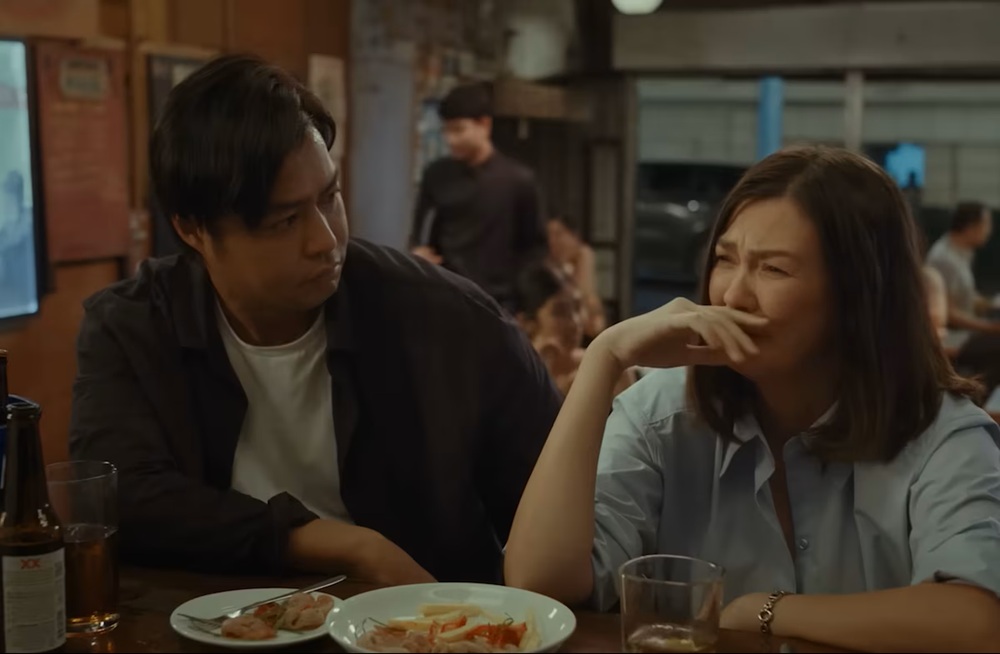
What “Unmarry” understands, from the start, is that the end of a marriage is rarely just about paperwork. Under Jeffrey Jeturian’s steady direction, the film treats annulment not as a legal concept but as a slow unraveling that seeps into every corner of a person’s life. The process is tedious, often absurd, and emotionally invasive, and the film never rushes past that reality.
Jeturian’s control of tone is one of the film’s great strengths. Even as the story moves through custody battles, courtroom performances, and the strange rituals demanded by a system that refuses to call separation what it is, humor keeps finding its way in. These moments never feel flippant. They feel necessary, a release valve for characters being asked to relive their worst memories in public. The framing device of Eugene Domingo’s lawyer-vlogger works less as exposition than as commentary on how spectacle and sincerity collide in the legal process itself.
Angelica Panganiban gives a central performance that reminds you how precise she can be with emotional detail. Her Celine is a woman slowly reclaiming a sense of self that marriage hollowed out, and Panganiban plays that recovery without shortcuts. On the other hand, Zanjoe Marudo matches her with a portrayal shaped by uncertainty rather than heroism, a man whose desire to be understood doesn’t always align with emotional readiness. The supporting cast deepens this perspective, offering no easy villains or moral shorthand.
The film is just as careful with the possibility of romance that develops between Celine and Ivan. Jeturian resists overtly turning their connection into either a reward or an escape, allowing it to exist in a space defined by hesitation and implication. What draws them together is not promise but recognition, the relief of being seen by someone else navigating the same limbo. And while it hints upon it, the film never insists on what that bond should become. In turn, it sidesteps the urge to replace one institution with another, and instead leaves room for interpretation and conversation.
What gives “Unmarry“ its weight is how little it insists on certainty. The film doesn’t lobby for a solution or elevate its characters into symbols. It stays with the aftermath instead: the exhaustion, the half-closures, the quiet recalibration that follows once the papers are signed and the noise dies down. Jeturian is less interested in where his characters land than in what they carry forward. By letting ambiguity stand, the film forgoes easy catharsis and instead allows its final notes to feel earned, unsettled, and true to the lives it’s observing.
Continue to Part II (#10–6)
