



Love, in its most untamed and consuming form, has always haunted the edges of human understanding. It is a force that can elevate the spirit to ecstatic heights and simultaneously plunge it into the abyss of despair. Imtiaz Ali’s 2018 film, “Laila Majnu,” directed with a delicate touch by Sajid Ali, fearlessly navigates this turbulent terrain. Initially met with a muted response, this cinematic gem, much like a hidden spring in the Kashmiri valleys it so exquisitely captures, has steadily nurtured a dedicated following, blossoming into what many now recognize as a modern-day classic.
To those who initially overlooked or dismissed it, a second encounter is not merely a suggestion; it’s an invitation to a profound and enduring experience. From the moment its evocative trailer first flickered across screens, it beckoned viewers into an intense and passionate world, promising a contemporary reimagining of the timeless Sufi romance. While it might have initially felt like a departure from Imtiaz Ali’s familiar romantic landscapes, time has peeled back the layers, revealing a film brimming with profound philosophical inquiries and undeniable artistic brilliance.
‘Laila Majnu’: A Radical Philosophy of Love
At its very core lies a radical philosophy of love, one that resonates deeply with the Sufi concept of ishq haqiqi—the yearning for the divine often mirrored in earthly passion. Qais’s (Avinash Tiwary) metamorphosis into Majnu is not a simple descent into madness, but rather a symbolic odyssey of the ego dissolving in the crucible of an overwhelming affection. His obsession transcends the mere physical presence of Laila (Triptii Dimri), evolving into an all-consuming yearning for an idealized, almost abstract, beloved. This mirrors the Sufi belief that earthly love can serve as a crucial stepping stone toward comprehending and experiencing divine love, a realm where the individual self ultimately merges with the universal.
The brilliance of “Laila Majnu” lies in its masterful deployment of metaphors to articulate these intricate philosophical ideas. The vast, untamed landscape of Kashmir itself becomes a potent symbol for the often irrational and untamed nature of love. The interplay between the subjective experience of dramatic emotional peaks and crushing troughs in Qais and Laila and the objective reality of the soaring, majestic mountains and deep, serene valleys of their world reveals a fundamental resonance. There, the intensity of inner being finds a corresponding echo in the outer landscape, suggesting a deeper philosophical principle of interconnectedness and the mirroring of internal states in the external realm.
Themes of Solitude and Isolation
The recurring themes of solitude and profound isolation, particularly as Majnu’s story unfolds, function as poignant symbols of the individual soul’s intense yearning for union with the beloved. It’s a craving so absolute, it can nurture a profound drifting away from the anchors of the material world. Even Qais’s seemingly strange behavior of embracing rocks and whispering to the wind can be understood as a powerful metaphor for perceiving the essence of the beloved in every element of existence, a central idea in some mystical traditions.
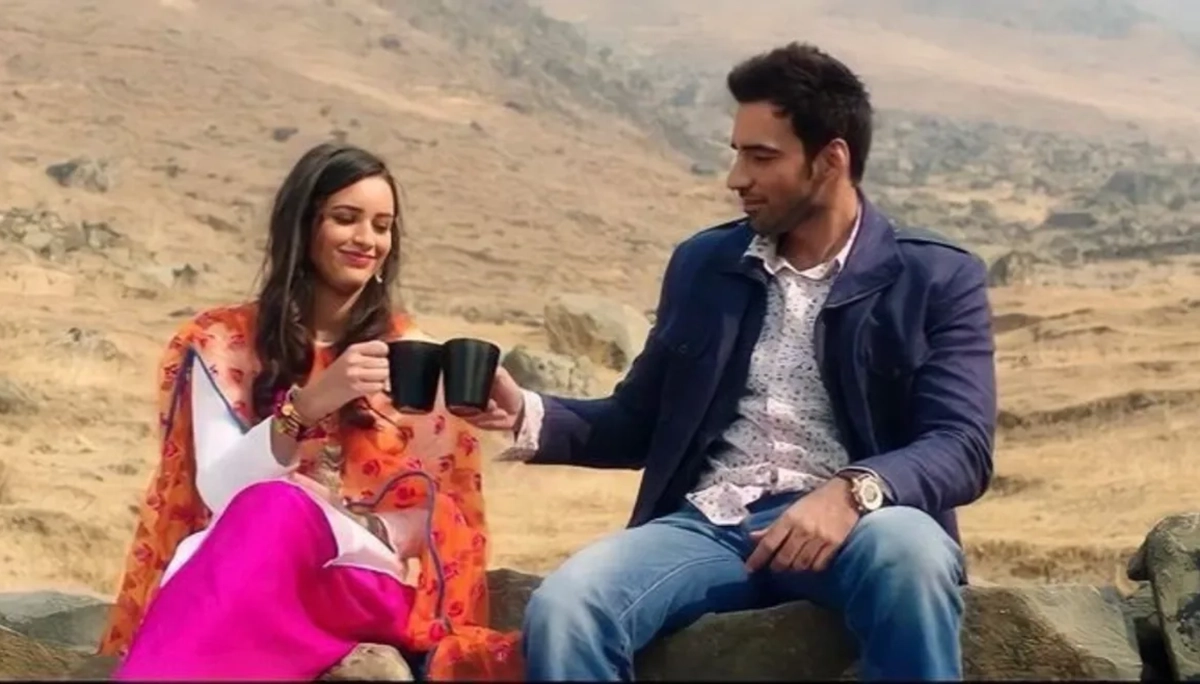
The narrative and profound philosophical exploration of “Laila Majnu” organically sprouts from its evocative music, a collaborative creation by Hitesh Sonik and Niladri Kumar, making it not a separate soundtrack, but a root system. The breathtaking vistas, the towering mountains, the tranquil valleys—they all echo the tumultuous yet ethereal nature of the central love story.
The subtle undercurrent of the region’s volatile political climate poignantly underscores the inherent instability and external pressures that relentlessly plague their relationship, adding a profound layer to their deeply personal struggles. The very authenticity of Kashmir, its untamed spirit, resonates with the wild, untamed nature of Qais’s love, creating a powerful synergy between setting and soul.
A Film Rich in Metaphors and Symbolisms
The dialogue itself, often imbued with a poetic cadence and layered with profound metaphorical meaning, contributes significantly to this rich philosophical exploration. Their exchanges, seemingly light and commonplace, resonate with a profound weight, the simplicity of the words a veil drawn thinly over deeper spiritual and emotional truths that hum just beneath perception.
The pervasive yearning, the agonizing separation, the unwavering and absolute devotion—these core themes are intricately woven into the very fabric of the narrative, alluding to the ancient Sufi understanding of divine love, where the earthly beloved serves as a potent reflection of the ultimate truth.
Imtiaz Ali’s vision, brought to life with a sensitive and nuanced directorial hand by Sajid Ali, is palpable in every meticulously crafted frame. The raw, untamed beauty of Kashmir is masterfully interwoven with the intense and often volatile emotional landscape of the characters.
A Homage to the Untamed Kashmiri Landscape

Ali’s signature style of delving into the complexities of human relationships and the intricate landscapes of inner journeys finds a particularly potent and resonant expression in “Laila Majnu.” The deliberate and evocative use of metaphors, especially in the film’s latter half, elevates the narrative far beyond the confines of a conventional love story, transforming it into a profound and lingering meditation on the very nature of obsession, the unwavering power of devotion, and the elusive essence of existence itself.
The narrative and profound philosophical underpinnings of “Laila Majnu” are inseparable from its evocative music, a collaborative masterpiece by Hitesh Sonik and Niladri Kumar, which acts not as a soundtrack, but as an essential foundational thread. The soulful melodies and deeply resonant lyrics serve as a direct conduit to the characters’ innermost turmoil, amplifying the emotional intensity of their journey. Tracks like “Hafiz Hafiz” and “O Meri Laila” transcend being mere musical interludes; they are, in essence, poetic expressions of profound yearning, the agony of separation, and the often-mystical dimensions of love that the film so eloquently explores.
In a symbiotic embrace, the music intertwines with the unique sounds and rhythms of the Kashmiri landscape, drawing the viewer deeper into the film’s atmosphere and profoundly enriching its emotional impact.
A Transformative Performance
Witnessing Avinash Tiwary as Qais is not mere observation, but a mesmerizing immersion into a transformative realm. He doesn’t just act the part; he viscerally embodies the consuming and potentially destructive power of love, delving into the profound philosophical depths of a man utterly consumed by an all-encompassing passion.
From the initial playful arrogance and youthful exuberance to the eventual heartbreaking descent into the desolate figure of Majnu, Tiwary navigates this incredibly complex arc with a captivating intensity that is both deeply pleasing in its artistic execution and profoundly unsettling in its raw emotional honesty. His eyes become windows to a soul undergoing a radical transformation, conveying a spectrum of emotions from playful affection and burgeoning obsession to desperate longing and, ultimately, a haunting emptiness that speaks volumes about the destructive yet paradoxically transformative power of love.
To prepare for this demanding role, Tiwary reportedly underwent a period of intense immersion, spending time in Kashmir, often in solitude, to absorb the atmosphere and the emotional landscape of the region, seeking to understand the isolation and yearning that define Majnu’s existence.
The Embrace of Solitude and The Whispered Confession
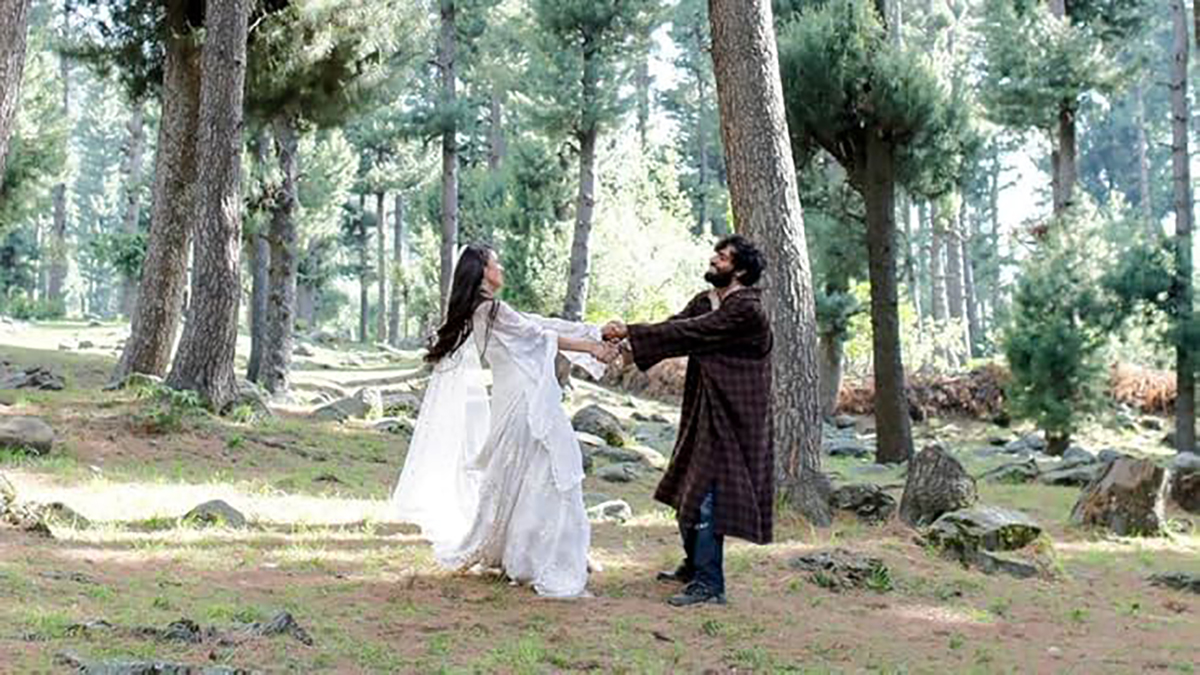
Tiwary’s intense portrayal of Majnu transforms his embrace of the unyielding Kashmiri ground into a potent symbol, embodying the profound depths of his internalized love. Sajid Ali’s direction frames him against the vast, indifferent landscape, emphasizing his isolation. The silence, broken only by his whispers, conveys the depth of his devotion where Laila is now intertwined with every element of existence. Imtiaz Ali’s sparse yet profound dialogue, if any in that moment, underscores the philosophical shift from lover to the embodiment of love itself.
The tender vulnerability in Tiwary’s eyes as Qais confesses his love to Laila beneath the majestic Chinar tree is captivating. Sajid Ali’s soft lighting and intimate framing enhance the delicate intimacy of the moment. With a poet’s touch and a heart laid bare, Imtiaz Ali’s dialogue delicately captures the initial blossoming of their bond, each exchange a tender prelude to the consuming intensity destined to ignite.
Meanwhile, Tripti Dimri, as Laila, provides a perfect counterpoint, her portrayal marked by a quiet strength and an inner turmoil that mirrors Qais’s external chaos, creating a palpable chemistry that makes their connection both believable and deeply affecting.
On Telling a Story of Irrational Love
Imtiaz Ali, the writer behind this poignant tale, has often explored the complexities and often-irrational nature of love in his films. His decision to revisit the classic “Laila Majnu” legend stemmed from a desire to explore the timeless essence of such profound and all-consuming love in a contemporary context. He was intrigued by the idea of a love that transcends societal norms and even sanity, pushing the boundaries of human experience. Ali saw the story as a potent metaphor for the human yearning for connection and the lengths to which individuals might go in its pursuit, even to the point of self-annihilation. He aimed to peel back the layers of the familiar narrative and delve into the philosophical underpinnings of such intense devotion.
While “Laila Majnu” undeniably possesses significant artistic merit and a profound philosophical core, it is not entirely without its perceived flaws. Some viewers might find the film’s pacing, particularly in its later stages, somewhat uneven, and the deliberate shift toward a more abstract and internalized portrayal of Majnu’s descent into madness might not resonate with every audience member.
An Unconventional Narrative?

However, it can be argued that these very aspects are intrinsically linked to the film’s deeper philosophical exploration. The more deliberate pace in the latter half allows for introspection and contemplation, mirroring the slow erosion of Qais’s sanity, while the abstractness itself reflects the elusive and often irrational nature of intense love, pushing beyond conventional narrative structures to explore the inner landscape of obsession.
So why did this cinematic gem not receive its due recognition upon its initial release? Perhaps its unconventional narrative trajectory, particularly the move towards a more internalized and symbolic representation of Majnu’s madness in the latter half, challenged conventional expectations of a typical romance. The film demands a certain level of patience from its viewers, as well as a willingness to actively engage with its deeper metaphorical layers and its philosophical inquiries into the nature of love and self.
A Personal Reflection on ‘Laila Majnu’
As someone who was captivated by the evocative trailer and eagerly attended the first day first show of “Laila Majnu,” I must confess that the film initially left me intrigued, yet grappling with its unconventional narrative. However, with time and subsequent viewings, a profound understanding began to dawn. This wasn’t merely a tragic love story; it was a deep dive into the very essence of what it means to love with an intensity that defies reason. I found myself drawn to its philosophical undercurrents, its exploration of a love that mirrors a spiritual yearning, and the courage it took to portray such an all-consuming passion without romanticizing its potential for perceived madness.
Over the years, I’ve recommended “Laila Majnu” to countless individuals, often prefacing it with a caution about its unique rhythm and its willingness to venture into abstract emotional territories. Fortunately, the response subsequent to the film’s re-release has been heartening. Many who initially dismissed it have returned to discover the brilliance I had glimpsed, engaging in thoughtful discussions about its themes of devotion, selfhood, and the enigmatic nature of love. It reaffirms my belief that true cinematic artistry often requires time and an open heart to be fully appreciated. “Laila Majnu” remains a powerful testament to the idea that love, in its purest and most intense form, can indeed transcend definition, echoing in the depths of the soul long

