

Close Menu
    Facebook X (Twitter) Instagram
    Friday, March 6
    Facebook X (Twitter) Instagram Bluesky
    The Movie Buff
    • Home
    • About
      • Critics
      • Press & Testimonials
      • Friends of the Buff
      • Terms of Use
      • Thank You!
    • Film Reviews & Coverage
      • Movie Reviews
      • TV/Streaming Reviews
      • Film Festival Coverage
      • Interviews
    • Podcasts
    • Indie Film
      • Reviews & Articles
    • Advertise
    • Contact
      • Write for us
    The Movie Buff
    Drama

    ‘Happyend’ NYFF 2024 Review: Looks Good, Sounds Better, but Spreads Itself too Thin on Big Ideas

    Kevin ParksBy Kevin ParksOctober 12, 2024No Comments4 Mins Read
    Facebook Twitter Pinterest LinkedIn Tumblr Email Copy Link
    A scene from Neo Sora's film "Happyend."
    A scene from Neo Sora's film "Happyend." (Photo: NYFF and Film at Lincoln Center).
    Share
    Facebook Twitter Email Copy Link

    The potential for dread and disaster looms over Neo Sora’s “Happyend,” which made its US premiere at this year’s iteration of the New York Film Festival. Threats of earthquake, political unrest, and sinister vandalism surround a Tokyo prep school in what we’re told is the “near future,” but these prove to be MacGuffins in an otherwise conventional prep-school dramedy.

    Sora returns to NYFF after last year’s sublime “Ryuichi Sakamoto | Opus,” a loving and melodic tribute to the director’s late father. Rich in visual and aural flair but bloated in its delivery, “Happyend” promises to tackle some meaty material and in doing so, spreads itself too thin. Macro issues take precedent, diminishing characters and elevating the system (i.e. school, government) which entraps them, an ironic and unfortunate result considering the film’s weariness of those in power.

    A Future-Set Film that Looks Anything But

    Announcing this as a story that takes place “in the future,” Sora is making a premature bid to define the film. And yet, nothing about this future feels revelatory or speculative. In fact, some elements seem almost dated. While it’s possible that Sora’s goal is to persecute the slippery logic that leads to surveillance and overreach, the introducing scenes suggest a small-scale saga of prep-school friends on the cusp of graduating. Kou (Yukito Hidaki) and Yuta (Hayao Kurihara) are best friends, united both in their love of techno music, and that shared, unwavering bond that grows for a while until it sticks, and begins to melt away, and then it’s gone entirely. 

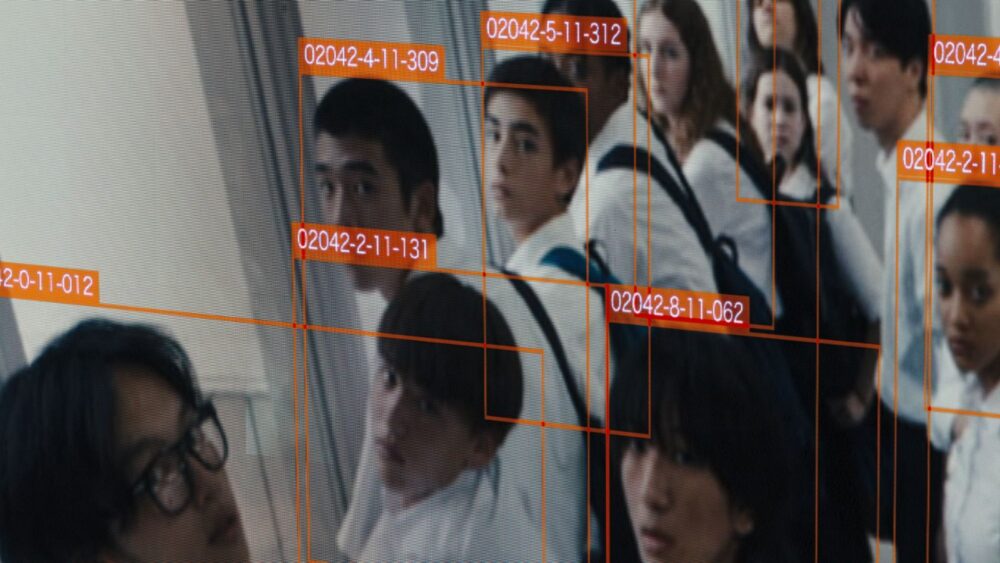
    The tender, almost elegiac tone soon shifts gears when, in response to a prank Principal Nagai (Shiro Sano) describes as “terrorism,” the school deploys a paranoid surveillance system to follow all students, and judge them based on an ill-defined points system. Eventually, a group of agitated classmates (most of them are not Japanese natives) storm the principal’s office to demand he get rid of the invasive monitoring, which of course he’d claimed was for safety purposes.

    More NYFF62 Coverage: “Eephus,” and “The Room Next Door“

    The activism mirrors broader unrest outside the school, where several students (and one teacher) partake in anti-government protests. If the surveillance system suggests science fiction, the political motifs imply stark ripped-from-the-headlines realism, the catch-phrasing and slogans spewed out too familiar to serve as a warning or a sign of looming decay. 
    A scene from Neo Sora's film "Happyend."
    A scene from Neo Sora’s film “Happyend.” (Photo: NYFF and Film at Lincoln Center).

    Sidelining Central Relationships in Favor of a Mishmash of Ideas 

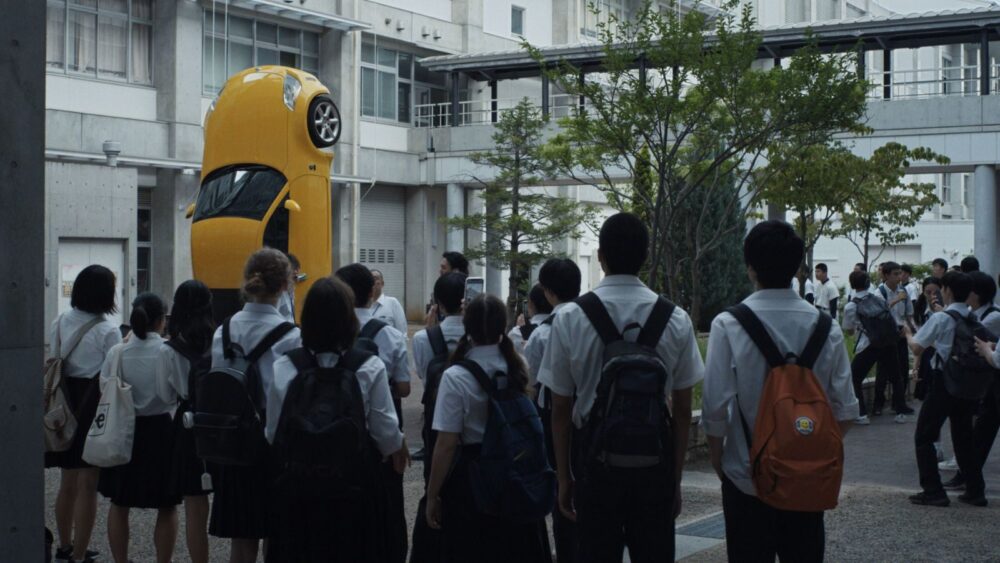
    And then, there are the earthquakes. On television, the Prime Minister warns about a forthcoming disaster, and the students are subject to shrieking sirens and safety drills. A light in a restaurant shakes, so do the desks, and while on one occasion an earthquake causes damage (especially to Principal Nagai’s yellow sports car), Sora’s script doesn’t fully invest in that theme of destruction and collapse. Instead, it just seems tacked-on, and it sidelines the anxieties and relationships of these students, who are reckoning with their current and future place in the world beyond the school’s suffocating purview. 

    When the character development and narrative momentum lags, “Happyend” does stand out for its vivid visual style (the sports car turned on its side is a particularly memorable image) and haunting music. Once again, Sora teams up with “Opus” collaborators Bill Kirstein (Director of Photograph) and Miki Nomura (Sound Supervisor); as well as with composer Lia Ouyang Rusli for the film’s witty, suggestive score. Combining thumping synth and gentler orchestral strings, Ouyang Rusli evokes both “Opus” and “A Clockwork Orange,” though “Happyend” has neither the peaceful sensibility of the former nor the violent edge of the latter. Sora has a gift for demanding audience engagement, but the script overindulges on a diet of current events, drifting from the central relationships.

    And so, “Happyend” ultimately becomes a morality tale of sorts, a finger-wave warning about power structures and citizens’ complacency, which could be frightening if this future didn’t already look conspicuously like the present. 

    Happyend has a score of C+ from The Movie Buff staff


    “Happyend” screened at the New York Film Festival, which runs from September 27th – October 14th. Follow us for more coverage. 

    Happyend japan Neo Sora NYFF Ryuichi Sakamoto world cinema youth culture
    Share. Facebook Twitter Pinterest LinkedIn Tumblr Email
    Previous Article‘New Nightmare’ Review: Wes Craven Updates the Series with a Meta-aware Film that Ultimately Misses the Mark
    Next Article ‘Jimmy’ NYFF 2024 Review: Yashaddai Owens’ Loose, Generous Snapshot of an Iconic Writer
    Kevin Parks

    Kevin is a freelance writer and film critic who lives in New York. His favorite director is Robert Altman and he dearly misses Netflix's delivery DVD service.

    Related Posts

    Drama March 4, 2026

    ‘Rosemead’ Review: A Mother and Son Stare Down the Barrel in a Tragic Eye-Opener

    Independent March 2, 2026

    The Short Film ‘Jam Boy’ by Sriram Emani is Rich with Culture and Social Commentary

    Horror March 2, 2026

    ‘Scream 7’ Review: A New Chapter as the Franchise Rewrites the Rules

    Drama March 1, 2026

    “Wuthering Heights” (2026) Review: A Preposterous Retelling, Rich in Aesthetic Yet Weightless in Text

    Action February 26, 2026

    ‘Man on Fire:’ Violent and Unforgiving, but Features Both Denzel and Fanning at their Best

    Romance February 24, 2026

    Review: Rough Sex and Rougher Relationship Dynamics Intertwine in the Risqué ‘Pillion’

    Leave A Reply Cancel Reply

    Latest Posts

    ‘Rosemead’ Review: A Mother and Son Stare Down the Barrel in a Tragic Eye-Opener

    By Vidal DcostaMarch 4, 20260

    The Short Film ‘Jam Boy’ by Sriram Emani is Rich with Culture and Social Commentary

    By Mark ZiobroMarch 2, 20260

    ‘Scream 7’ Review: A New Chapter as the Franchise Rewrites the Rules

    By Holly MarieMarch 2, 20260

    “Wuthering Heights” (2026) Review: A Preposterous Retelling, Rich in Aesthetic Yet Weightless in Text

    By Hector GonzalezMarch 1, 20260
    • Facebook
    • Twitter
    • Instagram
    • YouTube
    Indie Film Highlights

    ‘Rosemead’ Review: A Mother and Son Stare Down the Barrel in a Tragic Eye-Opener

    By Vidal DcostaMarch 4, 20260

    “Rosemead” is based on “A dying mother’s plan: Buy a gun. Rent a hotel room.…

    The Short Film ‘Jam Boy’ by Sriram Emani is Rich with Culture and Social Commentary

    By Mark ZiobroMarch 2, 20260

    Review: Rough Sex and Rougher Relationship Dynamics Intertwine in the Risqué ‘Pillion’

    By Vidal DcostaFebruary 24, 20260

    Interview: Filmmaker Sriram Emani on Exploring Self-Erasure and Breaking Patterns in his Debut Short ‘Jam Boy’

    By Vidal DcostaFebruary 20, 20260

    Acclaimed Violinist Lara St. John Talks About ‘Dear Lara’ Doc in Post SBIFF Interview

    By Mark ZiobroFebruary 16, 20260
    Spotlight on Classic Film

    ‘The Innocents’ Review: One of the First Haunted House Films of the Modern Horror Era

    ‘Gone With the Wind’ Review: Epic Film from the Golden Age of Hollywood

    ‘The Count of Monte Cristo’ QCinema 2024 Review: A Thoughtful, If Rushed, Study of Revenge and Redemption

    ‘Thirteen Women’ Review: A Precursor of the Slasher Genre, with a Devilishly Divine Femme Fatale at its Helm

    The Movie Buff is a multimedia platform devoted to covering all forms of entertainment. From Hollywood Blockbusters to Classic Comfort faves. Broadcast Television, on-demand streaming, bingeworthy series'; We're the most versatile source.

    The Movie Buff is also the leading supporter of Indie film, covering all genres and budgets from around the globe.

    Facebook X (Twitter) Instagram YouTube LinkedIn TikTok
    Copyright @2011-2025 by The Movie Buff | Stock Photos provided by our partner Depositphotos

    Type above and press Enter to search. Press Esc to cancel.