


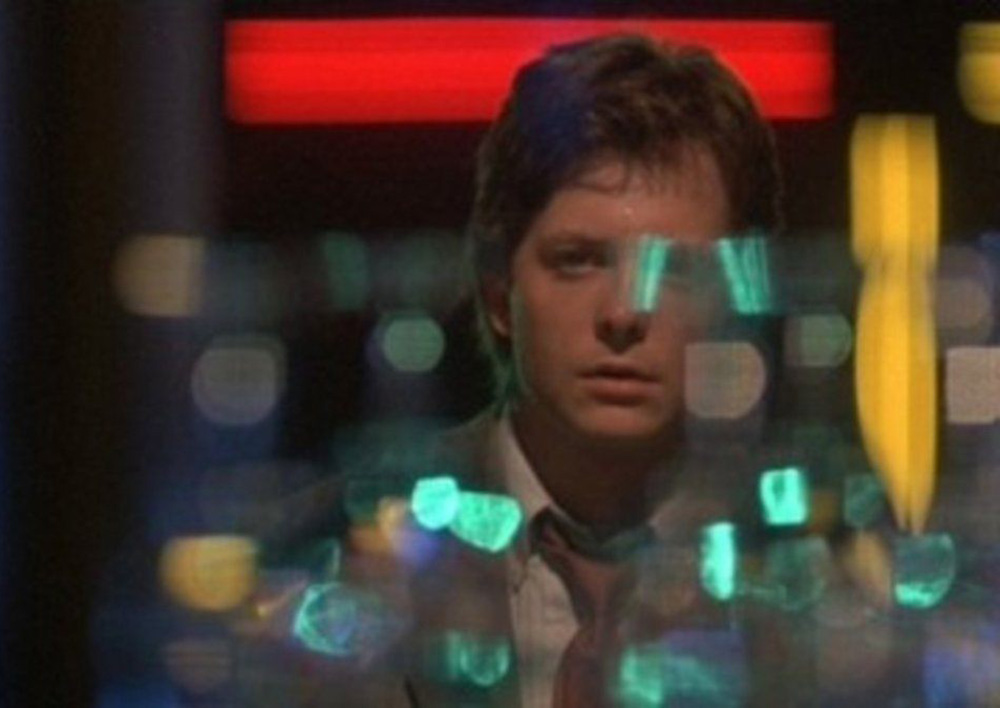
On the set of Brian De Palma’s “Casualties of War” (1989), Sean Penn reportedly would taunt Michael J. Fox, calling him a “little television actor,” to harden Fox’s demeanor and performance. That wasn’t the first dramatic leap for one of the most famous celebrities of the 1980s; one year earlier took on the role of Jamie in James Bridges’ “Bright Lights, Big City” (1988). In this adaptation of Jay McInerney’s 1984 bestseller, Fox was a counterintuitive choice to play the wayward drug addict mourning the loss of his wife and mother. The casting decision itself wasn’t the problem, but Fox’s overwrought execution and the soft edges of McInerney’s disorganized screenplay fall flat in what could have been a seminal 1980s New York movie.
One of my favorite movie genres is the New York Movie, and not far behind it in the rankings is its sister sub-genre, the 1980s New York Movie. The stock market. Cocaine. Talking Heads. Midtown steakhouses! There was a certain sound and look to all of them; and a couple of directors most effectively deployed some or all of the items on this checklist. Jonathan Demme’s “Something Wild” (1986) opened with a David Byrne song and a roaming camera stalking the city from the Hudson River. Oliver Stone’s “Wall Street” (1987) took us through the crowded locker rooms and trading floors and found a way to weave in Talking Heads to an apartment-searching sequence. Compared to these insider views, the Arkansan James Bridges looked like an odd choice to capture the cocaine highs and stock market lows of the biggest city.
Another Addition to the ’80s Theme of the New York Movie
Starting with his debut in 1970 (“The Baby Maker”), Bridges constructed an eclectic resume, making it hard to pin down his artistic and social preoccupations. He wasn’t exactly an independent auteur; and, despite some commercial successes (“The China Syndrome,” 1979, “Urban Cowboy,” 1980), he was far from a director-for-hire. Still, his interpretation of the material here — or his interpretation of McInerney’s interpretation of his own novel — ends up as a simplified depiction of person and place. Many of the passages lifted straight from the novel — especially the flashbacks, in which Jamie visits his dying mother (Dianne Wiest) — are delivered as maudlin explanations, not evocative of the darker sides of Jamie’s despair.
If Fox’s performance is a weakness, the strength of the supporting cast illuminates his misfires.”
Jamie is a drug addict who, before the story starts, lost his mom and divorced his wife. During the story, he is fired from his job and engages in petty and immature behavior against even those who are trying to help him. In the novel, his drug use, sexual pursuits, and retributions are acts of desperation; whereas in the film, it’s all portrayed lightly, with humor and sympathy towards his plight. Jamie conveys no shame about his coping strategies; he only extends warmth to his friends to the extent they can give him something he wants. When his selfless coworker Megan (Swoosie Kurtz) invites him over for dinner, Jamie drinks all of her wine and tries to have sex with her. And his relationship with Tad Allagash (Kiefer Sutherland) is largely one-sided, based mostly on what Tad can do for Jamie.
Fox Struggles to Deliver the Themes Jamie Holds in McInerney’s Novel
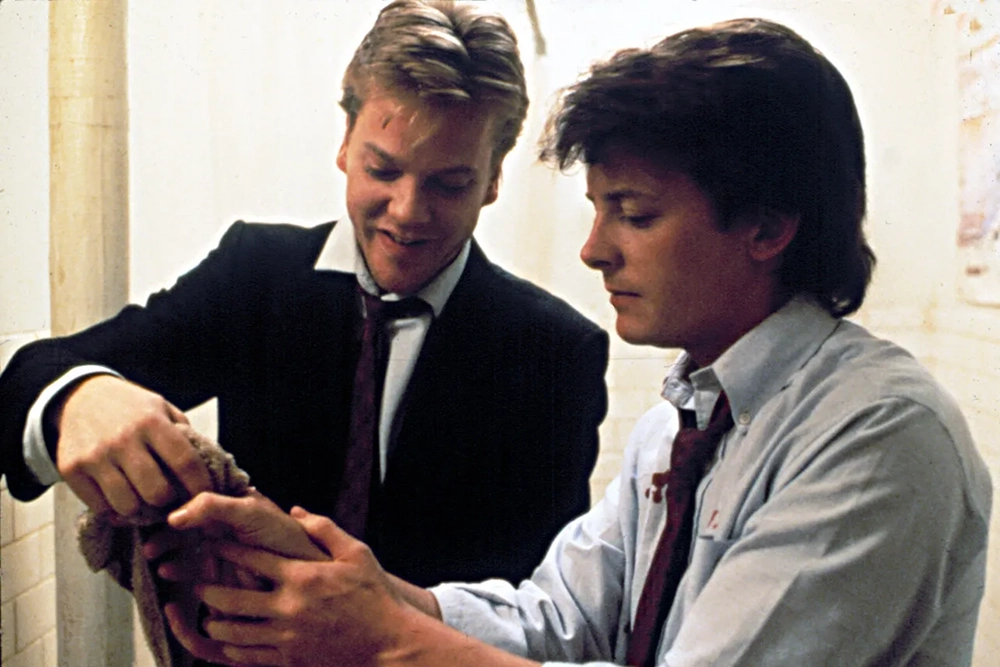
It might have been asking too much of the TV-teen idol Fox, at this stage in his career, to deliver the themes — striving, narcissism, and hopelessness — McInerney rendered clearly in the novel. Jamie’s petulant behavior (he repeatedly stands up Megan, abandons his brother Michael) and explanatory monologues (reflecting on his failed literary career as if he didn’t have a lifetime ahead of him) come off less as a sign of the narcissistic New York times and more of a case of a privileged boy trying to understand what he did to deserve all of this. The literal act of running away from his problems (his brother, who’s visiting) is set to music that sounds like “The Entertainer.” Jamie is a clown, of sorts, and if all we do is laugh at his behavior, then it’s impossible to take his struggle seriously.
If Fox’s performance is a weakness, the strength of the supporting cast illuminates his misfires. We spend mere passing moments with fine actors such as Sutherland, Kurtz, Wiest, and an uncredited Jason Robards, doing what the script asks of them. In the novel, Allagash has all the great lines; he is the type of persuasive sociopath who might run in the same social circle as “American Psycho’s” Patrick Bateman. Yet here, his presence is reduced to an extended cameo. Kurtz is exactly right as Megan; however, we never come to understand her loyalty to Jamie because the script doesn’t provide the revelatory moments that she gets in the novel. Instead, we’re left without much of an idea of why she’d support an unreliable colleague who can’t remember her bagel.
A Pace that Fits the Novel, but Not the Film

After “Bright Lights,” Fox did win some praise for his role in “Casualties of War,” but then he was back to his lighter future, returning as Marty McFly for parts two and three of that franchise. For James Bridges, “Bright Lights, Big City” represented a sad type of closure; it was the final film he would direct before dying of cancer in 1993. Even Jay McInerney, who remains a prolific writer four decades later, never again would fly as high as he did during his initial ascent into the “literary brat pack” with the smashing success of this debut novel.
Maybe what this story really needed was more cocaine, some Talking Heads, and any reference to the stock market to put it on the level of its NYC peers. Then again, Fox would have looked even less convincing with slicked-back hair and in suspenders. Brave of this film to buck the trend of its NYC peers; yet it didn’t need to sanitize the story and people this much. The film doesn’t capture the humor and grit of the novel, and it deemphasizes the immense talents of the supporting players. Bridges’ film, like McInerney’s novel, moves at a rapid pace; and while that flow elevates the novel, on screen it dims the lights and shrinks the city.
“Bright Lights, Big City” is available to stream on The Roku Channel, Redbox., Tubi – Free Movies & TV or Pluto TV
Support the Site: Consider becoming a sponsor to unlock exclusive, member-only content and help support The Movie Buff!
