


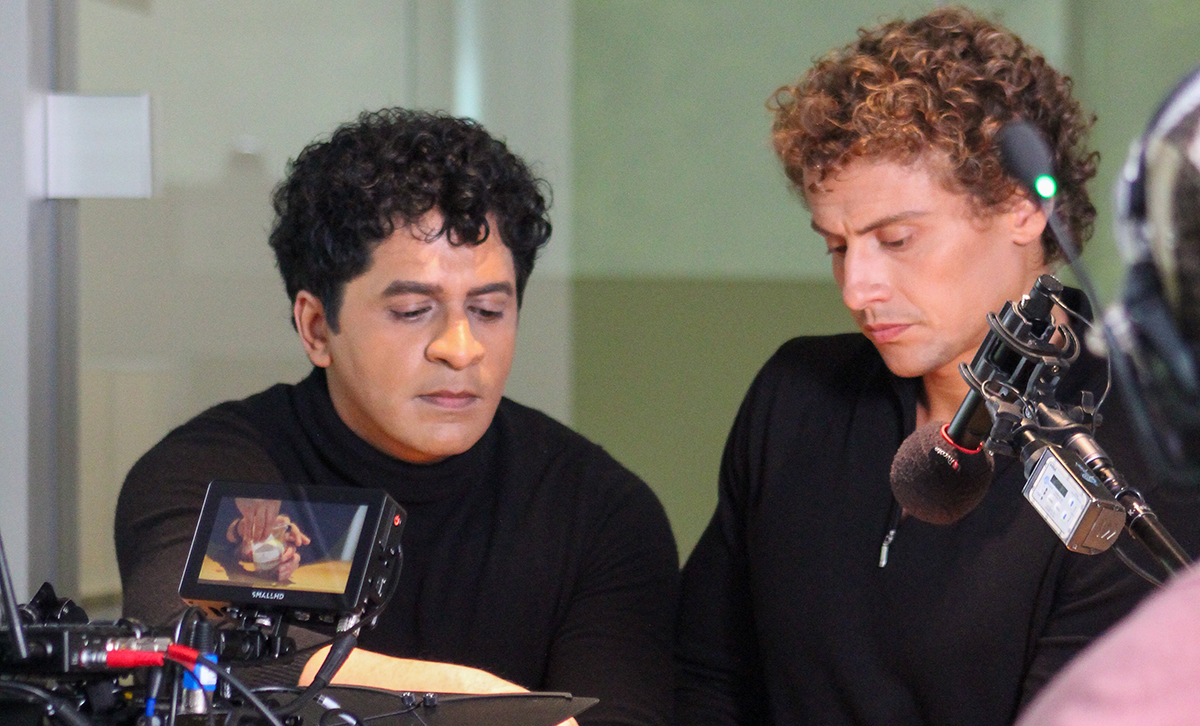
Don’t let the “Severance”-adjacent dystopian ambiance fool you—actor and filmmaker Sriram Emani’s bilingual workplace sci-fi “Jam Boy” feels very much rooted and relatable in present day Trump’s America. The short film—which derives its title from an ethnic slur dating back to imperialism—is also akin to Boots Riley’s critically acclaimed “Sorry to Bother You.” This is especially with regards to themes such as code-switching, race politics, hierarchies, as well as nightmarish depictions of toxic workplaces akin to pressure cookers, and unfolds via the lens of the model minority.
Following the release of “Jam Boy,” Emani was kind enough to agree to talk to The Movie Buff in the following interview. In this insightful conversation, the filmmaker discusses his creative process and is vocal on the need to question and topple an unfair, prejudiced system, reclaim one’s culture/identity, and to altogether ‘break the pattern’.
Vidal D’Costa for The Movie Buff: Congratulations on the world premiere of ‘Jam Boy.’ Could you share with our readers about your background and journey as a filmmaker and actor?
Sriram Emani: I come from a very non-traditional path into filmmaking. My professional background began in management and entrepreneurship, but artistically I was shaped much earlier through years of Carnatic music training and a deep love for Telugu, Hindi, and English cinema.
One thing my family still laughs about is how early I started questioning norms. When my younger sister was born, my parents would sometimes tell me to listen to elders, and at other times say I was the elder sibling and should behave like one. At the age of five, I sat my mother down and very seriously asked, “So what exactly am I, elder or younger?” That instinct to question frameworks and speak my mind never left me, and it later became a creative strength in filmmaking.
My storytelling voice began taking shape on the sets of Indian Raga. I initially set out to make music videos, but I found myself more drawn to narrative, emotional rhythm, and the inner lives of characters than just musical performance. Acting further deepened that lens. One of my earliest formative experiences was spending three full days on the set of “Don’t Look Up,” observing Leonardo DiCaprio, Cate Blanchett, Jennifer Lawrence, Tyler Perry, and Ariana Grande from just a few feet away. It felt like an unexpected masterclass in screen presence and precision. From there, stepping into my first speaking role opposite Heather Graham and later appearing in a co-star role on CBS’s “Matlock” with Skye P. Marshall helped refine my instincts from the inside out.
The seed for “Jam Boy” came from something very ordinary. Starbucks baristas consistently struggled with my name, which made me wonder how one of the most common names in India could suddenly feel like an anomaly in the United States. That small recurring moment opened up a larger curiosity about what else from India remains flattened or undiscovered in global narratives. We often hear about Indian CEOs and senior executives shaping industries, but their cultural worlds, homes, food, humor, and contradictions are rarely centered.
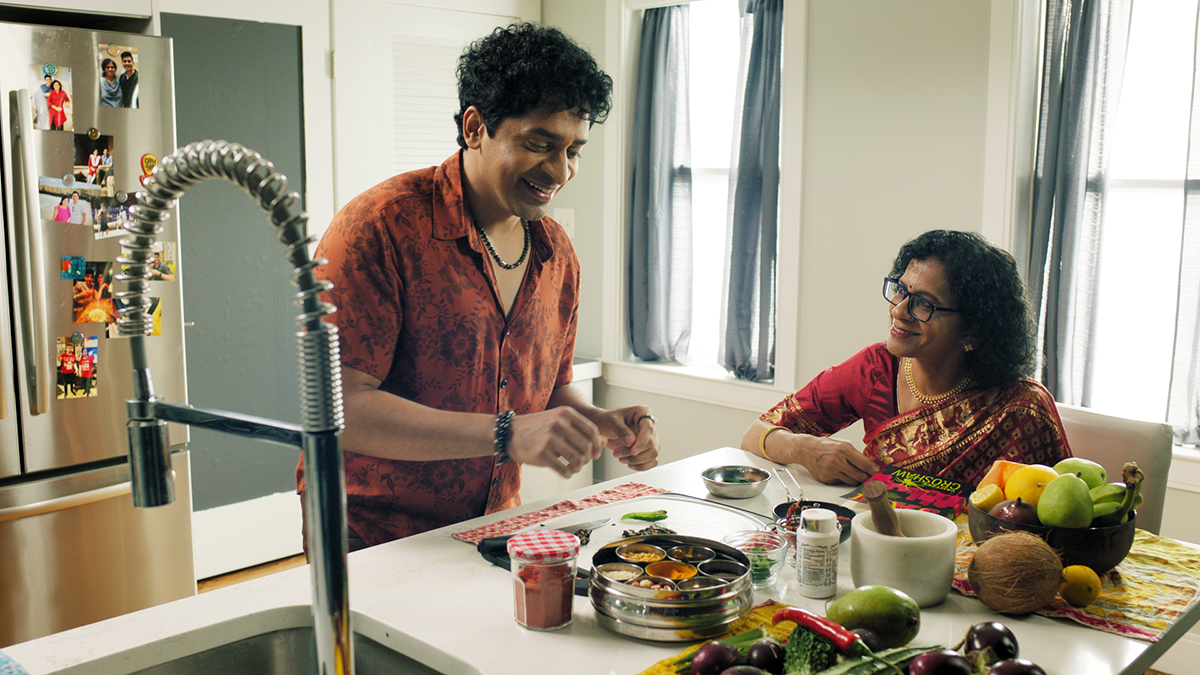
[My goal was not] to make films that simply explain a culture. I wanted to invite audiences into lived spaces, into kitchens, conversations, silences, and ironies that feel intimate yet universal. I strongly believe that what travels globally is not just intellect or achievement, but emotional texture. Our food, our cultural nuances, and our contradictions can become powerful cinematic entry points. My goal as a filmmaker is to build authored work that places culturally specific characters inside globally resonant stories, where identity is not a label but a lived experience.
VD: Having heard horror stories of overworked Indians based in the US who are rarely able to commute home out of fear of losing a stable income, I could sympathize with “Jam Boy’s” protagonist as well as some supporting players. Aside from the harsh reality, were there any works of fiction of filmmakers that you drew inspiration from while crafting this short film?
SE: That observation is very valid. While current realities have made these stories more visible, the underlying pressure has existed for a long time. Thinkers like Vijay Prashad, in his book “The Karma of Brown Folk,” spoke about the model minority myth as a psychological and structural condition where productivity and compliance become quiet expectations placed on entire communities. What fascinated me creatively was how to depict that kind of internal conflict on screen, because unlike overt deportation narratives or visible crises, this pressure is largely invisible and deeply psychological.
That challenge pushed me toward fiction rather than literal realism. Christopher Nolan’s work, especially “Inception,” was influential in showing how the rules of a constructed world can externalize an internal struggle. Jordan Peele’s “Get Out” also reshaped how I think about genre, because it embeds social anxiety and psychological tension into world-building without becoming overly didactic. It helped me realize that the system itself could become the metaphor.
I found myself more drawn to narrative, emotional rhythm, and the inner lives of characters than just musical performance.“
SRIRAM EMANI
With “Jam Boy,” I wanted the film to feel quiet on the surface but increasingly urgent underneath. The devices, metrics, and controlled environment are not just technological elements but philosophical constructs representing worth, compliance, and self-erasure.
Interestingly, when I shared an early draft with friends in India, many of them felt the story was not limited to immigrants in the United States. They saw reflections of overworked professionals across South Asia and other parts of the world, highly capable individuals slowly losing time, identity, and emotional life in service of large global corporations. Some even compared it to systems where the ability to return home is restricted by circumstance, obligation, or policy. That response widened the emotional scope of the film for me.
Literature and philosophy also shaped my thinking early on. I read Ayn Rand’s “Atlas Shrugged” at a young age, and the idea of capable individuals withdrawing their labor stayed with me as a stark contrast to the reality I was observing, where thousands of highly skilled people continue to serve institutions that may not fully value their humanity. That tension between capability and quiet compliance felt dramatically compelling.
On a more personal level, Carnatic classical music was a symbolic influence. Thyagaraja’s composition “Nidhi Chala Sukhama,” which questions whether material wealth is more fulfilling than spiritual purpose, resonated deeply with how I was thinking about modern professional life. It raised a central question for me: what are we slowly self-erasing for, and is it worth it?
My influences sit at two extremes, ancestral philosophy and contemporary global speculative cinema. Bringing those together led to a guiding idea while making “Jam Boy:” the future has ancestors. Even in speculative worlds, inherited pressures, cultural memory, and invisible systems of control continue to shape how people live, work, and define their sense of worth.
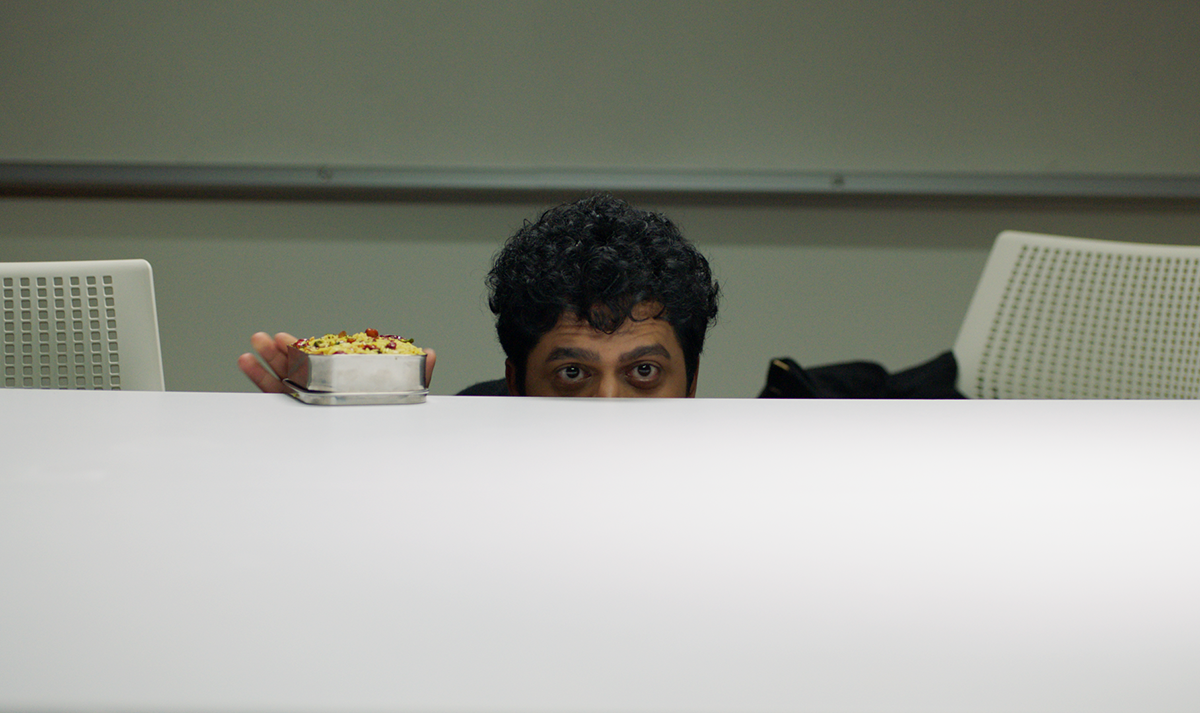
VD: “Jam Boy” also marks the acting debut of your mum, Manga. In the film, her character is constantly supporting and guiding the protagonist in his efforts to replicate her home-cooked recipes. Did you receive any creative input from her or other castmembers (with regards to characterization), that made it into the final cut?
SE: A lot of the emotional foundation of the mother-son relationship is drawn directly from real life. The joy of sharing stories from our heritage with my mother Manga Emani, learning to cook from her, and even the way those lessons happen are very authentic. I still remember holding up a vegetable on a video call and asking her how to cook it step by step. That sense of cultural transmission through everyday moments naturally made its way into the film.
Interestingly, what was hardest for both of us as actors was the part that was not real. In the film, her character tells Sriram to break the pattern, and in reality, my mother has never had to say that to me. I was convinced quite early in my life and career that erasing oneself in pursuit of ever-moving corporate targets is not worth it. So, we both had to consciously perform a dynamic that does not exist in our real relationship.
Beyond my mother, the film was deeply collaborative. Our Cinematographer Giovanni Alfonzetti spent extensive time in pre-production with me discussing how to visually translate internal pressure into cinematic language. One of his most impactful contributions was the opening staging, where the central speaker is framed in a dim, lifeless room surrounded by seated figures, evoking the atmosphere of a cult circle or institutional support group. He also helped transform a location limitation into a creative strength. When we discovered the bathroom had two separate mirrors instead of the single mirror I had written, he suggested exploring the idea of Sriram’s reflection moving from one mirror to another, which became one of the film’s most symbolic visual moments.
Giovanni Alfonzetti spent extensive time with me discussing how to visually translate internal pressure into cinematic language.”
SRIRAM EMANI
Production Designer Joyce Lai embraced the conceptual language of the world in a profound way. We discussed the idea that the technology and workplace should feel retro and slightly regressive, as a metaphor for society moving forward technologically while going backward emotionally and philosophically. She carried this into the set design through retro-styled equipment and textures, and collaborated closely with Motion Graphics Designer Sophia Alexander so that even the code and interfaces used by the Mind Assets reflected that thematic continuity. A major creative evolution came from logistics. I had originally imagined the dream waltz sequence as a black-box void representing the infinite mind, but a full company move was impractical. We instead used an under-construction floor in our office location, and Joyce reimagined it as a skeletal, corpse-like office space, symbolizing the stripped emotional environment and the freedom the character longs for.
Choreographer and performer Olga Goncharova also influenced the emotional rhythm of the film. I had initially envisioned a Viennese Waltz, but she suggested a slower waltz structure that allowed the emotional subtext and storytelling to breathe rather than feel rushed.
Zeus Taylor, who plays Niko, was a fantastic collaborator in ensuring the character did not become a one-dimensional caricature. We explored some fun variations in his absurd task assignments, including the Morse-code burping moment, to reflect the strange reward systems within controlled environments. He also improvised the line “it’s really not looking good for mama, is it?” which elevated the scene from a localized interaction into a deeper threat about ancestry, legacy, and cultural erasure.
Even in hair and makeup, Monique Peoples-Graham added a conceptual layer by emphasizing a colder, paler aesthetic for workplace characters, reinforcing the sterile environment. She was also intentional about styling Sriram’s hair to subtly resemble Niko’s at moments, visually reflecting the character’s internal desire to assimilate and mirror those in power. Together, these contributions made the film far more layered and cohesive than anything I could have achieved in isolation.
VD: Lastly, as you’ve highlighted in “Jam Boy,” we live in an oppressive climate where voices and cultures of minority groups are hindered. As a South Asian storyteller carving your own space, what advice would you pass on to budding filmmakers who feel hesitant in sharing their stories in a prejudiced world?
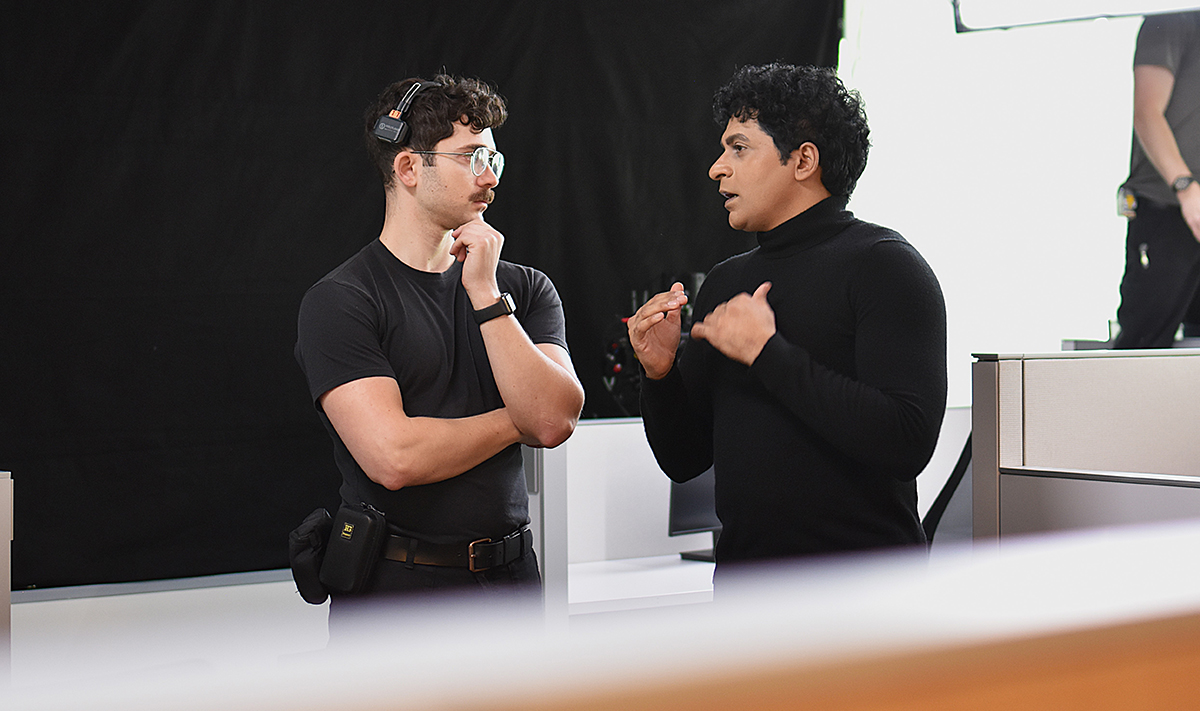
SE: My biggest advice would be to start with something deeply personal, even if it does not initially feel big or cinematic enough. The smallest lived experiences often carry the most universal emotional truth. When you deeply understand your subject, you can meaningfully collaborate with every department and use their craft to amplify the story rather than dilute it.
The second is to ground your storytelling in specifics. Specific memories, gestures, and details make a film feel lived and honest, and that authenticity travels much further than broad generalizations. In a prejudiced world, specificity itself becomes a quiet form of resistance because it refuses flattening.
I also strongly believe in building a diverse and thoughtful team. Cinema evolves through dialogue, and multiple perspectives naturally prevent the story from becoming one-sided while restoring balance and nuance.
I have come to believe that a film has three lives. The first is in writing and pre-production, where you imagine and visualize the world. The second is during production, where real locations, performances, and spontaneous discoveries reshape the film in ways you may not anticipate. The third is in post-production, where editing, sound, and design transform the narrative flow yet again. “Jam Boy” evolved significantly in post, with scenes restructured and juxtaposed differently based on audience attention and comprehension. That was not a lack of planning, but an organic continuation of storytelling.
My biggest advice would be to start with something deeply personal, even if it does not initially feel big or cinematic enough.“
SRIRAM EMANI
Another key lesson is not to lose essential collaborators while tightening budgets. Meticulous continuity supervision by Vaishnavi Bhimani, the thoughtful hair and makeup work of Monique Peoples-Graham, and the collaborative Costume Design by Corine Shannon elevated the film and saved us from costly errors while strengthening the believability of the world.
Finally, be open to input and last-minute changes without viewing them as compromises. I ultimately cut an entire scene I once considered a centerpiece because it did not feel as impactful as I had imagined. That decision saved valuable time on set, reduced costs, and allowed us to prioritize stronger moments. In restrictive environments, flexibility is not weakness. It is creative resilience.
*”Jam Boy” is set to premiere at the DC International Film Festival on Feb 15, 2026. For more updates, follow the official Instagram handle of “Jam Boy” here.

