

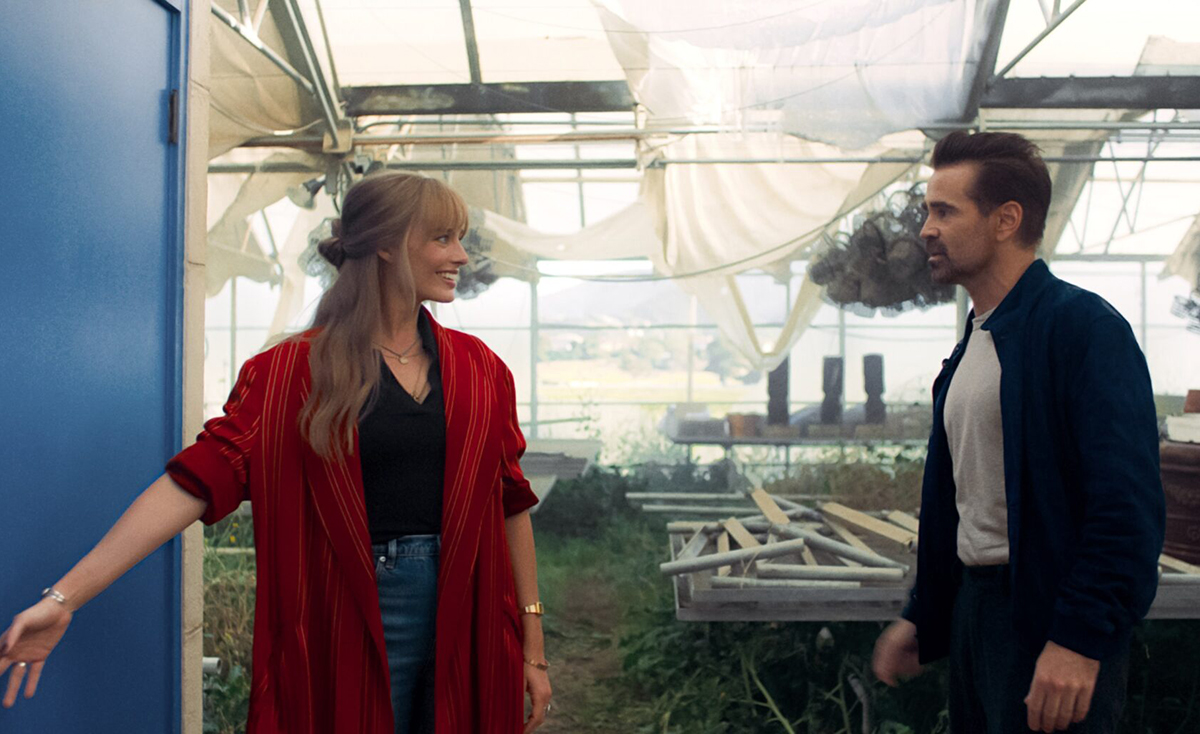
“A Big Bold Beautiful Journey” begins with a meet cute. Cynical Sarah (Margot Robbie) and hopelessly romantic David (Colin Farrell) exchange glances from across the aisle at an acquaintance’s wedding. While David eventually ends up alone at the end of the night after turning down Sarah’s offer to join her on the dance floor (a decision he later begrudges), serendipity strikes. They run into each other at a rest stop the next day, sharing a plate of onion rings at Burger King. David also offers Sarah a lift back to the city after her car ‘mysteriously’ breaks down. As fate would have it, the pair share a common car rental company. Before they know it, a sentient SATNAV starts calling the shots. It leads them on a journey traveling back in time when to their younger years, as clueless and immature in matters of the heart as they are today.
It is a bumpy ride that drops them off at the same literal doors they shut behind them once, with some doors bringing about an epiphany, and others requiring a secret knock. The journey offers a chance at course correction for the duo, who hide behind quirky or people-pleasing personalities but have left a trail of wrecked relationships in their wake. Each door forces them to own up to their lies, reunites them with heartbroken exes who clamour for closure, and dig deeper into their not-so-thinly-veiled unresolved insecurities and emotional baggage.
Self-Aware and Tender
The final stop is one that Sarah and David must agree upon, mutually. Will they choose to drive off into the sunset together, or will they go their separate ways?
“A Big Bold Beautiful Journey” continues Hollywood’s fling with self-aware and tender old school romances. It can be likened to “Plus One,” but with a touch of sci-fi. Both these movies are particularly similar in their depiction of protagonists who are single by circumstance rather than by choice. They search for validation even at weddings, and require the additional push to realize they are still worthy of being loved while simultaneously retaining all the charming, saccharine and cliched elements of the genre.
Like “Plus One,” “A Big Bold Beautiful Journey” is also more than just a love story, and serves as an allegory for adulting, which according to the mysterious cashier at the car rental company (played by Phoebe Waller Bridge) is just “acting or pretending to know one’s way.” The movie depicts how losing one’s way in life and feeling directionless is common and even normal. While it features more cheese than a ‘fast food cheeseburger’ (an in-joke at the product placement in the movie), this Kogonada directorial simultaneously does away with redundant archetypes, such as the manic pixie who fixes the man or needs to be rescued from her own predicament by him. Instead, both leads have to put in the work to fix their own problems.
Re-examining the Past
The film can also be likened to another sci-fi romance “Her,” as both movies are set in a distant future where loneliness is still an epidemic. It touches upon the same by drawing a comparison between David visiting a nostalgia-evoking location by himself and later revisiting it with a special someone. It also serves as an examination of how one looks back (or rather looks down) upon their formative years which elicit a wide variety of emotions, ranging from anger, to cringe, and an affinity to romanticize or idolize toxic behaviours and situations. As the journey progresses, the pair are left with no way out of their circumstances other than to keep moving forward as well as looking inwards.
Rather than swerving head first into a wall of the same old mistakes all over again and continuing the cycle of self-sabotage, this second opportunity also affords them to simply steer clear of the same, to break free from a cultivated habit of breaking hearts and instead mending them. In other words, it helps the pair realise they’ve both still got a lot of growing up to do.
Koganda Pulls from Past Influences
The world building in “A Big Bold Beautiful Journey” is inexplicable, but one can find meaning through Kogonada’s effective and intricate use of space and sets. He uses vacant voids (such as a spacious but empty art gallery Sarah once visited frequently to view her mother’s favourite painting and a high school auditorium. The latter is filled with cheering parents who make an effort to show up for their children’s school plays. Both locations offer insight into the protagonists’ respective relationships with their families. This is coupled with some poetic and meaningful lines of dialogue and incorporation of musical theatre (David re-enacts his high school production of “How to Succeed in Business Without Really Trying”). Here the movie thus transforms into a profound performance piece that immerses the audience into the lead pair’s journey and plates up ordinary experiences in an otherworldly fashion.
Kogonada also makes no attempts to hide his primary influences, such as “Kiki’s Delivery Service” with omnipresent Easter Eggs to this Studio Ghibli classic scattered throughout. One instance being Kiki’s plaza, a location which serves as the starting point of David and Sarah’s journey. The director even pays homage to his own work through the aforementioned dance number that harkens back to the opening credits of his previous sci-fi venture, “After Yang.” The title of the movie itself is a thematic influence hiding in plain sight since the Tom Hanks-starrer “Big” features heavily among Sarah’s treasured memories, serving as her comfort movie. However, unlike Hanks’ character in that film who wishes to become an adult, Sarah desires to revisit a simpler time when she was young and felt more content.
Farrell and Robbie are Charming
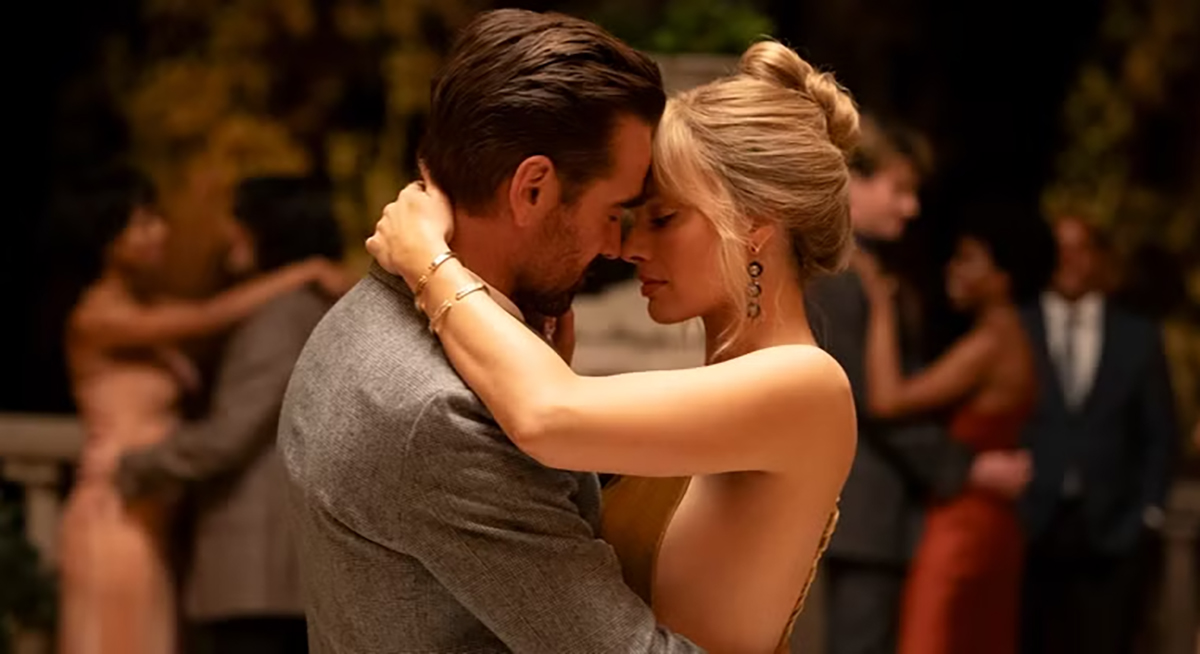
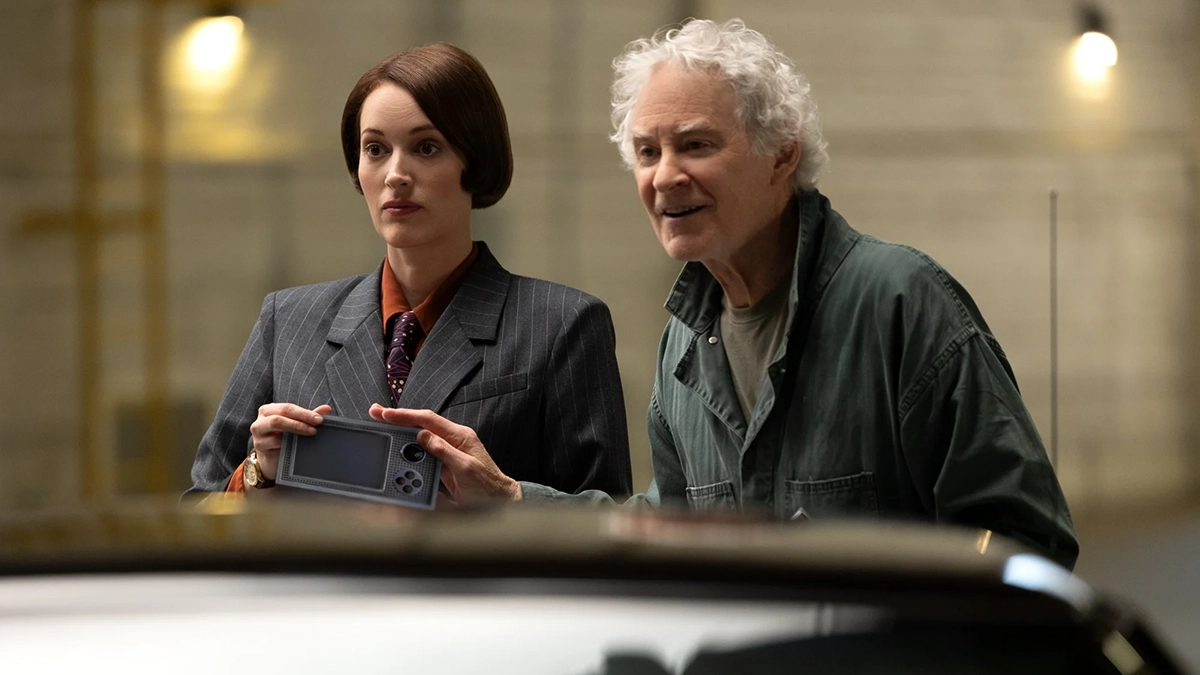
While initially Sarah warns David to ease up on the charm, the actors playing them—Farrell and Robbie—don’t fret from turning the charm up to an eleven. Both actors subtly embody their respective characters—a lovelorn teen and an angsty rebel stuck in time—in adult bodies that are but mere exoskeletons, and rooted in their stubborn ways. Their performances and collective charisma allow one to look past even some superficial moments. Hamish Linklater is another actor who impresses, delivering a subdued performance as David’s dad. Linklater’s Irish accent is also a lot more compelling in comparison to Phoebe Waller Bridge’s unnatural imitation of a German accent (the latter is unfortunately reduced to an unremarkable role which is mere comic relief). Kevin Kline is under-utilised but fits the bill as an endearing, elderly sage-esque mechanic at the car rental company.
“A Big Bold Beautiful Journey” may not be as bold as its title suggests—and many might knock it for being overly sentimental tripe or sluggish at times—but it certainly is a story told beautifully. The film proceeds at a leisurely pace, with many earnest moments, and has plenty of life lessons. I don’t know if serendipitous romances are making a comeback or are officially here to stay. However, “A Big Bold Beautiful Journey” takes a chance with the genre and will hit the sweet spot for fans of the same.