From 1981, “The Prowler” is a breath of fresh air in the horror world. After coming from “Maniac Cop” earlier this week—which pretended to be a slasher but wasn’t—this film is the true practitioner of the genre. It’s not perfect, but has its fair share of camp, tension, and gory kills. It came out the same year as “The Burning” and a year after “Friday the 13th.” It has more in common with the latter than the former. With shrill violins, droning cellos, and scenes that build up and tension, one IMDb user remarks it’s “one of the better slasher films from the Golden Age of slashers”—and they’re right. Its only missteps are some strange directing decisions and overlong shots that seem to go nowhere and then suddenly end. But the film has its heart in the right place, and horror aficionados will find easy footing.
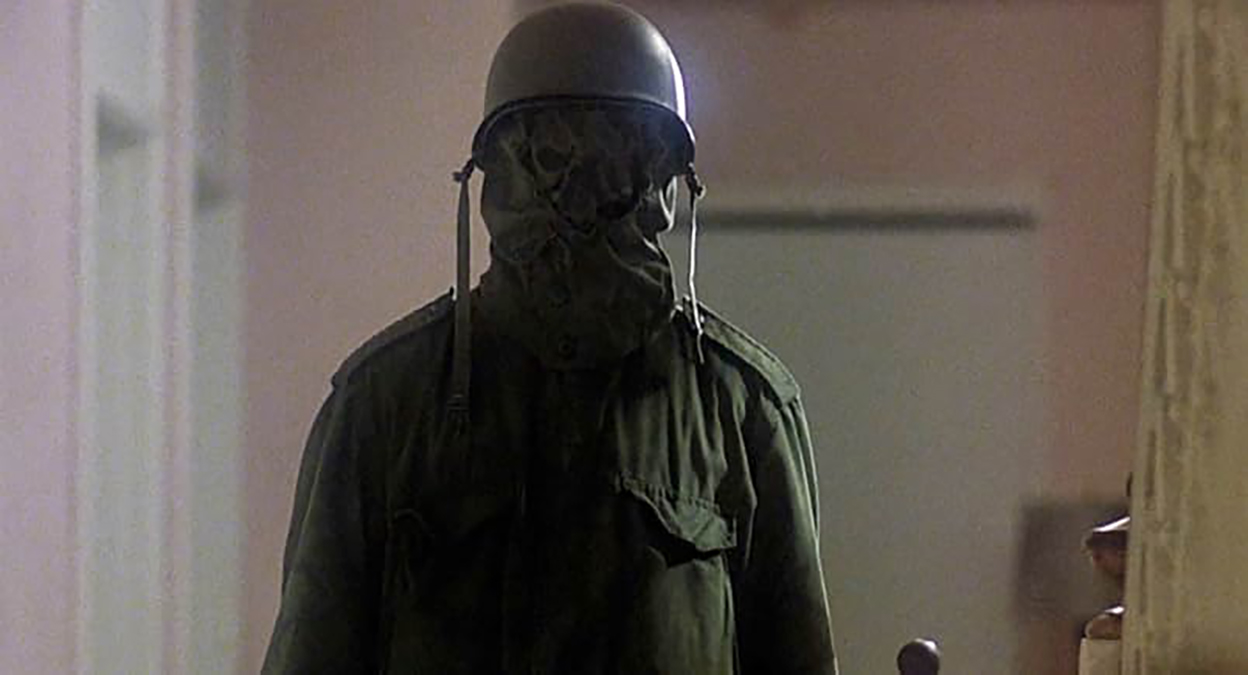
The story of “The Prowler”—a hysterical title that gets its name halfway through the film—revolves around a heinous act in a town’s past and a legend that remains. The film opens with an off-screen soldier from WWII reading a Dear John letter as his girl from back home breaks up with him. In short time, at a college graduation party, a young woman (Joy Glaccum) and her boyfriend are killed by a maniac in a full World War II-era U.S. Army combat uniform. He runs a pitchfork through the two in a gazebo by the lake. It’s assumed the woman, Francis Rosemary Chatham, was the writer of the Dear John letter. The scene the cuts away as the film fast-forwards nearly 40 years later to 1980 as the college is having its first graduation dance since that tragedy. It’s not hard to see where this is going.
A Likable Cast
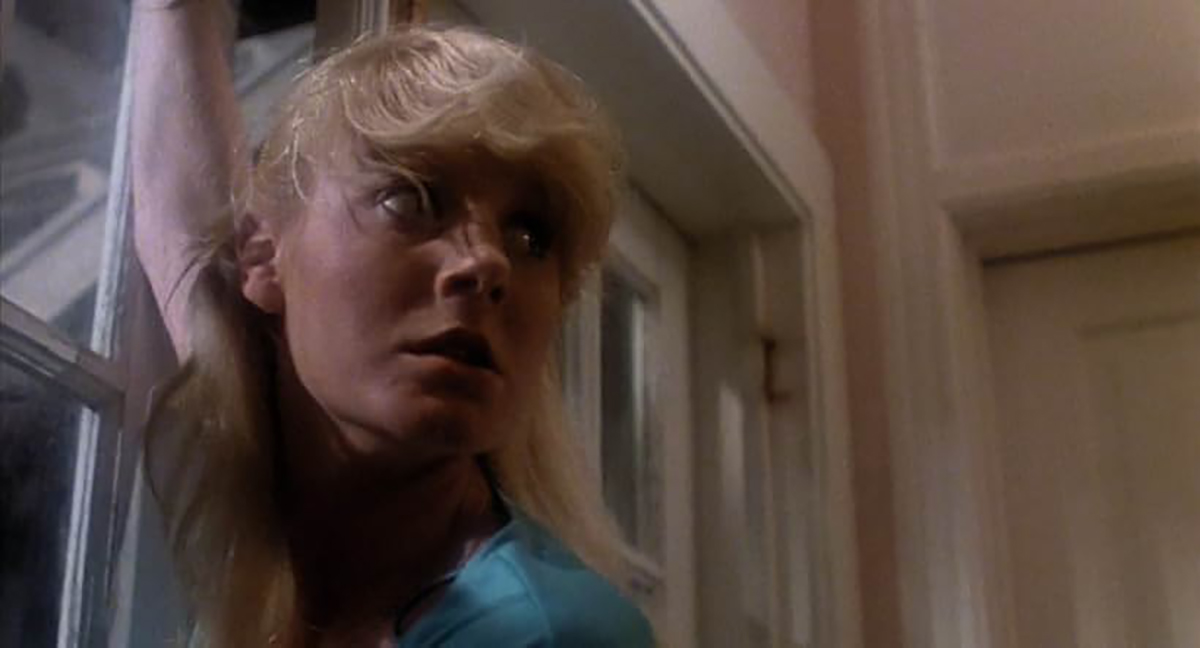
The stage-setting for the college scenes in 1980 is one of “The Prowler’s” strong points. It’s here we meet the film’s protagonist Pam (Vicky Dawson), a likable town deputy (Christopher Goutman), and other players who make this feel like a real town real place. The kids are setting up festoons for the event, flirting with each other, looking forward to the dance, etc. It reminded me of scenes from college romps like “Porky’s” and “Back to School,” but without those film’s raunchiness. Pam is instantly likable. It’s clear she’s into Goutman’s Mark London, despite his obliviousness to the whole thing. He’s left in charge by the town sheriff (Farley Granger), who has gone fishing for the weekend, and is enamored with all the attention from the coeds. It sets up some of the plot dynamics.
Watching “The Prowler” immediately strikes one with “Friday the 13th” vibes, both from the tension-building nature of it and the score, which I mentioned above. It’s no surprise for me to read, then, that Tom Savini was the special effects man here, working next to make-up artist Jane Forth. Savini made “Friday the 13th” what it was and does a good job here as well. The film’s composer, Richard Einhorn, however, did not work on “Friday the 13th.” And given that this film came out the same year as “Friday the 13th Part 2″—when the series was just finding its steam and was not yet a phenom—it’s likely the films feel familiar because the slasher film itself was becoming a cultural icon. But I liked “The Prowler’s” music. It was eerie and foreboding. The film itself is not as dark or brutal as the “13th” series, but is still scary to watch at times.
Tension and Gore Present
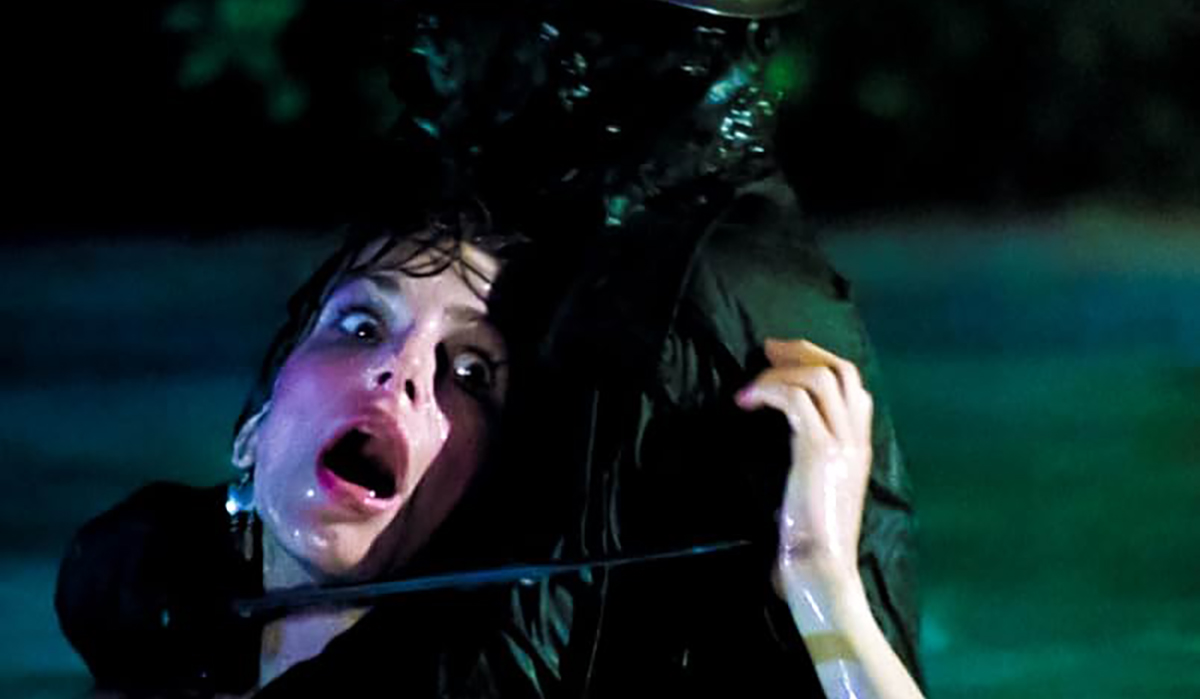
The gore in “The Prowler” is a bit much. It’s humorous for me to read that later “Friday the 13th” films had to edit their sequences to tame down the gore when you look at a film like this. The Prowler himself (it’s a guy, spoiler alert), hunts with a large lance-looking thing, and sometimes a pitchfork. When he kills his victims, it’s never this quick thing, as most slasher films would utilize to rid the tension they’ve spent their scenes creating. He will slit people’s throats but leave the knife halfway in their neck for prolonged periods, or the camera will fixate on the killer’s lance sticking in a person’s head with blood pouring out.
However, I’d argue this is not Cinematographer João Fernandes trying to lay on the gore, but he and Director Joseph Zito trying to figure things out. The pair would reunite with their same job titles in the brutal “Friday the 13th Part IV: The Final Chapter” with much tighter shots. In fact, the film’s languid cinematography is not reserved for just the kills, but scene-setting as well. At times—especially with the film’s leads, Vicky Dawson and Christopher Goutman—characters will stare at each other with little direction or make decisions not implied by the story. In one sequence, the two fight and it’s clear Pam is going into her dorm, but she just stops, stands still, and gets back into London’s car as if nothing had happened. It left some head-scratching moments. I’m not usually one to pick apart a film’s direction or editing, but here the scenes play on too long sometimes and it harms the tension. A trip to the editing room or re-shoots would have helped these scenes immensely.
Not Perfect, but a Good Overall Slasher
That said, “The Prowler” is still a good horror film. It utilizes darkness well to set up scenes of tension, and I liked the setting of college dorms and the dance hall of its sprawling mansion as horror-zones. It sets up enough red herrings to make you wonder who the killer really is, while never becoming a ‘whodunnit’ like so many of the horror films of today. Its ending is somewhat odd and terse, but—unlike many slasher films of the day—it has a strong female lead in Vicky Dawson and works hard not to objectify its characters. Like “Friday the 13th: Part 2,” “The Prowler” makes no bones about killing likable, good-natured characters, which is lost in today’s cinema where many victims are bad people who have it coming. It’s not a perfect film, but all-in-all one of the better ‘80s slashers I’ve seen and a fine pick for this Halloween season.