



There are some films that resist the urge to introduce themselves or announce their themes. Instead, they wait quietly and confidently for the viewer to arrive on their own terms. Achal Mishra’s “Chaar Phool Hain Aur Duniya Hai” is such a film, modest in appearance, gentle in rhythm, and yet filled with something rare in cinema today: philosophical stillness.
At first glance, it seems like very little is happening. We are placed inside a small, aging home somewhere in a sleepy Indian town where a retired schoolteacher lives with his young grandson. The dimly lit spaces complement the walls that carry years of quiet endurance, and life unfolds not in events but in repetitions—sweeping the courtyard, boiling tea, adjusting flower pots on a ledge. Gradually, in the absence of spectacle, we sense something deeper at work: a meditation on life itself, on presence, memory, and the invisible labor of care.
A Narrative Built on the Unspoken
The heart of the film lies in the relationship between the grandfather and the child, and in the way they inhabit the same space while experiencing the world differently. The grandfather, played with remarkable restraint, is not a man of dramatic gestures. His care is shown in movements so small they might be missed altogether: the way he picks a dying leaf from one of his four potted plants, the way he places a hand lightly on the child’s back when walking past him, or the way he reads aloud from a half-torn letter, filling in the unreadable words with quiet guesswork rather than frustration.
One of the most affecting scenes comes when the grandson asks his grandfather why he waters the flowers every day when they barely seem to bloom. The old man does not provide a clear explanation. Instead, he brushes a petal with his fingers and says, “Kuch cheezein ugti hain bas is liye kyunki koi unhe dekhta hai.” (Some things grow only because someone is watching them.)
In that single line, spoken casually yet deliberately, lies the entire worldview of “Chaar Phool Hain Aur Duniya Hai”: it’s tender, attentive, and rooted in the philosophy that meaning arises not from outcomes but from commitment.
A Deeply Philosophical Core
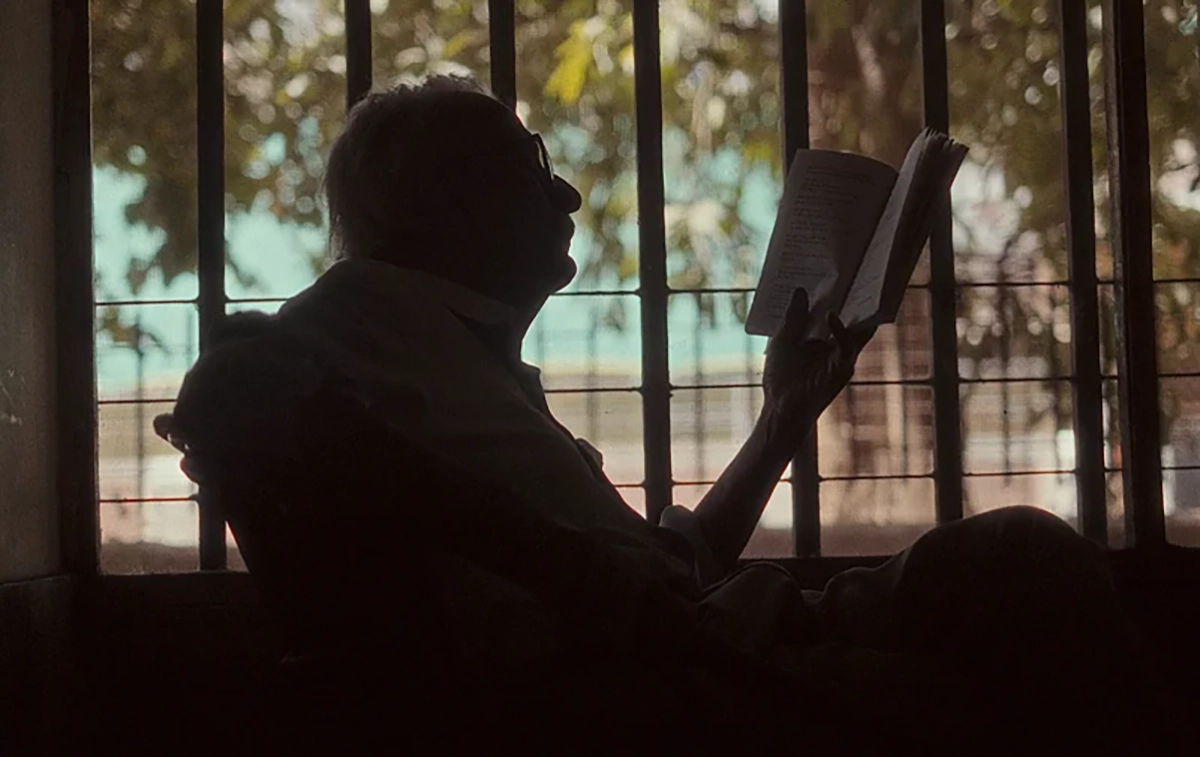
“Chaar Phool Hain Aur Duniya Hai” never declares its philosophical depth outright, instead settling for deep feeling. The film resists the modern obsession with urgency and rewards, asking us to pay attention to the small, fragile things we tend to overlook. This is in perfect harmony with the spirit of Vinod Kumar Shukla, whose prose gently lifts the mundane into the realm of the profound. His writing centers on the inner lives of ordinary people and fleeting moments tucked inside the mundane. His language is sparse yet evocative, circling the idea that true wisdom lies not in grand ideas but in simple acts. These include folding laundry, watching rain, or speaking to a flower.
“Main jo sochta hoon, wahi toh duniya hai mere liye.” (“What I think—that is the world, for me.”) This line from Shukla’s poetry could well be the heartbeat of the film. The grandfather’s world is small—a house, a boy, four flowers. But to him, it is the world. And by watching, we begin to believe it, too.
The Philosophy in the Frame
What sets “Chaar Phool Hain Aur Duniya Hai” apart is how deeply philosophical it is without ever turning into philosophy. There is no overt message or neatly packaged theme. Instead, it operates like a poem, one that does not ask for interpretation, only experience.
At its core, it poses a difficult question: what does it mean to continue in a world that no longer notices? The film also resists cynicism and easy optimism. What it offers instead is a kind of meta-hope—the hope beyond outcomes; a hope that persists not because of reward but because it is, in itself, a form of quiet defiance.
Like Shukla’s writing, the film also celebrates the unimportant things: a cracked teacup, a wall stain, a mispronounced word, a half-said thought. It does not glorify poverty or rural life; it simply insists that these, too, are worthy of being seen. The film breathes Shukla’s essence in every frame. His literature has always been a counter to the rush of modernity. He sees beauty not in grandeur but in duration. Not in what happens, but in what remains.
Visuals That Feel Like Memory
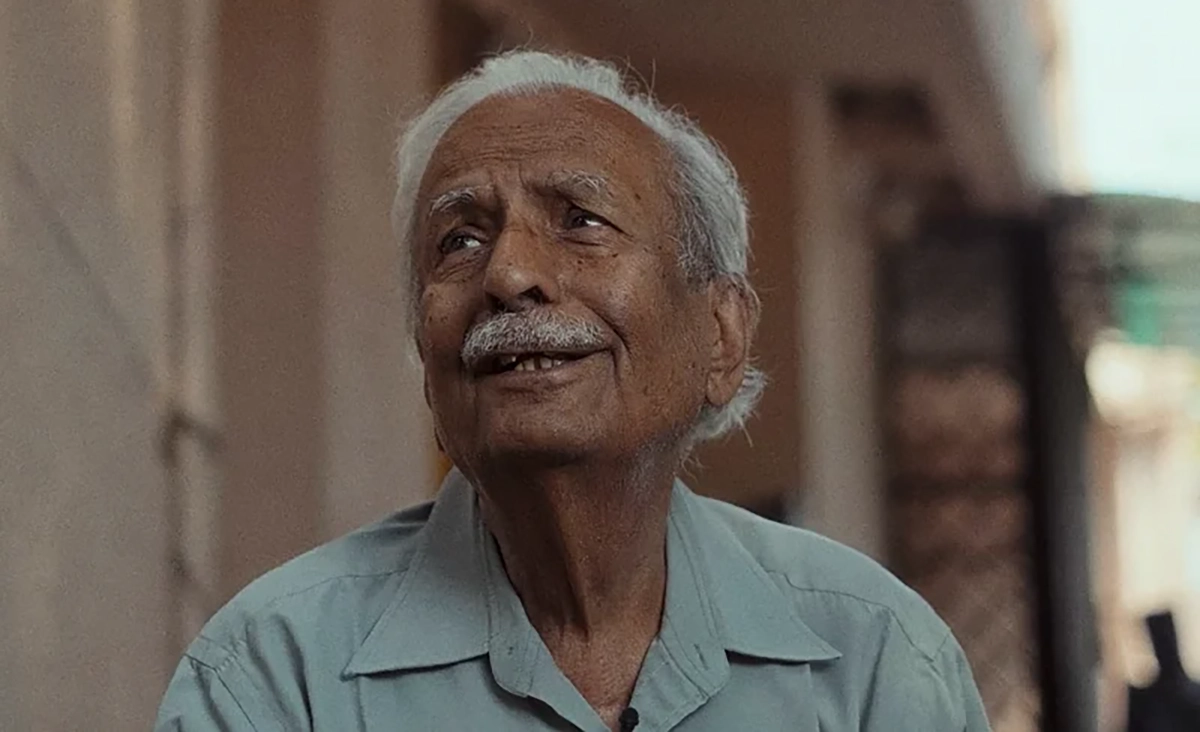
Achal Mishra does multiple duties here apart from direction, handling the cinematography, editing, and production. His filmmaking style is patient and subtle, with the camera often staying still to let the viewer fully take in the quiet shifts of light and movement in each frame. Meanwhile, the cinematography focuses on minimalism and restraint, capturing everyday moments with such care that they feel deeply meaningful. His direction matches this calm pace, favoring natural performances and a slow rhythm that encourages the audience to reflect on the texture of daily life.
Instead of following a typical plot, Mishra’s storytelling explores the inner lives of the characters and the small details that define their world. This approach turns simple scenes into thoughtful reflections on memory, presence, and care. The setting is intentionally ordinary, from faded walls to overgrown corners and objects left where they were last used. All these reinforce the sense that the film is about the passing and weight of time itself.
Though it never preaches, “Chaar Phool Hain Aur Duniya Hai” offers a deeply spiritual message about how we relate to time, to care, and to each other. The four flowers become more than plants; they are metaphors for people, for relationships, for thoughts we keep alive by simply returning to them. The title itself suggests a vast contrast between the smallness of the flowers and the vastness of the world, and yet the film suggests that in caring for the former, we make sense of the latter.
It is, in the truest sense, a film about meta-hope: the quiet, persistent hope that exists not because we believe everything will be okay but because we continue anyway. There is no triumph here, no redemption arc, yet it feels complete, satisfying, necessary.
The Unspoken Message
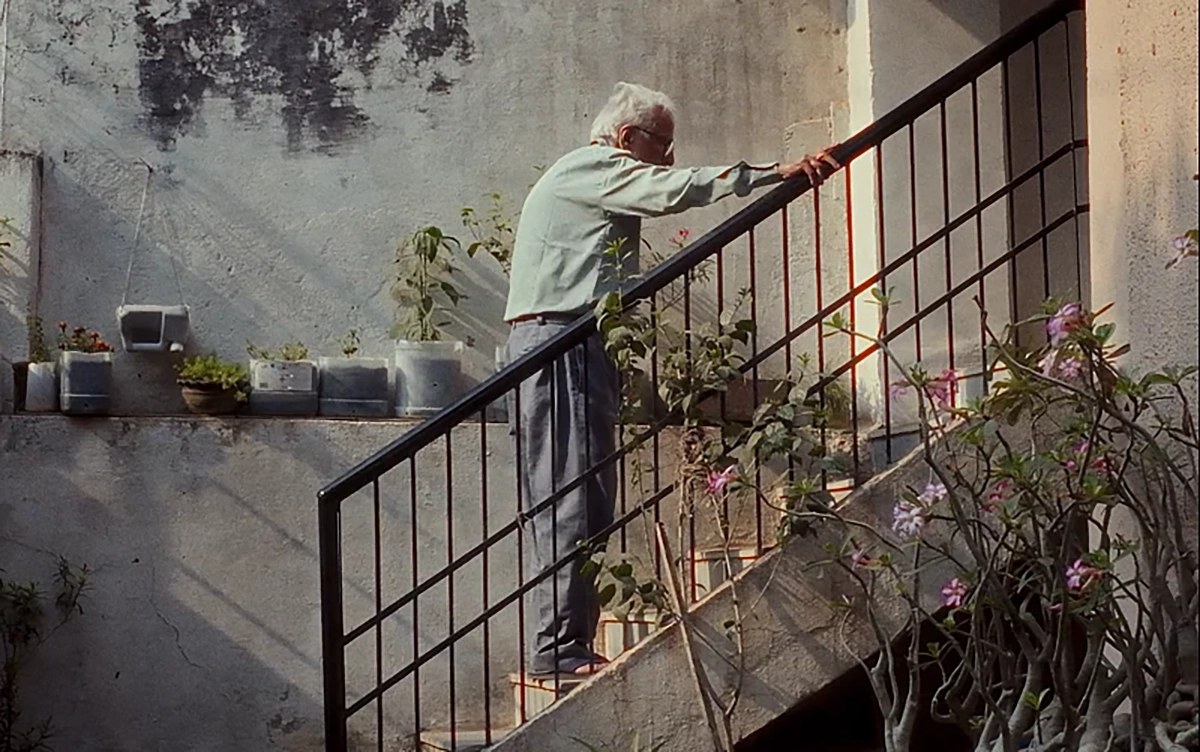
“Chaar Phool Hain Aur Duniya Hai” is not a film that demands attention. It earns it. And for those willing to sit with it—not consume it, not interpret it, but simply sit with it—it offers a rare kind of clarity. The clarity that emerges not from revelation but from recognition. Watching it is like being reminded of something you did not know you had forgotten.
This film is a masterpiece of quiet cinema. It does not just tell a story; it embodies a philosophy. As a beautiful and intimate portrait of a writer whose life is as profound and poetic as his work; it reminds us that in a world of endless noise, the most significant moments are often the ones we experience in silence. The film challenges us to redefine what we consider a meaningful life, teaching us that perhaps the truest form of hope is not in what is to come but in the simple, beautiful fact that we are here, observing.
The film is freely available on YouTube, stripped of ads or fanfare. It sits there like a quiet room waiting to be entered, asking only for your attention. Perhaps the greatest lesson of all is not what to find but what to stop looking for.
Watch “Chaar Phool Hain Aur Duniya Hai” on YouTube for free. Follow us for more coverage. You can watch the film’s trailer in the window below.

