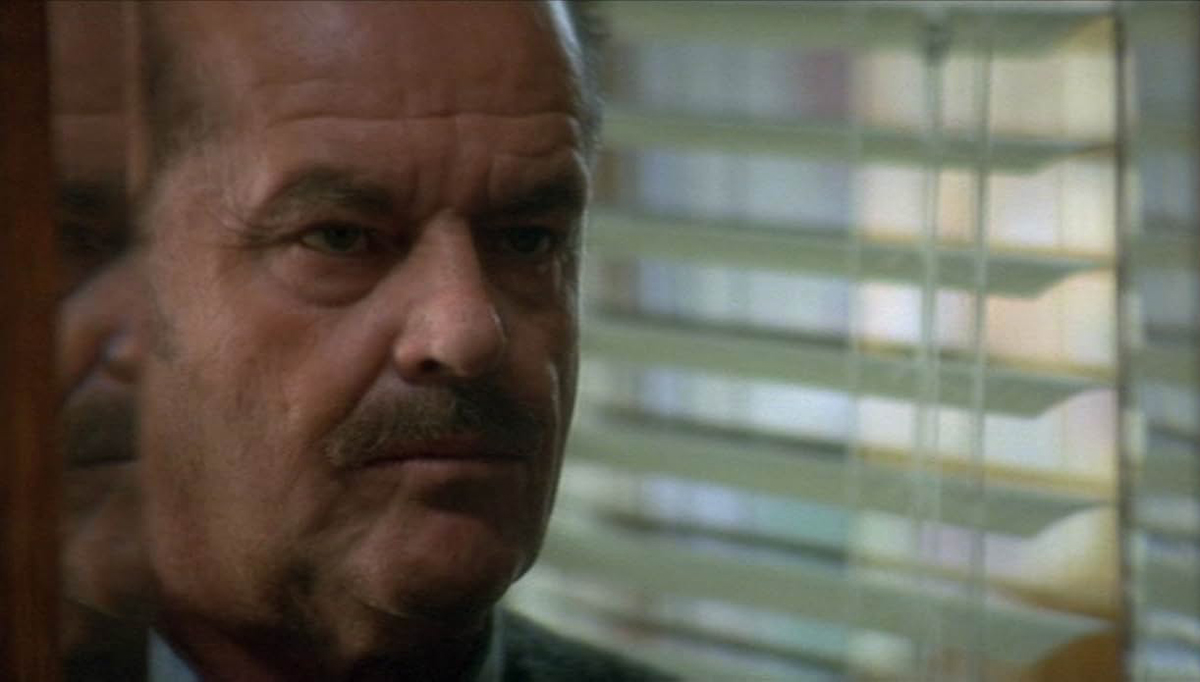
20 years ago I watched this film and remember being irritated by the ending. It felt anticlimactic and bizarre. But I’ve gained an appreciation for slow-burn films since then, and an even bigger appreciation for films that don’t follow the norm. Yet “The Pledge” on rewatch in 2025 doesn’t fare much better. It starts strong. Jack Nicholson playing a retiring cop on his last day—who’s tags along to investigate the murder of a 7-year-old girl—was purposeful and rendered a still quality I don’t see much in films anymore. As the investigation goes on that night, it ends with Nicholson’s Jerry Black making a promise. He tells the mother of the little girl (Patricia Clarkson) that he will find the killer. We can see a promise is no small thing to him. “I made a promise,” he tells his ex-captain (Sam Shepard) after his retirement. “You’re old enough to remember when that meant something.”
“The Pledge” starts in a typical police procedural manner. And with the way Nicholson’s characters is retiring, replaced by a younger hotshot Stan (Aaron Eckhart), the film almost feels like it could have been the set-up for “Falling Down.” But “The Pledge” quickly separates itself. This is not a burn-out from the start drama, but a slow, introspective character study. The problem is the first half of the film is poignant and real, whereas the latter half devolves into script issues and forced plot decisions. The film is directed by Sean Penn. His eye for detail who—along with Cinematographer Chris Menges—provide stillness and calm that propels the film along. But it stalls just as it was getting somewhere with a purposeful decision that either works for you or doesn’t. For me it didn’t.
Nicholson is in Top Form
But before we get there, “The Pledge” has its share of positives, the most special Nicholson’s performance. He’s reined in and real. There were times watching the film where I waited for him to slip into that sarcastic slickness he excels at. But he never does. Whether due to direction from Penn (who is a good if intriguing director), Jerry Black becomes someone we like to follow. He becomes obsessed with finding the killer of the young girl, even as he meets a love interest in a small California town (a great Robin Wright) who has a young daughter who just might be the killer’s next victim. We’ve seen in the film’s opening a suspect was arrested. And though Stan gets him to confess, we see the man (Benecio Del Toro, very method)—who kills himself after—is mentally handicapped and likely didn’t do it.
And this is where the film started not working for me, the devolution of Jerry from amazing cop at the film’s opening to a man who will be muttering to himself while downing liquor by the end. There were hints maybe I missed. Jerry loves fishing and his precinct buys him a package to Baja to finally catch that marlin he’s been after. During the fishing scene at the film’s opening, Jerry takes a nip of liquor before returning to his task. But yet he’s so sharp on his last day in his instincts, observations, and manners that it’s bizarre how screenwriters Jerzy Kromolowski and Mary Olson-Kromolowski (based off a novel by Friedrich Dürrenmatt) take his character by the end. It doesn’t seem the realistic arc of his character, but forced. I couldn’t buy the tragedy that becomes of Jerry Black in the rushed third act.
Confusing Elements Bring ‘The Pledge’ Down
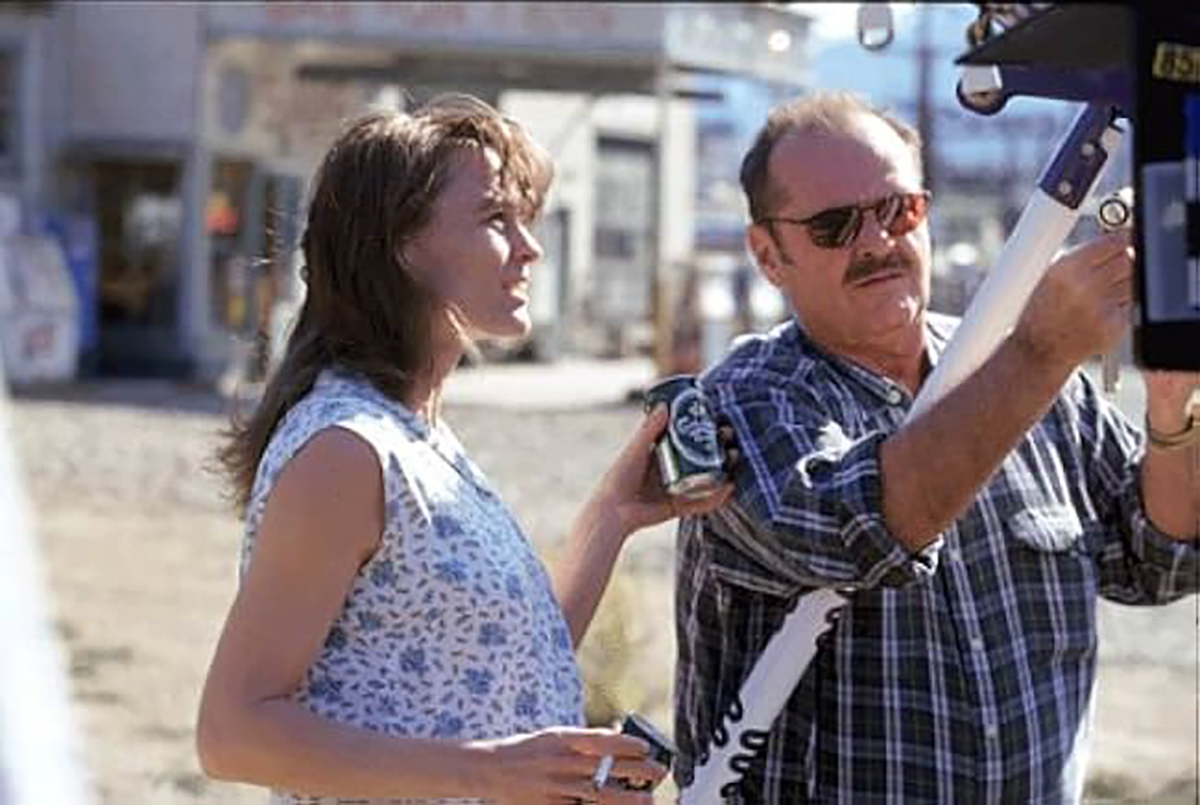
Probably that reason is his quest, his pledge, wasn’t ironed out more than nominally as the film progresses. Jerry wants to find the killer at all costs, but we really don’t know why. Yes, he promised the mother, but we don’t learn anything about his backstory (he’s twice divorced with no kids) that would help us understand this. By the end Stan will be lamenting to his fellow officers how it’s sad what happened to Jerry, how he used to be a great cop and he’s now drunk and crazy. Yet besides the film’s opening and ending, we rarely see Jerry drink. He does become obsessed and crazy toward the end, making decisions that become harder and harder to agree with. But without an imperative to help us understand them, it hits bizarre. I think if Jerry had had a daughter killed in a murder he never solved, or something of the like, it would have made sense. But the story provides more questions than answers.
That can be good in a film. Denis Villeneuve’s “Prisoners” is an excellent example of this, a film that makes us question what justice is and who exactly was/were the prisoners. “The Minus Man”—about a serial killer—is also one that makes us question expectations of how films should end. And while my younger self was irritated with the head-scratching way the ‘justice’ of “The Pledge’s” antagonist came to fruition, now I was able to overlook it in lieu of the slow, purposeful picture Penn seemed eager to paint. But when we arrive at the end of that painting, it feels like waking in the middle of a dream. I found it hard to understand how we got there. It also felt like the screenwriters were eager to undo the care and stillness put into the excellent first half. Almost as if “The Shining” had cut out Jack Torrance’s descent into madness, showing only the beginning and the end.
Not Without Merit
That’s not to say there’s nothing good about “The Pledge” or nothing worth discovering. It’s a capable film. Its opening scenes are thorough and captivating, and Nicholson, truthfully, has seldom been better. You can tell he found Jerry Black a captivating character and put his heart into the performance. I wish that Jerzy and Mary-Olsen Kromolowski had found a way to subvert the rushed feeling and unearned insanity that finds Black but the end. The finale is one that subverts expectations (especially on the cop procedural, as rightly pointed out by the late Roger Ebert), but sometimes that isn’t enough. Jerry needed more development and so did this story. But that aside, “The Pledge” can still be rewarding for its unique sets, authentic cinematography, and old-time feel.