

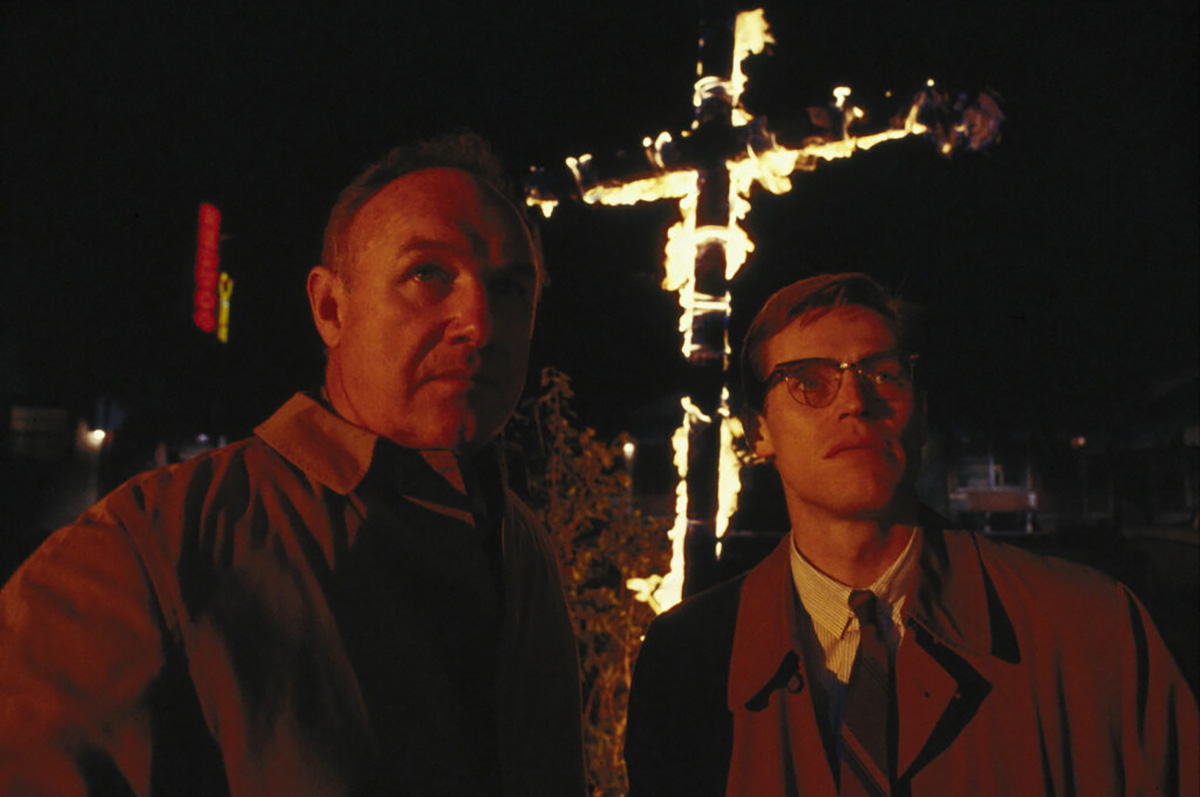
“Mississippi Burning” is a 1988 film that depicts the unrest and violence of the Freedom Summer. Set in a sweltering backwoods county, the story focuses on the disappearance of three Civil Rights Movement activists, and the subsequent investigation, FBI filed Mississippi Burning (MIBURN).
“Mississippi Burning” was directed by Alan Parker and written by Chris Gerolmo. I’ve learned it was criticized by activists involved in the Civil Rights movement and the families of the victims at the time of its release due to the fictionalization of events. Having read the excellent book “Freedom Summer” by Bruce Watson, I can agree with the negative response. I’ll touch on that in my conclusion but henceforth will look at it for its cinematic appeal.
Mississippi, 1964
Director Alan Parker sets the stage. There’s segregation at a drinking fountain and diner. Rural country roads, sweltering humidity, and the sounds of crickets. A hot oppressive sun that doesn’t set, and glowering locals. I’ve never stepped foot in the Magnolia State but ten minutes in I felt like I could relate to the atmosphere.
FBI Agents Rupert Anderson (Gene Hackman) and Alan Ward (Willem Dafoe) are sent to the fictional Jessup County after three college students vanished attempting to help African Americans register to vote. As one would expect, the feds quickly run afoul of the local law; both official and unofficial.
Master Class in Acting
We recently lost the great Gene Hackman. Watching him on-screen is a treat to say the least. I had previously seen him in his signature role in “The French Connection” and one of my favorite movies “The Firm.”
Hackman can play any side of the law. But he excels as a rogue player who cuts the red tape to get the job done as we get with Agent Rupert Anderson. The history of the character is well crafted. He’s a government agent yes, but he’s also a Mississippi native. As such, he can speak about the pros and cons of the region and knows that traditional tactics won’t get the job done. “What’s got four eyes and can’t see?” he jokes in his opening scene before revealing the answer with the trademark Hackman smirk. “Mississippi.”
Willem Dafoe has shown unique abilities on screen as well. From his flamboyant part in “The Boondock Saints” to the artsy “The Lighthouse,” Dafoe is a talent in his own right. Alan Ward is a bookish agent green with experience. His idealistic values clash with the grizzled Agent Anderson. The tension between the two agents is perfectly embodied by the amazing acting of the two leads.
Impressive Supporting Cast
Brad Dourif does an excellent job in the role of Deputy Sheriff Clinton Pell with the incomparable Frances McDormand playing his besieged wife. My boy Michael Rooker is perfect as Klansman Frank Bailey. “Seinfeld” alum (before Seinfeld was a thing) Kevin Dunn and Stephen Tobolowsky lend support. As does Tobin Bell, better known for Jigsaw.
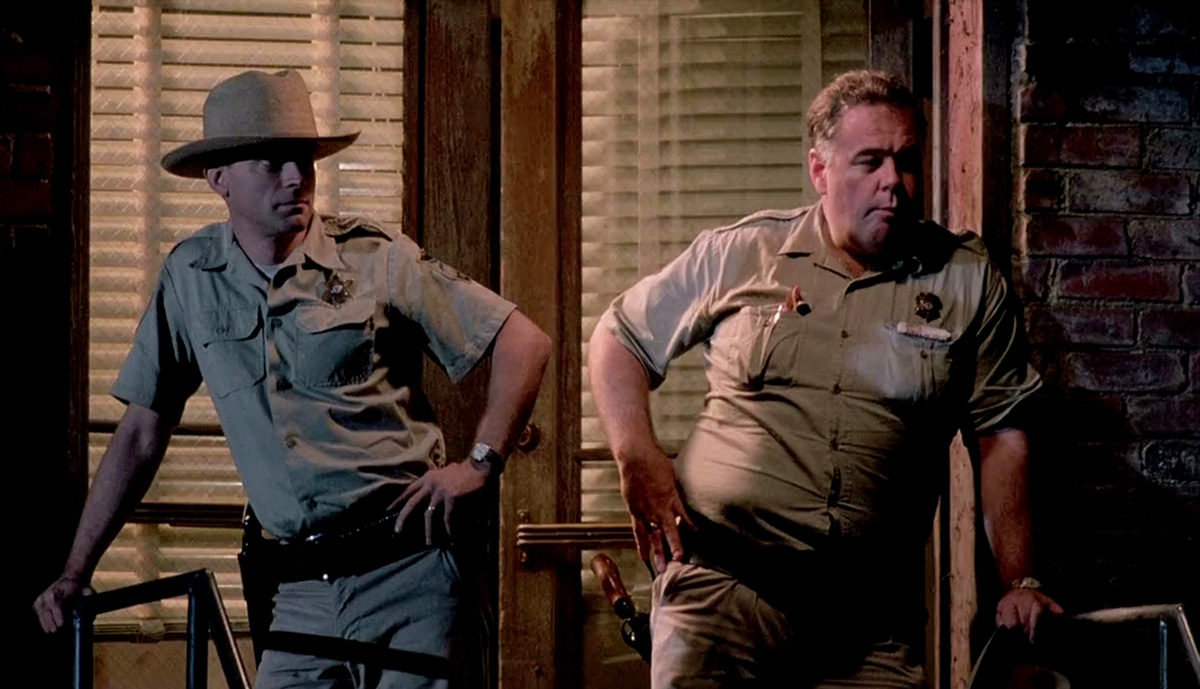
I loved the character of Sheriff Ray Stuckey (Gailard Sartain). Sartain just looks the part of a small town, smaller minded cop who operates with his own version of the law. “The rest of America don’t mean jack shit,” he explains to the FBI agents who are disrupting things in Jessup County. “You in Mississippi now.”
Another World
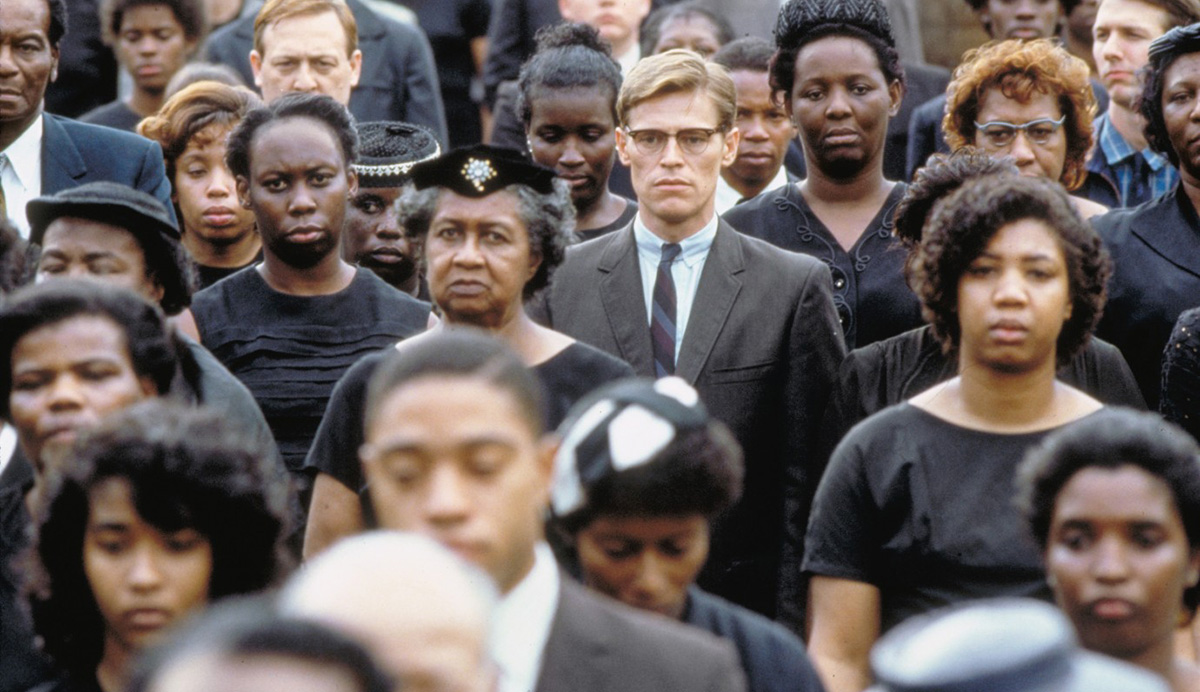
Getting a glimpse of how things looked 60 years ago in the Deep South is like seeing another planet. People, black and white, live in fear of outsiders and their own. Ku Klux Klan controls business like the mafia, burning crosses and violently abusing anyone who opposes them. Filming was shot in various parts of Mississippi, and the film is better for it.
Great acting, compelling story, atmospheric setting. So, what’s not to like? “Mississippi Burning” runs 128 minutes which isn’t bad, but I feel the film would have better served if trimmed 5-8 minutes. There are some scenes that may replicate the slow-paced existence of the south but are unnecessary as far as the story goes.
And echoing the previously mentioned historical criticisms, I would rather watch a true-to-form documentary on the real-life case, rather than a fictionalized version. Or a completely fictional story that shares the setting. Films that try to do both often miss the sweet spot.
That said, “Mississippi Burning” is a very good experience. It explores uncomfortable topics that are not as far in the past as we may like them to be. Happy Juneteenth.