





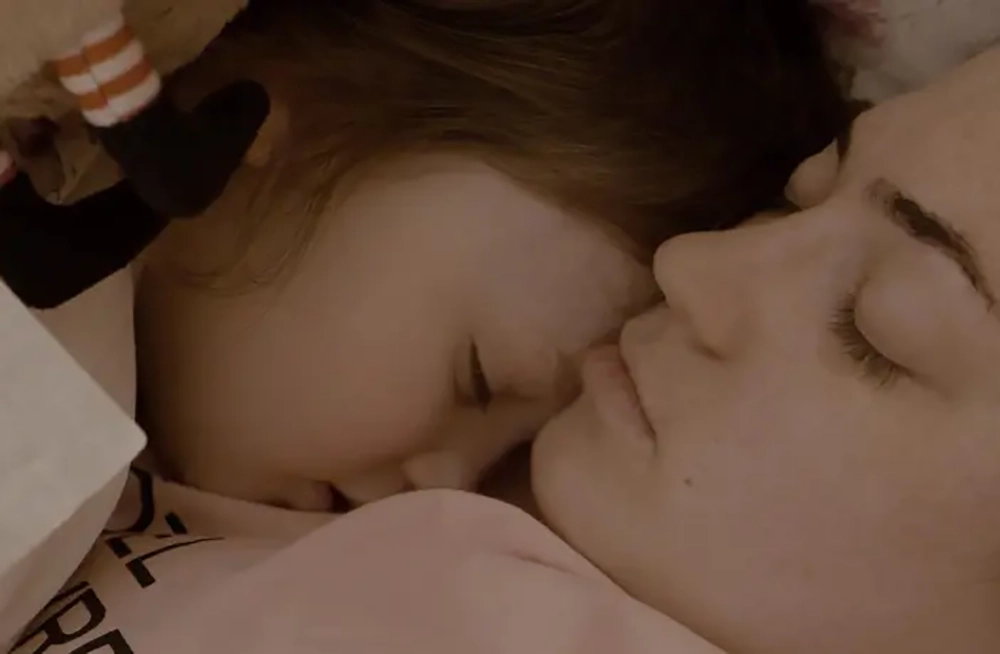
A young Orthodox couple faces the challenges of living in a society deeply governed by tradition, as they try to integrate their autistic son. In this deeply autobiographical documentary film from Henya Brodbeker, âThe Three of Us,â the family risks everything as they search for their place in the world.Â
Camera in hand, Brodbeker documents her familyâs struggle to secure support for their beloved autistic son. As a young ultra-Orthodox woman, Henya finds herself at a personal impasse. Aside from the challenge of finding a school for her son, she begins questioning her partnership with her husband Aharon, her own faith, and her place in the world.Â
Along the way, their journeyâchallenges, struggles and allâdelves into the delicate balance between love and faith.
[Related Review: âReturn to Dustâ is a Tender Examination of Human Connection amid a Worldview Shaped by Cultural Traditions]
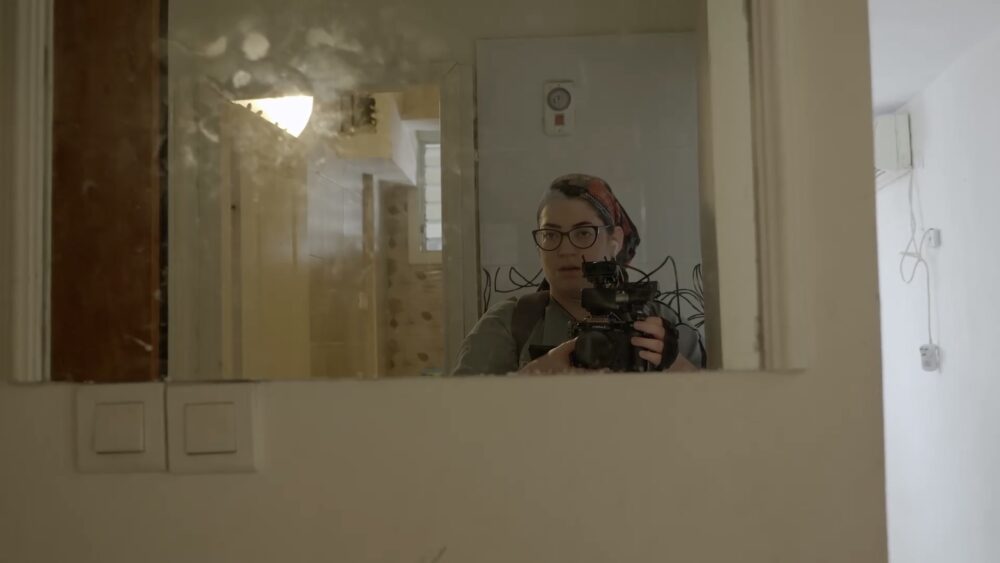
A Candid Glimpse into a Family Shaped by Ultra-Orthodox ValuesÂ
âThe Three of Usâ reveals that for years, Brodbeker kept her son’s autism a secret due to their ultra-Orthodox upbringing. We see that in these communities, children with learning disabilities donât receive the care they need to become high-functioning individuals when they grow up.Â
Talking to a therapist, Henya shares that part of the reason to keep it secret was to make sure her brother successfully finds himself a suitable wife; and that word of Ariâs autism coming out would ruin her brotherâs life â not hers or Ariâs. Add to these her own bouts with depression as well as her suppressed doubts about religion, and weâre witnesses to an individual at her breaking point.Â
Nonetheless, Brodbeker trudged on, despite the film showing the harsh realities of their life overwhelming and exhausting them all. Unable to find an Orthodox school willing to accept Ari, they try to enroll him in Israelâs general education system. However, theyâre also met with indifference, highlighted by a rigid and outdated system that excludes special needs children entirely.Â
Through it all, she works with her husband to find compromises in order not to give up on the fundamental aspects of their identity. Sadly, Henya sees the irony that her son doesnât stand a chance of being accepted in an Orthodox community that prides itself of coming together to maintain its insular strength.
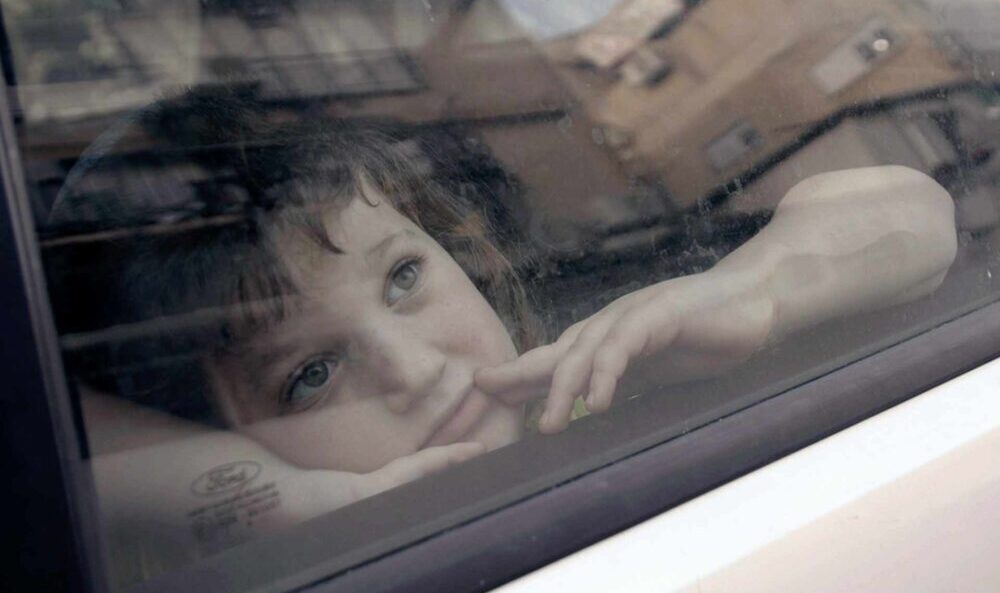
âThe Three of Usâ: An Intimate Portrait Underscored by Arresting Vulnerability
Brodbekerâs lens serves as the audience’s gateway into the life of an ultra-Orthodox family in Israel. Several times, the film becomes a tough watch, largely due to the real-life implications of its narrative. Ariâs outbursts and episodes are also difficult to watch, and how the parents do their best to calm him down. A scene inside a barber shop where Ari breaks down before his haircut particularly hit me close to home.Â
Indeed, Brodbeker doesnât sugarcoat the struggles that she and Aharon face as they contact every school they can find in hopes to integrate Ari. Whereas the ultra-Orthodox society rejected them in the name of religion and conservatism; the state education system did the same, but in the name of bureaucracy.Â
Coming to a decision to relocate to keep trying to integrate Ari, Henya tells her mother, âMaybe in a place where thereâs no community, I wonât be second-rate, an outsider.â Itâs this rawness of life that permeates every frame of the film, highlighting its arresting vulnerability.Â
On the Overarching Themes of Belonging and Identity
If I could nitpick one thing, it is that I find Ayala Bengadâs editing work arguably among the filmâs weaker points. And this is understandable, given the scope of Brodbekerâs filming makes the editing an almost-thankless task. That said, the pacing fortunately doesnât bog the film down as a whole. It manages to paint an honest and intimate portrait of a family at a crossroads, in search of identity and community.Â
Probably the most important thing to note here is how the film critiques certain aspects of the ultra-Orthodox community’s life without disrespecting it entirely. This level-headedness is key, since the film can be representative of all traditional and conservative societies worldwide. After all, the sense of belonging is a universal tenet, irrespective of oneâs religion, tradition, and culture.
Finally, perhaps for Brodbeker herself, âThe Three of Usâ is pivotal to her own growth and transformation as a mother, wife, and a person. Through the lens of her camera, the director documents their life, the disillusionment they both undergo, and the liberation and self-discovery she unearths in the end.Â





