
Close Menu
    Facebook X (Twitter) Instagram
    Friday, March 6
    Facebook X (Twitter) Instagram Bluesky
    The Movie Buff
    • Home
    • About
      • Critics
      • Press & Testimonials
      • Friends of the Buff
      • Terms of Use
      • Thank You!
    • Film Reviews & Coverage
      • Movie Reviews
      • TV/Streaming Reviews
      • Film Festival Coverage
      • Interviews
    • Podcasts
    • Indie Film
      • Reviews & Articles
    • Advertise
    • Contact
      • Write for us
    The Movie Buff
    Awards

    TIFF 2022 Review: ‘We Are Still Here’ is a Galvanizing Anthology of Indigenous Strength in the Face of Colonialization

    Paul Emmanuel EnicolaBy Paul Emmanuel EnicolaSeptember 16, 2022No Comments4 Mins Read
    Facebook Twitter Pinterest LinkedIn Tumblr Email Copy Link
    We Are Still Here
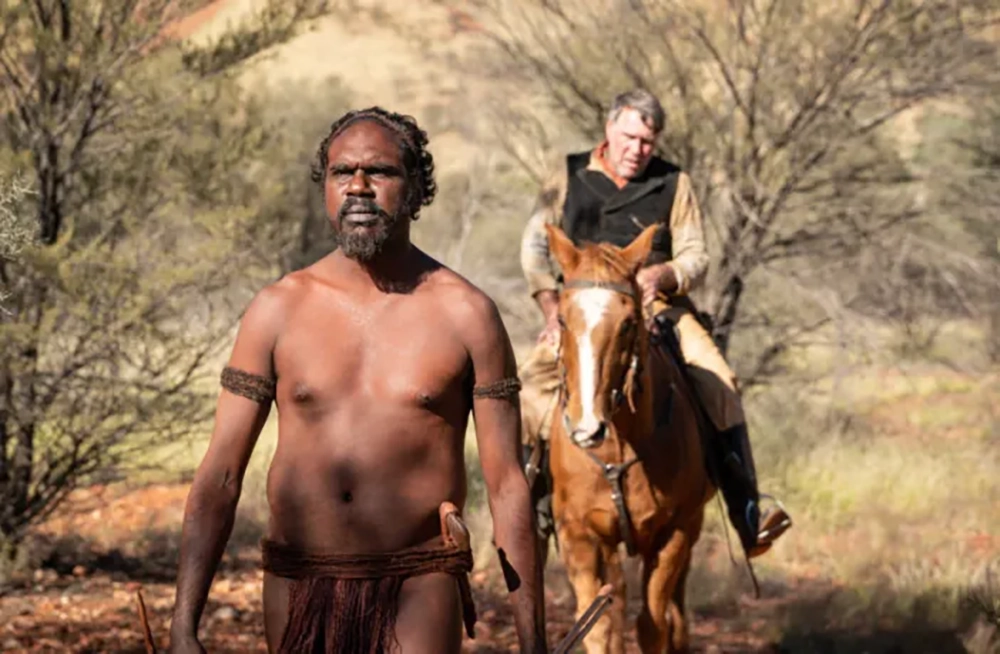
    A scene from the story 'Woke.' (Photo: No Coincidence Media and Marama Productions, 2022).
    Share
    Facebook Twitter Email Copy Link

    Filmmakers present their stories in an anthology format because of various objectives. A series might present an anthology in stories that don’t segue to the next, but nonetheless share a central theme. Other anthologies opt for a common backdrop where the characters themselves become secondary to the frontier. “We Are Still Here,” on the other hand, goes for both.

    A collaboration among 10 Indigenous filmmakers from Australia, Aotearoa (New Zealand), and Pasifika (Pacific Islander nations of Samoa, Tonga, the Cook Islands, Niue, Tokelau, Tuvalu, and other smaller domains); the movie combines eight stories from these filmmakers to create a singular narrative that resonates with the people.

    More importantly, the film is a direct response to the 250th anniversary of James Cook’s historically celebrated voyage to Australia. Commissioned by the British government, this resulted in the colonizer’s invasion of Indigenous lands. This 90-minute response—compelling and insightful in equal measures—highlights the shared history of the people of their region. The result is a strong statement of resilience even, and especially, in the face of oppression.
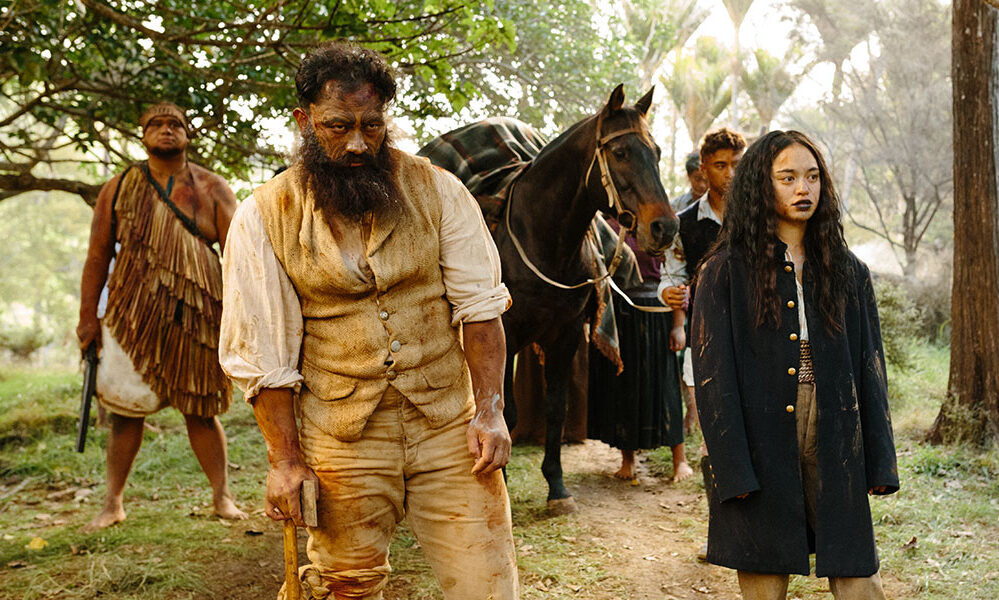
    A scene from the story 'Te Puuru'
    A scene from the story ‘Te Puuru’. (Photo: No Coincidence Media and Marama Productions, 2022)

    The Impact of Colonization in Indigenous Culture and Identity

    “We Are Still Here” begins with a couple of title cards that explain the film’s purpose.

    In the late 18th century, the British Empire invaded and claimed many territories in the Pacific.
    It was a catastrophic event for indigenous people.

    In response to 250 years of colonization, 10 leading Indigenous filmmakers—Beck Cole, Dena Curtis, Tracey Rigney, Danielle MacLean, Tim Worrall, Renae Maihi, Miki Magasiva, Mario Gaoa, Richard Curtis, and Chantelle Burgoyne—create a cohesive collective narrative of contemporary Indigenous activism.

    Starting an anthology film with rotoscope animation (the same approach Richard Linklater used in “Waking Life”) is ambitious, to say the least. However, “We Are Still Here” does just that, showing a mother and daughter fishing in a pre-dated Utopia. In this story (‘Lured’ by Danielle MacLean), the daughter reels in a big ship instead of a fish. The ominous ship, with its all-too-familiar flag, symbolizes a future that would threaten the two’s relationship. Worse, the succeeding stories after ‘Lured’ would touch upon the oppressive efforts to erase the Indigenous identity.

    Whether it’s the daughter of the Tūhoe chief who challenges tribal traditions in order to support the fight against the British colony (‘Te Puuru’ by Tim Worrall and Richard Curtis), or a young graffiti artist in Naarm creating murals as an expression of activism (‘Rebel Art’ by Tracey Rigney); these stories resonate to this day. The protagonists of each story portray the struggles, pain, frustration, and ultimately the determination to rise up even stronger. And as someone from a land colonized by equally unwelcome explorers, I find the film hitting close to home.
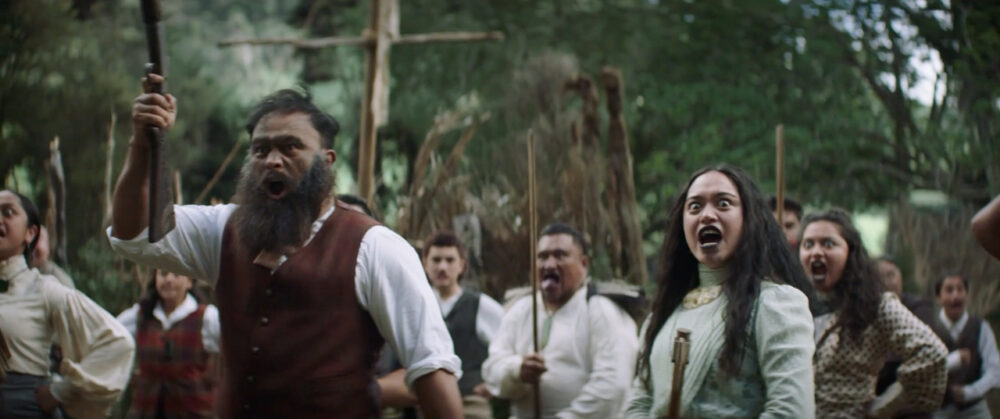
    the famous Tūhoe haka (war dance) in We Are Still Here
    Performing the famous Tūhoe haka (war dance) from the story ‘Te Puuru’. (Photo: No Coincidence Media and Marama Productions, 2022)

    ‘We Are Still Here’: A Galvanizing Call to Action

    As we noted at the onset, anthologies can be presented in a traditional format. But while it’s safe to assume that “We Are Still Here” would work just fine with simply telling one story after the other in chronological order; the filmmakers decide to interweave the stories instead. 

    Eschewing a linear format in favor of interweaving the stories, the film jumps from one story to the next, often leaving particular scenes hanging. Spanning a thousand years from pre-Utopia to an envisioned dystopia in the future, it’s a juggling act that at times proved a little too much. 

    Given the unconventional storytelling, the experience can be jarring at times, what with the stylistic differences in the filmmaking approaches. Add to this the uneven tone (from drama to lighthearted comedy and even romance), and the film could end up a mishmash of powerful ideas undermined by its half-baked execution.

    Thankfully, the whole thing works, which is testament to Roland Gallois’ editing work. Complementing Gallois with the camerawork, Raymond Edwards and Eric Murray Lui were able to capture the beauty of the regions; from the expansive landscapes of the Central Australian Desert to the lush green rainforests of New Zealand.

    Eight tales of indigenous strength, spanning a thousand years of kinship, loss, grief, and resilience; the film is a galvanizing call to action. 

    But maybe it’s more of a cry: that despite the colonialism, racism, and oppression of Indigenous people, “We are still here.”

    “We Are Still Here” had its world premiere at Sydney Film Festival in June 2022; and is among the Contemporary World Cinema selections for this year’s Toronto International Film Festival. 

    Support the Site: Consider becoming a sponsor to unlock exclusive, member-only content and help support The Movie Buff!

    colonization history indigenous Māori TIFF war we are still here world cinema
    Share. Facebook Twitter Pinterest LinkedIn Tumblr Email
    Previous ArticleReview: ‘Bodies Bodies Bodies’ is a Fun Slasher Film that Will Keep Audiences Guessing Until the Very End
    Next Article Canadian Films at TIFF Roundup: ‘The Swearing Jar,’ ‘The Young Arsonists’
    Paul Emmanuel Enicola
    • Website
    • X (Twitter)

    Paul is a Tomatometer-approved film critic inspired by the biting sarcasm of Pauline Kael and levelheaded worldview of Roger Ebert. Nevertheless, his approach underscores a love for film criticism that got its jumpstart from reading Peter Travers and Richard Roeper’s accessible, reader-friendly reviews. As SEO Manager/Assistant Editor for the site, he also serves as a member of the International Federation of Film Critics (FIPRESCI) and the Society of Filipino Film Reviewers.

    Related Posts

    Drama March 4, 2026

    ‘Rosemead’ Review: A Mother and Son Stare Down the Barrel in a Tragic Eye-Opener

    Independent March 2, 2026

    The Short Film ‘Jam Boy’ by Sriram Emani is Rich with Culture and Social Commentary

    Horror March 2, 2026

    ‘Scream 7’ Review: A New Chapter as the Franchise Rewrites the Rules

    Drama March 1, 2026

    “Wuthering Heights” (2026) Review: A Preposterous Retelling, Rich in Aesthetic Yet Weightless in Text

    Awards February 28, 2026

    Release: Golden Scythe Horror Awards Announce 2026 Winners, Nominations

    Action February 26, 2026

    ‘Man on Fire:’ Violent and Unforgiving, but Features Both Denzel and Fanning at their Best

    Leave A Reply Cancel Reply

    Latest Posts

    ‘Rosemead’ Review: A Mother and Son Stare Down the Barrel in a Tragic Eye-Opener

    By Vidal DcostaMarch 4, 20260

    The Short Film ‘Jam Boy’ by Sriram Emani is Rich with Culture and Social Commentary

    By Mark ZiobroMarch 2, 20260

    ‘Scream 7’ Review: A New Chapter as the Franchise Rewrites the Rules

    By Holly MarieMarch 2, 20260

    “Wuthering Heights” (2026) Review: A Preposterous Retelling, Rich in Aesthetic Yet Weightless in Text

    By Hector GonzalezMarch 1, 20260
    • Facebook
    • Twitter
    • Instagram
    • YouTube
    Indie Film Highlights

    ‘Rosemead’ Review: A Mother and Son Stare Down the Barrel in a Tragic Eye-Opener

    By Vidal DcostaMarch 4, 20260

    “Rosemead” is based on “A dying mother’s plan: Buy a gun. Rent a hotel room.…

    The Short Film ‘Jam Boy’ by Sriram Emani is Rich with Culture and Social Commentary

    By Mark ZiobroMarch 2, 20260

    Review: Rough Sex and Rougher Relationship Dynamics Intertwine in the Risqué ‘Pillion’

    By Vidal DcostaFebruary 24, 20260

    Interview: Filmmaker Sriram Emani on Exploring Self-Erasure and Breaking Patterns in his Debut Short ‘Jam Boy’

    By Vidal DcostaFebruary 20, 20260

    Acclaimed Violinist Lara St. John Talks About ‘Dear Lara’ Doc in Post SBIFF Interview

    By Mark ZiobroFebruary 16, 20260
    Spotlight on Classic Film

    ‘The Innocents’ Review: One of the First Haunted House Films of the Modern Horror Era

    ‘Gone With the Wind’ Review: Epic Film from the Golden Age of Hollywood

    ‘The Count of Monte Cristo’ QCinema 2024 Review: A Thoughtful, If Rushed, Study of Revenge and Redemption

    ‘Thirteen Women’ Review: A Precursor of the Slasher Genre, with a Devilishly Divine Femme Fatale at its Helm

    The Movie Buff is a multimedia platform devoted to covering all forms of entertainment. From Hollywood Blockbusters to Classic Comfort faves. Broadcast Television, on-demand streaming, bingeworthy series'; We're the most versatile source.

    The Movie Buff is also the leading supporter of Indie film, covering all genres and budgets from around the globe.

    Facebook X (Twitter) Instagram YouTube LinkedIn TikTok
    Copyright @2011-2025 by The Movie Buff | Stock Photos provided by our partner Depositphotos

    Type above and press Enter to search. Press Esc to cancel.