


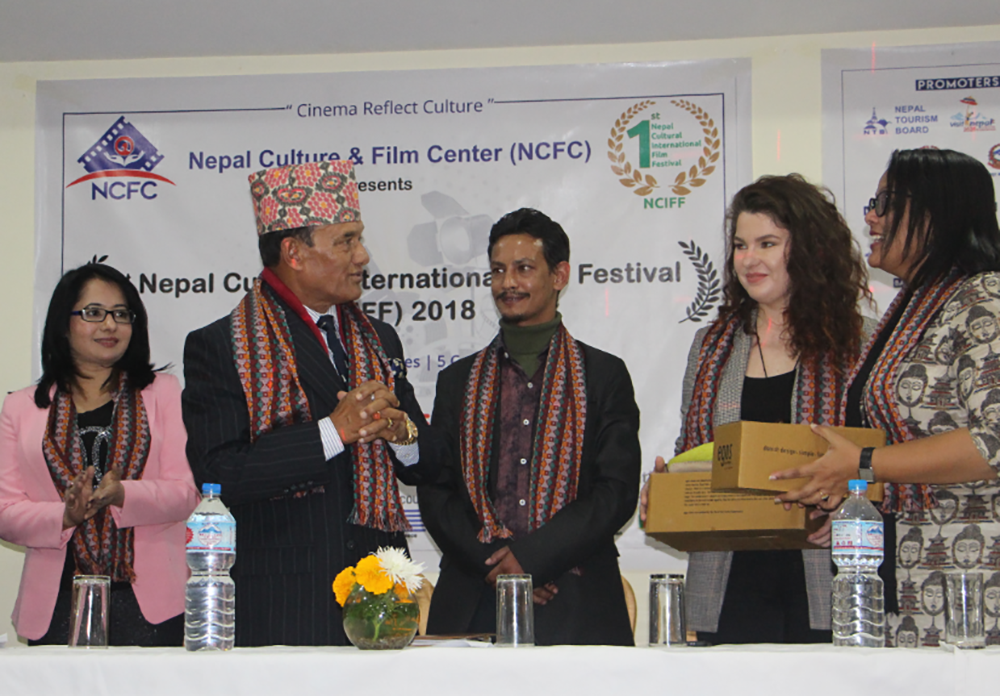
The Nepal Cultural International Film Festival (NCIFF) not only showcases movies from around the globe, but also nurtures local talent blossoming in and around Nepal. I had the pleasure of speaking to some of their team members on how their festival promotes local content on a global scale, the importance of providing a creative outlet for talented youth in a competitive industry, and a lot more in this interview.
Vidal Dcosta for The Movie Buff: How did the idea for the Nepal Cultural International Film Festival sprout, and for how many years has this festival been up and running?
We are a team of filmmakers who have participated in many film festivals in Nepal and abroad. We found there is a lack of organization and representation of cultural film festivals on the national and international levels. So, we decided to establish the Nepal Culture and Film Center—NCFC.
NCFC actively preserves and promotes cultural films from around the world and presents them to the global audience. [It] aims to dynamically organize the Nepal Cultural International Film Festival—NCIFF on a yearly basis. After the success of our last two editions, the third iteration is all set to launch in December 2021.
Were there any hurdles that you faced during the initial stage of the festival? If so, how did your team prepare for them and overcome them?

We are experienced as filmmakers, but organizing an international film festival was definitely challenging for us. In the initial stage, we had to learn about various technical and legal formalities like submissions, rights, permissions, etc., which we had very little or no idea about.
Then the major problem was to find right collaborations and sponsors, especially for our first edition. Our team was confident and prepared enough to face these challenges and execute the event. We did intense research in the festival planning domain and took advice from professional consultants in the field.
The cultural films help represent the problems that occur in our country and make the audience aware with a more realistic approach than the commercial movies. Hence, we gave our best to push the project forward.
Were there any specific goals that you had in mind when you started the Nepal Cultural International Film Festival and what are the current goals that your team is working towards?
We started NCIFF with an aim of providing a platform to independent filmmakers from around the globe to showcase their film in a cultural environment in Nepal and abroad. The event aimed and further aims to encourage them by providing awards and cash prizes in specific and different categories.
It gives us great pleasure to be a part of this festival. Over the years, the festival has not only become a place where filmmakers from Nepal and abroad can meet and share their work. But [it is] also an important outlet for the proactive creativity that provides excellent educational opportunities.
A unique atmosphere has been created here, allowing artists and their audiences to communicate with each other freely, to address the most vital concerns, and to seek solutions. [We’re] certain that this year’s edition will impress the locals and visitors alike, and yield a lot of valuable insights.
While I find it commendable that you’ve sought to bring to the screens the rich culture and heritage of Nepal. However, I often hear news about racial discrimination and racially-motivated attacks on the Nepalese from other parts of India. Does any of the content screened at the festival address or scrutinize hard-hitting issues such as these?
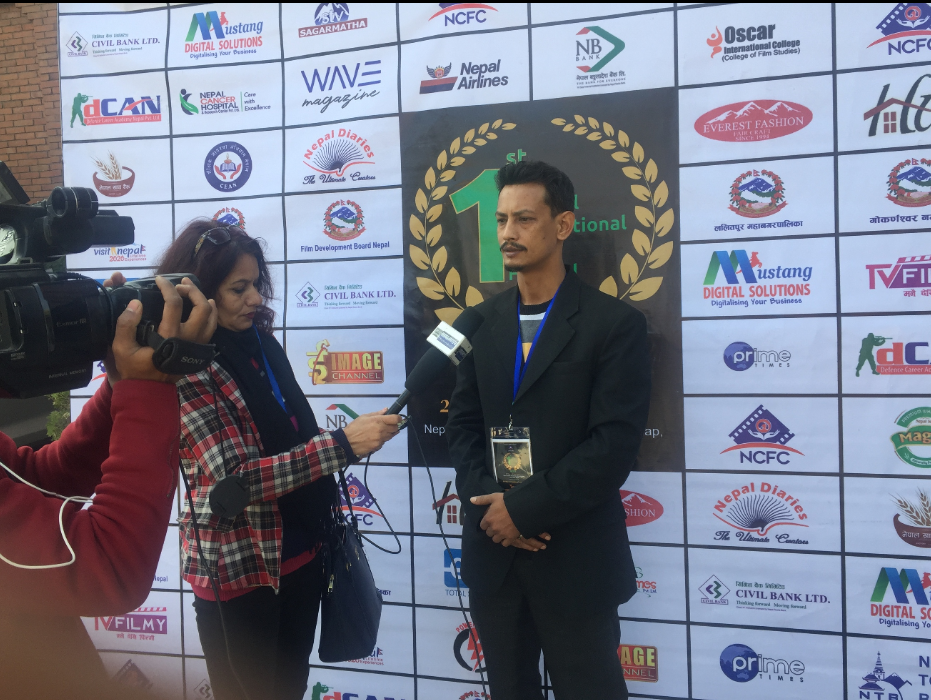
Civilizations always become richer and more colorful through exchanges and mutual learning from each other. Such exchanges and mutual learning form an important drive for human progress as well as global peace and development. Cultural events, such as this film festival, enable direct exchanges and dialogues among civilizations and peoples.
This year our theme is mainly based upon human rights, socioeconomic, cultural, religious, racism, ethnicity, trafficking, environmental issues. We have [also]been receiving so many contents regarding human rights, racism, and ethnicity based upon different nationalities and their languages from all over the world. We will be screening films on those related issues to bring awareness to the whole world.
One of the goals behind this festival is to extract youth potential. What are some of the challenges faced by local youth who seek to make their mark in film? How does the festival helps them in overcoming these issues?
During the initial phase for local youth, they usually face several challenges like having less production money, having to assume multiple roles in a film to reduce costs as much as possible, understanding the pulse of the audience that they are trying to reach, and distributing the final movie through different channels. And for that, it takes so much struggle and big finance. No one will notice or care about your work when you have little experience or have no prominent name.
The elevator pitch of cinema’s market is highly commercial; so for local [youth] it is hard because they are not well versed in terms of how to release their movies in theatres.
The festival has not only become a place where filmmakers from Nepal and abroad can meet and share their work…”
Moreover, for young people, especially, mental health challenges can be difficult to navigate. Too many face these challenges alone, fearful of being misunderstood. This can change, and it should change. With a festival they get a platform to showcase their work or content at a desirable price. [This helps in] reaching a mass audience with proper exposure and distribution in a short period that local young people desire in a very flexible way.
At the beginning of the pandemic—and even lately—a lot of film festivals opted for the virtual route. Did your film festival also take to the online sphere? Was the switch to virtual screening challenging in any aspect? Has the experience turned out to be a positive or a negative one?
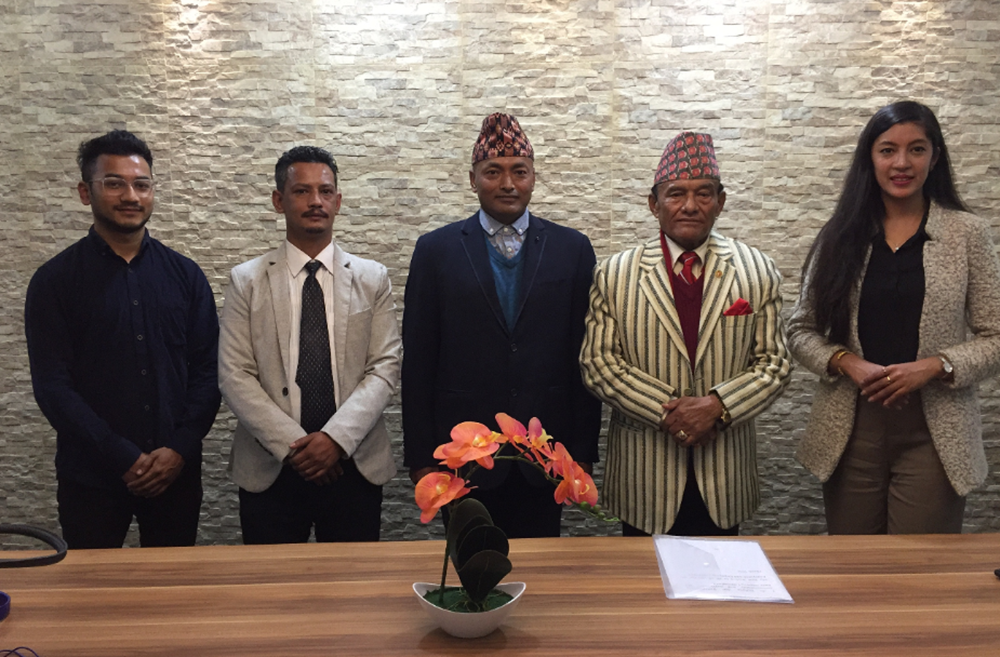
Yes, unfortunately we had to opt for the virtual route too. The reason behind doing film festivals is to [screen]physically so films or contents could reach more filmmakers and audiences to a larger extent…but we couldn’t do that so we organized and switched it on to the virtual screening.
Comparatively, virtual screening was actually easier than physical because it is not costly and flexible. Likewise, physical costs high and takes a lot of time, effort, and is more challenging. However, virtually was more effective and positive.
It was indeed a pleasure to speak with the hardworking team behind this film festival. You can find out more information by visiting: http://ncfc.org.np. You can also follow them on Instagram here.
