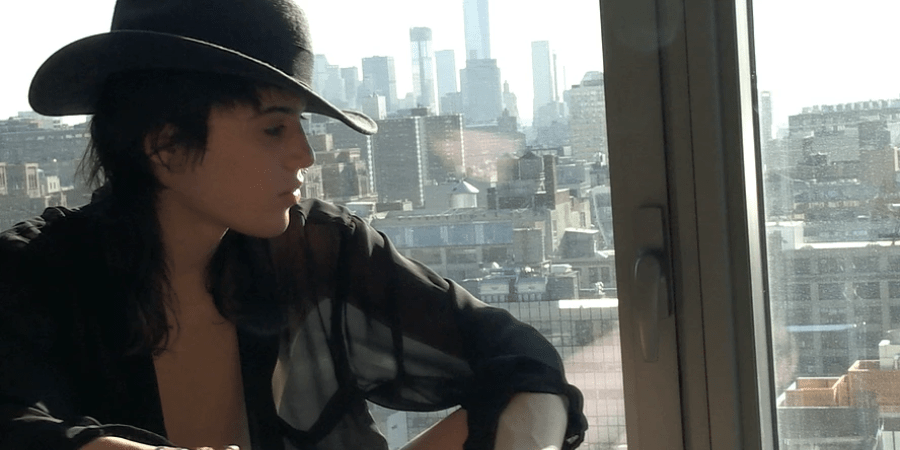
“Ekaj” deals with hard material and stark revelations. One of its most powerful scenes comes towards the movie’s close, as we see the titular character on the floor, high with heroine, sweaty, disheveled, in pain. It cuts to images of his father, telling him in no unclear terms that he could deal with anything, drug addiction, crime, etc. – anything but a homosexual son. Ekaj, a runaway in New York City, has led a difficult life for a young man, and by the time this revelation hits home we understand a bit more about it than we did going in. This film, written and directed by Cati Gonzalez, is both gritty and real. It brings you into a world you mightn’t otherwise have gained access.
One of my favorite directors, David Gordon Green (“All the Real Girls,” “Joe”) often casts non actors in chief roles, which improves his films’ authenticity and impact. I wasn’t shocked to read that Gonzalez cast only non-actors in “Ekaj,” though, surprisingly, all of them can act rather well. The film has as tight focus, taking place in NYC, on the streets, bringing us into her characters’ world that much deeper. This is not the same New York of money-making rom coms or financial power movies. It’s a real New York, a personal New York, and one that feels as authentic as the characters that inhabit it.
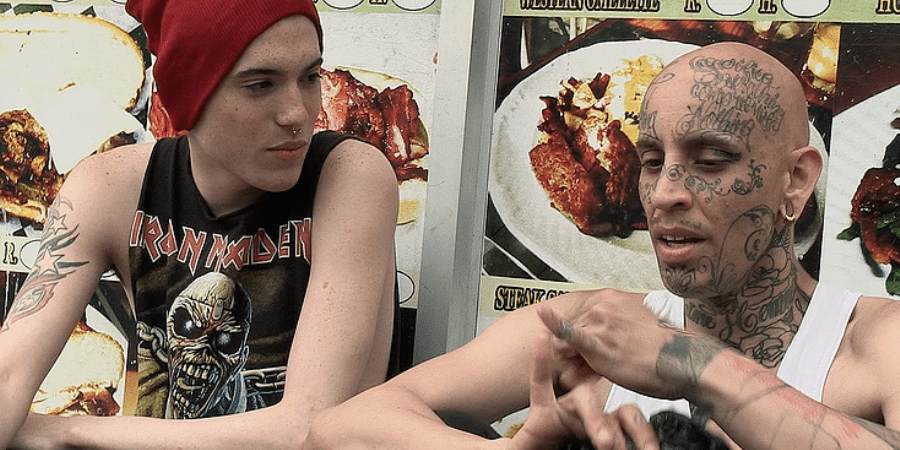
To say what “Ekaj” is about is hard. This is a film of substance, not plot, and is defined by its protagonist’s relationship with himself, different men he meets, and another who would become his best friend, a tattooed man named ‘Mecca.’ Mecca is played by a conceptual artist named Badd Idea, who brings life and sincerity to a film that is often unkind and provocative. A plethora of tattoos adorn him, including his face, and casual drug abuse consumes his days. Yet Idea plays him close to the chest, revealing a kind soul with kind eyes who becomes a buffer for Ekaj in the NYC jungle they try to survive.
Ekaj himself is played well by Jake Mestre in a performance that imbues the young man with a physical representation of the host of questions that run through his mind for the film’s run. “Ekaj” is filmed almost like biography; as such, there isn’t so much a progression of events, but a relationship between them and the audience. Mestre is our narrator for this relationship. It’s through him that we see hardships on the street such as drug abuse, robbery, domestic violence, and poverty. “Ekaj” doesn’t want to comment on the morality of these things, but their effect on its characters. “People don’t understand the bad times you go through only make you stronger,” Ekaj narrates. “I would never, ever, ever want to go back to the person I was.”
“Ekaj” handles its material well, though a sense of fatalism runs through it that is palpable and real. When a character is raped, this is felt acutely. “Get over it, everyone gets raped,” one character opines. “You know, only ugly people don’t get raped.” The point here is not to admonish nor defend the act itself. “Ekaj” wants us to understand the mindset of its protagonists, and accomplishes this with ease.
The most captivating part of “Ekaj” is the relationship between Mecca and Ekaj, a relationship that only deepens as the film moves along. To call “Ekaj” a love story is shortsighted. Amidst the loneliness both Ekaj and Mecca feel, they develop a friendship that could have been something more, but smartly never is. Amidst abusive relationships, physical violence, and AIDS, the friendship shared by the two is nothing short of remarkable. For non-actors, Idea and Mestre form a chemistry that is believable and poignant. The film’s next to final scene, as the two lie on the grass discussing life in Central Park is bittersweet and touching. Few films linger the camera long enough on friendships or relationships to show what they’re made of, to show why they work for both characters. “Ekaj” shines here, and we feel an authentic and rare relationship in its unfolding.
“Ekaj” won several awards at festivals, including ‘Best Screenplay’ at the Amarcord Chicago Arthouse Film Awards and ‘Best Debut Film’ at the Fort Worth Gay and Lesbian International Film Festival. The film explores heavy themes but does it with grace. It encourages empathy rather than judgement and brings you slowly into its world. All-in-all, this is a solid film that is a worthy recommend.
“Ekaj” review originally posted on Filmotomy.com as part of their Femme Filmmaker Festival. Reprinted with permission from Robin Write, site lead.
You can watch “Ekaj” on the following platforms: iTunes US YouTube Google Play US iTunes UK Amazon UK.