Though “Miracle on 34th Street” ends with a trial intended to commit a man who thinks he’s Santa Claus to an asylum, the film is not about hard evidence, but belief. There are many disbelievers in this film, none as staunch as a Macy’s higher-up and her daughter; and then there are others who don’t know what to think. Released in 1947, “Miracle” tells its tale in black and white, and in character arcs rather than an overabundance of Christmas cheer. It succeeds solely in the hands of its actors and its setting. Its inherent charm is that a department store – Christmas at its most commercial – becomes instead a breeding ground for sentimentality.
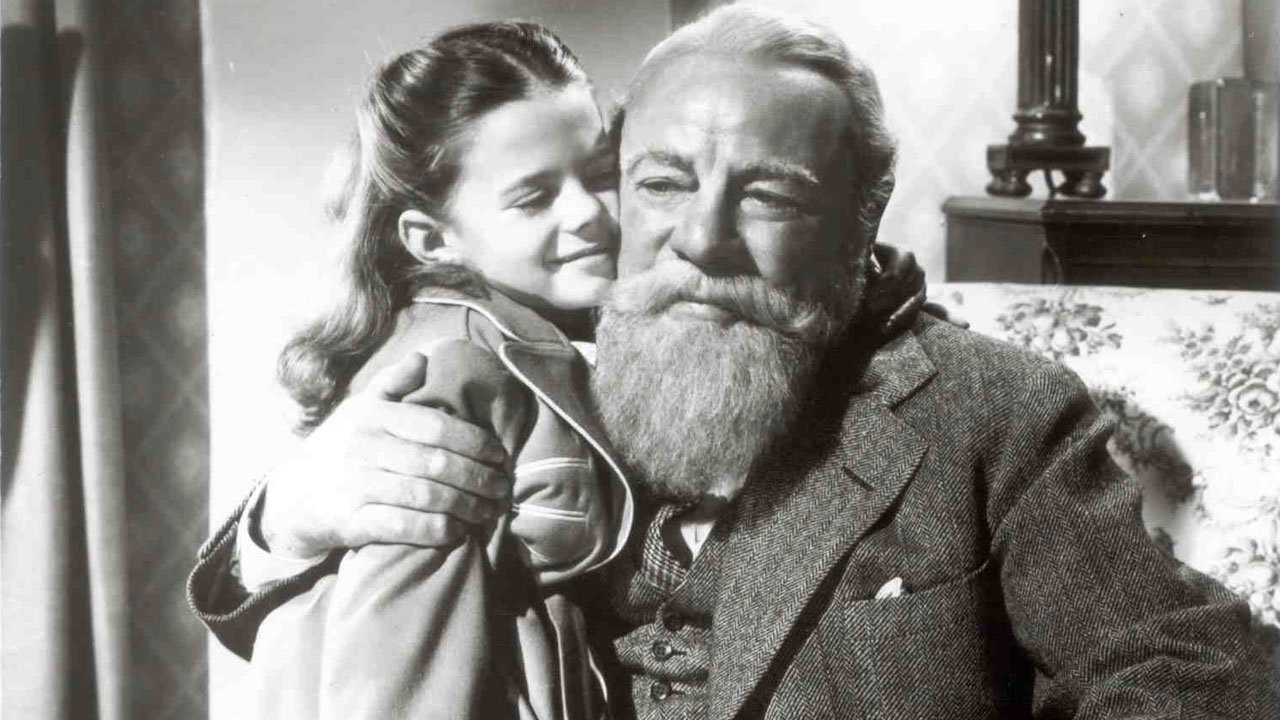
The plot begins simply, with a man playing Santa falling down drunk before the Thanksgiving parade, leading Macy’s employee Doris Walker (Maureen O’Hara) to look for a fill-in. Her daughter (Natalie Wood), watching from a loft apartment in Manhattan comments that the replacement looks so much better than last year’s Santa. The rub is that this one (played by Edmund Gwynn), says his name is Kris Kringle and that he’s the real Santa. That no one believes him is beside the point; he is hired by Macy’s under the hopes of bringing in more business and upselling some of their undersold toys. “Gee, that’s an elegant suit,” a janitor tells him in the dressing room. “Sure makes a bum out of the one they gave you.” It’s in this way that “Miracle on 34th Street” tries to warm its way into your heart.
The setting and set pieces in the film are iconic and convincing. Its opening parade will strike a chord with lovers of the Holiday season, as its popularity hasn’t really dissipated in the 67 years since the film’s release. But it’s the highlighted way of life of times past that the film really excels at. Macy’s has cemented itself as a major store spanning America, but here we see a department store when that really meant something. Online shopping and a franchise that spans 45 states wouldn’t make sense to the characters in this film who couldn’t even grasp the idea of a mobile phone. Gimbels, the other great department store in this film, went out of business in 1987. The film brings these stores to life in their heyday, showing the diversity of employees and walks of life. It’s hard to imagine the title of ‘Head of the Toy Department’ carrying such heft in today’s consumer culture, nor of a need for a psychologist for a department store.
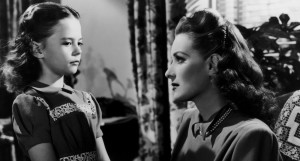
“Miracle on 34th Street” is also filled with interesting characters and good performances. As Doris’ daughter Susan, Natalie Wood plays a disbelieving young girl who really wants to believe, despite her mother’s insistence in looking at the world ‘realistically.’ The two play off of each other well. However, it is with the film’s lawyer, Fred Gailey (John Payne) and Kris Kringle that young Natalie plays off of the most; it’s no surprise that Wood would go on to star in other films, most notable James Dean’s “Rebel Without a Cause.” As Gailey, Payne is one of the film’s best actors, becoming Kringle’s advocate in every way as he fights to prove to the world that Santa Claus does exist. One scene between him and Doris shows the push and pull of logic vs. faith. And in a fit of irony, it’s the lawyer who advocates belief in miracles, and a store manager who looks at the world with fixed realism.
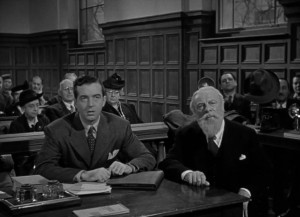 Amidst these, Gwynn ads an element of the unknown in his insistence of being Santa Claus with funny and clever dialogue throughout. “Do you enjoy impersonating me?” He asks one employee, and tells a disbelieving mother “I keep track of the toy market pretty closely.” Gwynn also ties many of the characters together, specifically Doris and her mother, and even Gailey. And as a climactic trial ensues with the State of NY attempting to prove he is not Santa Claus, challenges to the age-old myth are highlighted. It’s also in the courtroom scenes that we see some of the film’s most unsung acting. One scene between Charlie Halloran and Gene Lockhart, who plays Judge Harper, is wonderfully acted, dynamic, and utterly hysterical.
“A Miracle on 34th Street” has become a holiday classic, even so far as to be remade in 1994 with the venerable Richard Attenbourough as Kris Kringle. It’s a warm film featuring good performances throughout, and an ending that serves to break up its overly serious courtroom drama. It is oddly devoid of the usual hallmarks of Christmas, such as snow-covered streets, decorations, or carolers, but makes its point despite these. The film doesn’t carry the emotional impact of “It’s a Wonderful Life” or even “Elf;” but that’s okay. Its approach is interesting and unique and you’ll have a good time watching it. And maybe that’s enough.
– by Mark Ziobro