


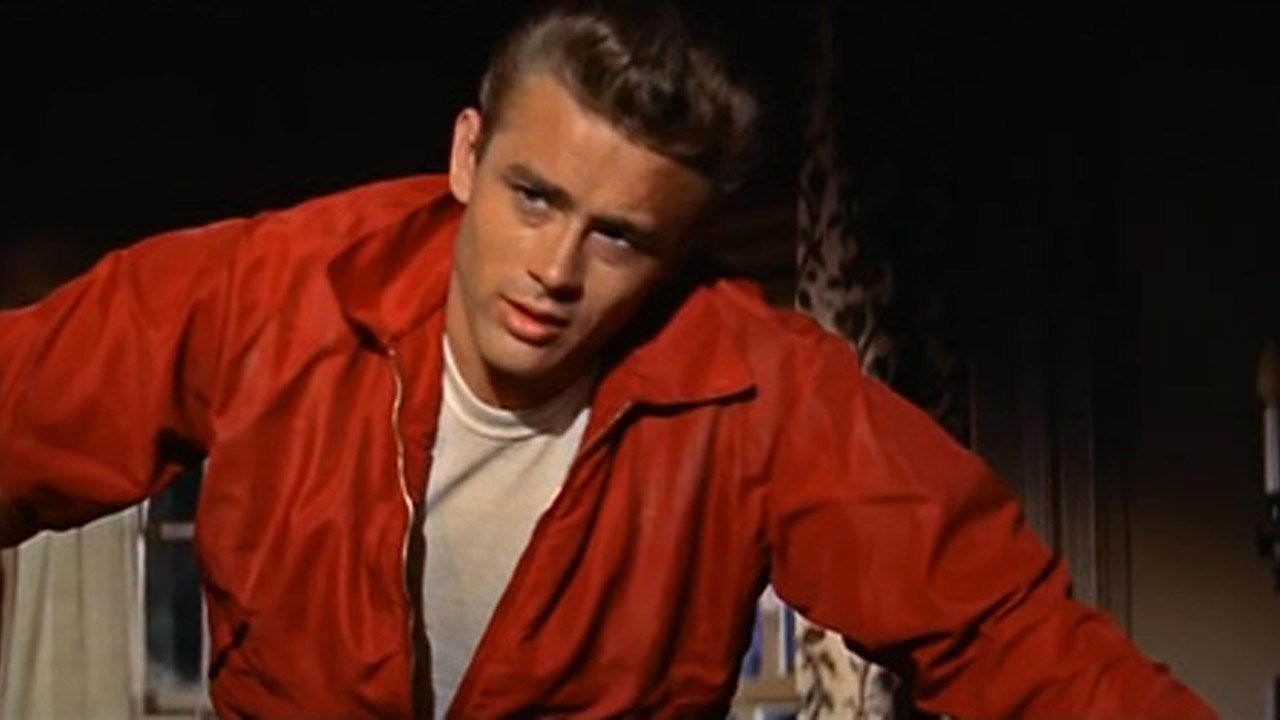
James Dean’s untimely death at 24 years of age – incidentally the same year as his second to last film, the 1955 “Rebel Without a Cause” – would forever catapult the actor into iconic status. As a film lover, I say with regret that I had never seen this movie, nor James Dean before. A dynamic actor, Dean plays the film’s protagonist, Jim Stark, with ease. “Rebel Without a Cause,” the tale of a conflicted teenager running from place to place with little answers raises several questions such as “Why am I here?” and “What does it all mean?” probably more advanced than 1950’s filmmakers were used to telling. The result is a movie that leaves a mark when it’s finished, using an actor-centered filming style and superb acting to tell its story.
“Rebel Without a Cause,” lays the groundwork for its conflict early on, the movie opening in a police station, where a drunken Stark entreats his parents to say what they mean. “You’re tearing me apart!” he entreats. “You say one thing, she says another, and then everybody switches back again!” With little answers forthcoming, Director Nicholas Ray sets the stage for one of the first serious attempts at legitimizing teenage problems. Stark is different from the youths of today’s movies. He doesn’t want the world, just answers and to perhaps feel his concerns have weight. It isn’t long before he meets the girl next door, Judy (Natalie Wood), her seemingly macho boyfriend Buzz (Corey Allen), and the misplaced loner Plato (Sal Mineo).
The film features good acting all around, most notably at the hands of Dean, as well as his uninvolved father (Jim Backus, TV’s “Gilligan’s Island”), who unquestioningly goes through a humdrum life that is damaging his son, and possibly himself, in ways he doesn’t even realize. The two best scenes in the film feature Backus and Dean, father and son, in the cold suburban house that serves as the backdrop for their dramatics: one, in Jim’s room as he asks his father advice on how best to handle the dilemma between protecting his honor or doing the right thing; the second, as Jim begs his father to stand up and finally say what it really is that is tearing their family apart. In both instances, all his father can do is shrug his shoulders listlessly. It’s not his answer, but a lack of one, that threatens to drive Jim away.
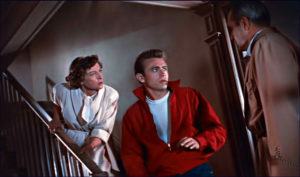
“Rebel Without a Cause” raises some significant questions, most relevant Jim’s rebellion and alignment with unlikely and sometimes unsavory characters. Why does the most significant exchange between Stark and his for all intents and purposes enemy Buzz occur moments before a ‘chickie run’ that will end tragically for one of them? Likewise, why does Jim’s purpose in life come not out of scholastics, love, or machismo, but by providing a friend to the awkward Plato when no one else would? “Rebel” seeks to shine a light on the things that matter – not dramatics, not accomplishment, but acceptance. And it’s in the most unlikely places that “Rebel’s” characters find this elusive concept. It’s in this unlikeliness that the film shines, where a weaker plot mechanism would have been little more than forgettable.
“Rebel Without a Cause” is not without fault, especially during some of its overlong scenes involving a number of thugs chasing key characters, running around town in an amok fashion, or with the anticlimactic re-appearance of a friendly police officer to Jim in the beginning of the film. Additionally, as the film is markedly about Jim, Plato, Judy, and Jim’s father, certain extra characters such as Jim’s mom (Ann Doran) or Judy’s father (William Hopper) are painted incredibly thin; and while adding significant development to the narrative, it would have been nice to see them fleshed out a little more. At 111 minutes the film never drags, and probably wouldn’t have suffered from a few additional scenes throughout.
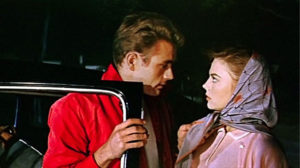 The acting and writing in “Rebel,” which are sufficiently engaging, are helped greatly by the cinematography of Ernest Haller, who shoots the film in an interesting and engaging way markedly dissimilar from films of today. While the film’s colorization at times appears unrealistic with bright reds and forest greens, the focus on key characters throughout begs our attention in unique ways. For instance, a camera lingers on Dean’s face during certain scenes; not to mention the fantastic upside-down shot as Jim lays on a couch while his mother runs downstairs to greet him, which is one of the most interesting shots I’ve seen in a film in some time. Haller’s willingness to linger, almost uncomfortably, rather than cutting away, makes the film nothing if not memorable.
There are several reasons to watch “Rebel Without a Cause,” and whether you’re a self-proclaimed film buff, a fan of James Dean, or someone who had finally wanted to see what the hype was about, the film presents an engaging story, while at the same time offering a touching and sweet portrayal of people trying to find their way in life. While Dean’s career would come to a halt, placing him in a long line of promising actors who died much too young, the lessons contained within its runtime are transcendent, and as important today as they were in 1955. Filmmakers such as John Hughes, and even TV’s Josh Schwartz would doubtless pull from its impact with films such as “Pretty in Pink,” “Sixteen Candles,” or the short-lived drama “The O.C.” For its iconic significance, acting, and lasting impact, “Rebel Without a Cause” is not likely to disappoint.

3 Comments
a excellent review with nice film touches.
Pingback: » The Blob (NR)
Pingback: 18 Movies Everyone Claims To Have Seen But Probably Never Did - On Your Journey