


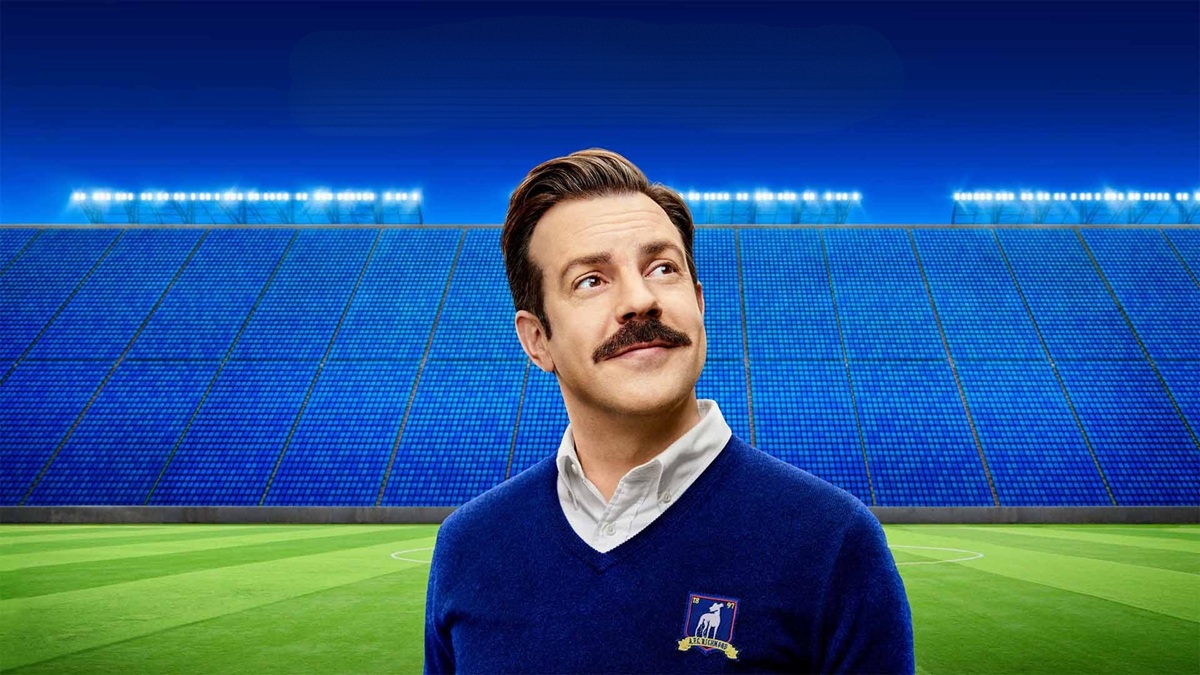
I don’t usually have a lot of patience for television. That’s not a badge of honor, nor some curmudgeonly critic stance I’ve chosen to preserve for dramatic effect. It’s mostly a pacing problem. So many shows begin with a strong idea, find an audience, then move like someone afraid the party will end if they stop talking. Episodes stretch. Seasons multiply. Characters repeat the same emotional beats with slightly different lighting. After a while, the whole thing starts to feel less like storytelling and more like maintenance.
Or, to put it less politely: they’re dragging it out.
“Ted Lasso” should annoy me more than it does. And in some ways, it does. Its third season, especially, has the looseness of a show given too much room and not enough discipline. Episodes run long. Subplots wander off and return with souvenirs. The character arc of a new member of the team is funny until it isn’t. A PR firm storyline sometimes feels like it belongs to a spin-off the show forgot to announce. By then,”Ted Lasso” had turned into a cultural comfort object, the sort people wanted to hug, quote, defend, and occasionally overpraise. Dangerous territory. Nothing kills a comedy faster than being told it’s important.
And yet here I am, writing about it as Men’s Health Month draws to a close, because few recent shows have made me think as much about men, friendship, shame, silence, and the tiring business of pretending to be fine.
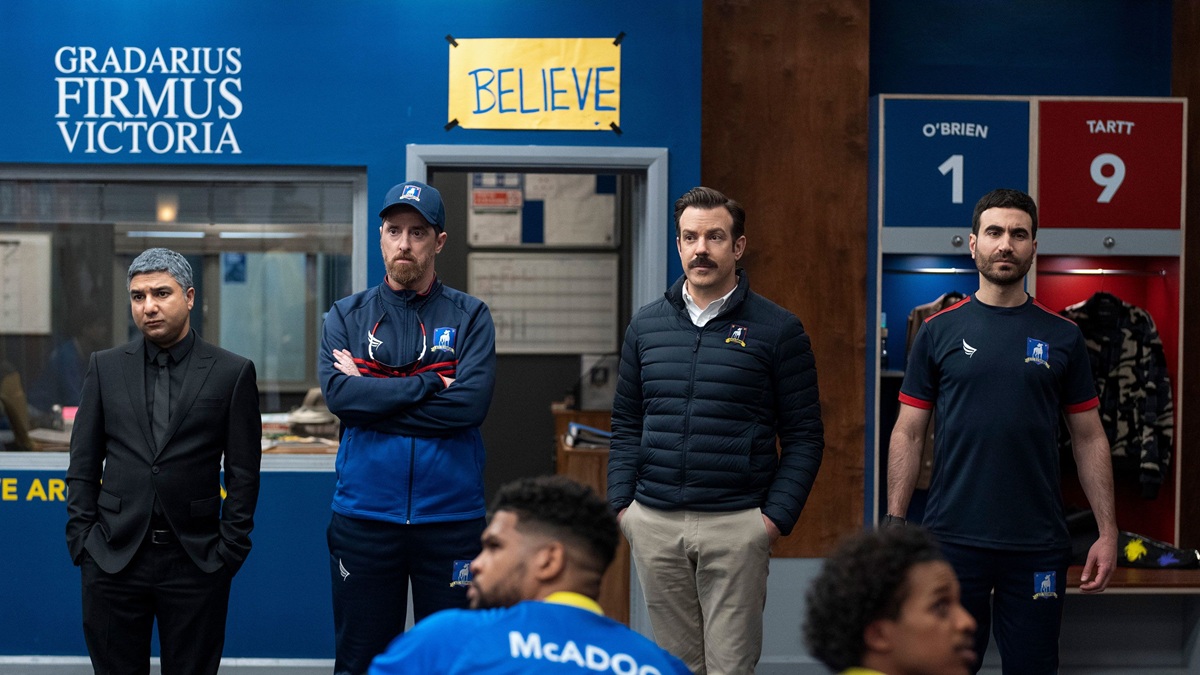
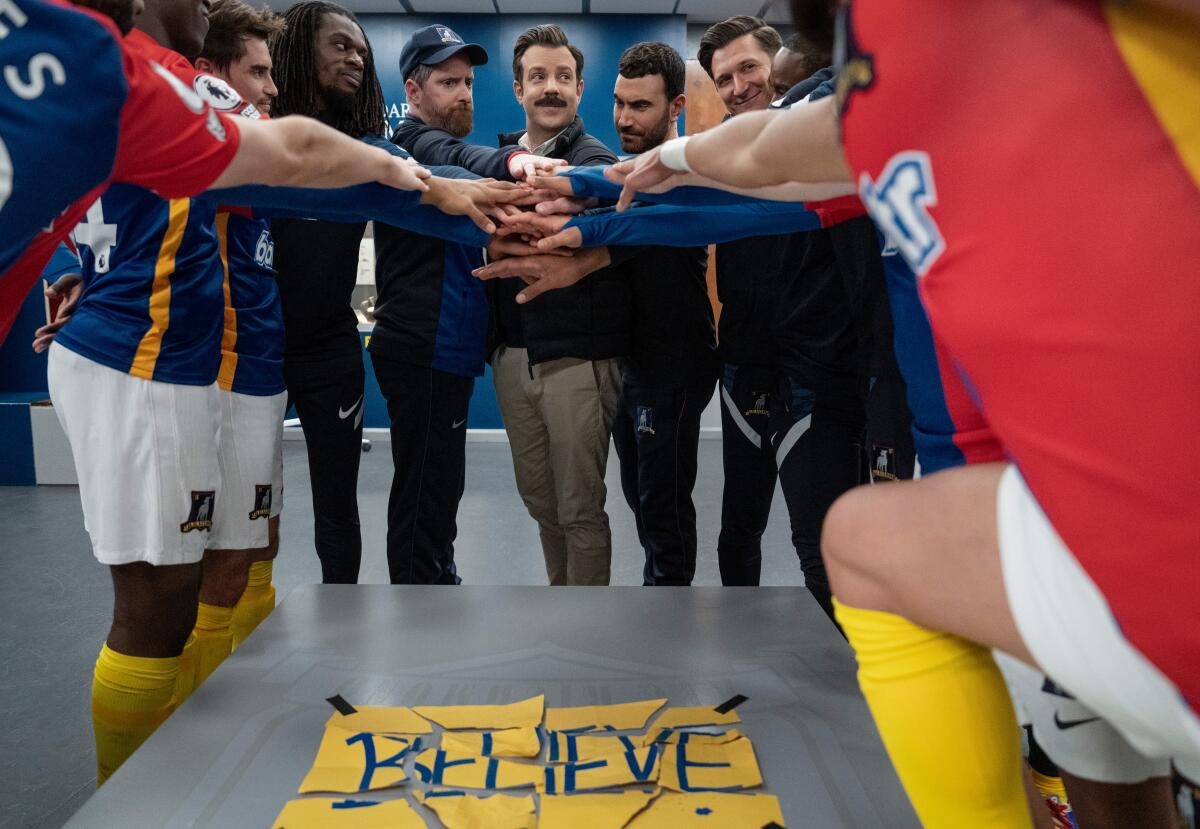
It’s corny, yes. Corny as fuck, at times. The show has a motivational poster where its spine should be, and somehow, against all reasonable odds, the damn thing works. The biscuits are corny. The pep talks are corny. The “BELIEVE” sign is corny in a way that should require a municipal permit. But “Ted Lasso” earns a lot of that corniness because it understands the pain underneath it. Its sincerity isn’t weightless. It belongs to characters who’ve been bruised, rejected, abandoned, humiliated, or taught early that vulnerability is a luxury they can’t afford.
That’s why I’ve never quite bought the criticism that Ted Lasso is simply a savior figure. I understand where the reservation comes from. On paper, the premise practically begs for suspicion: an American football coach lands in England, knows nothing about the sport, and gradually transforms a cynical Premier League club through optimism, homespun wisdom, and baked goods. From a distance, it sounds like a very polite invasion.
But looking at Ted as a savior means stopping at the surface. It mistakes his coping mechanism for his mission.
Ted doesn’t reach Richmond whole. He shows up funny, which isn’t the same thing. He shows up kind, which isn’t the same thing either. His niceness is real, but it’s also practiced. He’s polished it into something useful: a language, a shield, a way to keep rooms warm enough that nobody notices how cold he is inside. He can read pain in other people because he’s full of it. And yet he can make room for everyone’s mess except his own.
A savior doesn’t need saving. Ted very clearly does.
The Savior Who Needed Saving
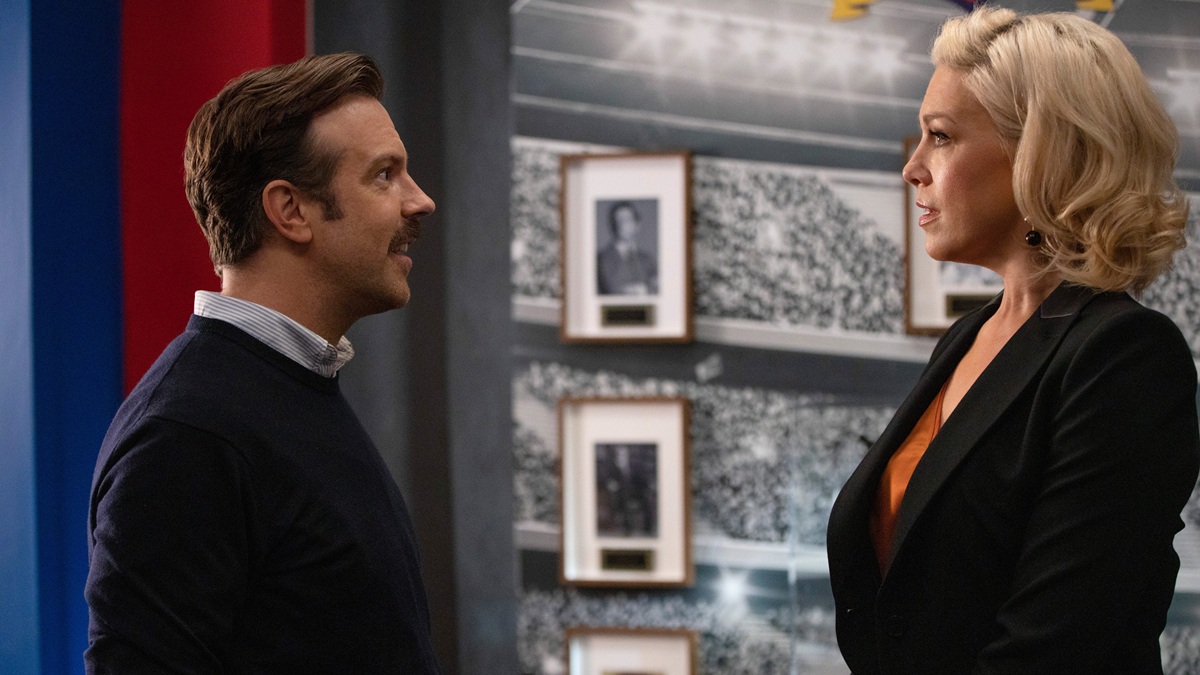
The first season of “Ted Lasso” uses its fish-out-of-water premise as a Trojan horse. At first, Ted is the joke. Jason Sudeikis plays him with a smile so open it almost feels suspicious, the relentless cheer of a man who might meet bad news and compliment its shoes. He’s hired by Rebecca Welton (Hannah Waddingham) to fail, a human sabotage plan in khakis. He knows nothing about English football. He calls the pitch a field. He seems to have wandered into the wrong country, wrong sport, and wrong divorce.
But the show’s trick is that Ted is never stupid. He’s disarming. There’s a difference. His cheerfulness may look naive, but it’s also a choice, sometimes noble and sometimes desperate. He understands people faster than they understand him. He sees through Rebecca’s frost. He notices Nate before the club does. He refuses to treat Jamie Tartt as merely a narcissistic show pony, though Jamie spends much of the early stretch making a convincing case for the prosecution. Ted’s gift is attention, and he pays it freely. For men raised to think affection must be earned through performance, usefulness, toughness, or success, Ted’s attention can feel almost indecent. He gives it without demanding that people first become impressive.
That is what makes him effective as a coach. Not tactics (I mean, certainly not tactics). The man’s football knowledge, especially in the early episodes, has the structural integrity of wet tissue. His real work instead is emotional: he creates a room where people slowly become less afraid of being seen.

Still, the show is too smart, at least in its best stretches, to make Ted’s kindness a cure-all. His panic attacks crack the mask. His marriage is ending, while his distance from his son gnaws at him. And even then, his father’s death sits somewhere deep in him, unprocessed and radioactive. The smile stays, but the show starts asking us to look at its edges. From there, “Ted Lasso” grows past its pleasant comedy-about-optimism shell. It studies the masks that men learn to wear.
Ted performs okay-ness. Roy Kent performs anger. Jamie performs arrogance. Nate performs invisibility, then resentment. Beard (Brendan Hunt) performs eccentric mystery, which is less a coping mechanism than a whole unfinished novel with legs. Each man has found a way to survive what he can’t quite say aloud. For what it’s worth, Ted’s mask just happens to be the most socially acceptable one.
Charm, Anger, Arrogance, Silence
The show’s portrait of masculinity works because it doesn’t treat men as a single emotional species. It gives them different evasions.
Jamie Tartt (Phil Dunster) begins as vanity with cheekbones. He’s selfish, gifted, cruel when cornered, and so pleased with himself that the air around him probably needs a leave of absence. But Jamie’s arrogance isn’t empty. It has a history. His father has taught him that love is conditional, humiliation is motivational, and softness is a liability. So Jamie fashions himself into a man who can’t be hurt because he’s already turned himself into spectacle. Desire him, envy him, boo him, chant his name. Anything is better than feeling small.
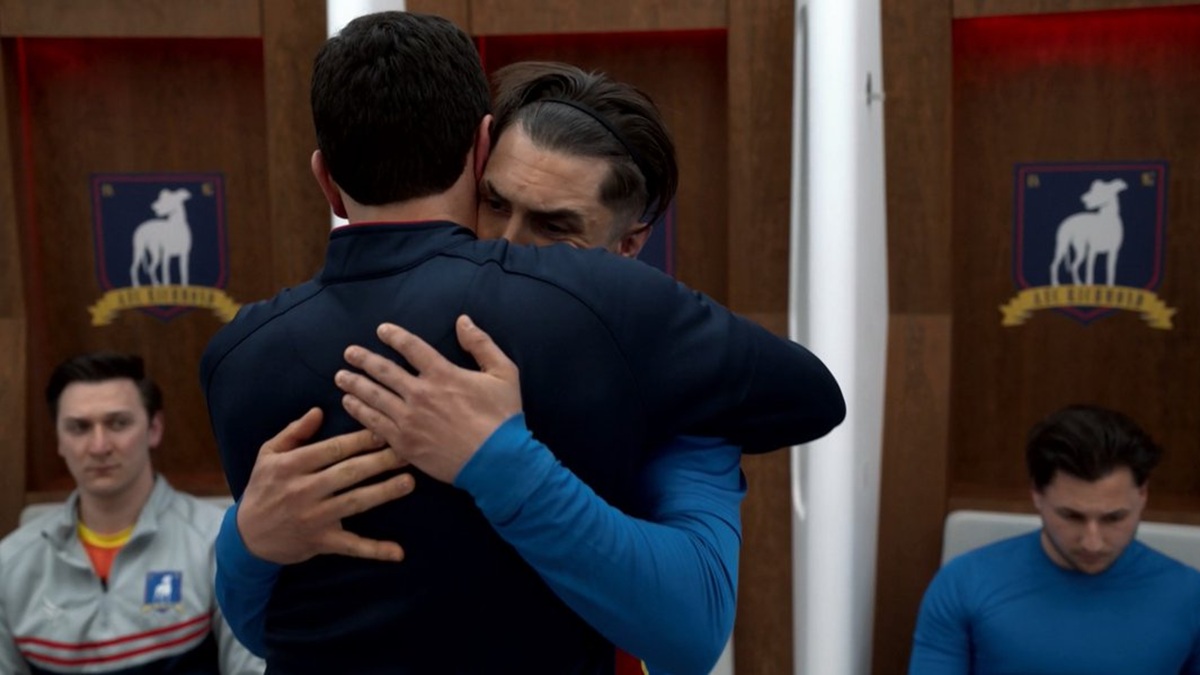
Roy Kent is built from a different masculine vocabulary: rage, bluntness, discipline, and enough profanity to qualify as renewable energy. Brett Goldstein plays him as a man who’s made anger so central to his identity that tenderness feels like an administrative error. But Roy is never just a grump. His anger is grief in work boots. He’s aging out of the only world that has known how to value him. Football gave him purpose, status, and structure. Without it, he has to figure out who he is when he’s no longer useful in the old way.
Then there’s the aforementioned Nate Shelley (Nick Mohammed), whose arc remains the show’s most uncomfortable study of male insecurity. Nate’s pain doesn’t turn into charm or swagger. It curdles. He’s spent so long being overlooked that attention intoxicates him, then poisons him. The moment he receives power, he mistakes fear for respect. His cruelty isn’t incidental; it’s the language of a man who has no idea what dignity feels like unless someone else is beneath him.
Nate is hard to watch because he exposes the ugly side of wounded masculinity. Not every hurt man softens into someone lovable. Some grow mean, while some punish the room for failing to heal them. Some even turn their shame into hierarchy, then call it confidence.
That’s one reason the show’s generosity can move and frustrate in the same breath. “Ted Lasso” wants to believe people can come back from their worst selves. Admirable, yes. Yet frankly, it’s also dramatically risky. Nate’s redemption in Season 3 has moments of grace, but the season rushes portions of it, as if the show is so eager to forgive him that it occasionally forgets forgiveness has weight. Still, the instinct behind the arc matters. Nate’s betrayal can’t simply be erased. Shame, left untreated, will keep searching for someone to wound.

When Therapy Interrupts the Bit
Season 2 is where “Ted Lasso” stops merely hinting at its interest in mental health and brings it into the room through Dr. Sharon Fieldstone (Sarah Niles). Her arrival is one of the smartest choices the show makes because she doesn’t fall for Ted’s routine. She isn’t dazzled by the jokes, nor does she treat his warmth as proof of wellness. Instead, she listens, waits, and lets the silence do what Ted’s humor keeps trying to prevent.
Ted can talk to anyone. He has that gift. He can fill a room with stories, references, apologies, and jokes that wear little hats. But being able to talk isn’t the same as being able to tell the truth. Dr. Sharon sees that. She forces the show to distinguish between emotional fluency and emotional honesty.
That distinction matters, especially when thinking about men’s mental health. A lot of men aren’t silent in the literal sense. They banter, joke, and advise. They perform competence. And they make themselves dependable, entertaining, useful, or tough. But try asking them where the hurt lives, and suddenly the whole system crashes. Ted’s panic attacks are frightening because they break through a personality built on reassurance. The man who comforts everyone else can’t talk his own body out of terror. His body knows what his mouth keeps dodging.
This is also where the timing of “Ted Lasso” begins to matter beyond release-date trivia. The show premiered in August 2020, when much of the world was still living through the early terror and isolation of the pandemic. A series this open-hearted might have played differently in another moment; during lockdown, its kindness felt less like a gimmick than a minor form of relief. For many viewers, myself included, those years sharpened anxieties that didn’t simply vanish when restrictions eased. I don’t want to overstate the healing powers of a half-hour comedy about football, but I also don’t want to undersell what it meant to me to discover a show willing to be gentle when gentleness felt in short supply.
For many men, that split may be the most recognizable part of the show. Not the football, not the workplace comedy, and definitely not the biscuits. It’s the distance between what you can provide for others and what you can admit to yourself. You can be kind and still be unwell. You can be loved and still be lonely. And you can be the person everyone leans on and still have no idea where to put your own weight.
I grew up in a time, not very long ago, when men speaking openly about hurt were still too easily treated as weak, dramatic, or embarrassing. Many of us inherited some version of that instruction. Don’t cry. Don’t complain. Don’t make it heavy. Don’t be a burden. If you must feel something, convert it quickly into anger, work, sex, humor, drinking, silence, or a joke clean enough for public use.
“Ted Lasso” keeps poking at that inheritance. Sometimes gently. Sometimes with all the subtlety of a locker-room speech written by a golden retriever with abandonment issues. But the point lands. The show asks what men might become if they stopped treating emotional honesty as a minor public scandal.
The Men of Richmond
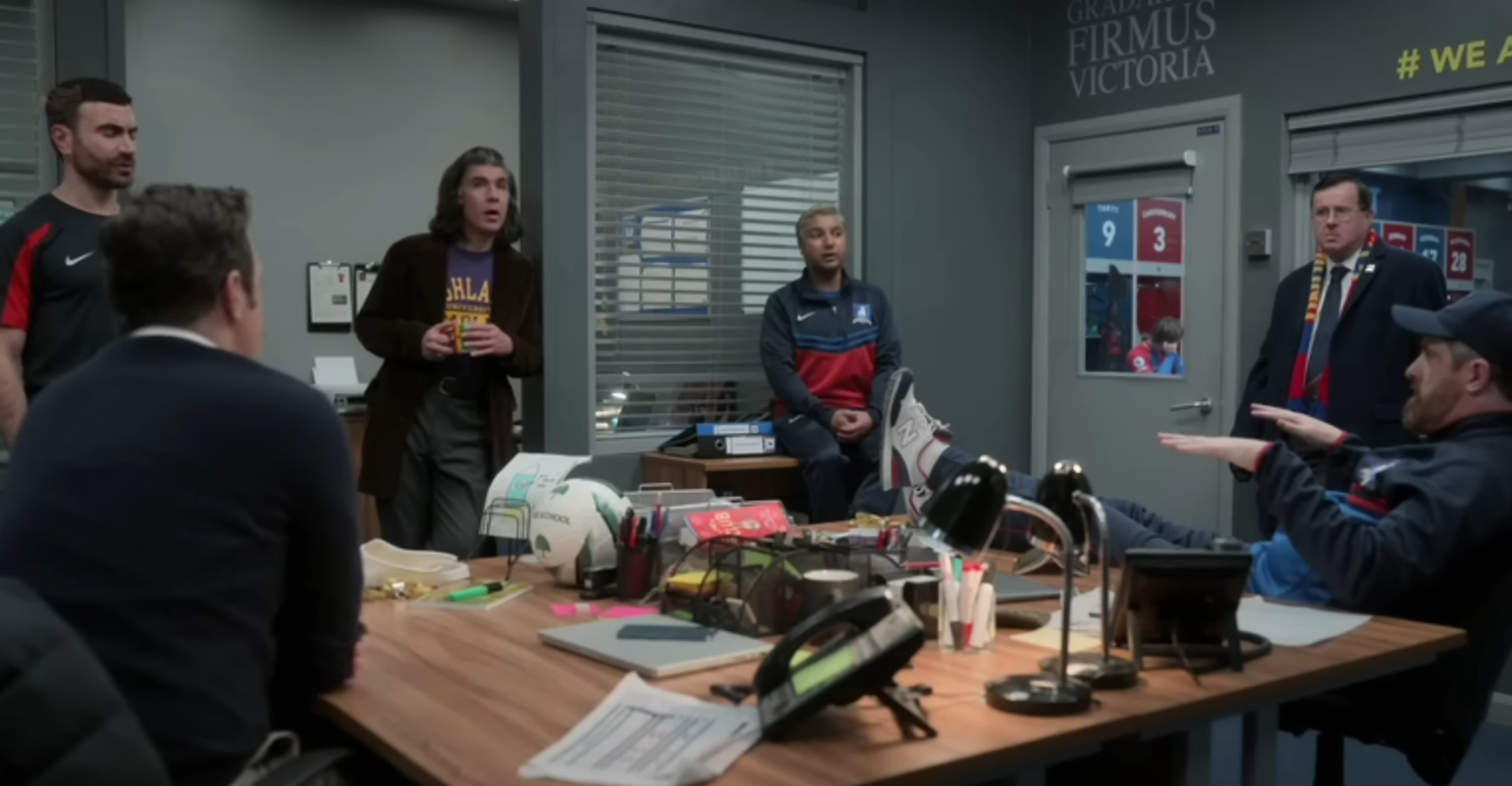
Some of the show’s best writing watches men care for each other badly before they learn how to do it better.
Roy and Jamie give us the clearest example. Their relationship starts in hostility, with Roy seeing Jamie as everything he hates: young, flashy, vain, undisciplined, adored. On the other hand, Jamie sees Roy as a fossil with a beard. The show could’ve kept them there, trading insults until the jokes ran dry. Instead, it turns their antagonism into one of the series’ most rewarding friendships.
What makes it work is that neither man gets sanitized. Jamie doesn’t lose his vanity; he simply learns not to make cruelty the price of his confidence. Roy doesn’t stop being Roy; he instead learns that emotional constipation isn’t a moral principle. Their training sequences, arguments, and grudging affection give the show a male friendship that feels funny because it’s still awkward. These aren’t men suddenly fluent in therapy language. They’re men trying, often through grunts, insults, and poorly timed advice, to become less hopeless with each other.
There’s something moving about that, and not because the show turns them into enlightened models of modern masculinity. Nobody needs Roy Kent hosting a wellness podcast (though that’d be a hoot). The pleasure comes from watching them expand without being replaced. Jamie remains ridiculous. Roy remains terrifying to children, adults, and possibly some household appliances. But they make space for tenderness, and the show lets that count as growth.

Colin Hughes (Billy Harris) deserves a place in this section, too, because his coming-out story isn’t staged as a grand confession waiting for applause. He isn’t asking to be applauded for bravery. He just wants to stop living two separate lives. That’s what gives the arc its own pain: the small, exhausting calculations of being himself in private, then editing himself in the locker room before anyone notices too much. Richmond has become a space where men slowly figure out how to say the hard thing, but Colin’s silence carries a different charge. His fear isn’t only rejection. It’s losing the ease of being one of the lads.
When his best friend on the team, Isaac McAdoo (Kola Bokinni), finds out, the series lets the reaction turn uncomfortable without making Colin pay for someone else’s confusion. It’s not perfect, but it feels honest enough: friendship can be real and still need a minute to catch up.
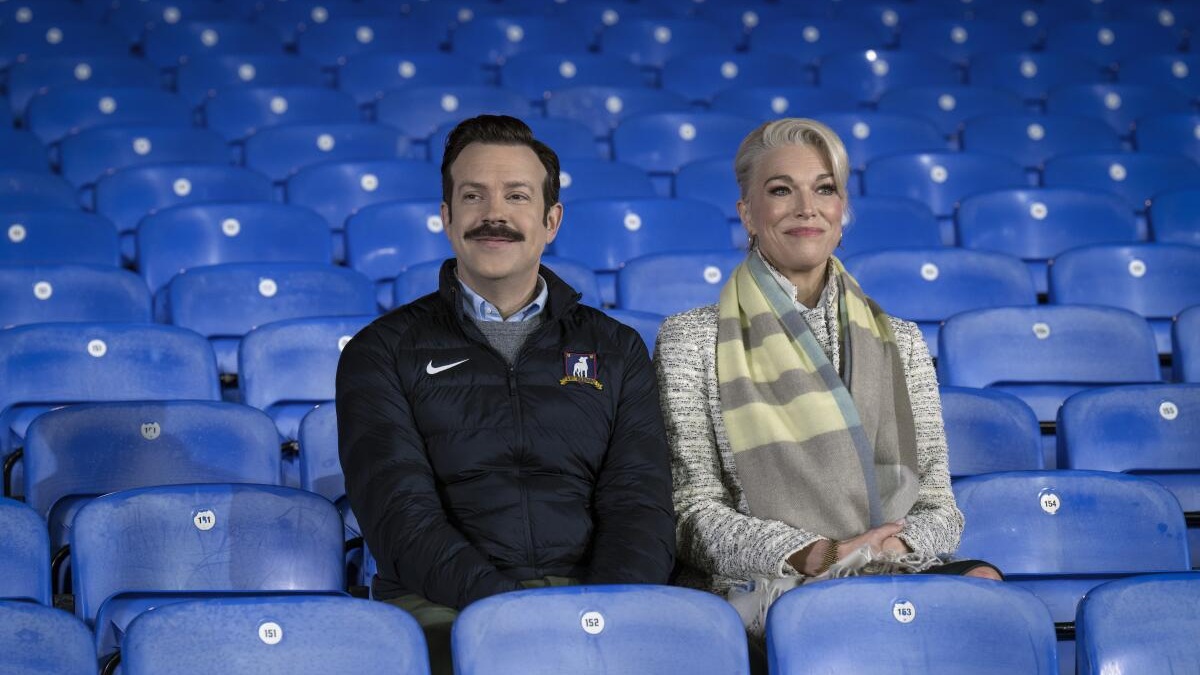
Even Ted’s relationship with Rebecca complicates the savior reading. He doesn’t rescue her. If anything, they rescue each other in uneven, unfinished ways. Rebecca begins by trying to use him as a weapon against her ex-husband. Ted, being Ted, answers with decency so persistent that it becomes difficult for her to keep hating him as an idea. Their friendship matters because she’s one of the first people at Richmond to see him as more than a cheerful mascot. She sees the cracks. And she realizes early on that the smile isn’t the whole man.
Across three seasons, Apple TV’s football comedy used kindness, anger, vanity, and one aggressively corny sign to ask what happens when men finally stop mistaking silence for strength.
That is one of the show’s better instincts: healing is not handed down by a single noble figure. It moves sideways—through teams, friendships, apologies, and rooms where people are allowed to fail without being immediately thrown away.
A Wobbly Final Season With a Beating Heart
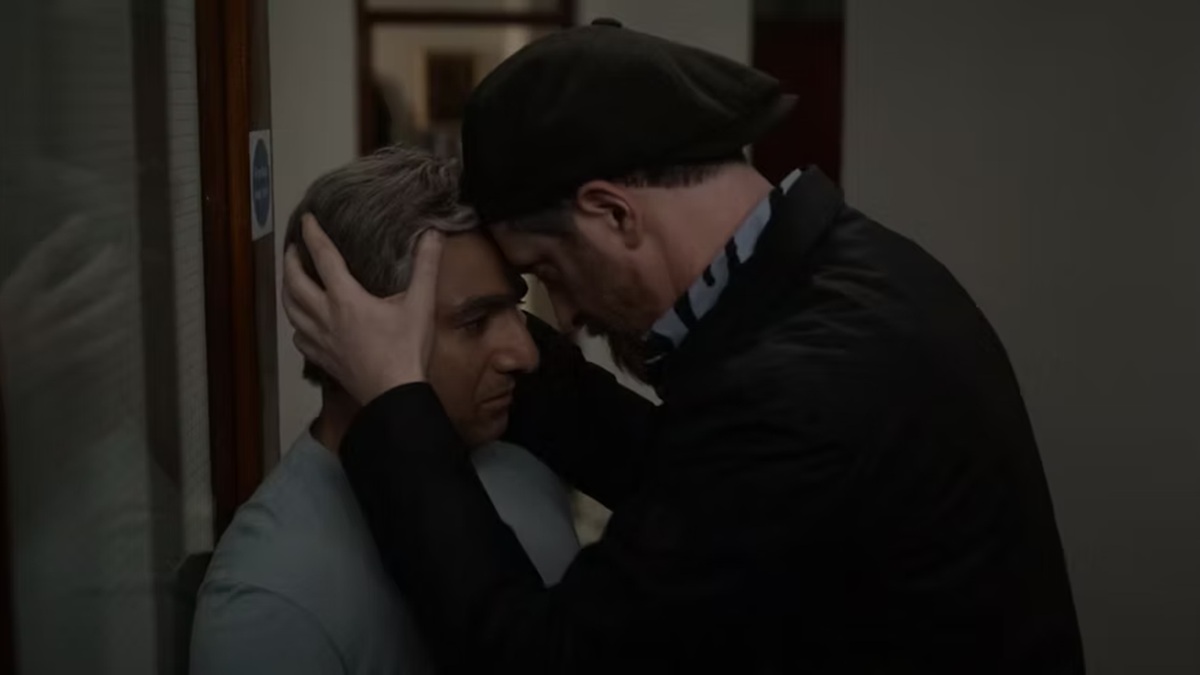
Season 3 is where my affection for “Ted Lasso” gets tested the most.
As television, it’s the show at its baggiest. The episodes often feel overfed. The plotting loosens. Characters drift into arcs that don’t always carry enough weight. Keeley’s (Juno Temple) independent storyline has worthwhile ideas about ambition, branding, and female friendship, but too often it feels sealed off from the main emotional bloodstream. Zava is amusing, and Maximilian Osinski plays him with the right amount of spiritual nonsense, but the joke stretches past its natural expiration date. Even the season’s redemptive impulses can feel too tidy, as though the writers are trying to tuck everyone in before saying goodnight.
I don’t want to overdefend that. The criticisms are valid. A show can be warm and still need an editor. Maybe especially then.
Nevertheless, Season 3 pays off the series’ emotional argument. Its messiness doesn’t excuse every weakness, but it does suit, in part, a show about people who don’t heal in clean lines. They repeat themselves. They avoid the obvious conversation. They make the same mistake with a nicer haircut. Progress enters, leaves, then returns looking embarrassed.
Ted’s final choice to go home to his son Henry works because the series understands that Richmond can’t turn into another hiding place. He’s helped build something beautiful there. He’s made people better, or at least braver. The club loves him. We love him. That’s precisely why leaving matters. If Ted stayed simply because Richmond needs him, the show would turn his goodness into another trap. He’d remain the man who can show up for everyone except his own child. Going home isn’t defeat. It isn’t even a rejection of Richmond. It’s Ted finally admitting that being needed and being well aren’t the same thing.
That’s a very adult ending for a show so often dismissed as feel-good. It lets sadness sit beside gratitude. It understands that love sometimes means leaving the room before the room starts calling your absence selfish.
The finale doesn’t land every beat. The fake-out structure, the sentimental flourishes, the little bows tied around certain characters—all of it can feel a touch too careful. But Ted’s departure works because it’s emotionally correct. Richmond helped save him from himself, but it couldn’t become the place where he avoided the rest of his life.
Corny as Fuck, and Thank God Because It Is
Part of me remains suspicious of how easily “Ted Lasso” can move people. I know that sounds ungenerous, but sentimentality has a way of sneaking past our defenses while pretending it was invited. The show can be too pleased with its own sweetness. It can over-explain, over-hug, over-believe. It occasionally sounds like a self-help book just learned how to juggle.
Still, there’s a discipline in choosing sincerity when the easier move is to smirk at it from a safe distance. “Ted Lasso” doesn’t always control its earnestness, but it keeps risking embarrassment in order to say things many people—men especially—still struggle to say without apology. In a culture where irony remains the safer public language, the show’s uncoolness starts to look less like a flaw than a dare.
Its corniness soothes because it isn’t only decorative. It’s an offer. Not a cure. Not a grand thesis. Just an offer: Maybe you can say the thing. Maybe you can apologize. Maybe you can ask for help before your body asks on your behalf. And maybe friendship doesn’t have to be built entirely out of insults and emergency emotional support disguised as sports analysis.
For men raised to keep things moving, that offer can feel almost radical, not because “Ted Lasso” says anything new about mental health in a clinical sense. It doesn’t. The show’s psychology is sometimes broad, sometimes neat, sometimes wrapped in dialogue that carries its own tissue box. However, it keeps saying the necessary thing out loud: strength without honesty is just another costume. Ted’s great lesson isn’t kindness. Kindness is only the visible part. The deeper lesson is that even kindness can turn into a way to disappear if you never let anyone see the wound it came from.
That’s why the savior reading falls short. Ted doesn’t descend upon Richmond as a healed man dispensing wisdom. He enters as a man running from grief, divorce, fatherhood, panic, and the memory of a father he couldn’t save. His miracle, if we want to use a word that large, isn’t that he fixes everyone. It’s that he helps create a place where people begin telling the truth, and then, slowly, painfully, he becomes one of them.
Before Richmond Returns
Now that “Ted Lasso” is returning for a fourth season, with Ted back in Richmond to coach a women’s football team, the show faces a strange challenge. Season 3 ended with the emotional finality of a goodbye. Bringing Ted back risks turning the series into exactly the television that tests my patience: the story that ended, then looked at the numbers and decided it had more to say.
And who knows? Maybe it does. The women’s team idea was floated near the end of Season 3, and there’s potential in watching a show so invested in masculinity move into a new sporting space with different pressures, assumptions, and histories. It could deepen the series. It could also expose its habits. Warmth alone won’t be enough this time. Neither will nostalgia, though I’m sure the show will bring biscuits just in case.

For now, the first three seasons remain a complete enough argument. Not perfect. Not disciplined all the way through. Often corny, sometimes wobbly, occasionally too generous for its own dramatic good. But also funny, humane, and more emotionally perceptive than its reputation for niceness might suggest.
“Ted Lasso” isn’t about a good man saving broken men. It’s about broken men learning that being funny, useful, angry, talented, charming, or kind isn’t the same as being okay. That may sound simple, and maybe it is. But a lot of men spend their lives needing permission to hear simple things.
You can be loved and still need help.
You can be strong and still be scared.
You can make everyone laugh and still be running from the quiet.
You can say you’re fine for years, then one day realize the word has become less an answer than a hiding place.
For a show about football, “Ted Lasso” was never really about winning. It was about what men do after the whistle, when the crowd noise fades and there’s no one left to perform for. Some keep joking. Some keep raging. Some keep preening. Some keep disappearing into the version of themselves everyone else finds easiest to love.
The lucky ones find people who notice. The braver ones let them.
Ted Lasso is available to stream exclusively on Apple TV+.

