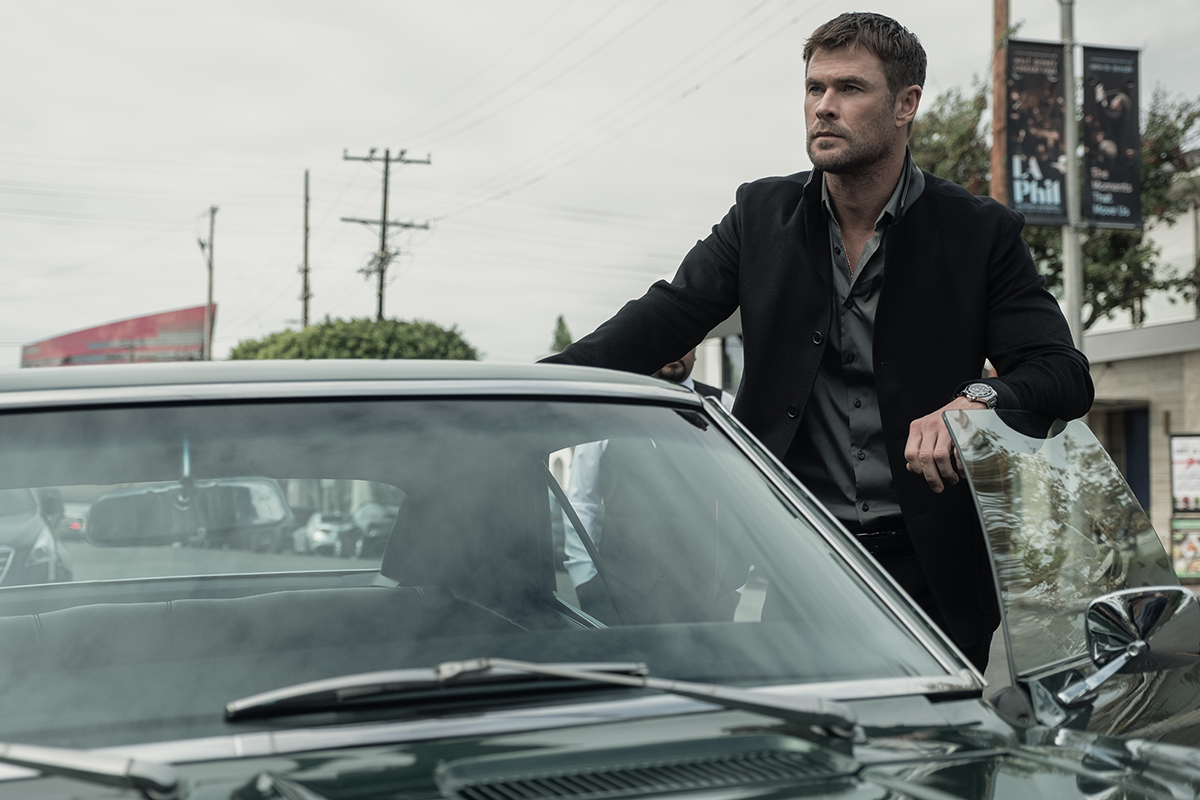
There’s a certain kind of movie that doesn’t really get made anymore—mid-budget, adult, crime-adjacent, full of movie stars who are just happy to hang out in morally gray spaces for two-plus hours. They’re not really trying to win Oscars, but they’re also not just trying to fill out a Redbox wall either. “Crime 101,” directed by Bart Layton and based on a novel by Don Winslow, is very much that kind of movie. And almost immediately, you clock what it’s doing: this is a “Heat” descendant—just another branch on the family tree.
And honestly? That’s fine.
We’ve been living in the shadow of “Heat” for 30 years now. Every few years, another movie steps up to take a swing at that same vibe—cops and robbers as existential mirror images, L.A. as both playground and purgatory, professionals who are maybe a little too invested in their own codes. Sometimes you get something as sweaty as Gudegast’s “Den of Thieves,” sometimes as chaotic as Bay’s “Ambulance,” sometimes as locked-in as Affleck’s “The Town.” “Crime 101” lands somewhere in the middle of all that—recognizably another “Re-Heat,” but with a slightly more introspective hang than most.
Villains Who are Kind of Tired
Because what’s interesting here is that Layton isn’t really chasing the myth of professionalism the way Michael Mann does. This isn’t about guys who live and die by the code. It’s more about people who are… kind of tired. People who maybe thought their lives would go one way and are now stuck recalibrating. There’s a quiet “how did I get here?” energy running through the whole thing. It feels like if Michael Mann’s L.A. crime saga took up therapy and went to yoga.
That extends to Chris Hemsworth, who is clearly trying to sand down the Thor persona—less charm, more weird little behavioral tics, a general refusal to be the coolest guy in the room. He’s like if Steve McQueen played Neil McCauley with a Batman-style moral code. His Davis is knocking guys out instead of killing them. He’s easy to root for, but also way less compelling because of it.
Does it totally work? Not always. But I’ll take this version of Hemsworth—actively trying—over autopilot Hemsworth any day.
And it’s consistent with the choices he’s been making. You look at “Furiosa”—where he’s just absolutely cooking—then back to “In the Heart of the Sea,” the “Extraction” movies, “Rush,” even “Blackhat” (underrated, absolutely rules), and you see a guy who’s way more interested in poking at his own image than protecting it. That counts for something.
A Host of Supporting Players
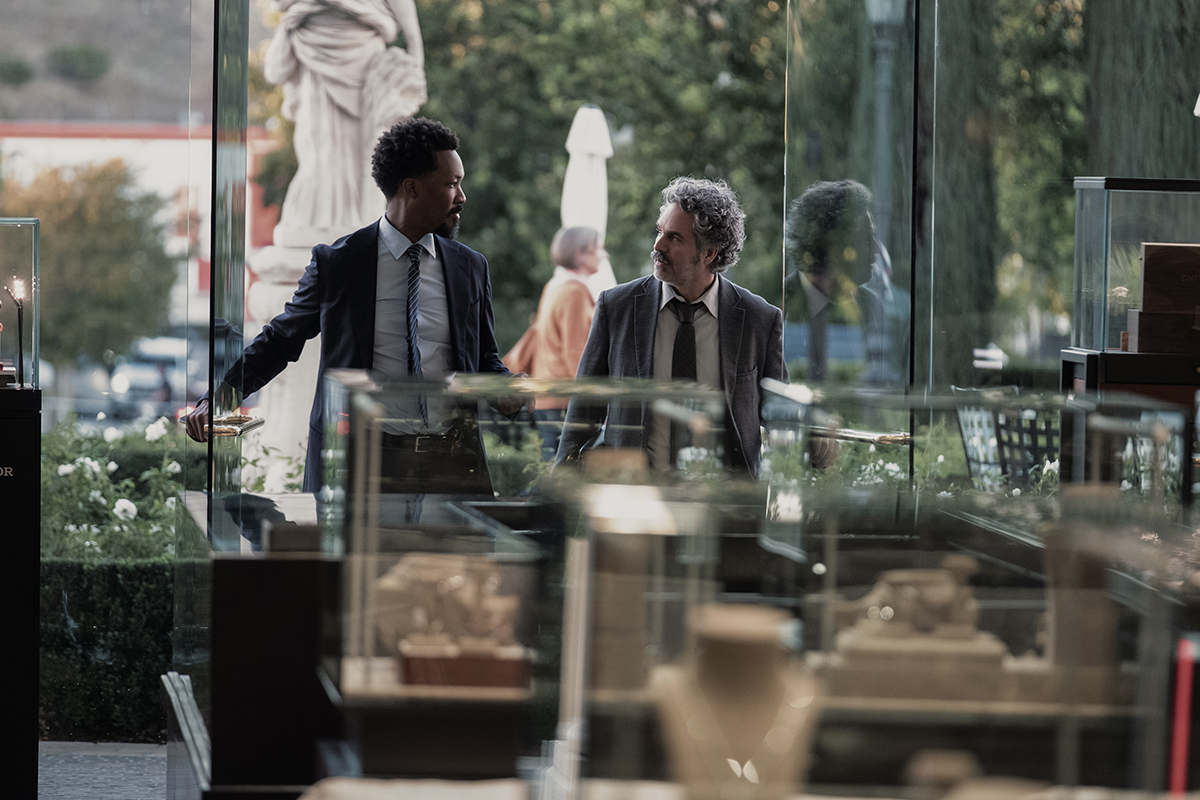
Mark Ruffalo, on the other hand, is in full “I’ve done this before and I know exactly how to do it” mode—and I mean that as a compliment. He slides into the detective role like it’s a favorite jacket. (Also: why hasn’t he starred in a “Columbo” reboot? He’d be perfect.) There’s a great little variation on the diner scene from “Heat” between him and Hemsworth—shot in moving traffic—that’s probably the movie at its best. Just two guys talking, sizing each other up, letting the tension do the work.
Around them, you’ve got a really strong supporting cast doing interesting variations on familiar types. Halle Berry plays an insurance broker who’s hit a ceiling and knows it, which gives her performance a nice undercurrent of frustration. Barry Keoghan shows up as the movie’s chaos agent—basically the Waingro slot—and feels like he wandered in from a Safdie Brothers movie, which is exactly the jolt of energy the film needs every 20 minutes or so.
But the real MVP might be Monica Barbaro, who takes what could’ve been a nothing role and quietly elevates it across the board. There’s a level of engagement there that the script doesn’t always earn, and she just supplies it anyway. It’s the kind of performance that makes you wish the movie had found a little more for her to do.
Stylistically, Layton keeps things grounded. This is a deliberately sprawling, slightly diffuse movie—more interested in the texture of its world than in snapping every plot point into place. There are a few Friedkin-ish car chases that actually understand the geography of L.A., an opening jewel heist that’s satisfyingly specific, and a lot of thoughtful use of the city as a setting. Not just postcard L.A., but class-conscious L.A.—who lives where, who moves through which spaces, who gets stuck on the outside.
A Movie that Barely Gets Made Anymore

And crucially, it all feels like it’s in service of the (very familiar) story. It builds a world and lets these characters exist in it. Which, again, feels weirdly rare right now.
That said… yeah, it’s too long. It’s a little too sincere in places. Sometimes it just says the thing instead of letting it breathe. And the sprawl, while intentional, can drift into “okay, where are we exactly?” territory. But it’s worth it for the eventual convergence of all these characters, spread out like a low-key Robert Altman ensemble.
I kept coming back to the same thought while watching it: this is a movie that knows what it is. It’s a solid, well-acted, thoughtfully made crime drama that wants to hang out with its characters and let them bounce off each other. It’s not chasing a twist, it’s not trying to reinvent the wheel—it’s just trying to execute.
And for the most part, it does.
It could’ve been better. But it’s good. And in a landscape where movies like this barely get made anymore, “good” starts to feel pretty valuable.