


(This is a spoiler-free article about Yorgos Lanthimos’ “Bugonia.” For our review of the movie, click here.)
I must admit, I walked into “Bugonia” ready to brace myself. Not because I dislike Yorgos Lanthimos (I don’t), but because his films tend to arrive with a reputation already attached: While they could be funny, they’re also cold. They’re cruel. And they’re laughing at us. Sometimes all three are true. Sometimes that reputation gets in the way of actually watching what’s on the screen.
This time, I came out unsettled, amused, uneasy—and, yes, ultimately impressed.
On the surface, “Bugonia” presents itself as another deranged setup: Michelle Fuller (Emma Stone), the polished CEO of pharmaceutical giant Auxolith, is abducted by Teddy Gatz (Jesse Plemons), a beekeeper whose life has been overtaken by conspiracy theories. With help from his quieter, more hesitant cousin Don (Aidan Delbis), Teddy becomes convinced Michelle is an Andromedan—an alien infiltrator responsible for environmental decay, corporate numbness, and the collapse of the bee population Teddy tends with near-religious devotion.
That description alone is enough to make the movie sound like a blunt satire with its targets already circled in red: big pharma, girlboss rhetoric, Reddit-brained (or 4chan?) paranoia, “eat the rich” catharsis. I understand why some viewers recoil; the metaphors aren’t exactly hiding behind the furniture.
The Search, Not for Truth, But for Coherence
But here’s where my experience diverged from the harsher reactions. I didn’t read “Bugonia” as a movie sneering at conspiracy theorists or punching down at the disillusioned. What interested me was how carefully it stages the process of belief: how someone like Teddy arrives at his conclusions, and why those conclusions feel sturdier to him than any official explanation ever could.
Teddy isn’t searching for facts. He’s searching for meaning. His comatose mother’s (Alicia Silverstone) medical history, his stalled life, the slow death of the bees—none of these things feel survivable on their own. The conspiracy offers him a narrative big enough to hold all that grief without collapsing. If the world is run by monsters in disguise, then at least there’s a reason it hurts this much.
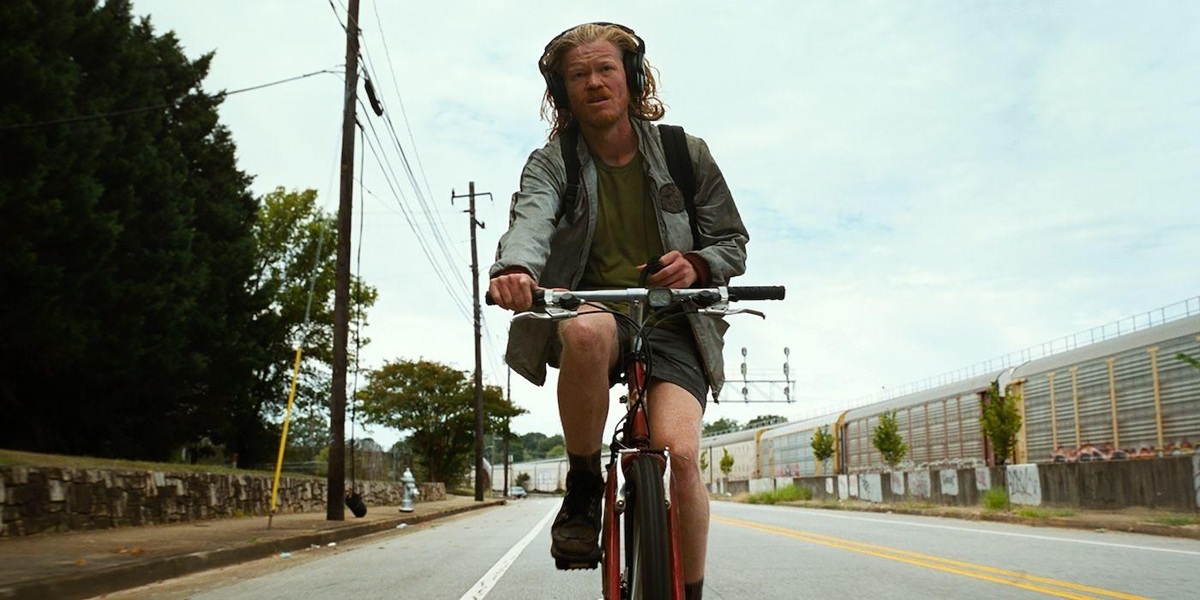
Lanthimos doesn’t spell that out, and he doesn’t need to. It’s embedded in Plemons’ performance, which is one of those slow-burn character studies that gets under your skin because it refuses to simplify itself. Teddy isn’t charismatic, but he isn’t a caricature either. He sweats conviction, and clings to logic the way a drowning man clings to debris. You can sense how badly he wants to be right, not because righteousness matters, but because being wrong would mean staring into a void with no explanation.
Control as Survival
Meanwhile, Stone plays Michelle from the opposite end of that power spectrum. She’s all controlled surfaces: corporate cadence, humane language delivered with deadened eyes, empathy as a professional skill. Early on, there’s a darkly funny scene where she announces a new “culture shift” at her company. Employees are now free to leave at 5:30 pm, provided all their work is done and they feel comfortable doing so. The sentence coils back on itself like a legal disclaimer. You laugh, then you wince, because you’ve heard versions of it before.
The film understands that conspiracies don’t thrive because people are foolish; they thrive because certainty, even a corrosive one, can feel safer than ambiguity.
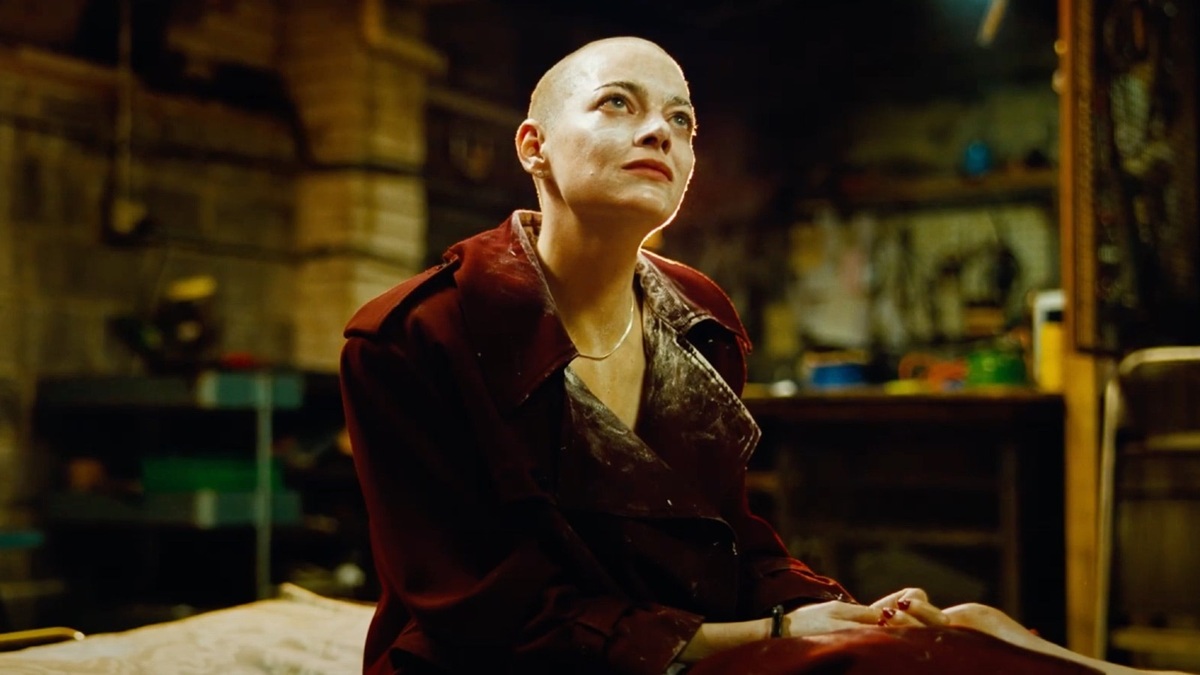
What’s fascinating is how that polish functions once she’s stripped of her status. In the basement, money and optics mean nothing. Apart from a shaved head, all she has left is persuasion, timing, and the ability to read people. Stone calibrates this beautifully. Michelle never pleads. She negotiates. Even when she’s denying the alien accusation, she sounds like someone managing a crisis memo, not defending her soul. The performance keeps you guessing in a way that feels intentional rather than coy.
How Stone portrays Michelle presents a fascinating counterweight to Plemons’ Teddy. Both characters believe in systems. One believes in conspiracies because institutions failed him. The other believes in institutions because they’ve always protected her.
Living in a World Where Conspiracies Feel Plausible
What makes “Bugonia” feel so pointed right now isn’t that it traffics in conspiracies; it’s that it understands why those conspiracies no longer sound absurd to the people who believe them. For much of the film, the question of whether Michelle is actually what Teddy claims she is becomes strangely beside the point. What matters more is the machinery of belief Teddy has built around her, and how little that machinery depends on verification.
Today, we live in a moment where trust has thinned out almost everywhere it once lived. Governments issue statements that read like disclaimers. Corporations wrap harm in the language of wellness. Even expertise now arrives filtered through suspicion. Against that backdrop, the leap from “something is wrong” to “someone is lying to us” doesn’t require madness—it requires fatigue. “Bugonia” taps into that exhaustion without sanctifying it.
And that’s why Teddy’s theories don’t play as simple farce. They’re extreme, yes, but they’re assembled from familiar parts: a sense of abandonment, a suspicion that systems only work for those already insulated, and a craving for explanations that feel proportionate to the damage done. Whether Michelle confirms or denies his suspicions barely registers in the long run; every response is absorbed, reinterpreted, and folded back into the narrative he needs to survive. The belief system doesn’t collapse under scrutiny. It simply adapts.
Lanthimos doesn’t frame this as enlightenment, and he doesn’t excuse the violence that follows. But he does refuse the easy comfort of mockery. The film understands that conspiracies don’t thrive because people are foolish; they thrive because certainty, even a corrosive one, can feel safer than ambiguity. In that sense, “Bugonia” isn’t really about uncovering hidden truths. It’s about watching belief harden into structure—so rigid that reality itself becomes negotiable.
Seen this way, the film’s discomfort feels earned. It isn’t asking us to sympathize with every belief it depicts. It’s asking whether we recognize the conditions that allow belief to overpower evidence, and whether we’re as immune to those conditions as we’d like to believe.
Turning Banality Into Dread—and Navigating the Film’s Riskiest Terrain
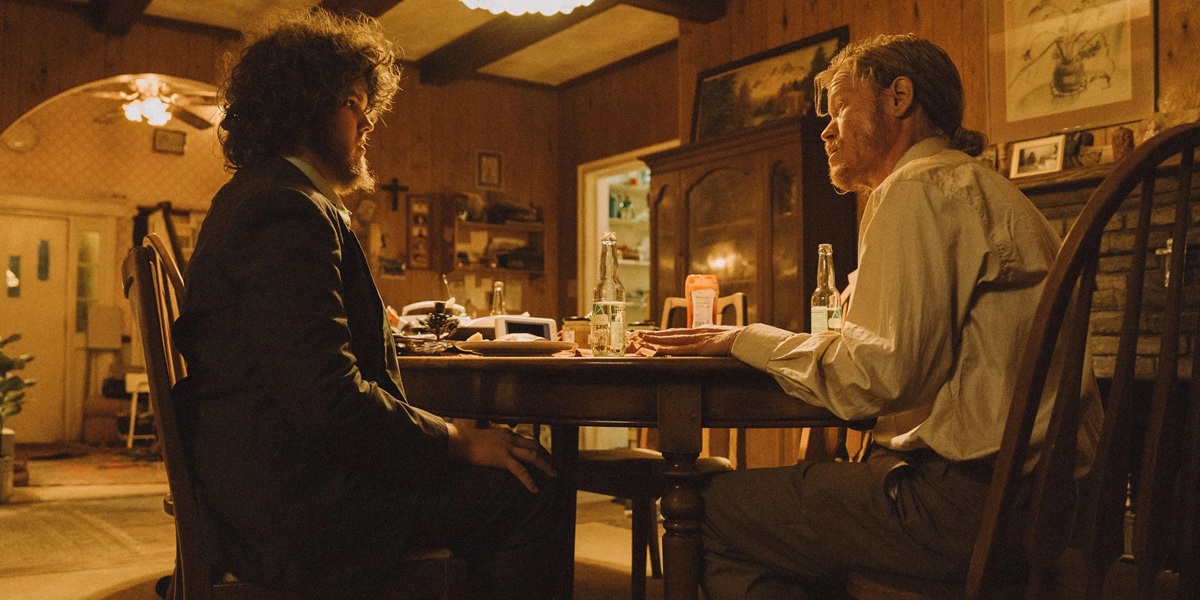
This is one of Lanthimos’ more controlled films in recent years. He’s always had an eye for turning ordinary spaces into sites of dread, but here the banality feels pointed. Kitchens, hallways, backyards—nothing is stylized into abstraction. The horror comes from how familiar everything looks. The camera doesn’t rush. The editing (care of Lanthimos regular Yorgos Mavropsaridis) holds shots just long enough to make you feel trapped inside the logic of the scene.
Also, Jerskin Fendrix’s score deserves special mention. It inflates the mundane into something operatic, sometimes to absurd effect. A shot of Teddy biking or tending to his hives gets scored like a myth in the making. The music doesn’t tell you how to feel; it dares you to reconcile the grandeur with the smallness of what you’re watching. Sometimes that contrast lands as dark comedy. Sometimes it lands as a menace.
Having said that, a lot of the criticism aimed at “Bugonia” accuses it of treating its working-class characters as props in a freak-show. I won’t pretend the film doesn’t flirt with that danger. There are moments when Lanthimos’ taste for the grotesque threatens to tip into glibness, when you can feel the screenplay nudging events toward shock instead of insight. The film doesn’t linger long on the economic realities shaping Teddy’s life. It gestures, then moves on.
Still, I didn’t experience the movie as contemptuous. I experienced it as wary of empathy, of sentimentality, and of giving the audience a clean emotional outlet. Lanthimos and screenwriter Will Tracy don’t let you settle comfortably on anyone’s side. That resolve can read as cruelty, but it can also read as a refusal to lie.
Don, in particular, is where the movie risks losing people. His relationship to Teddy is built on loyalty and need rather than shared belief. He follows because following gives him belonging. The film’s handling of him is painful, and I won’t argue with anyone who finds it distressing or unfair. I will say that I read his arc less as exploitation than as indictment—not of Don, but of the systems and people who use belief as a substitute for care.
‘Bugonia’: A 2025 Mood Piece in Conversation With Its Peers
I kept thinking about how “Bugonia” fits into the broader 2025 movie landscape, especially alongside films like “One Battle After Another” and “Eddington.” All three are grappling with a country caught in a feedback loop of distrust, grievance, and institutional fatigue. They couldn’t be more different in tone or structure, but they’re circling the same airless atmosphere. Where “Eddington” gets granular by zeroing in on a specific town and a specific moment; “One Battle After Another” approaches the same anxiety from a different angle, using momentum, pursuit, and generational fallout to dramatize how belief hardens into action.
“Bugonia,” on the other hand, operates more like a parable. That abstraction is both a limitation and a choice. It keeps the film from plumbing certain social details, but it also gives Lanthimos room to ask a broader, stranger question: if someone really were watching us from above, evaluating their so-called human experiment, what would they make of this mess we’ve made? Together, the three films sketch a portrait of a country caught between paranoia, exhaustion, and the fading promise that institutions (or revolutions) will ever fully deliver.
That question honestly stayed with me longer than the satire. The movie isn’t content to mock corporate amorality or internet paranoia. Instead, it’s more interested in what happens when belief becomes the only available structure in a life stripped of trust. The bees matter not because they’re a metaphor you need to decode, but because they represent care, stewardship, and continuity—things Teddy can still touch with his hands.
The title itself gestures toward an old myth: life emerging from rot, renewal born out of sacrifice. Lanthimos doesn’t romanticize that idea. He treats it as something eerie, transactional, maybe even horrifying. Creation isn’t gentle here. It’s conditional.

Bees, Belief, and Where I Landed
Does “Bugonia” overplay its hand at times? Yes. There are moments when the screenplay leans into provocation instead of letting silence do the work. The film’s final movement, as Marlene Dietrich‘s “Where Have All The Flowers Gone” plays with sinister intent, will divide audiences sharply, and I won’t blame anyone who finds it self-satisfied. Lanthimos has never been shy about closing a film with a raised eyebrow, after all. But I didn’t leave feeling mocked. I left feeling implicated.
For all its excesses, “Bugonia” doesn’t strike me as a movie laughing at broken people. It’s a movie staring at a world where belief has replaced trust, where power speaks in therapeutic language, and where despair is fertile ground for stories that promise meaning, however twisted or crazy that meaning sounds. It’s messy, it’s abrasive, and it doesn’t always know when to pull back.
Still, there’s a bracing honesty in how it eschews consolation. Lanthimos isn’t offering answers. He’s asking whether we recognize ourselves in the experiment—and whether we’d like what’s looking back. That’s not comfort enough. But it’s engagement. And for a film this strange, that to me felt like enough.
Yorgos Lanthimos’ “Bugonia” premiered in the main competition of the 82nd Venice International Film Festival on August 28, 2025. It had its theatrical release in the United States by Focus Features on October 24, 2025. Follow us for more coverage.

