


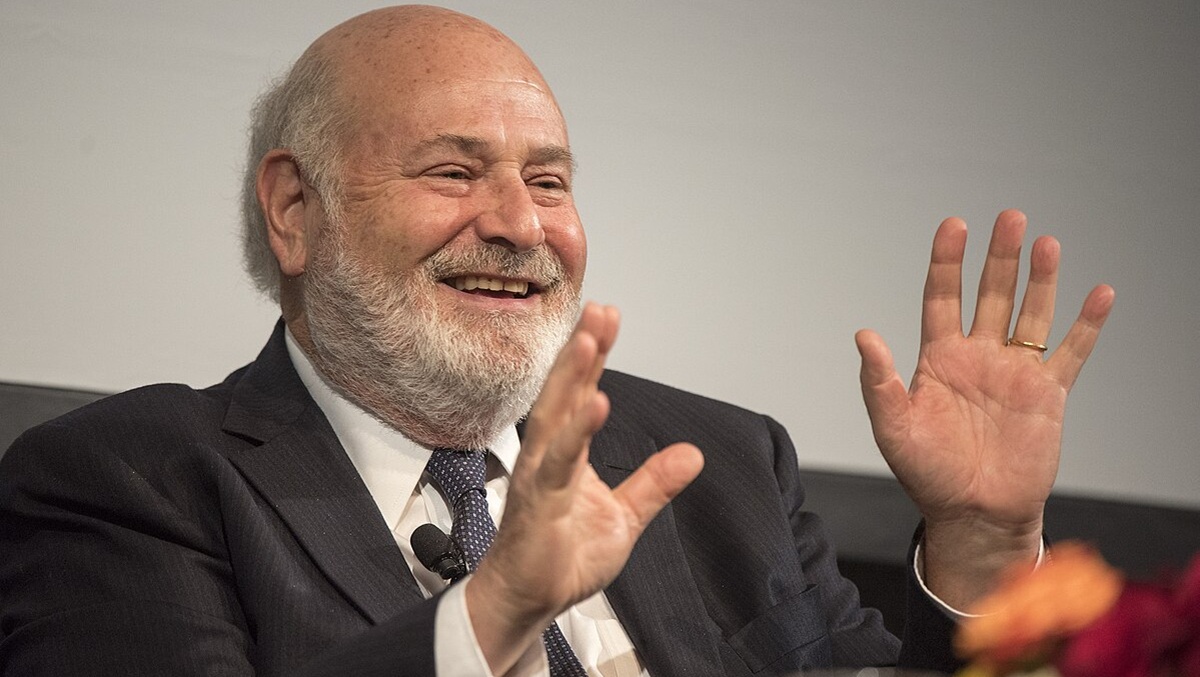
It took me longer than it should have to recognize how much Rob Reiner’s films shaped me. Not in the obvious way that comes with discovering a favorite director all at once, but gradually, over the years, as I started to understand my own tastes as a viewer and my instincts as a critic. His films entered my life at different ages, often before I had the language to explain why they stayed with me. By the time I did, their influence was already part of how I watched movies.
Reiner was never a director who announced himself loudly. There was no signature visual style to latch onto, no easily marketable “vision.” What there was, consistently, was clarity. About character, about tone. About what a story was trying to say, and how best to say it without getting in its own way.
On December 14, 2025, Reiner died at the age of 78 alongside his wife, Michele Singer Reiner, at their home in Brentwood, California. Authorities are investigating their deaths as an apparent homicide, and family and friends are grieving a sudden and shocking loss. Today, I pay tribute to the man the best way that I know: through his films that shaped how I watch, feel, and think—and why it took me so long to realize it.
‘Stand By Me’ and the Shape of Male Friendship
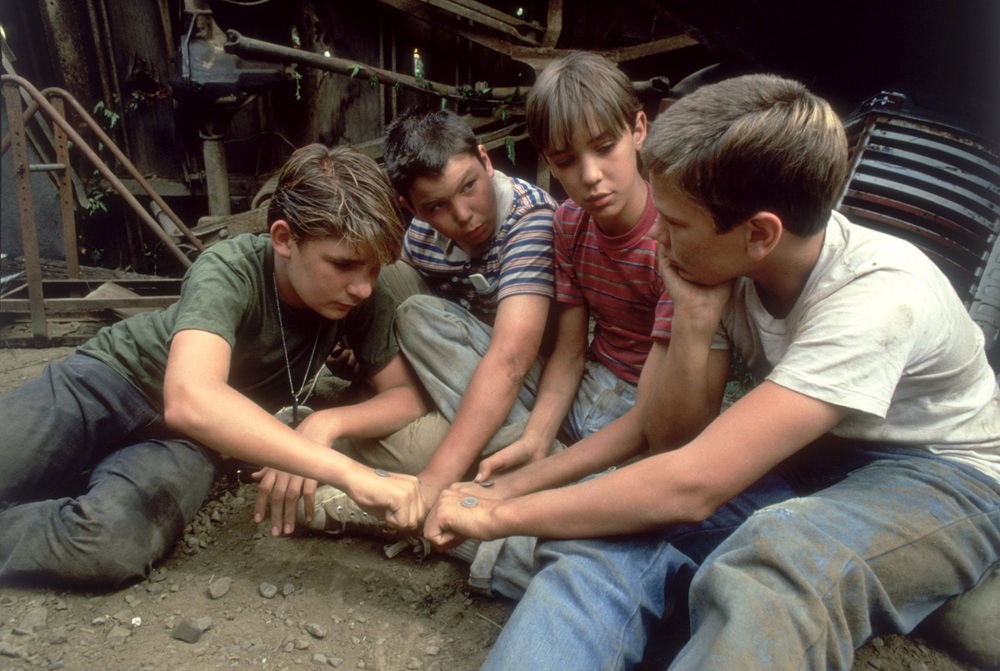
“Stand By Me” may be the earliest example of a film teaching me something without my realizing it at the time. On the surface, it is a simple story about four boys walking along railroad tracks to find a dead body. What made it stay with me was everything underneath that premise.
The boys talk. They argue. They confess their fears. Chris Chambers admits that everyone expects him to be “a thief and a no-good hood” because of his family, and Gordie listens. Really listens. There is no joke to deflect the moment, no rush to reassert toughness. The film allows silence, hesitation, and emotional exposure, particularly in the famous campfire scene where Gordie shares his story about the pie-eating contest and quietly admits his grief over his brother’s death.
What struck me was not nostalgia, but recognition. This was a portrayal of male friendship that did not rely on bravado or emotional armor. Strength and vulnerability coexist. Loyalty is not performative. And the film’s closing line, “I never had any friends later on like the ones I had when I was twelve. Jesus, does anyone?” lands because the film has earned it. It understands that childhood friendships are not just memories, but foundations. As I grew older, this shaped my skepticism toward stories that treat emotional repression as maturity, or mistake cruelty for realism.

‘The Princess Bride’ and the Power of Sincerity
If “Stand By Me” taught me emotional openness, “The Princess Bride” taught me that sincerity is not something to be embarrassed by.
As a child, I loved it for obvious reasons. Sword fights. Giants. Masks. Romance. As an adult, what I admire most is how little the film apologizes for itself. It commits fully to its fairy tale framework while filling it with dialogue so sharp it has become cultural shorthand. “As you wish.” “Anybody want a peanut?” “You keep using that word. I do not think it means what you think it means.”
Those lines endure because the film believes in them. There is no ironic distancing, no attempt to undercut the romance or the adventure with cynicism. Even the framing device of a grandfather reading a story to his grandson is not there to mock the material, but to affirm its value. Through the film Reiner argues, gently but firmly, that stories about true love and happy endings still matter, even when you think you’ve outgrown them.
That confidence left a mark on me. It taught me that liking happy endings is not a failure of taste, and that joy, when earned, is not shallow. As a critic, it also made me wary of films that hide behind irony to avoid emotional risk.
‘A Few Good Men’ and Writing as Action
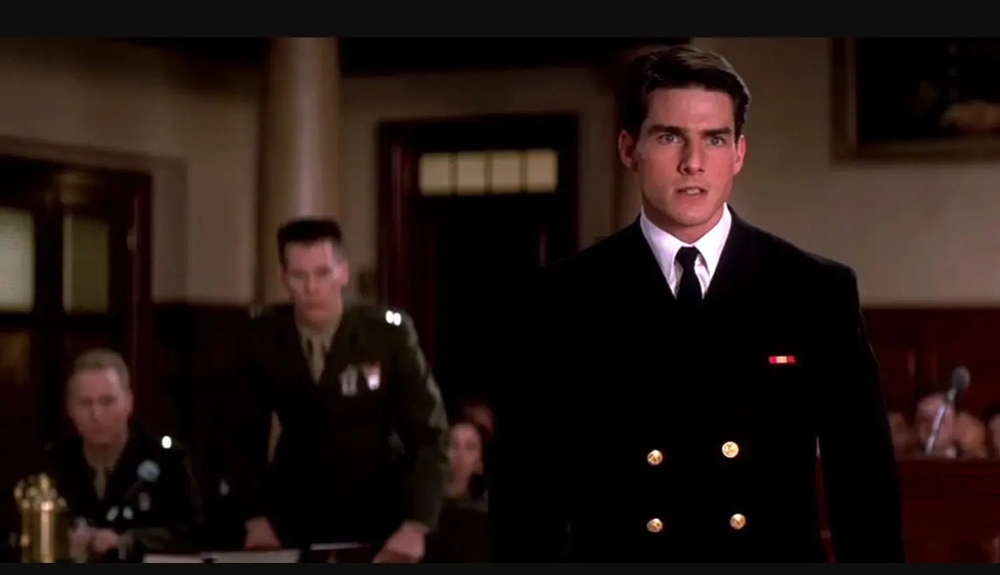
“A Few Good Men” recalibrated my understanding of what tension looks like on screen. Until then, excitement often meant movement. The more kinetic, the better. Reiner’s courtroom drama showed me that stillness, in the right hands, can be just as gripping.
Much of the film takes place in rooms where people talk. They argue and posture. They withhold information. The drama comes from how the dialogue is structured and how long Reiner is willing to sit in a moment. The famous “You can’t handle the truth!” scene works not because of volume, but because of buildup. By the time Colonel Jessup explodes, the film has carefully boxed him in with questions, pauses, and glances.
What impressed me most, even before I could articulate it, was the trust the film places in its script and performers. Sure, it helps to have Aaron Sorkin penning the script and entrusting Tom Cruise and Jack Nicholson to translate it on screen. Even so, Reiner’s direction is clean and purposeful. He knows when to push and when to step back. That respect for writing as a form of action stayed with me, and later informed how I evaluated films that equated noise with intensity.
‘Misery’ and the Danger of Devotion
“Misery” introduced me to the idea that fandom, when untethered from boundaries, can curdle into something frightening long before terms like “parasocial” entered the mainstream. At the time, it played simply as a terrifying thriller. Looking back now, it feels eerily prescient.
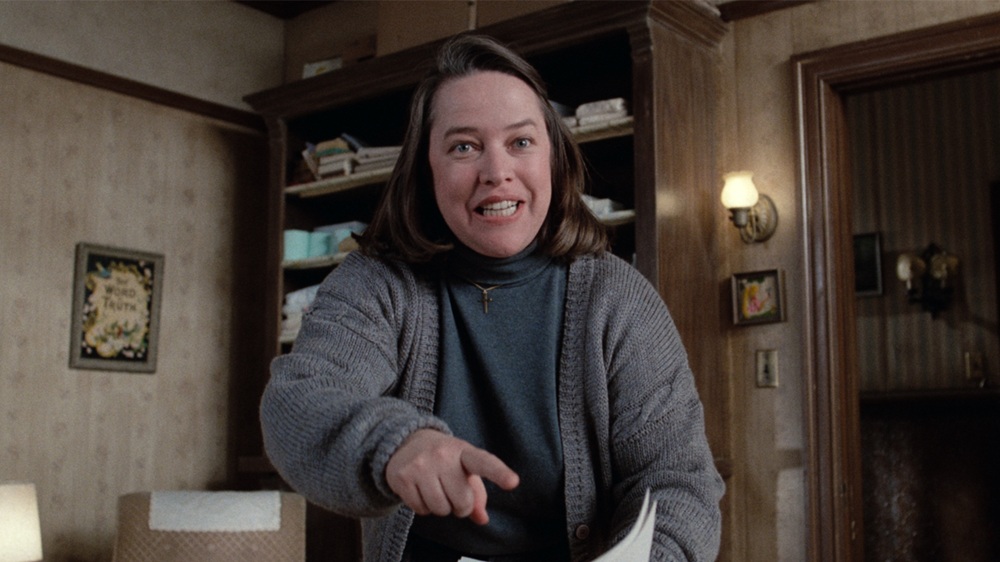
Kathy Bates’ Oscar-winning performance as Annie Wilkes is not just an obsessed fan, but someone who believes ownership over the art she loves also grants her ownership over the artist who created it. Her violence is not random. It is rooted in entitlement, in the conviction that stories exist to serve her emotional needs. When Paul Sheldon kills off her favorite character, Annie does not read it as a creative choice. She reads it as betrayal.
What makes the performance unforgettable is how ordinary Reiner allows Annie to seem, at least at first. She is warm, polite, even nurturing. The horror comes from watching that surface peel back to reveal something controlling and deeply unstable underneath. Reiner’s direction never competes with Bates’ performance. He gives her space, trusts the stillness, and lets the tension build through proximity rather than spectacle.
As I grew older, I’ve come to see “Misery” not just as a masterclass in suspense, but as an early lesson in the dangers of conflating admiration with entitlement. In an era where access to creators is constant and boundaries are increasingly porous, the film feels less exaggerated than it once did. It taught me to look more critically at the relationship between audiences and artists, and to recognize how easily passion can turn possessive.
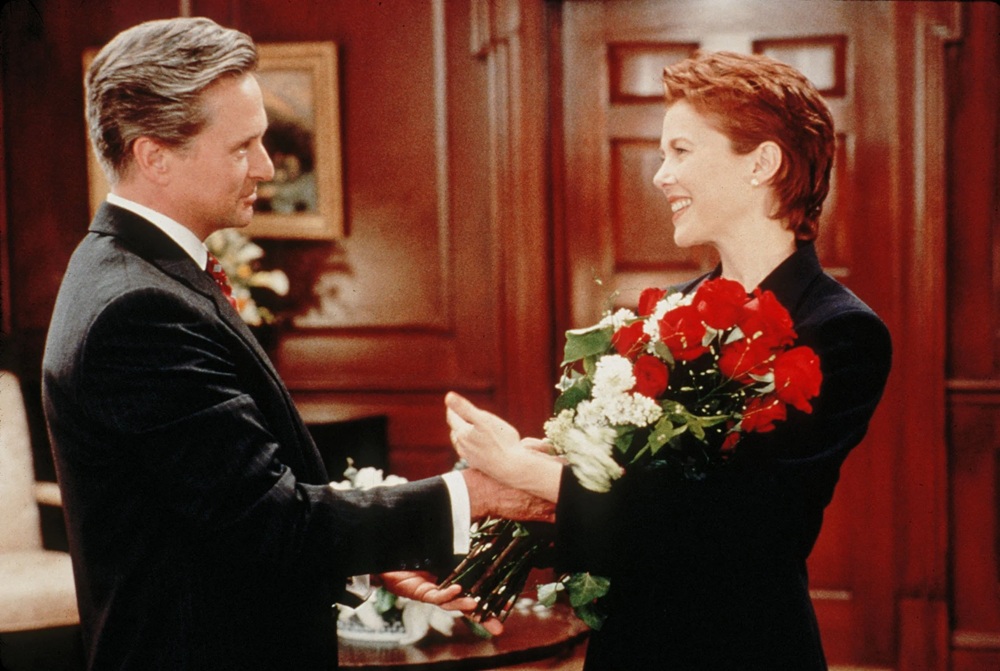
‘The American President’ and Learning to Trust a Genre
For a long time, romantic comedies were easy for me to dismiss. Too many of the ones I encountered growing up felt interchangeable, content to recycle familiar beats without much curiosity or emotional specificity. Reiner’s “The American President” was the film that forced me to reconsider that assumption.
What surprised me most was how adult it felt. The romance between Andrew Shepherd (Michael Douglas) and Sydney Ellen Wade (Annette Bening) is built less on contrivance than on conversation, on the slow accumulation of respect and shared values. The film allows its characters to be articulate without being smug, idealistic without being naive. When Shepherd says, “My name is Andrew Shepherd, and I am the President,” the line lands not as bravado, but as a declaration of responsibility. It is romantic because it is rooted in conviction.
Reiner’s direction gives the material room to breathe. He trusts Aaron Sorkin’s dialogue, but he also knows when to pull back, letting silences and reactions do their work. The film’s optimism never feels forced, in part because it acknowledges compromise and disappointment along the way. Love, here, is not a distraction from public life, but an extension of personal integrity.
Watching it again as an adult, I realized this was where my appreciation for smart romantic comedies really began. The film didn’t just change how I felt about the genre. Instead, it made me more open as a viewer, more willing to see a film on its own terms rather than dismiss it based on past experiences.
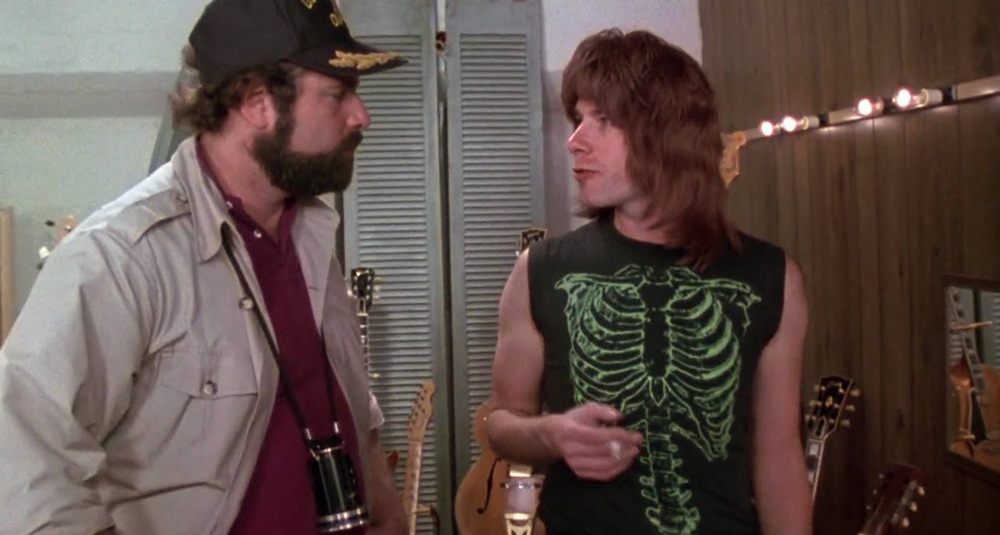
‘This Is Spinal Tap’ and Satire That Understands Its Subjects
“This Is Spinal Tap” deepened my appreciation for mockumentary and black comedy, but more importantly, it clarified what makes satire actually work. The film is not funny because it mocks its subjects from a distance. It is funny because it understands them completely.
Reiner’s great insight was to treat the band with total seriousness. The documentary framing is never broken, never exaggerated for effect. When Nigel (Christopher Guest) proudly explains that his amplifier “goes to eleven,” the joke lands because no one treats it like a joke. The same is true of the band’s endless lineup changes, their tortured explanations for spontaneous combustion, and their sincere confusion over why their career keeps stalling. These moments work because the film lets the characters indict themselves through their own words.
What sets ‘Spinal Tap’ apart from broader parody is its attention to behavior. The humor comes from watching people talk around their insecurities, rationalize failure, and inflate minor victories into acts of greatness. Reiner’s direction is deceptively restrained. He never pushes for laughs; instead holding the frame, letting conversations run long, and trusting the audience to recognize the absurdity. In doing so, the film becomes less about ridiculing musicians and more about exposing the fragile egos that exist in any creative field.
At the time I first saw it, the film felt simply outrageous. As I grew older, it began to feel uncomfortably accurate. The desperation to be taken seriously, the need to preserve an image long past its expiration date, the inability to separate identity from output all rang increasingly true. What once seemed exaggerated now reads as observational.
The film also reinforced my attraction to mockumentary as a form. It showed me how structure itself can be a source of comedy and critique, and how the illusion of objectivity can be used to reveal deeper truths. While my comedic education began with Monty Python, “This Is Spinal Tap” grounded that sensibility in something more specific and more human. It taught me that the sharpest satire often comes not from cruelty, but from recognition.
‘When Harry Met Sally…’ and the Idea of Falling in Love Again
“When Harry Met Sally…” is a film that changes as you do. What once played as a smart, funny romantic comedy now feels more like a study of how people avoid being honest with themselves, and how long it can take to stop doing that.
From the start, the film is less concerned with whether Harry and Sally will end up together than with the stories they tell themselves to keep that outcome at a safe distance. Harry (Billy Crystal) insists that men and women cannot be friends because it gives him cover. Sally (Meg Ryan) believes that careful planning will protect her from disappointment. Their conversations are quick and funny, but they are also revealing, full of rules designed to keep real feeling at arm’s length.

Reiner’s direction understands the value of time. We watch years pass. Relationships begin and end without fanfare. The film allows its characters to sit in loneliness rather than rushing them toward a conclusion. The interview segments with older couples work not just as comic relief, but as reminders that most relationships are built slowly, through missteps and compromise.
When Harry finally runs through New York on New Year’s Eve, the moment works because it avoids grand gestures. His confession is awkward and specific. “I love that you get cold when it’s 71 degrees out.” The speech is about paying attention, about choosing someone as they are rather than as an idea. What the film gave me, without my realizing it at the time, was permission to believe that love is not something you solve once and move on from. It can be returned to, reconsidered, and earned again. It made me fall in love again with the idea of falling in love again, this time without the illusion that it comes easily.
Rob Reiner: A Massive Loss, and A Quiet, Lasting Influence
Looking back, what strikes me most is how quietly these films did their work. Reiner did not impose a single worldview across his filmography, nor did he chase trends. He made films that trusted their characters and respected their audiences. Somewhere along the way, without my noticing, I was learning how to watch movies, how to think about people, and how to value sincerity over posturing.
That kind of influence does not announce itself. It accumulates over time. And by the time you recognize it, it has already shaped you. For that, I’m grateful—the world is grateful. Thank you, Rob Reiner, for the gift of movies.

