



“I don’t psychoanalyze my sources,” the legendary investigative reporter Seymour Hersh tells Director Laura Poitras early on in “Cover-Up” (2025). “And I don’t psychoanalyze myself, thank God.” Behind the camera, Poitras and her co-director Mark Obenhaus might have exchanged a smirk, wink or giggle, much like the audience did during my screening. Hersh can reject looking inward, but Poitras (“All the Beauty and the Bloodshed”) and Obenhaus don’t go down without a fight, assuming the roles of filmmakers/journalists/therapists in this biographical audit of Hersh, detailing a dazzling working life of scoops, dupes and Fourth-Estate/First-Amendment triumphs. In “Cover-Up,” this trio, functioning like a dysfunctional family, dishes, waxes and argues through a rakishly entertaining piece of historical nonfiction, deploying a fairly conventional storytelling approach which condenses the material’s sprawl into a digestible and unsentimental tribute to Hersh and his profession.
According to Poitras, It took Hersh almost twenty years to accept her offer to work together, and throughout several testy interviewing sequences, it’s clear he’s still conflicted about the project and, potentially, what it might say about his image and reputation. Despite a career that’s astonishing for its duration (eight decades and counting), successes (uncovering the My Lai massacre while at the New York Times and groundbreaking contributions to expose the Watergate scandal) and misfires (a manifesto supporting Bashar al-Assad, controversial sourcing tactics), Hersh maintains a steely, resolute vigilance about the costs-of-doing-business. It’s a credit to the filmmakers’ objectivity and craft that they can step back and prod only when necessary. Following Hersh’s model, Poitras and Obenhaus exhibit a scrupulous knack for verifying, for turning over the appropriate pages and refusing to glorify a supernova personality, avoiding the trap of making a squeaky-clean, authorized profile in courage.
I Don’t Psychoanalyze My Sources
It’s selfless filmmaking, appropriately placing Hersh in the sphere of history that he helped make and interpret. Given Hersh’s contagious charisma and his career’s melodramatic arc, it would have been understandable if the film luxuriated in name-dropping and gossip. But, the trio’s sturdy professionalism doesn’t bend. Fixating on key questions—journalistic ethics and how to protect sources—“Cover-Up” doesn’t purport to be a full picture of an individual, rather, it’s a finely-wrought thorny and semi-self-portrait of an obsessive. Watching this film so soon after finishing Rebecca Miller’s “Mr. Scorsese” (2025), I found myself grateful that these long-gestating films by and about essential artists exist at all. These labors of love function almost as a public service, allowing a new generation to affirm or revise accepted wisdom surrounding mercurial alpha-males who may be difficult and personally tormented, but are fundamentally moral and stubbornly human.
Scan a documentary review and chances are, the word hagiography will show up, some if not most of the time. Often, it’s invoked as a liability, but it could be used as a counter-point, explaining what the doc didn’t do, how a given film subverted expectations and the temptations of a puff piece. What sets “Cover-Up” apart from the lot of middling docs dumped into the streaming-verse, and subsequently examined by critics, is the principal players. Hersh, Obenhaus, and Poitras might be hardheaded, but they put the work first, serving at the altar of truth-telling. Even when Hersh, who’s not without ego, threatens to exit (“Let’s quit. I quit. Can we cut cameras?”), it’s almost laughable not solely because, obviously, he stuck it out, but because he, like Poitras and Obenhaus, are passionate, expert witnesses, determined to finish the work they started.
A Nostalgic Zoom Back
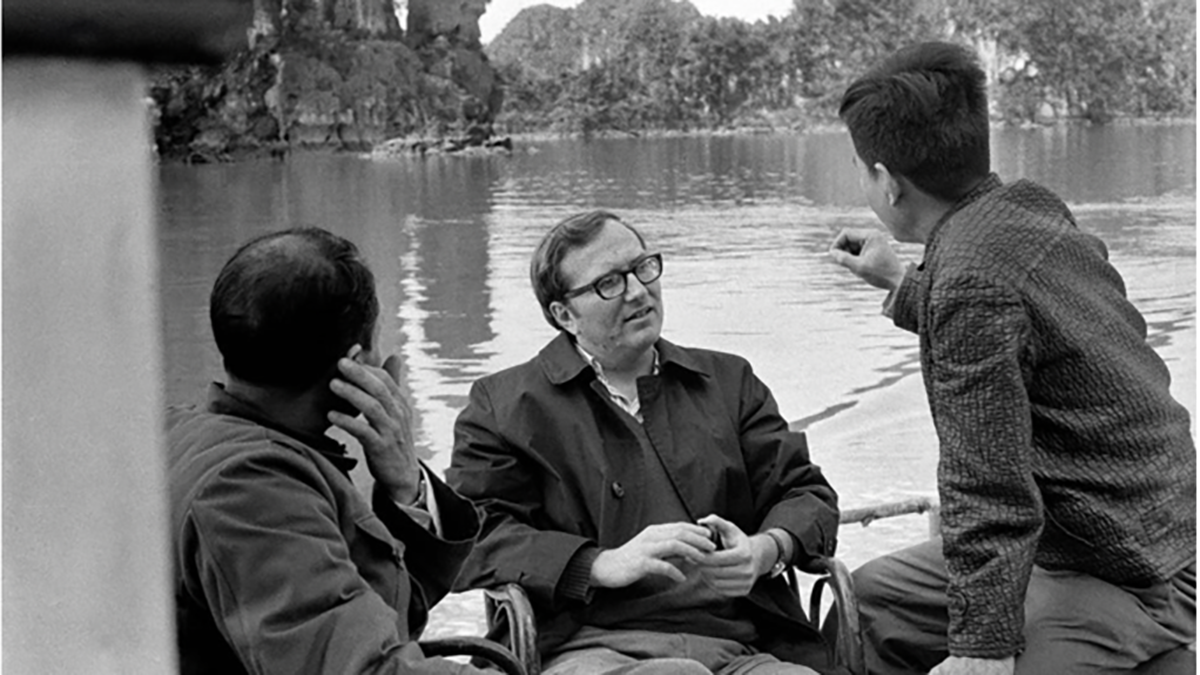
Neither a cheerful retrospective nor a harsh corrective, “Cover-Up” is a nostalgic zoom back to an era when press rooms could be the front lines of activism, and the reporters who populated them toed the murky line between superheroes and villains. Consumer habits, the Internet, etc. have sent Hersh’s old trade into a steep, long-term decline (he’s now on Substack), but the economics and viability of newspaper reporting aren’t what’s truly under the Obenhaus-Poitras microscope. What’s special and, occasionally revelatory, is the sheer breadth and scope of Hersh’s reporting, which certainly warrants full-length feature focus. Hersh, nearing ninety years old, continues to produce and rework a living testimony to his country and the free press that strives to keep it in check. Thanks to “Cover-Up”, the smudged ink accrues to a polished, precise document that captures Hersh, a consummate raconteur, giving his output the final say on a journalist’s life.
“Cover-Up” opens in New York at Film Forum on December 19th, for an exclusive one-week run. Then, the film will be available to stream on Netflix starting December 26th.

