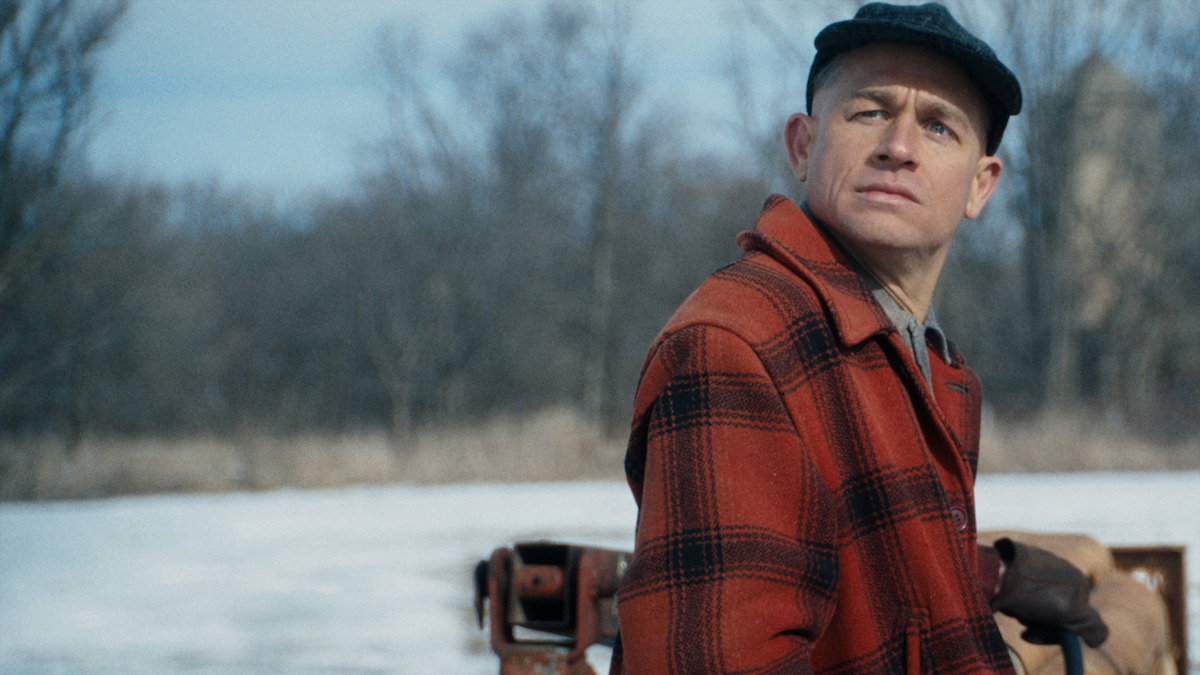
“Monster: The Ed Gein Story” is Ryan Murphy’s third installment into true crime, but regrettably this time seems he’s has lost his way. The previous two installments (chronicling Jeffery Dahmer and The Menendez Brothers, respectfully) were thematic and chilling. The former was dark and morose and the latter manic and intoxicating. Both series pulled the audience into the proceedings—and the mind(s)—of its subjects. Evan Peters (Dahmer) and Cooper Koch and Nicholas Alexander Chavez (Erik and Lyle Menendez) offered acting masterclasses. And while “Sons of Anarchy” actor Charlie Hunnam struggles to find the right footing with Ed Gein, that part is forgivable. At the end, series director Max Winkler and writer Ian Brennan—smattering the screen with pop culture references and misdirection—fail to really let us understand their chief subject. It feels, regrettably, that we don’t really know him at all.
With all of Murphy’s “Monster” productions, I believe the central theme is that the “monster(s)” are always more than just the subject he studies. In “Dahmer,” the monster was the killer and also the justice system—mainly the police—which failed Dahmer’s victims on multiple occasions. In the “Menendez” story, it was the two brothers but also perhaps their parents and (maybe?) their lawyer. And in “Ed Gein,” aside the Plainfield Butcher himself, the monster(s) are parents. Chiefly Gein’s mother (a solid Laurie Metcalf), the inspiration for Norman Bates’ mother in “Psycho,” who emasculates and coddles him, but also the mother of his friend, Adeline (Suzanna Son), whose mother despises her with scorn and shame. Gein was a monster, but given his upbringing, it’s not hard to see what may have pushed him over the edge.
Too Many Creative Liberties
“The Ed Gein Story” takes more creative liberties than its predecessors, much to its detriment. Murphy and Brennan’s thesis this time seems to be the influence of Gein on popular horror culture, specifically the films his case inspired: the aforementioned “Psycho,” “The Texas Chainsaw Massacre,” and “The Silence of the Lambs.” And yet Gein was not like Norman Bates, not like Leatherface, and not like Buffalo Bill. He was sheltered and impressionable, odd and meek. The graphic and macabre crime scene the police would discover—human bones, self-made human skin suits, preserved human tissue, and a trussed up and eviscerated human caress in his barn—seemed not to fit the man. He was mild-mannered and soft spoken, enunciating in a high-pitched way that seemed almost comical.
In this, Hunnam (or the producers) takes the creative license a bit far; in clips, the real Gein sounded less exaggerated and less soprano. Hunnam’s Gein seems ineffectual and meek, and not someone who could have shot two people to death with malice (and maybe also murdered his brother). Episode 6, “Buxom Bird,” is the only one where we feel any sense of horror, and it comes from police searching his house, finding the place a den of horror and human trophies. But watching “The Ed Gein Story,” you’re never really afraid (I was during parts of Murphy’s previous two outings, especially with “Dahmer”). And when Gein stumbles home in the midst of this police search, asking with complete befuddlement, “what is everyone doing here??” as if it were a pleasant surprise visit, it hits tonally odd, though not completely unexpected.
Fact or Fiction?
The series further blurs the lines between fact and fiction, and there’s much this time that was creative license rather than truth. It’s possibly Gein’s story wasn’t robust enough to make an entire series on, or rather the production team swung for complete ambition this time. But the season hinges on linking Gein to popular culture so much it becomes distracting. Whole episodes are devoted to Alfred Hitchcock, Anthony Perkins, and filmmaker Tobe Hooper (“The Texas Chainsaw Massacre”). The most time is devoted to Tom Hollander’s Hitchcock, taking *some* creative license to show his creepier side—and how much his telling of Gein’s story (the novel “Psycho” was written by Robert Bloch) informed our culture. And while these films and the comparisons Brennan and Murphy make are apropos, it bites off too much. There were times throughout “Monster” where Gein himself is missing for so long I almost forgot the story was about him.
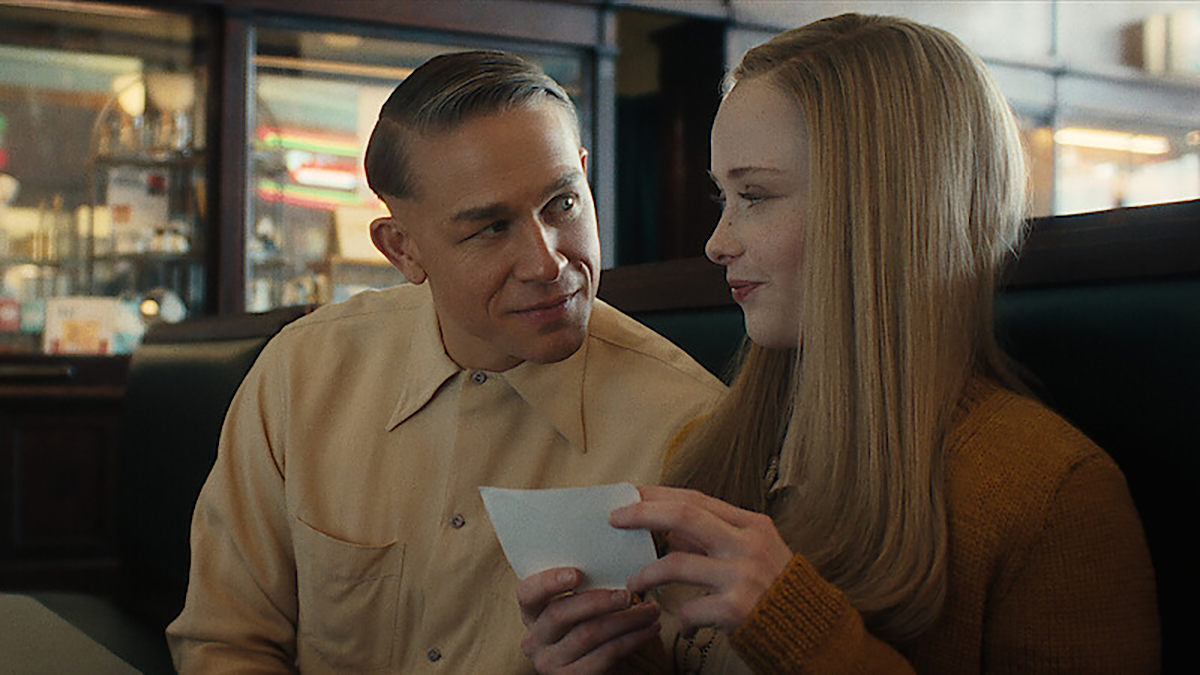
“Ed Gein” also interweaves most of the killer’s inspiration into two main pockets: the aforementioned Adeline, who starts as his friend, becomes—at times?—his fiancée, and ultimately becomes an opportunist. In the series, she’s a true crime aficionado and lover of the macabre who dreams of moving to New York and taking gory crime scene photos. She introduces him to his second inspiration, a Nazi murderess named Ilsa Kock (Vicky Krieps), who appeared in a fictionalized comic book heralding her the “Bitch of Buchenwald.” In the series, she tortured Jewish prisoners and made lampshades and the like out of their skin—inspiring Gein to do the same. Koch was a real person; however, the crimes against her were part of a controversial trial, with her most heinous crimes unable to be proven.
Do We Really Know Ed Gein?
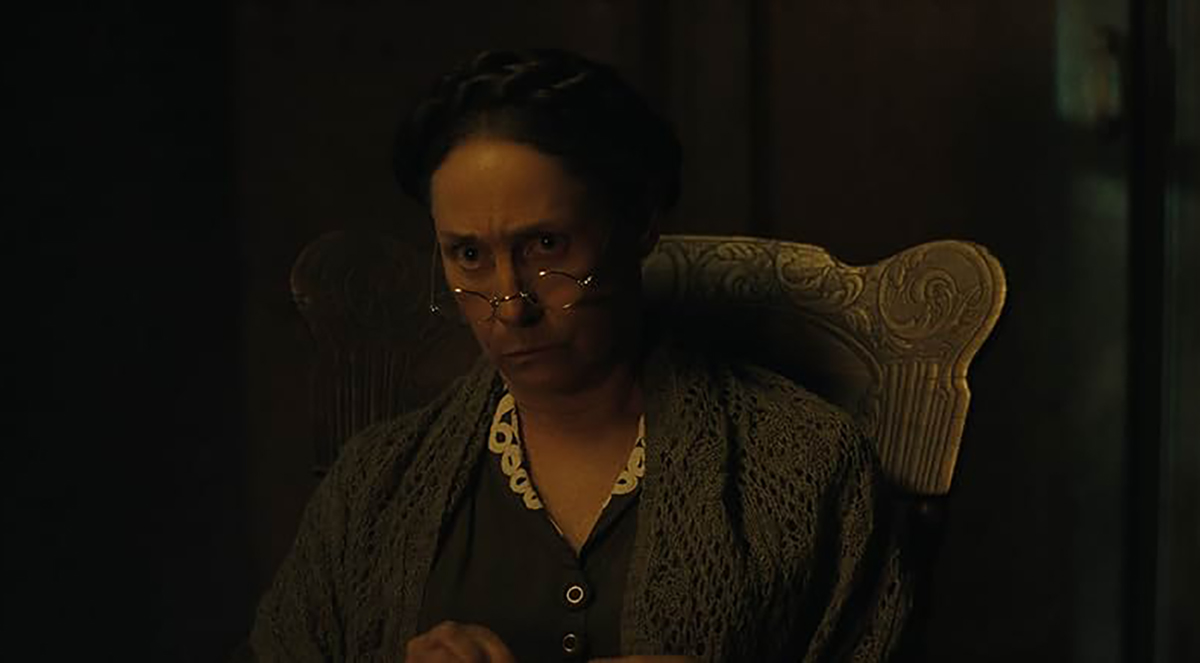
And this is the larger problem with “The Ed Gein Story.” There are so many historical references placed into the series, it becomes less about Gein, and more about the fervor he left behind. The series’ opening (when we spend a decent about of time with Gein and his unhinged mother) lets the audience feel they’re living in this colorless, small-town existence in Plainfield. And the aforementioned Episode 6 is almost perfect, despite the massive fictionalization of officer Frank Worden (Charlie Hall), showing us Gein’s eerie house of horrors.
But much of the rest of the series wades in and out of reality so frequently—and pop culture—it’s hard to tell what’s real. “Dahmer” and “The Menendez Brothers” used creative license, too. But they reined it in to help us understand the characters. There is so much fictitious about “The Ed Gein Story” that it oftentimes feels like a parody. You get the sense Gein was crazy (he was diagnosed with schizophrenia), but sometimes it feels Winkler and Brennan want us to laugh at him rather than be horrified by him. The series never lets us get to know him. Gein admitted to killing two people (Mary Horton and Bernice Worden), yet the series wants to suggest he was a composite of Leatherface and Buffalo Bill himself. Gein was not a serial killer, rather a disturbed man who killed some people. Most of his notoriety comes after the fact, from the artifacts he made with his victims’ bodies and those he dug up from a nearby cemetery.
Gein—Not the Monster Murphy and Company Want

The last two episodes of “The Ed Gein Story” somewhat vindicate the haphazard handling of most of what preceded it. But even then, there’re so many falsities present (I ran out of Googling stamina) it makes you wonder what is true and is not. What is true is that Gein endured psychological and physical abuse from both parents, undiagnosed schizophrenia, and an attachment to his mother that broke the bounds of sanity.
Is Ed Gein a monster? That’s up for interpretation. The pop culture and serial killer inspirations that sprung up from his crimes were likely unknown to the man. He had little connection to reality. Had Murphy and company’s latest “Monster” stuck truer to the truth and less concerned with the killer’s lasting enigma, it might have been more rewarding. I felt solemnly for Gein at the end. He was a madman that clearly couldn’t live in polite society—not in the 1950s, and certainly not in a time period marked by a lack of empathy and care for the mentally ill. The real Ed Gein probably wouldn’t have made the best “Monster” installment. It’s a shame that Hunnam—who tries his darnedest—is ultimately shortchanged by what feels like a productive and creative lack of vision.
“Monster: The Ed Gein Story” is streaming exclusively on Netflix.