


We don’t talk enough about the women who spend their lives holding families together from afar—working in strangers’ homes, raising other people’s children, sending money back while missing milestones in their own. At a festival as crowded as TIFF, stories of migration and family sacrifice appear year after year.
Still, Or Sinai’s “Mama” strikes a nerve. The filmmaker takes that reality and shapes it into a messy, melodramatic, and deeply personal story. Her camera cleaves to the titular character, a Polish housemaid in Israel, with such sympathy that “Mama” often feels like a diary translated to screen—fraught, contradictory, and piercingly intimate.
Coming Home After 15 Years
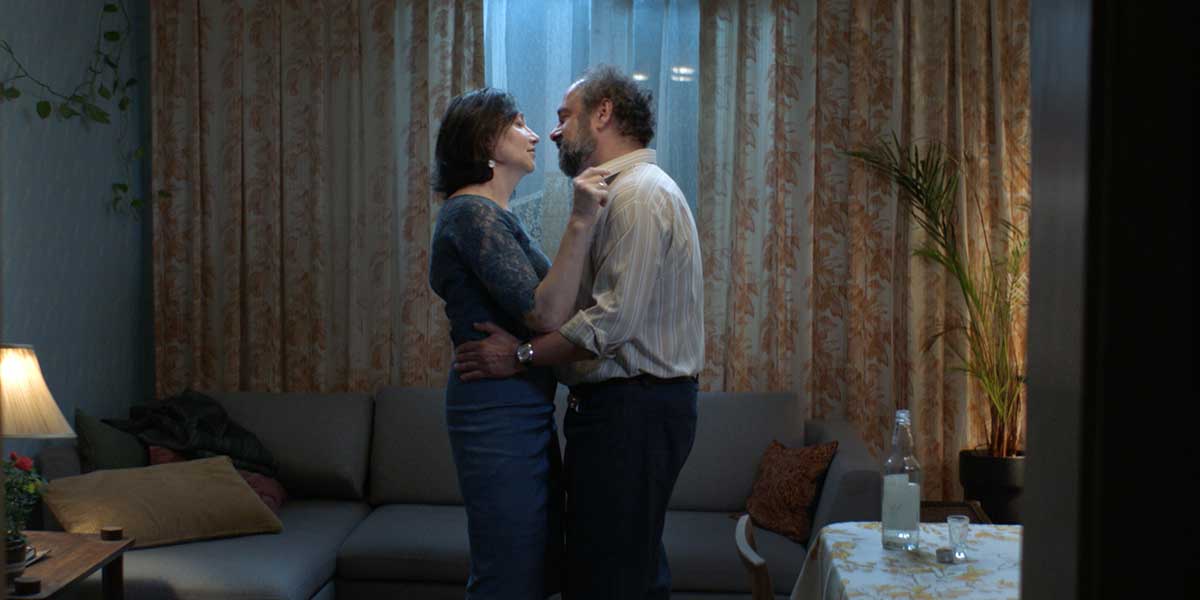
The film begins with a surprise. We see a middle-aged woman in a sensual embrace, basking in intimacy, before the camera pulls back to reveal the reality: Mila (Evgenia Dodina) is not the lady of the house, but the help. She has spent fifteen years working for a wealthy Israeli family, tending to their home and their needs, while keeping a quiet romance with the gardener on the side. When a fall from a ladder injures her wrist, her employers encourage her to take a two-week break to recover.
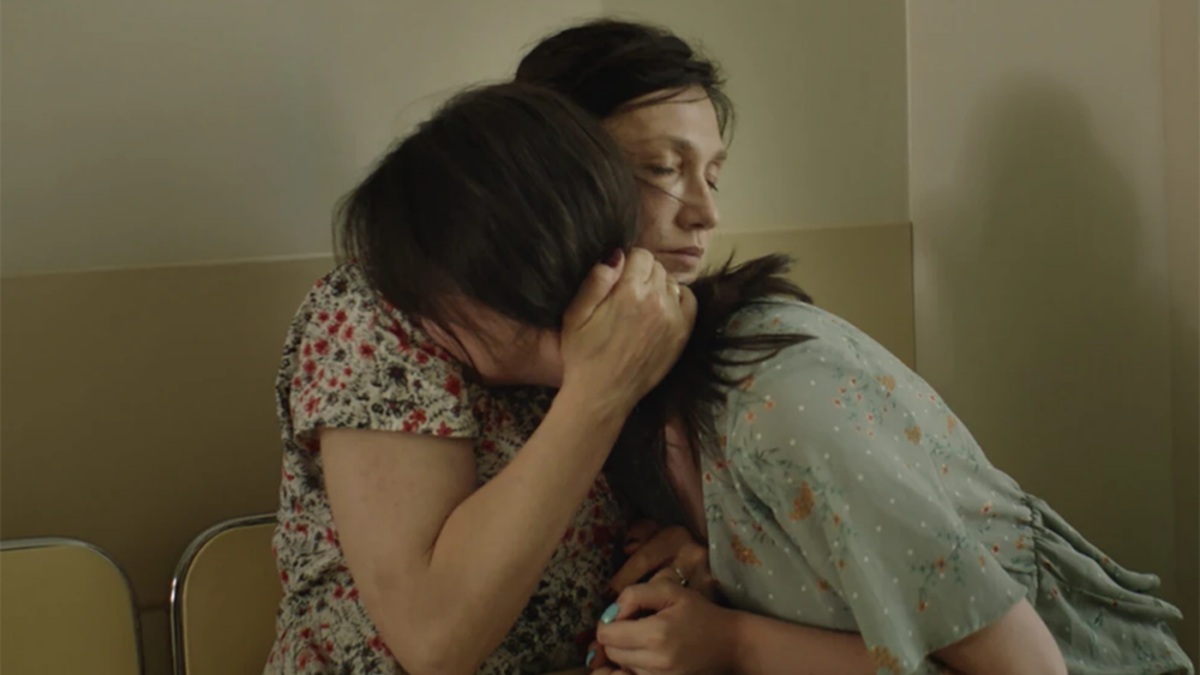
Returning to her native Poland for the first time in years, Mila anticipates a homecoming. But what she finds is closer to estrangement. Her husband Antoni (Arkadiusz Jakubik) has carried the weight of single parenthood, his pride scarred by her role as the provider. Their daughter Kasia (Katarzyna Lubik), now on the verge of adulthood herself, doesn’t quite know what to do with the mother who suddenly insists on being present. The old house is falling apart, and the dream home under construction built using Mila’s remittances doesn’t feel like hers. In her absence, her family has moved on.

Sinai frames all this with an intimacy that makes it clear the story is personal. The camera cleaves to Mila with singular sympathy. We watch her fumble, intrude, protect, deceive, and, finally, accept. At times, the perspective is so subjective that the film courts melodrama, especially in a late twist involving Kasia’s pregnancy.
The plotline, in which Mila pushes her daughter toward an abortion under false pretenses, has the blunt inevitability of soap, and Sinai’s heavy hand can smother the subtler truths. It’s the kind of melodramatic swing that Southeast Asian cinema often embraces, but here it leaves a trace of predictability.
A Timely Story of Migrant Labor
Even so, “Mama” hits nerves that are hard to shake. It’s a film about labor migration and the sacrifices women make, often invisible ones. Watching Mila, I thought back to “Happy Birthday,” Sarah Goher’s Egyptian drama about child labor and maternal burden. Different countries, different contexts, but the same cruel arithmetic: women trade away their presence in the home to secure their family’s future, only to return and find themselves displaced. Mila’s absence has left her daughter wary and her husband diminished, while the Israeli household she serves welcomes her back with a bottle of wine. She belongs fully to neither world.
Mama often feels like a diary translated to screen—fraught, contradictory, and piercingly intimate.
Sinai understands that contradiction. Mila is both indispensable and expendable, desired and resented, mother and stranger. Unfortunately, the film never quite finds a balance between restraint and melodrama. Nonetheless, that unevenness feels truer to the jagged emotions at its core. Through all these, Dodina does a masterful job. She gives Mila not just dignity but volatility—one moment tender, the next manipulative, her face carrying decades of choices she can’t undo.
‘Mama’—and the Sacrifices One Makes for Family
By the end, “Mama” doesn’t land on catharsis so much as resignation. Mila comes to terms with the fact that the life she imagined for herself and her family may no longer be within reach, and she chooses a quieter path forward. The closing moments suggest both freedom and futility, leaving us with an image of a woman still searching for a place to belong.
“Mama” isn’t perfect; its dramatics can be too on the nose, and its narrative turns sometimes play out exactly as you’d expect. But in its best moments, it captures the loneliness of being foreign everywhere—even in your own home. And in Mila, director Or Sinai gives us a woman whose sacrifices are both futile and profound, and whose displacement stretches far beyond the screen.

A joint production by Israel, Poland, and Italy, “Mama” had its North American premiere at this year’s Toronto International Film Festival. Follow us for more coverage.

